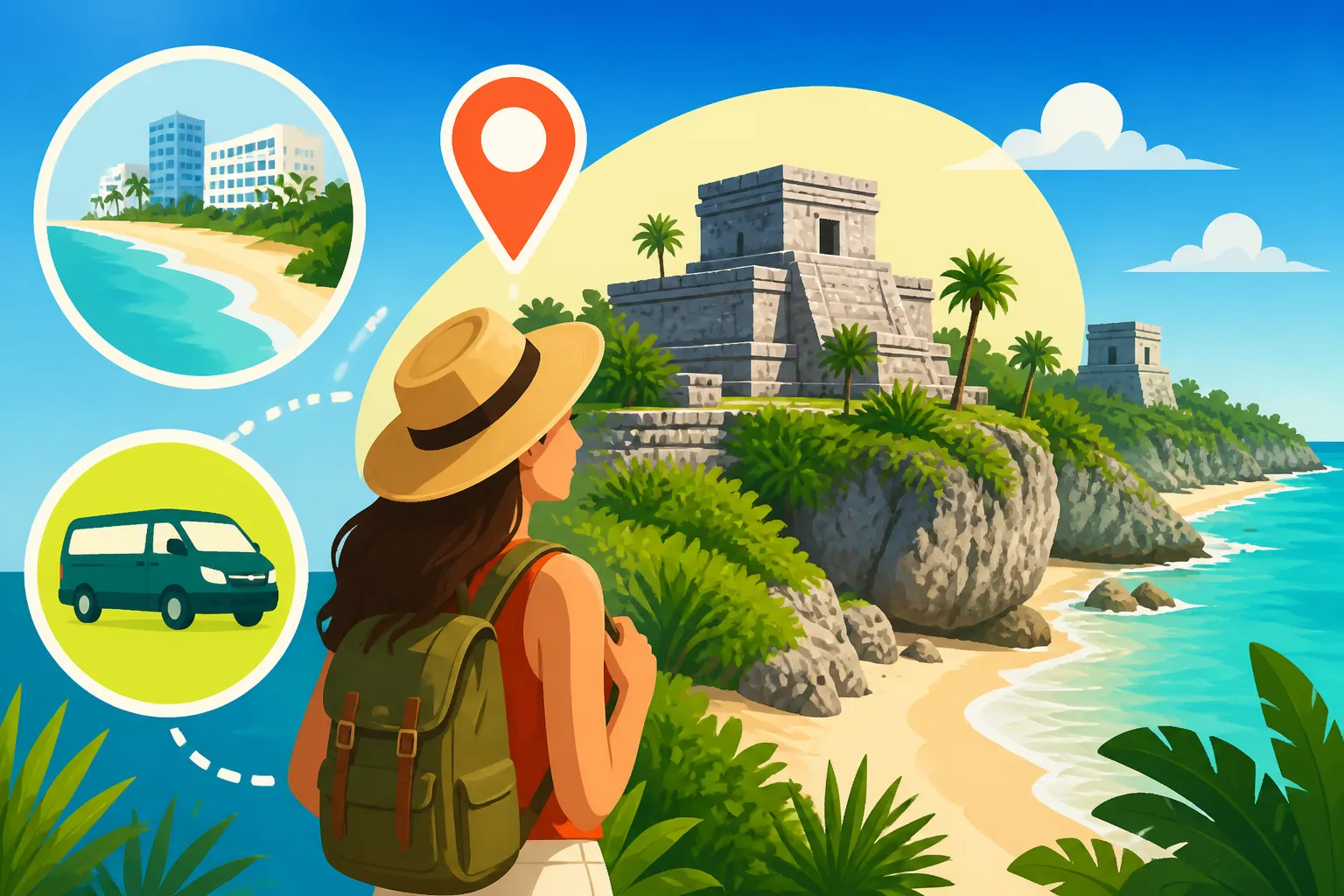
How to Visit Tulum and Its Ruins From Cancún
Every week, someone lands in Cancún, looks at a map, and realizes Tulum is not “just down the road.” It is a full morning of travel each way, and the ruins get brutally hot and crowded by mid-morning. This guide covers bus, car, and tour options, real costs, and a practical game plan so your Tulum day goes smoothly.
Disclosure: This post may contain affiliate links. We may earn a commission at no extra cost to you if you make a purchase through these links. Read full disclosure.
Planning Your Cancún to Tulum Day Trip
Before you pick a transport method, you need a realistic picture of distance, timing, and how much of your day this trip will take. The decisions you make the night before matter more than anything you do once you’re on the road.
How Far Tulum Really Is From Cancún
Tulum sits roughly 130 kilometers south of Cancún along Carretera Federal 307, the coastal highway that runs the length of the Riviera Maya. Depending on traffic, roadworks, and how many times you stop, the trip takes about two hours each way, and sometimes longer. If you are staying at the far northern end of the Hotel Zone, add extra time just to get out of Cancún. The boulevard backs up badly at rush hour.
The highway passes Puerto Morelos, Playa del Carmen, Puerto Aventuras, and Akumal before reaching Tulum. Playa del Carmen is the big bottleneck. The stretch through town has traffic lights, turning lanes, and plenty of slow-moving trucks. On a bad afternoon heading north, that section alone can eat a surprising amount of time.
One thing first-timers need to know: “Tulum” means three different places. There is Tulum Pueblo, the town on the highway where the ADO station is. There is the hotel zone, a long beach road lined with boutique hotels and beach clubs. And there are the archaeological ruins, which sit on a cliff north of the beach road, a few kilometers from town. When you tell a taxi driver or a bus agent “Tulum,” you will usually end up in the town center, not at the ruins gate. That alone causes a lot of confused, sweaty mornings.
If you’re still deciding whether Tulum deserves a full day or should be your main base, see Which Is Better for a Beach Holiday: Cancún or Tulum? for a broader comparison of the two areas.
The Best Time of Day and Year to See the Ruins
The single best piece of advice I can give is this: be at the ruins when they open. The site is small and fully exposed, with very little shade beyond a few palms. By late morning the sun is beating down on the limestone, tour buses from Cancún and Playa del Carmen have arrived, and the narrow paths fill up. Arrive early and you get softer light for photos, cooler air, and a calmer site.
That’s why your departure time from Cancún matters so much. To make opening time, you either leave very early by car or take one of the first buses of the day. Organized tours pick up early too, but they often arrive later than independent visitors, because the shuttle makes multiple hotel stops before heading south.
Seasonally, the cooler, drier months of winter and early spring are the most comfortable. They are also peak season, so expect crowds. The summer months bring heat, humidity, and afternoon storms. Hurricane season affects the coast from early summer into autumn, so a stormy day can close the beach below the ruins or make the drive unpleasant. Seaweed is another seasonal factor if you plan to swim. See How to Avoid Sargassum Seaweed on Mexico’s Caribbean Coast for how that shapes beach plans along this coast.
Day Trip or Overnight Stay
A day trip from Cancún is perfectly doable. Many visitors do it, and it works well if you just want the ruins, a quick swim, and lunch. But it’s a long day. Four hours in transit means you get roughly half your day in Tulum, and much of that time is in the hottest hours.
Staying one night changes the experience completely. You can wake up minutes from the ruins, walk in at opening before the Cancún crowds arrive, and spend the afternoon at a cenote or on the beach with no bus to catch. If you go that route, Booking.com is a convenient way to compare places in town against the beach road and filter by things like parking or air conditioning. Prices and availability shift a lot by season, so check current listings directly. For a neighborhood breakdown, see Where to Stay in Tulum: Beach Road vs Pueblo on Price and Access.
My honest take after many trips: if you only care about the ruins, a day trip is fine. If you also want cenotes, Cobá, or a real beach afternoon, one night in Tulum saves you a lot of rushing.
Getting From Cancún to Tulum: Bus, Car, or Tour
You have three realistic options: the ADO bus, a rental car, or a guided tour. Each one suits a different kind of traveler. The right choice depends on your budget, comfort level, group size, and whether you want independence or someone else handling the logistics.
Taking the ADO Bus Step by Step
ADO is the main first-class bus line on the Yucatán Peninsula. It’s reliable, air-conditioned (sometimes aggressively so, so bring a layer), and the cheapest comfortable way to reach Tulum. Buses leave from the downtown Cancún terminal near Avenida Tulum and Avenida Uxmal, and some routes also leave from Cancún Airport.
Here is how the bus day usually works:
- Check schedules the night before. ADO sells tickets on its own app and website, and Busbud is useful for comparing departure times across routes and seeing options at a glance. Fares and timetables change, so confirm on the operator’s page.
- Get to the terminal early. If you’re coming from the Hotel Zone, the local R1 or R2 buses or a taxi will take you downtown. Allow more time than you think you need.
- Buy your ticket or show your e-ticket. If you pay at the counter, have your passport or ID handy, because agents sometimes ask for a name.
- Make sure the bus is going to Tulum. Some services continue further south, and the destination board can be confusing. Ask the driver “¿Este va a Tulum?” if you’re unsure.
- Choose your stop. Buses typically stop at the Tulum town station, and some also pause near the ruins turnoff on the highway. Ask at the counter whether your bus stops near “las ruinas” so you don’t overshoot into town.
- Get from the drop-off to the ruins gate. From the town station, it’s a short taxi ride, a colectivo hop back up the highway, or an easy bike ride on the cycle path.
- Buy your return ticket early. Afternoon departures back to Cancún can fill up on busy days, especially weekends and holidays.
For a fuller walkthrough of ticketing, seat selection, and terminal etiquette, see How to Buy ADO Bus Tickets in Mexico. For the differences between ADO’s service classes, read Long-Distance Buses in Mexico: ADO and Premium Lines.
The colectivo is the bus’s scrappier cousin. These white shared vans run up and down Highway 307 and leave when they’re full. They are cheap and frequent and drop you wherever you ask along the highway, including the ruins turnoff. The trade-off is comfort and space. You may be squeezed in with luggage, and a van from Cancún usually means changing in Playa del Carmen. Many people ride ADO south and use a colectivo for the short hops in and around Tulum.
The Tren Maya also has stations serving the Cancún airport area and Tulum. Stations tend to sit outside the town centers, so factor in a taxi on both ends and check the official schedule before relying on it for a tight day trip.
Driving Highway 307 Yourself
Renting a car gives you the most freedom. You can leave in the dark to beat the crowds, stop at a cenote on the way back, detour to Akumal, and leave when you want. Highway 307 is a well-traveled, mostly divided road, and driving it in daylight is straightforward for anyone comfortable on unfamiliar roads.
A practical sequence for driving day:
- Sort out insurance before you get to the counter. Mexican third-party liability coverage is required, and the rate you see online often doesn’t include it. See How to Rent a Car in Mexico Without Overpaying for Insurance before you book anything.
- Photograph the car at pickup. Walk around it and record every scratch, dent, and the fuel gauge. Do it again when you return the car.
- Head south on 307 early. Leave before sunrise if you want to be at the gate when it opens.
- Watch for topes. These speed bumps appear without much warning, especially near towns and pedestrian crossings. Some are painted, many are not.
- Use gas stations carefully. Attendants pump the fuel for you. Before they start, make sure the pump reads zero, say clearly how much you want, and count your change. Paying in pesos with smaller notes makes this easier.
- Follow the signs for “Zona Arqueológica.” The ruins have their own parking areas near the entrance road. Expect to pay to park, and the closest lots fill first.
- Drive back before dark if possible. The highway is fine at night, but unlit stretches, cyclists, and topes are easier to handle in daylight. If you’re stopped at a checkpoint or by police, stay calm and polite. See What to Do If You’re Pulled Over by Police in Mexico for how to handle it.
Highway 307 is a free federal road along this stretch, but I still keep a tolls line in my budget. It covers small road costs on the day and any side trip that puts you on a cuota road. The cuota versus libre question is covered in Driving in Mexico: Toll Roads (Cuotas) vs Free Roads (Libres).
The car option has the widest cost range. Here is how a day of driving breaks down, per person:
| Cost item | Estimated cost per person in USD |
|---|---|
| Rental car for the day | 30-80+ |
| Gas, round trip | 15-25 |
| Tolls and road extras | 10 |
| Parking at the ruins | 10 |
| Ruins entrance | 5 |
| Meals | 15-30 |
| Total | 85-160+ |
That puts a driving day at about US$85 to US$160+ per person. The rental line is the one that swings the most, depending on the season, the car class, and the insurance package. If you’re traveling as a couple or a group, sharing the car and gas brings each person’s share down noticeably, which is often where driving beats the bus on value.
Booking a Guided Tour
A guided tour is the hands-off option. Someone picks you up at your hotel, drives you down, handles parking and tickets, and gives you context about the Maya site that you won’t get from reading signs. For first-time visitors who feel nervous about buses or driving, or who simply want a vacation day with no logistics, that’s worth a lot.
Most tours from Cancún bundle the ruins with something else: a cenote swim, snorkeling with turtles at Akumal, lunch, or a longer combination with the Cobá ruins inland. Viator is one of the easiest places to compare these packages side by side. You can see what’s included, read recent reviews, and check cancellation terms before you commit. Inclusions and prices vary by operator and season, so read each listing carefully rather than assuming all “Tulum tours” are the same.
What to check before booking any tour:
- Whether the entrance fee and any park fees are included or paid on the day.
- What time pickup starts and how many hotels the van stops at.
- How long you actually get inside the ruins, as opposed to time spent at a souvenir stop.
- Whether lunch is included and what it is.
- Group size, because a small-group tour feels very different from a full coach.
- The cancellation policy, especially in hurricane season.
If you’re weighing up the popular Tulum and Cobá combination, see Tulum and Coba Ruins: Which Combined Tour Is Actually Worth Booking for a detailed comparison.
Comparing Costs and Trade-Offs
Here is how the three options compare once everything is added up for a typical day:
| Option | Estimated total per person in USD | Best for | Main drawbacks |
|---|---|---|---|
| ADO bus | 41-73 | Budget travelers, solo visitors, confident independent travelers | Fixed schedules, extra hops to reach the ruins gate, harder to make opening time from the Hotel Zone |
| Rental car | 85-160+ | Groups sharing costs, early starters, travelers adding cenotes or Akumal | Insurance confusion, parking, driving stress, gas station vigilance |
| Guided tour | 60-175 | First-timers, families wanting zero logistics, travelers who value a guide | Later arrival at the ruins, fixed pace, time lost to hotel pickups |
There’s no wrong answer here. I have done all three. The bus is wonderful when I’m on my own and happy to move slowly. The car wins when friends are visiting and we want to stack Tulum with a cenote and a late lunch in Akumal. A tour makes sense when someone just wants to be looked after for the day.
Exploring the Tulum Ruins Once You Arrive
Tulum is not the biggest Maya site in Mexico, and it doesn’t pretend to be. What makes it unforgettable is the setting: a walled city perched on limestone cliffs above the Caribbean, with turquoise water crashing directly below the temples. That view is why people make the trip.
From the Highway to the Ticket Gate
The ruins sit inside a protected area, the Parque Nacional del Jaguar, and access has changed as the park has developed. Depending on where you’re dropped off or park, you may walk a stretch of access road, take a small shuttle or tram, or rent a bike. There can be a separate park fee on top of the archaeological site ticket, so check what you’ll need on the day and carry pesos in cash.
Expect lines at the gate if you arrive after the tour buses. Arriving at opening often means walking straight in. Tickets may be sold at a booth or by card at a machine, and systems change, so having both cash and a card is the safest approach. Keep your ticket until you leave, because staff sometimes check it inside.
Bathrooms, snack stands, and souvenir shops cluster near the entrance, with very little inside the walled area itself. Use the facilities and fill your water bottle before you go in.
If you’re staying in Tulum town, cycling to the ruins is one of the nicest ways to arrive. A paved bike path runs alongside the road, it’s mostly flat, and you can rent bikes from shops all over the town center. Lock up near the entrance and you’re in before the coaches arrive.
What to See Inside the Site
The site is compact, and a relaxed loop takes about an hour or two. Paths are marked, and roped-off areas protect the structures. Climbing the temples isn’t allowed, so you’ll be viewing everything from ground level, which is actually great for photos.
The highlights:
- El Castillo, the tallest structure, standing at the cliff edge. This is the postcard view, especially from the viewpoints to the north looking back across the cove.
- The Temple of the Frescoes, with remnants of painted murals and carved figures on its facade. It’s worth slowing down here to look at the details.
- The Temple of the Descending God, named for the upside-down winged figure carved above its doorway, one of the most recognizable images in Tulum.
- The defensive wall, which surrounds the site on three sides, with the sea forming the fourth. It’s a reminder that Tulum was a fortified trading port.
Iguanas are everywhere, sunbathing on the stones and wandering across the paths. They’re harmless, so give them space and they’ll ignore you.
Below the ruins is a small beach reached by a wooden staircase. When it’s open, swimming beneath El Castillo is one of the great experiences on this coast. It closes at times, for sea turtle nesting, rough seas, or maintenance, so treat it as a bonus rather than a guarantee. For a deeper look at the site’s history, layout, and photo spots, see How to Visit Tulum’s Beachside Ruins.
Heat, Site Rules, and What to Bring
I can’t stress this enough: Tulum’s heat sneaks up on you. The combination of open stone, reflected sunlight, and humidity leaves even experienced travelers wilting. I have watched people arrive at noon in black clothing with no water and be miserable within twenty minutes. Don’t be that person.
Bring:
- Plenty of water, more than you think you’ll need.
- A wide-brimmed hat and sunglasses.
- Biodegradable sunscreen applied before you arrive, since regular sunscreen may be restricted in protected waters and cenotes.
- Light, breathable clothing and comfortable walking shoes.
- A swimsuit under your clothes if you’re hoping the beach is open.
- Pesos in small notes for fees, snacks, and bike rentals.
- A small towel and a dry bag for your phone.
Rules worth knowing: commercial and professional photography gear, such as tripods and large camera setups, may require a permit, and flying drones over the site is prohibited. Stay behind the ropes, don’t touch the carvings, and don’t take stones. Staff do enforce these rules.
If you’re prone to heat exhaustion, read Heat Stroke and Sunburn: Preventative Care in Mexico’s Hot Climate before your trip. Knowing the early warning signs can save your day.
Building a Full Day Around the Ruins
Seeing the ruins takes only a few hours, so the real question is what to do with the rest of your day. That’s where Tulum shines. Cenotes, beach clubs, and Akumal’s turtles are all within easy reach.
Sample Itineraries for Different Travelers
Here are three plans I’ve used myself and recommended to friends.
The budget bus day:
- Take an early ADO bus from downtown Cancún.
- Ask to be dropped near the ruins turnoff, or take a short colectivo or taxi from the town station.
- Explore the ruins as early as possible and swim at the beach below if it’s open.
- Take a colectivo or taxi into Tulum town for an inexpensive lunch at a local taquería or cocina económica.
- Rent a bike for an hour or two, or head to a cenote close to town.
- Catch an afternoon ADO bus back to Cancún, with your return ticket already in hand.
The driver’s loop:
- Leave Cancún before sunrise and drive south on Highway 307.
- Park near the ruins entrance and walk in at opening.
- Head inland to a cenote such as Gran Cenote or Cenote Calavera.
- Drive north to Akumal for lunch and a swim.
- Stop in Playa del Carmen for an early dinner before the final stretch back to Cancún.
The guided, low-effort day:
- Book a combination tour in advance, comparing options and reviews on a platform like Viator.
- Enjoy the hotel pickup and let the guide handle tickets and parking.
- Follow the guide through the ruins, then enjoy the cenote or snorkeling stop included in the package.
- Relax on the ride back with no navigation, bus tickets, or parking to worry about.
Cenotes are the natural companion to Tulum’s ruins. These freshwater sinkholes are cool and clear, and after a hot morning on the cliffs, jumping into one feels incredible. See What Are the Best Cenotes Near Tulum? to pick one that suits your swimming level and how much time you have.
Getting Back to Cancún Without Stress
The return leg is where tired travelers make mistakes. You’re sunburned and hungry and want to be back at the hotel, so plan the return as carefully as the outbound trip.
If you’re on the bus, buy your return ticket in the morning, or as soon as you reach Tulum, and know exactly which terminal it leaves from. Get to the station a little early, because buses leave on time, and the next one may be full on busy days. If you’re heading to Cancún Airport for a flight instead of downtown, check which buses serve the airport directly. See How to Get From Cancún Airport to Playa del Carmen or Tulum, which also covers the airport connection in reverse.
If you’re driving, aim to be on the road before evening traffic builds through Playa del Carmen. Fill up with gas before you reach Cancún if the rental agreement requires a full tank. Station prices near the airport drop-off can be less forgiving, and you won’t want to hunt for one under time pressure.
If you’re on a tour, confirm the drop-off order. Hotels at the end of the route may arrive back noticeably later than the first drop-off. If you have dinner plans, mention it to the guide.
Handling Common Frustrations on the Day
Even with a good plan, a few things tend to test people’s patience on this trip. I’ve been through all of them, so let me save you some grief.
The confusing drop-off. You get off at Tulum town, see no pyramids, and wonder if you’ve been tricked. You haven’t. The ruins are a few kilometers away. Flag a colectivo heading north or take a taxi, and agree on the fare before you get in, since Tulum taxis don’t use meters.
Sticker shock in the hotel zone. Food and drinks along Tulum’s beach road can cost much more than in town. If budget matters, eat in Tulum Pueblo, where family restaurants and taco stands serve excellent food for far less.
The beach is closed. It happens. Accept it, take your photos from the cliff top, and plan a cenote swim instead. The ruins are still worth the trip.
Cash-only moments. Colectivos, small stands, bike rentals, and some park fees may require pesos. Withdraw cash from a bank ATM in Cancún before you leave, rather than relying on standalone machines near tourist spots.
Fatigue on the long day. Four hours of transit plus heat is genuinely tiring, especially for kids and older travelers. If anyone in your group struggles with heat or long rides, the overnight option or a guided tour with air-conditioned transport makes the day much gentler.
Tulum rewards travelers who plan a little and start early. Pick the transport option that matches your style, get to the gate at opening, carry water and pesos, and leave room in your afternoon for a cenote or a slow lunch. Do that, and the view of El Castillo above that turquoise water will stay with you long after the sunburn fades.
Disclaimer
This article is for general informational purposes only and does not constitute professional advice. Laws, prices and regulations vary by location and change over time. Consult a qualified professional for guidance on your specific situation.