How to Order at a Taquería in Mexico
Walking into a bustling Mexican taquería for the first time is a sensory explosion that can quickly turn into a stressful ordeal. Between the rapid-fire Spanish, the sizzling of the trompo, and the unwritten social cues, many foreigners feel like they are blocking the flow of a finely tuned machine. This guide removes that "deer in headlights" feeling, providing the exact steps, vocabulary, and cultural etiquette needed to order tacos like a seasoned local.
Disclosure: This post may contain affiliate links. We may earn a commission at no extra cost to you if you make a purchase through these links. Read full disclosure.
Understanding the Atmosphere and Layout of a Mexican Taquería
The first thing you need to realize is that a taquería is not a monolithic entity. There are distinct differences between a street-side puesto (stall) and a brick-and-mortar local. In a street stall, you are often standing shoulder-to-shoulder with businessmen and construction workers, all unified by the search for the perfect salsa. In these environments, efficiency is king. You don’t wait for a hostess; you find a gap at the counter and catch the taquero’s eye. If you have used Booking.com to find a hotel in a central neighborhood like Roma or Condesa, you’ll likely see these stalls on every corner, each with its own loyal following.
Inside a physical restaurant, the rules change slightly. You might have a dedicated mesero (waiter) who takes your order at the table. However, the most important figure is always the taquero—the artist behind the knife. In a traditional setting, there is often a separate cajero (cashier) who handles the money. One of the most common cultural shocks for newcomers is realizing that the person handling your food is rarely the person handling the cash. This is a hygiene practice that has been standard in Mexico long before global health crises made it a talking point.
When you arrive, observe the flow. Are people standing and eating quickly, or are they lingering over plastic-covered plates? If you see a line, don't necessarily look for a formal queue; often, it’s a "who is next" verbal system. This is where your confidence comes in. If you look confused, you will be skipped. If you stand with intent, the taquero will eventually nod or bark a quick "¿Qué le damos?" (What can we give you?). This is your cue. If you are feeling overwhelmed by the local pace, you might consider booking a guided food tour through Viator to have an expert walk you through the process the first few times.
Decoding the Menu: Navigating Proteins and Preparations
The menu at a taquería can look like a secret code if you aren’t familiar with the different cuts of meat. Unlike the ground beef "tacos" found in many Western chains, Mexican tacos are based on specific textures and cooking methods. Understanding these is the difference between a meal you endure and a meal you crave. If you are traveling between regions using Busbud to book your transport, you will notice that the "standard" taco changes significantly from the beef-heavy north to the seafood-rich coasts.
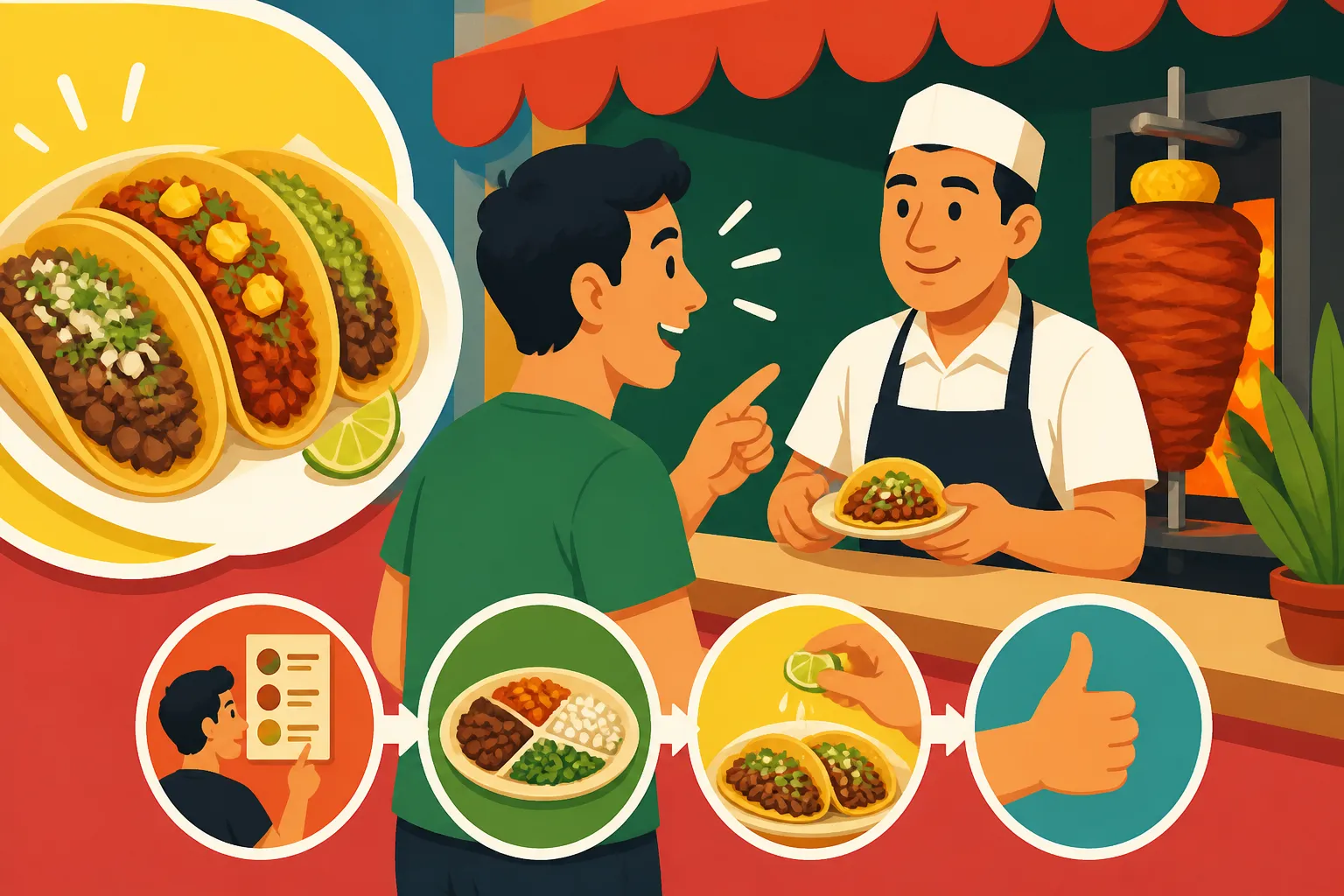
The most iconic option is Al Pastor. This is pork marinated in dried chilies and spices, cooked on a vertical rotisserie (the trompo) and topped with a slice of pineapple. If you see the trompo, you are in an Al Pastor house. Another staple is Suadero, which is a thin cut of beef from between the leg and the belly, confit-style in a large metal vat of oil. It is tender, fatty, and arguably the soul of Mexico City street food. For those who prefer something leaner, Bisteck (steak) or Pechuga (chicken) are safe bets, though they often lack the punch of the confit meats.
| Meat Type | Description | Texture/Flavor Profile |
|---|---|---|
| Al Pastor | Marinated pork with pineapple | Sweet, savory, and slightly smoky |
| Suadero | Confit beef brisket/belly | Tender, fatty, and very juicy |
| Longaniza | Spicy pork sausage | Crumbly, bold, and high-heat |
| Tripa | Beef tripe (intestine) | Can be ordered 'blandita' (soft) or 'dorada' (crispy) |
| Lengua | Beef tongue | Extremely tender, almost buttery |
| Cabeza | Beef head (various muscles) | Very soft, rich, and flavorful |
Beyond the meat, you need to decide on your "vessel." Most tacos come on two small corn tortillas (maíz). However, you can often order a Gringa (Al Pastor meat and cheese in a flour tortilla) or a Volcán (a tortilla toasted until it's crispy like a chip, topped with meat and melted cheese). If you are still learning the ropes, reading about Mexican Food Culture: Eating and Drinking as a Visitor can help you understand why these specific combinations exist.
The Ordering Process: A Step-by-Step Tutorial
Once the taquero makes eye contact, you need to be ready. You don’t order your entire meal at once if you are eating at a stall. You order two or three to start. Tacos are meant to be eaten hot; ordering ten at once means the last five will be cold and greasy by the time you get to them. Start small and "re-up" as needed. This is the ultimate insider move that separates the expats from the tourists.
The standard phrasing is "Me da tres de pastor, por favor" (Give me three pastor, please). The taquero will then ask, "¿Con todo?" (With everything?). In the taco world, "everything" almost always means chopped onions and cilantro. Unless you have a specific aversion to these, always say yes. The acidity of the onion and the freshness of the cilantro are designed to cut through the richness of the meat. You should also check out Ordering Food in Spanish in Mexico Without Stress for a deeper dive into the specific vocabulary used in these high-pressure interactions.
After you have your tacos, you head to the "barra de salsas." This is where the real magic—and the real danger—happens. You will typically see a green sauce and a red sauce. Do not assume the green is mild; in many taquerías, the green salsa is made with raw habanero or serrano peppers and is significantly hotter than the roasted red salsa. Always do a "test drop" on your plate before drenching your taco. Along with the salsas, you’ll find lime wedges, radishes, and sometimes pickled onions or grilled knob onions (cebollitas). Squeeze the lime generously; it’s a natural flavor enhancer and a digestive aid. If you're worried about your stomach's reaction to new flavors, refer to Is Street Food Safe to Eat in Mexico? for some peace of mind.
The Payment Dance: How the "Trust System" Works
Perhaps the most confusing part of the taquería experience for foreigners is the payment. In many traditional stalls, you eat first and pay later. There is an implicit "trust system" where the taquero or the cashier expects you to remember exactly what you ate. You might have started with two suadero, added a longaniza later, and drank one Sidral Mundet (apple soda). When you are finished, you approach the cashier or the taquero and say, "¿Cuánto le debo?" (How much do I owe you?) or simply "La cuenta, por favor."
You then list what you consumed: "Fueron tres de suadero, uno de lengua y un refresco." The cashier will do the mental math at lightning speed and give you the total. This can be intimidating if your Spanish numbers aren't sharp, so it’s worth reviewing Mexican Spanish: Slang and Expressions for Visitors before you head out. While some modern, larger taquerías in tourist zones might take cards, the vast majority of authentic spots are cash-only. Always carry small bills and coins; trying to pay for a 20-peso taco with a 500-peso note is a sure way to annoy the staff.
Tipping at a street stall is not strictly required, but it is highly appreciated, especially if you’ve become a "regular." Usually, there is a small jar or tin near the cutting board. Leaving 5 to 10 pesos is a kind gesture. In a sit-down taquería with waiter service, a 10% to 15% tip is the standard. For more details on the nuances of this, see Tipping in Mexico (Propina): When and How Much. Once you’ve paid, it’s polite to say "Gracias, provecho" to those still eating nearby as you leave. It’s a small cultural touch that demonstrates you aren’t just a visitor, but someone who respects the local rhythm.
Common Pitfalls and How to Avoid Them
One of the biggest mistakes newcomers make is assuming every taquería is the same. Some specialize in tacos de canasta (sweated tacos kept in a basket), which are pre-made and sold in the mornings. Others do tacos de guisado (stews served on tortillas), which are more common at lunch. If you show up to a night-time Al Pastor stand and ask for breakfast tacos, you’ll likely get a confused stare. Learning the timing of Mexican meals is essential. Tacos are a versatile food, but the type of taco changes with the hour of the day.
Another pitfall is the "salsa bravado." Many foreigners feel they need to prove their spice tolerance. Trust me, the taquero is not impressed when you turn bright red and start gasping for air. Use the salsa to enhance the meat, not to mask it. If you do overdo it, do not reach for water; the oils in the chili are not water-soluble. Instead, take a bite of a plain tortilla or a sip of a dairy-based drink if available. For a complete guide on navigating the etiquette of the table, How to Eat Tacos Like a Local in Mexico provides excellent insights into the "taco grip" and other physical techniques.
Lastly, don't be afraid to ask for the bill. In Mexico, it is considered rude for a waiter to bring the check before you ask for it, as it implies they are rushing you out. You could sit there for an hour after eating and they won’t bother you. To get moving, you must make the international "signing a check" gesture or catch their eye and say the magic words. For more on this, check out How to Ask for the Bill in a Mexican Restaurant. Also, keep in mind that most small shops will not have change for large bills, so managing your Cash vs Card in Mexico: What Visitors Should Know is a vital skill for any expat living in the country.
Disclaimer
This guide is intended for informational purposes only. While every effort has been made to provide up-to-date and accurate advice regarding cultural norms and practices in Mexico, local customs can vary significantly by region and individual establishment. Always exercise personal judgment and follow local health and safety guidelines when consuming street food.