Taxco, Tepoztlán, and Day-Trip Pueblos Mágicos
Many expats and tourists living in the sprawling urban maze of Mexico City eventually hit a wall where the noise, traffic, and concrete become overwhelming. The desperate need for a breath of fresh air and a change of scenery is a universal foreigner experience here, yet navigating regional travel can feel like an administrative nightmare if you do not know which terminal to use or how to avoid the "free" roads. This guide provides a comprehensive roadmap to the most iconic Pueblos Mágicos near the capital, Taxco and Tepoztlán, ensuring your escape is as seamless as a local’s weekend getaway.
Disclosure: This post may contain affiliate links. We may earn a commission at no extra cost to you if you make a purchase through these links. Read full disclosure.
The Magic of the Pueblo Mágico Designation
When I first arrived in Mexico, I thought "Pueblo Mágico" was just a clever marketing slogan dreamed up by the tourism board. It took a few trips to realize it is actually a rigorous federal program. To earn this title, a town must protect its historical architecture, maintain specific cultural traditions, and offer something truly unique to the Mexican identity. For those of us living in the city, these towns represent a portal into a Mexico that feels frozen in time, far removed from the skyscrapers of Paseo de la Reforma.
Preserving Cultural Heritage and Identity
The program was launched in 2001 to redirect some of the massive tourism traffic away from the beaches and toward the interior of the country. For a town to remain "Mágico," it has to follow strict rules—you won't see neon signs or modern glass facades in the center of Taxco or Tepoztlán. This preservation is what creates that "Disney-for-adults" feel, but with authentic soul. Understanding the effort that goes into this status helps you appreciate why the cobblestones are so well-kept and why the local festivals are so vibrant. It is about more than just aesthetics; it is about local pride.
Why They Make Perfect Day Trips
The beauty of these specific towns is their proximity to Mexico City. While places like San Cristóbal de las Casas are stunning, they require a flight. Taxco and Tepoztlán can be reached in under three hours, making them viable for a Saturday morning departure and a Sunday evening return—or even a very ambitious single-day loop. If you are still adjusting to the pace of life here, these trips are the perfect way to test your "travel legs" before heading into deeper, more remote territory. You get the benefit of a complete cultural shift without the exhaustion of a cross-country trek.
What to Expect Upon Arrival
Expect hills. Lots of them. Most Pueblos Mágicos in central Mexico are built into the rugged topography of the Trans-Mexican Volcanic Belt. Your calves will get a workout, and your breath might hitch a bit more due to the altitude. You should also expect a slower pace of communication. In the city, everything is "ahora," but in the pueblos, the rhythm of life follows the church bells and the market hours. Embracing this shift is part of the therapy. If you are worried about the transition, reading up on Common Cultural Surprises for First-Time Visitors to Mexico can help set your expectations for the subtle differences in service and social cues you will encounter.
Taxco: The Silver City of Guerrero
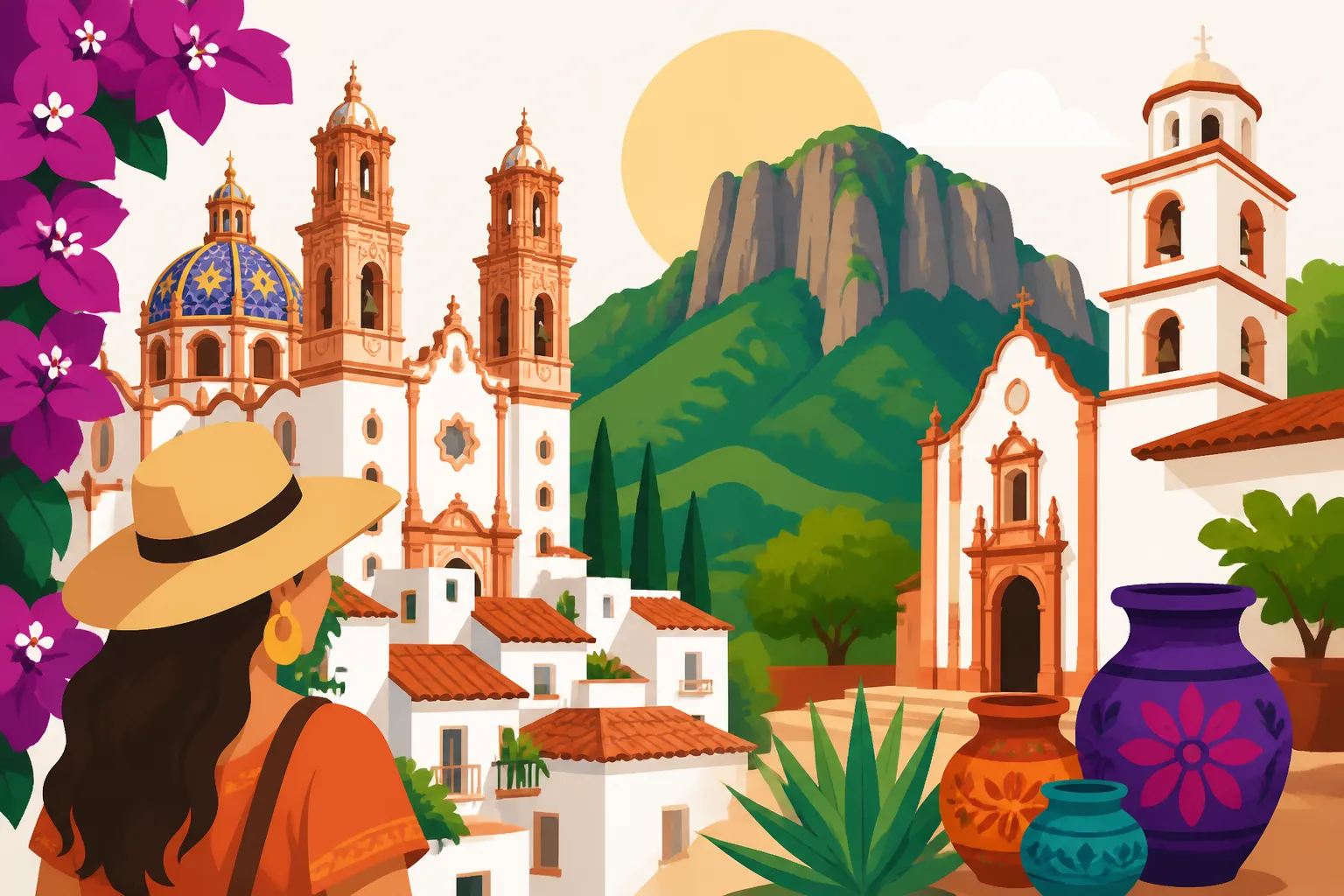
Taxco de Alarcón is perhaps the most visually stunning town in central Mexico. Perched on a steep hillside in the state of Guerrero, its white-washed walls and red-tiled roofs create a Mediterranean vibe that feels entirely distinct from the surrounding dry forests. Historically, Taxco was a mining powerhouse, and that legacy of wealth is visible in every ornate balcony and the towering spires of its main cathedral.
The Legacy of Silver Craftsmanship
You cannot talk about Taxco without talking about silver. In the 1930s, an American named William Spratling revitalized the local industry, turning Taxco into the silver capital of the world. Today, the town is packed with platerías (silver shops). While you can find cheap trinkets, the real joy is seeking out artisan workshops where the 925-sterling mark is a guarantee of quality. I always tell my friends that Buying Silver, Textiles, and Pottery in Mexico requires a bit of a discerning eye—always look for the hallmark stamp on the back of jewelry to ensure you are getting the real deal.
Santa Prisca and the Architecture of Wealth
The Templo de Santa Prisca dominates the skyline. Built in the 18th century by a silver magnate named José de la Borda, it is a masterpiece of Churrigueresque style. The detail is so dense it almost looks like the building is melting. Walking inside, the gold-leaf altarpieces are a stark reminder of the incredible wealth extracted from the mines below. The plaza in front of the church, the Zócalo, is the best place to sit with a coffee and watch the world go by. It is a vertical city, so prepare for endless stairs and narrow alleys where the famous white Volkswagen Beetle taxis zip around with terrifying precision.
The Teleférico and Panoramic Views
For the best perspective of Taxco’s layout, you must take the teleférico (cable car). It carries you up to the Hotel Monte Taxco, offering a bird’s-eye view of the white city clinging to the mountainside. From up here, you can see how the town is integrated into the geography, with houses built directly into the rock. It is a great spot for a sunset drink before heading back down into the labyrinth. If you find yourself falling in love with the view and deciding to stay the night, you can easily find charming boutique hotels on Booking.com that offer terraces overlooking the cathedral.
Tepoztlán: Mysticism and Mountain Peaks
If Taxco is about colonial grandeur, Tepoztlán is about ancient energy. Located in Morelos, just over the mountain ridge from Mexico City, this town is famous for its purported "magnetic energy" and its connection to the god Quetzalcoatl. It is a magnet for hikers, spiritual seekers, and anyone looking to indulge in some serious traditional food.
The Ascent to El Tepozteco
The primary draw for many is the hike up to the El Tepozteco pyramid. It sits nearly 400 meters above the town on a jagged cliff. The trail is steep, rocky, and can be quite crowded on weekends, but the view from the top—and the sight of a pre-Hispanic temple perched on the edge of the world—is worth the sweat. I strongly suggest doing this hike early in the morning to avoid the heat and the heaviest crowds. Also, be wary of the tejones (coatis) at the top; they look like cute raccoons but are expert bag-snatchers.
The Mercado and Pre-Hispanic Flavors
After the hike, you will be starving, and Tepoztlán has one of the best markets in the region. This is the place to try itacates—triangular, thick corn masa cakes stuffed with cream, cheese, or various stews. The food here is deeply rooted in indigenous traditions. You’ll find stalls selling everything from cecina (thinly sliced salted beef) to exotic mushroom stews. If you are adventurous, this is a great place to dive into the local cuisine, though I always recommend checking out Is Street Food Safe to Eat in Mexico? if it is your first time eating away from the sanitized restaurants of the city. The flavors here are bold, earthy, and unlike anything you'll find in a suburban Taco Bell.
Spiritual Centers and Temazcales
Tepoztlán is a hub for "New Age" tourism, but it is backed by genuine indigenous tradition. Many expats come here for a temazcal, a traditional Mexican steam bath led by a healer. It is a physical and spiritual cleansing ceremony that involves medicinal herbs and ancient chants. Even if you aren't into the spiritual side of things, the town is full of beautiful gardens and spas that offer a level of relaxation you just can't find in the city. The town’s vibes are decidedly "bohemian-chic," making it a favorite for artists and writers.
Essential Logistics for the Day-Tripper
Getting to these towns requires a bit of planning. Mexico City has four major bus terminals, and you need to make sure you head to the right one. For both Taxco and Tepoztlán, you will generally use the Terminal Central del Sur, also known as Tasqueña. It is located at the southern end of the Blue Metro Line (Line 2).
Navigating the Bus System
The bus system in Mexico is surprisingly high-quality. For Taxco, the "Costa Line" or "ADO" are your best bets. For Tepoztlán, look for the "Ometochtli" or "Pullman de Morelos" lines. You can often check schedules and book tickets in advance through platforms like Busbud to avoid the stress of standing in line at the terminal. If you are a fan of luxury travel, you’ll be pleased to find that many of these buses offer reclining seats, Wi-Fi, and movies. For a deeper dive into how this works, check out Long-Distance Buses in Mexico: ADO and Premium Lines.
Driving Yourself: Cuotas vs. Libres
If you have a car or are renting one, the most important advice I can give is: take the cuotas (toll roads). While the libres (free roads) are scenic, they are often poorly maintained, full of "topes" (speed bumps), and can be less secure. The toll road to Taxco and Tepoztlán is the Highway 95D. It is a well-paved, fast route that will save you hours of frustration. Just make sure you have plenty of cash for the toll booths, as many still do not accept credit cards or foreign tags. Understanding the nuances of Driving in Mexico: Toll Roads (Cuotas) vs Free Roads (Libres) is essential for a stress-free trip.
Guided Tours for the Stress-Averse
If the thought of navigating a foreign bus terminal or driving on Mexican highways makes you anxious, there is no shame in booking a guided tour. Companies like Viator offer day trips that bundle Taxco with other nearby sites like the Cacahuamilpa Caves. This takes the logistical weight off your shoulders, providing door-to-door transport and a bilingual guide who can explain the history of the silver mines or the significance of the pyramid. This is a particularly good option for those who are still working on their Spanish and don't want to risk getting lost.
Comparison of Taxco and Tepoztlán for Expats
| Feature | Taxco de Alarcón | Tepoztlán |
|---|---|---|
| State | Guerrero | Morelos |
| Primary Vibe | Colonial, European, Silver-focused | Indigenous, Spiritual, Rugged |
| Main Attraction | Santa Prisca Church & Silver Shopping | El Tepozteco Pyramid & Traditional Market |
| Travel Time (from CDMX) | 2.5 to 3 hours | 1.5 to 2 hours |
| Physical Effort | High (Steep streets, constant walking) | Very High (Steep mountain hike) |
| Best Food Item | Pozole Guerrerense | Itacates and Cecina |
| Ideal Traveler | History buffs, shoppers, photographers | Hikers, spiritual seekers, foodies |
Other Notable Day-Trip Pueblos Mágicos
While Taxco and Tepoztlán are the "Big Two," there are several other towns within striking distance of the capital that offer different flavors of Mexican life. Depending on your interests—whether it is pottery, colonial history, or forest landscapes—one of these might be your perfect match.
Malinalco: The Hidden Valley
Located in the State of Mexico, Malinalco is often overlooked but is arguably the most atmospheric of the nearby pueblos. It features a monolithic temple—the Cuauhcalli—carved directly into the side of the mountain, which was once a site for Aztec eagle and jaguar warrior initiations. The town itself is lush and green, with a beautiful former convent featuring 16th-century murals painted by indigenous artists. It is quieter than Tepoztlán and feels like a true hidden gem.
Metepec: The Tree of Life
If you love Mexican folk art, Metepec is a must-visit. Just outside of Toluca, this town is the birthplace of the Árbol de la Vida (Tree of Life) clay sculptures. The streets are lined with workshops where you can watch artisans mold intricate biblical and historical scenes out of clay. It is a bit more suburbanized than the other towns, but the central hill with its colorful church remains quintessentially "mágico." This is a great place to visit if you are looking to decorate your new Mexican home with authentic art.
Tips for Success on the Road
Regardless of which town you choose, a few veteran tips will make your life easier. First, always carry small bills and coins. Tipping in Mexico (Propina): When and How Much is a constant consideration, from the person watching your car to the bathroom attendant at the bus station. Second, download your maps for offline use. Mountainous terrain means cell service is spotty at best. Finally, keep an eye on your belongings in crowded markets. While these towns are generally safe for tourists, Staying Safe in Mexico: Practical Tips for Travelers always involves a baseline level of situational awareness to avoid petty theft.
The Pueblos Mágicos near Mexico City are more than just tourist stops; they are the heart and soul of the country. Whether you are bargaining for silver in Taxco or sweating your way up a mountain in Tepoztlán, you are engaging with a side of Mexico that will make your expat experience much richer. Don't let the logistics intimidate you—grab your sun hat, book your bus via Busbud, and get out there to explore.
Disclaimer
The information provided in this guide is for informational purposes only. Travel conditions, safety situations, and business operations in Mexico can change rapidly. Always check current local advisories and official government resources before planning your trip. The author is not responsible for any incidents or changes in service that may occur during your travels.