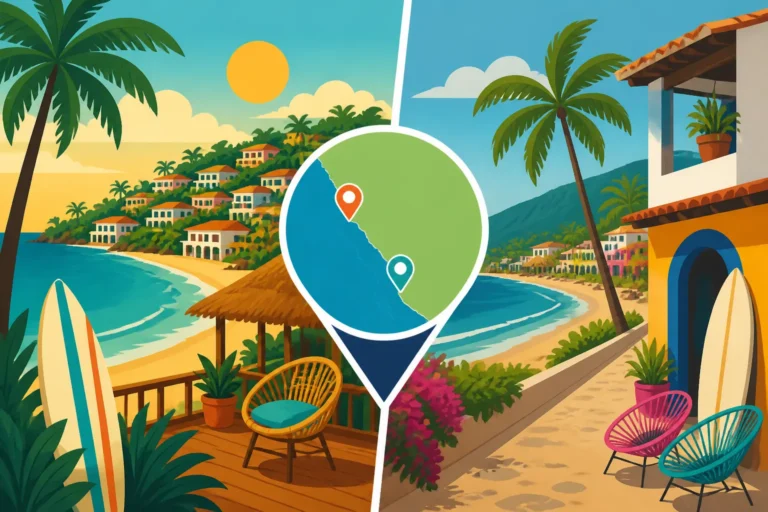
Puerto Vallarta and the Riviera Nayarit
Most travelers and aspiring expats treat Puerto Vallarta and the Riviera Nayarit as the same destination, but landing at the airport without understanding the state lines, time zone shifts, and radically different lifestyle vibes can lead to major logistical headaches. This guide clarifies the nuances of this Pacific coastal stretch, helping you decide where to plant roots or spend your vacation.
Disclosure: This post may contain affiliate links. We may earn a commission at no extra cost to you if you make a purchase through these links. Read full disclosure.
The Geographical and Cultural Heart of the Banderas Bay
When you look at a map, the Banderas Bay appears as a giant, sparkling horseshoe. However, what the maps often fail to emphasize is that this horseshoe is sliced right down the middle by the Ameca River. This river isn't just a body of water; it is the border between the states of Jalisco and Nayarit. For an expat or a long-term traveler, this distinction is massive. Puerto Vallarta sits in Jalisco, governed by the laws and cultural norms of that state, while everything north of the bridge—Nuevo Vallarta, Bucerías, Sayulita, and beyond—falls under the jurisdiction of Nayarit.
Understanding the Divide Between Puerto Vallarta and Nayarit
One of the first frustrations foreigners encounter is the "time zone trap." Historically, the two states operated on different hours, leading to missed dinner reservations and confused airport pickups. While Nayarit officially moved to Central Standard Time to align with Jalisco in recent years, the cultural divide remains. In Puerto Vallarta, you are in a bustling, established city with deep colonial roots. The cobblestone streets are charming but can be a nightmare for your car’s suspension. In contrast, much of the Riviera Nayarit, particularly Nuevo Vallarta, was master-planned. The roads are wider, the sidewalks are manicured, and the vibe is significantly more suburban and resort-heavy.
Navigating this transition requires patience. If you are living in Bucerías but working or socializing in Puerto Vallarta, you will spend a significant amount of time crossing the Ameca bridge. During peak hours, this can become a bottleneck that tests the patience of even the most zen-like expat. It is vital to consider your daily rhythm before choosing a side of the river. Are you looking for the gritty, authentic energy of a Mexican city, or do you prefer the gated security and polished finish of a planned community?
The Expat Pull: Why People Choose This Coast
The draw of this region isn't just the sunset, though those are admittedly world-class. It is the infrastructure. Unlike some remote beach towns in Mexico where the power might flicker every time a heavy rain hits, the Banderas Bay area offers a level of reliability that makes remote work and retirement feasible. This is why Healthcare in Puerto Vallarta: Medical Services in a Resort City is such a common topic of conversation among the community. The presence of high-end hospitals means you aren't sacrificing safety for sunshine.
Furthermore, the social integration here is smoother than in many other parts of Mexico. There is a massive, established community of foreigners who have already paved the way. Whether you are looking for a bridge club, a volunteer organization to help local animal shelters, or a tech-nomad meetup, you will find it here. The local population is also incredibly accustomed to foreigners, creating a bilingual environment where you can slowly improve your Spanish without the high-stakes pressure of a non-tourist city.
Navigating Puerto Vallarta’s Iconic Neighborhoods
Puerto Vallarta is not a monolith; it is a collection of "colonias," each with a distinct soul. Choosing the wrong neighborhood can mean the difference between a peaceful retirement and being kept awake until 4:00 AM by the thumping bass of a nightclub. As an expat, you quickly learn that proximity to the beach is only one factor; elevation, noise levels, and the "hill factor" play equally important roles in your daily comfort.
The Romantic Zone (Zona Romántica)
Also known as Old Town or the South Side, the Romantic Zone is the beating heart of Puerto Vallarta’s social scene. If you enjoy being within walking distance of hundreds of restaurants, art galleries, and the famous Los Muertos Beach, this is where you want to be. However, it comes with a price—both in terms of rent and peace of mind. The area has seen a massive construction boom over the last decade, and the sound of jackhammers is as much a part of the soundtrack as the ocean waves.
Living here means embracing the chaos. You will find a high concentration of boutique hotels and condo rentals on Booking.com, but finding a long-term, quiet apartment requires boots on the ground and a lot of networking. For many, the tradeoff is worth it. You don't need a car in the Romantic Zone; everything is accessible by foot or a cheap Uber ride. It is the most walkable part of the city, but it is also the most "touristy." You’ll need to balance your desire for convenience with the reality of higher prices for everything from a latte to a bowl of pozole.
El Centro and the Malecón
Moving north from the Romantic Zone, you hit El Centro. This is the historic center of the city, dominated by the iconic Church of Our Lady of Guadalupe. The Malecón, a mile-long boardwalk, serves as the city’s front porch. While tourists flock here for the statues and the nightlife, many expats choose the hillside neighborhoods just above El Centro, such as Gringo Gulch.
The views from these hills are breathtaking, often offering a 180-degree vista of the bay. But living here is a workout. The streets are steep, often consisting of literal stairs instead of roads. If you are moving here later in life, the "hill factor" is a serious consideration. You might have a stunning view, but if you can’t walk to the corner store to get a jug of water without huffing and puffing, the charm might wear off quickly. It is essential to research Healthcare Costs in Mexico: Doctor Visits, Hospital Stays, and Surgery Expenses if you are planning a high-altitude lifestyle, as the physical demands of these neighborhoods are real.
Marina Vallarta and the Northern Hotel Zone
If the cobblestones and hills of the center feel too daunting, Marina Vallarta offers a completely different experience. Located near the airport, the Marina is built around a world-class harbor filled with yachts and surrounded by a circular boardwalk. It feels much more like a Mediterranean village than a traditional Mexican town. The terrain is flat, the streets are paved, and there is a high-end grocery store and a private school nearby.
The Northern Hotel Zone, which sits between El Centro and the Marina, is where you will find the high-rise condos. If you want a modern lifestyle with an elevator, a gym, and a resort-style pool, this is the area. It lacks the "old world" charm of the south, but it offers a level of convenience that many North Americans find comforting. This area is also a hub for medical tourism, and you can easily find information on Dental Care in Mexico: Quality of Service and Costs for Expats in the various clinics that line the main avenue.
Exploring the Hidden Gems of the Riviera Nayarit
As soon as you cross the river into the state of Nayarit, the energy shifts. The "Riviera Nayarit" is a marketing term for a massive stretch of coastline, but for most residents, it refers to the string of towns starting at Nuevo Vallarta and heading north toward the surfing villages of Sayulita and San Pancho.
Nuevo Vallarta and Bucerías
Nuevo Vallarta is often described as the "suburbs" of the bay. It is flat, gated, and filled with all-inclusive resorts and luxury villas. For families moving to Mexico, it is a top choice because of the safety and the proximity to international schools. The beaches here are much wider and the sand is finer than in Puerto Vallarta. If your idea of Mexico involves golf courses and bike paths, Nuevo Vallarta is your haven.
Just north of the resort zone is Bucerías, which has become a favorite for Canadian "snowbirds" and retirees. It manages to strike a balance between the infrastructure of a resort town and the soul of a Mexican village. The "Golden Zone" of Bucerías is a walkable area filled with cafes and boutiques, while the area across the highway offers a more local, affordable lifestyle. Bucerías is also a fantastic jumping-off point for regional travel; many expats use Busbud to book regional coaches that head further north into Nayarit or inland to Guadalajara.
Sayulita and San Pancho: The Bohemian Heart
About 45 minutes north of the airport lie Sayulita and San Francisco (affectionately known as San Pancho). Sayulita is a world-famous "Pueblo Mágico" known for its surfing, vibrant street art, and party atmosphere. It is crowded, loud, and incredibly fun. However, the rapid growth has put a strain on the town’s infrastructure. If you are looking for a quiet place to write your memoirs, Sayulita might be too much "energy" for you.
San Pancho, its neighbor to the north, is often described as "Sayulita twenty years ago." It is quieter, more community-focused, and has a strong emphasis on the arts and sustainability. The beach is beautiful but the waves are much stronger here, making it less ideal for casual swimming but perfect for sunset walks. Both towns are easily accessible for day trips, and many visitors use Viator to book guided surf lessons or jungle canopy tours in the surrounding hills.
Punta Mita: Luxury and Seclusion
At the northern tip of the Banderas Bay lies Punta Mita. This is the "billionaire’s playground" of the region, home to the Four Seasons and St. Regis. There are two sides to Punta Mita: the ultra-exclusive gated peninsula and the "Punta de Mita" village (Anclote) just outside the gates. The village offers beautiful beachfront dining and a more accessible way to enjoy the turquoise waters and white sand that this point is famous for. If you are looking for absolute privacy and have the budget to match, the private estates in Punta Mita are unparalleled in Mexico.
Practical Logistics for Living and Traveling on the Coast
Living in a tropical paradise sounds dreamy until you have to figure out how to pay your electric bill or deal with a broken water pump. The logistics of the Banderas Bay are manageable, but they require a "Mexican mindset"—which usually involves a bit more patience and a lot more WhatsApp messages than you’re used to.
Transportation: Getting Around Like a Pro
The public transportation system here is surprisingly robust but can be intimidating for newcomers. In Puerto Vallarta, the city buses (the blue ones) are cheap and frequent. If you want to head to the southern beaches like Mismaloya, you take the orange buses from the Romantic Zone. If you are heading into Nayarit, you’ll look for the ATM (Autotransportes Medina) buses or the Compostela line.
For intercity travel, the "Central de Autobuses" (main bus station) near the airport is your hub. Using services like Busbud allows you to see schedules and prices for the luxury liners like Primera Plus or ETN, which are a far cry from the school-bus style local transport. These luxury buses feature reclining seats, individual screens, and snacks—making the five-hour trip to Guadalajara feel like a first-class flight. Within the city, Uber and InDrive are widely available and generally safer and more transparent in pricing than traditional street taxis, though you should always verify the Safety in Mexico: What Expats Need to Know About Staying Safe guidelines for your specific neighborhood.
Budgeting and the Cost of Coastal Life
One of the biggest myths about moving to Puerto Vallarta is that it is "dirt cheap." While it is certainly more affordable than San Francisco or Vancouver, it is one of the most expensive regions in Mexico. Rents have skyrocketed due to the popularity of digital nomadism. You can still find a deal, but you have to look further away from the water.
A realistic monthly budget for a couple living a comfortable, "mid-range" expat life—including a nice two-bedroom apartment, dining out a few times a week, and keeping the AC on during the humid months—ranges from $2,500 to $4,000 USD. You can certainly do it for less if you live like a local, eat at "cocinas económicas," and use the bus. For a deep dive into these numbers, check out Cost of Living in Puerto Vallarta: Budgeting for Beach Life.
| Expense Category | Puerto Vallarta (Centro) | Nuevo Vallarta / Bucerías | Sayulita / San Pancho |
|---|---|---|---|
| 1-BR Apartment Rent | $1,200 – $2,000 USD | $1,000 – $1,800 USD | $1,100 – $1,900 USD |
| Dinner for Two (Mid-range) | $50 – $80 USD | $40 – $70 USD | $30 – $60 USD |
| Monthly Utilities (w/ AC) | $150 – $250 USD | $150 – $250 USD | $100 – $200 USD |
| Transportation Vibe | Walkable / Uber | Car Recommended | Walkable / Golf Cart |
Safety and Healthcare Realities
Safety is the number one question asked by prospective expats. The Banderas Bay region is generally considered very safe for foreigners, provided you exercise common sense. Most crime is "crimes of opportunity," such as leaving a phone on a beach towel or an unlocked bicycle. The violence often reported in international news regarding Mexico rarely impacts the tourist or expat zones of Vallarta and Nayarit, as these areas are heavily protected for their economic importance.
Healthcare is another massive "pro" for this region. You have access to state-of-the-art facilities like Joya Hospital or San Javier. Many of the doctors were trained in the US or Europe and speak perfect English. If you are a resident, you might consider Public Healthcare in Mexico: IMSS and IMSS Bienestar Explained for Expats, but most foreigners choose to maintain private insurance for faster service and more comfortable amenities. Always carry a digital copy of your insurance card and know the location of the nearest emergency room to your specific "colonia."
Deep Comparative Analysis: Which Vibe Fits Your Lifestyle?
Choosing between the Jalisco side and the Nayarit side of the bay is ultimately about how you want your days to feel. Puerto Vallarta is a city that happens to be on the beach. The Riviera Nayarit is a collection of beach towns that happen to have some city-like amenities nearby.
Activity and Infrastructure Comparison
In Puerto Vallarta, your activities are urban-centric. You have high-end shopping malls (like La Isla or Galerías), professional theater productions, and a sophisticated culinary scene that rivals any major city. The infrastructure is old and can be quirky—think overhead power lines and narrow sidewalks—but it has character. If you want a life where you go to an art opening on Tuesday and a drag show on Thursday, the city is for you.
In the Riviera Nayarit, life revolves around the water and the outdoors. In Nuevo Vallarta, the infrastructure is modern and "invisible." You have wide bike paths, manicured parks, and miles of flat beach perfect for running. In Sayulita and Bucerías, the focus is on surfing, kiteboarding, and community markets. The "infrastructure" here is often a work in progress, but the connection to nature is much more direct. You aren't fighting traffic as much as you are fighting the humidity and the sand.
Seasonal Fluctuations and Weather Patterns
No one talks enough about the "Summer of Sweat." From July through October, the Banderas Bay turns into a steam room. The humidity can reach 90%, and the afternoon rains are torrential. Many expats "flee" during these months, heading back to their home countries or inland to the cooler climates of Lake Chapala or San Miguel de Allende.
If you stay, you get to see the jungle turn a vibrant, electric green, and you’ll have the beaches to yourself. However, you also have to deal with the bugs and the risk of hurricanes. It is a time for slow living and deep cleaning (to prevent mold). Conversely, the winter months (November to April) are perfection—mid-70s, zero humidity, and whales breaching in the bay. This is when the population triples and you need to book your tours on Viator weeks in advance. Understanding the seasonal rhythm is key to long-term success; if you hate the heat, you must have a plan for the "Off-Season."
Before you make the leap, it is also wise to understand the Healthcare in Mérida: Quality of Medical Care in Yucatán or other regions for comparison, as the humidity on the coast can exacerbate certain respiratory or inflammatory conditions. Every region of Mexico offers a different "brand" of paradise; Puerto Vallarta and the Riviera Nayarit just happen to offer a particularly accessible and well-supported one for the modern expat.
Disclaimer
This guide is for informational purposes only. Local laws, time zones, visa requirements, and safety conditions in Mexico can change rapidly. Always consult with official government resources, professional legal counsel, or certified immigration experts before making financial or residency decisions. The experiences shared here are based on the perspective of a veteran expat and may not reflect every individual's reality.