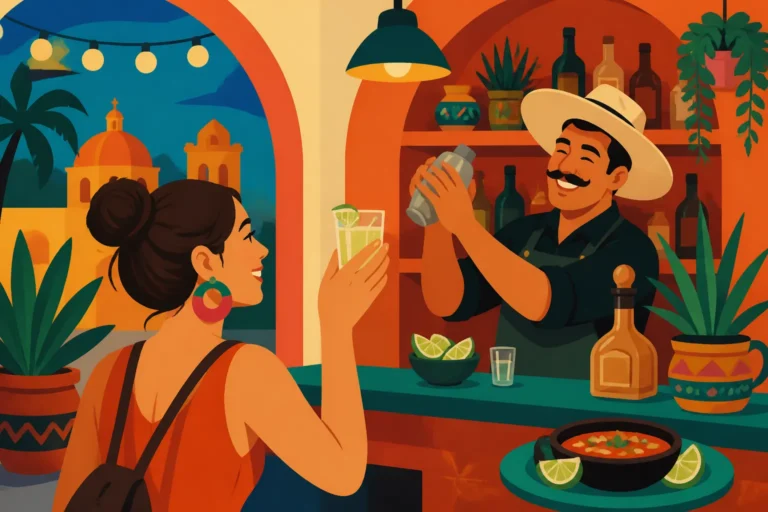
Mexican Spanish: Slang and Expressions for Visitors
You've just arrived in Mexico, perhaps after diligently studying your textbook Spanish, only to find yourself utterly bewildered by half the conversations around you. It’s a common rite of passage for every expat and long-term visitor here – the moment you realize that "real" Mexican Spanish is a vibrant, ever-evolving beast filled with slang and expressions that no textbook could ever prepare you for. This guide is here to untangle that beautiful, perplexing linguistic web, helping you move beyond the basics and start genuinely connecting with the local culture, one modismo at a time.
Disclosure: This post may contain affiliate links. We may earn a commission at no extra cost to you if you make a purchase through these links. Read full disclosure.
Why Mexican Slang is More Than Just "Bad" Spanish
When you first encounter Mexican slang, it can feel like a secret language, designed to keep outsiders… well, out. But the truth is, these expressions are the very heart of everyday communication, brimming with cultural context, humor, and a unique rhythm. Dismissing them as merely "bad" or informal Spanish means missing out on a significant part of what makes Mexico, well, Mexico. Understanding these phrases isn't just about vocabulary; it's about unlocking a deeper appreciation for the country's social fabric.
The Expressive Power of Local Idioms
Think about it: every language has its quirks, its shortcuts, its ways of saying a lot with a little. In Mexico, these aren't just polite colloquialisms; they are tools for expressing nuanced emotions, playful teasing, or even mild frustration without sounding overly aggressive. For instance, a simple "¡Órale!" can convey agreement, encouragement, surprise, or even a casual "hurry up," all depending on the tone. It’s a verbal shorthand that makes conversations flow and adds layers of personality that standard Spanish simply can't replicate. Embracing these idioms allows you to express yourself more authentically and understand the undertones of local interactions.
Bridging the Cultural Divide
Language is intrinsically linked to culture, and Mexican Spanish, with its rich tapestry of slang, is no exception. These terms often reflect historical events, indigenous influences, or popular culture, providing a window into the Mexican psyche. When you use or understand a piece of slang correctly, you're not just speaking the language; you're participating in the culture. Locals often appreciate the effort, and it can be a fantastic icebreaker. It shows you’re making an effort to move beyond surface-level interactions and truly immerse yourself, fostering connections that might otherwise remain out of reach. It can even help you navigate social situations more smoothly, as you'll better grasp the implied meanings and unspoken rules, which is crucial for building rapport and making friends in Mexico.
Essential Everyday Mexican Slang and How to Use It
Alright, let’s get down to business. Here are some of the most common and useful slang terms you'll hear and, with practice, can start incorporating into your own vocabulary. Remember, context and tone are everything!
General Terms for People and Things
You’ll hear these thrown around constantly, and mastering them is a huge step in sounding less like a tourist.
- Güey (wey): This is perhaps the most ubiquitous piece of Mexican slang. Roughly equivalent to "dude," "mate," or "bro" in English, it's used for both friends and strangers in informal contexts. You'll hear it constantly in conversations between younger people or close friends.
- Example: "¡Qué onda, güey! ¿Cómo estás?" (What's up, dude! How are you?)
- Usage Tip: While incredibly common, it can be slightly less appropriate in very formal settings or when addressing elders you don't know well. However, in most casual interactions, especially with people your age or younger, it's perfectly fine. It's so ingrained that it often loses its original "stupid" connotation and simply becomes a filler word or an address.
- Chido/Padre: These two mean "cool" or "great." Chido is probably more common in central Mexico, while padre also gets a lot of mileage. They're interchangeable in most casual contexts.
- Example: "Esa película estuvo muy chida/padre." (That movie was really cool.)
- Usage Tip: You can use these to describe almost anything positive: a person, a place, an event, or an object. "¡Qué chido!" or "¡Qué padre!" are great exclamations of approval. They're safe to use in almost any informal or semi-formal situation.
- Neta: This word means "the truth" or "seriously?" It can be used as a question or an affirmation.
- Example 1: "¿Es neta que te vas a mudar?" (Are you serious that you're moving?)
- Example 2: "La neta, no me gustó mucho." (To be honest, I didn't like it much.)
- Usage Tip: It’s a fantastic way to express disbelief or to emphasize sincerity. Using it casually makes you sound very much like a local. Just be aware it’s informal.
Exclamations and Reactions
These are crucial for adding flair to your conversations and reacting naturally to situations.
- Órale: Oh, Órale. This one is a chameleon! It can mean "Alright," "Okay," "Come on," "Hurry up," "Wow," "Yes," or "I agree." Its meaning depends entirely on context and tone.
- Example 1 (agreement): "Vamos a comer." "¡Órale!" (Let's eat. "Alright!")
- Example 2 (surprise): "Me gané la lotería." "¡Órale!" (I won the lottery. "Wow!")
- Example 3 (encouragement): "¡Órale, dale!" (Come on, give it your all!)
- Usage Tip: Listen for how locals use it, and you'll quickly pick up the nuances. It’s incredibly versatile and a staple of Mexican speech. Don't be afraid to try it out!
- No manches / No inventes: Both roughly translate to "No way!" or "You're kidding!" They are expressions of disbelief or surprise, usually mild. No manches is slightly more common and a softened version of a more vulgar phrase.
- Example: "Perdí mi cartera." "¡No manches!" (I lost my wallet. "No way!")
- Usage Tip: These are perfect for reacting to surprising news without being overly dramatic. They are informal but generally acceptable in most casual settings.
- Qué onda: This is a very common informal greeting, meaning "What's up?" or "What's happening?"
- Example: "¡Qué onda, Ana! ¿Cómo andas?" (What's up, Ana! How are you doing?)
- Usage Tip: Use this with friends, acquaintances, or people you're meeting in a very casual setting. It's a friendly and approachable way to start a conversation, much less formal than "Hola, ¿cómo estás?". For more on greetings, check out our guide on Survival Spanish for Travelers in Mexico: Key Phrases.
Slang for Socializing and Getting Around
Beyond basic conversational fillers, some slang terms are incredibly useful when you're out and about, whether you're grabbing a bite or simply navigating the city.
Dining and Ordering
Mexican food is a language in itself, and some slang can help you sound more natural when indulging in it.
- Chingón: This is a strong word, often meaning "awesome," "badass," or "masterful." It can also describe something difficult but impressive.
- Example: "Estos tacos están chingones." (These tacos are amazing/the best!)
- Usage Tip: Use with caution. While common and often positive, chingón comes from chingar, which has many vulgar connotations. It's generally safe when describing food, music, or a feat, but avoid it in formal settings or if you're unsure.
- Aguas: Literally "waters," this means "watch out!" or "be careful!" You'll hear it shouted in crowded markets or busy streets.
- Example: "¡Aguas con el coche!" (Watch out for the car!)
- Usage Tip: It’s a short, sharp warning. If someone yells it, pay attention! You can use it too if you see a potential danger. This is part of the essential local vocabulary you'll encounter, especially when you're exploring Mexican Markets and Food Halls for Visitors.
- Un Volado: This refers to flipping a coin to make a decision, a common practice for quick, informal choices.
- Example: "No sé qué pedir, ¡vamos a echarnos un volado!" (I don't know what to order, let's flip a coin!)
- Usage Tip: It’s a fun, casual phrase for when you’re indecisive.
Navigating Public Transport and Shopping
Getting around and shopping involves a lot of interaction, and a few slang words can really smooth things over.
- Cochino/a: While it literally means "pig," it's often used to describe something dirty or messy, rather than a person.
- Example: "Mi coche está muy cochino, necesito lavarlo." (My car is very dirty, I need to wash it.)
- Usage Tip: Useful for describing things like a messy room or a dirty dish. It’s informal and not offensive when used in this way.
- Camión: This typically refers to a public bus, not a large truck as it might in other Spanish-speaking countries.
- Example: "Toma el camión 20 para llegar al centro." (Take bus 20 to get to the center.)
- Usage Tip: Essential for understanding directions related to public transportation. If you’re figuring out Getting Around Mexico City: Metro, Metrobús, and Apps, knowing this term is key. Many tourists use services like Busbud to pre-book long-distance buses, but once you're in a city, the camión is your local workhorse.
- Barato/Caro: "Cheap" and "expensive," these are standard Spanish, but you'll hear them constantly in markets. Learning how to Bargaining at Mexican Markets: Etiquette and Tips can also help you use these effectively.
- Example: "Ese souvenir está muy caro." (That souvenir is very expensive.)
- Usage Tip: Simple but effective for talking about prices.
Here's a quick comparison of some formal Spanish phrases versus their slang equivalents you might hear in Mexico:
| Formal/Textbook Spanish | Mexican Slang Equivalent | English Meaning | Context/Notes |
|---|---|---|---|
| ¿Cómo estás? | ¿Qué onda? / ¿Qué tal? | What's up? / How's it going? | Casual greetings with friends. |
| ¡Qué bien! / ¡Excelente! | ¡Qué chido! / ¡Qué padre! | Cool! / Awesome! | Expressing enthusiasm or approval. |
| La verdad | La neta | Honestly / The truth is | Emphasizing sincerity, informal. |
| Ten cuidado | ¡Aguas! | Watch out! / Be careful! | Urgent, informal warning. |
| No lo puedo creer | ¡No manches! / ¡No inventes! | No way! / You're kidding! | Expressing disbelief or surprise. |
| Persona | Güey (among friends) | Dude / Mate | Very informal, often used as a filler. |
| El autobús | El camión | The (city) bus | Common in Mexico for public transit. |
| Dinero | Lana | Money / Cash | Informal, widely used. |
| Vamos a un sorteo | Vamos a echarnos un volado | Let's flip a coin | Deciding something informally. |
More Colorful Mexican Expressions and Phrases
Beyond single words, Mexican Spanish is full of vivid phrases that paint a picture. These are often harder to grasp at first but add so much character.
Expressing States of Being or Feelings
These phrases can help you describe how you or others are feeling, or the state of a situation.
- Andar valiendo gorro/madre: This means something is going badly, or someone is being a nuisance. "Estar valiendo gorro" is a milder version, while "valiendo madre" is more vulgar and intense, meaning "going to hell" or "not caring at all."
- Example (milder): "Mi internet anda valiendo gorro hoy." (My internet is being a pain today.)
- Example (stronger): "Todo el plan salió valiendo madre." (The whole plan went to hell.)
- Usage Tip: Be very careful with valiendo madre. It’s strong. Valiendo gorro is safer for minor annoyances.
- Estar crudo/a: This is how Mexicans say "to be hungover."
- Example: “Me fui de fiesta anoche, estoy muy crudo.” (I went out partying last night, I’m very hungover.)
- Usage Tip: A very common phrase if you're enjoying Mexico's lively nightlife, perhaps after a few too many tequilas or mezcals. For more on local drinks, check out Tequila, Mezcal, and Mexican Drinking Culture.
- Tener hueva: This literally means "to have laziness" but translates to "to be lazy" or "to not feel like doing something."
- Example: "Tengo hueva de cocinar, pidamos algo." (I'm too lazy to cook, let's order something.)
- Usage Tip: A very common and informal way to express a lack of motivation. Everyone understands tener hueva.
- Caer gordo/bien: To "fall fat" or "fall good" means to find someone annoying or to like someone.
- Example: "Ese tipo me cae gordo." (I find that guy annoying / That guy rubs me the wrong way.)
- Usage Tip: A very expressive way to describe your immediate impression of someone. It's not usually offensive when saying someone "cae gordo" as it expresses your personal feeling, not a direct insult to the person.
Playful Teasing and Common Responses
A lot of Mexican slang is used for playful banter, which is a big part of the culture.
- Chismoso/a: A "gossip" or someone who likes to gossip.
- Example: "No seas chismoso, ¿eh?" (Don't be a gossip, alright?)
- Usage Tip: Often used playfully among friends, but can be a genuine insult if used in anger.
- Echar la mano: To "throw a hand" means to lend a hand or help someone out.
- Example: "¿Me echas la mano con esto, por favor?" (Can you give me a hand with this, please?)
- Usage Tip: A polite and common way to ask for help in an informal setting.
- Ponte las pilas: "Put on your batteries" – this means to "get your act together" or "energize yourself."
- Example: "¡Ponte las pilas, que ya vamos tarde!" (Get a move on, we're already late!)
- Usage Tip: A great, encouraging phrase to use when someone needs a push or to be more alert.
Avoiding Pitfalls: When Not to Use Slang
While learning slang is exciting, it’s also crucial to understand its limitations. Not every situation calls for casual language, and misusing a term can lead to awkwardness or even offense. As an expat, I've learned this the hard way more times than I care to admit!
Formal vs. Informal Settings
This is the golden rule. Slang is almost exclusively for informal contexts. Imagine using "dude" or "bro" in a business meeting with clients you’ve just met, or when speaking to a doctor. It would be jarring, right? The same applies here. When you’re dealing with government officials at the INM office, engaging in formal business discussions, or speaking to anyone in a position of authority (like a police officer), stick to proper, polite Spanish. They might use slang among themselves, but as a foreigner, it’s best to err on the side of formality. This also applies when navigating official processes such as applying for a Mexico Temporary Resident Visa: Comprehensive Guide for Expats (2026 Update) or dealing with Taxes in Mexico for Expats: A Complete Guide to Income Tax and More.
The Peril of Offensive or Misunderstood Terms
Some slang terms, especially those derived from words like chingar or madre, carry strong connotations. While they can be used playfully among close friends or to express strong emotions, using them incorrectly or with the wrong person can be deeply offensive. For instance, pendejo (idiot/asshole) is a common insult that you might hear in arguments, but it’s certainly not something you want to use yourself casually. Unless you have a very solid grasp of the nuances and a strong relationship with the person, it's safer to avoid highly vulgar or potentially offensive terms. When in doubt, don't use it. Listen to native speakers carefully and observe their reactions before attempting to deploy such words yourself.
When in Doubt, Ask!
The best way to learn the appropriate use of slang is to be observant and, when comfortable, to ask. If a local friend uses a phrase you don't understand or are unsure about, ask them what it means and when it's appropriate to use. Most Mexicans are delighted when foreigners show an interest in their language and culture beyond the basics. They'll appreciate your curiosity and can guide you through the tricky waters of proper usage. They might even teach you some regional slang, as expressions can vary quite a bit from, say, Mexico City to Oaxaca or the Yucatán. Consider looking into Learning Spanish in Mexico: Top Tips and Resources for Expats to accelerate your learning.
Tips for Embracing Mexican Spanish Slang
Now that you have a taste of what Mexican slang has to offer, how do you actually go about incorporating it into your daily life without sounding like you're trying too hard, or worse, making a fool of yourself? It’s a delicate balance, but entirely achievable!
Observe and Listen Intently
This is arguably the most important tip. Before you try to use any new slang, pay close attention to how native speakers use it. Listen for the context: who are they talking to? What’s the situation? What’s their tone of voice? You'll notice that the same word, like güey, can be used differently depending on the region, the speaker's age, and their relationship with the listener. Listen to local music, watch Mexican movies or TV shows (with subtitles if needed), and just soak in conversations around you. Platforms like Booking.com, Viator, and Busbud can help you arrange travel and activities that put you in real-world scenarios where you can hear these expressions naturally. For instance, a guided tour booked through Viator might give you ample opportunity to hear guides and locals interacting.
Start Small and Simple
Don't try to become a slang expert overnight. Begin with the easier, more common, and less controversial terms. "¡Qué chido!", "¡Órale!", "No manches," and "güey" (used carefully) are good starting points. Try to swap them into conversations where you would naturally use their English equivalents. The more you hear them, the more natural they'll feel on your tongue. It's like building any habit; consistent small steps lead to significant progress. When ordering food or going Grocery Shopping in Mexico: Supermarkets vs Local Markets, try simple phrases like "¡Qué rico!" (How delicious!) if something tastes good.
Don't Be Afraid to Make Mistakes
Every language learner makes mistakes, especially when it comes to slang. It's part of the process! Mexicans are generally very understanding and appreciate the effort you're making to speak their language. If you use a term incorrectly or in an inappropriate context, they'll likely smile, gently correct you, or simply ignore it. Don't let the fear of sounding silly prevent you from trying. The more you practice, the more confident and natural you’ll become. Remember, progress over perfection. Even making an effort with phrases from Mexican Spanish: Slang and Expressions for Visitors can open doors.
Seek Out Informal Practice Opportunities
The best way to get comfortable with slang is to use it in casual, low-pressure environments. Hang out with Mexican friends, join local expat meetups, or frequent places where informal conversations happen naturally, like local cafes or markets. Strike up conversations with vendors or taxi drivers (but remember to keep it respectful and not overtly casual with initial interactions). The more you engage in genuine, everyday interactions, the faster you’ll assimilate these expressions and understand their nuances. Remember that the journey of Learning Spanish in Mexico: Top Tips and Resources for Expats is continuous, and embracing slang is a fun, cultural dive.
In the grand scheme of things, learning Mexican Spanish slang isn't just about sounding cool or fitting in; it’s about enriching your experience as an expat or visitor. It’s about being able to truly understand the humor in a joke, the exasperation in a sigh, or the genuine warmth in a casual greeting. It's a journey, and like any journey in Mexico, it's full of surprises, a few missteps, and ultimately, incredible rewards. So, ponte las pilas, güey, and dive in!
Disclaimer
Please remember that language, especially slang, is dynamic and varies by region, age, and social group. This guide provides general information and common usage, but individual experiences may differ. Always observe local customs and be respectful in your communication.