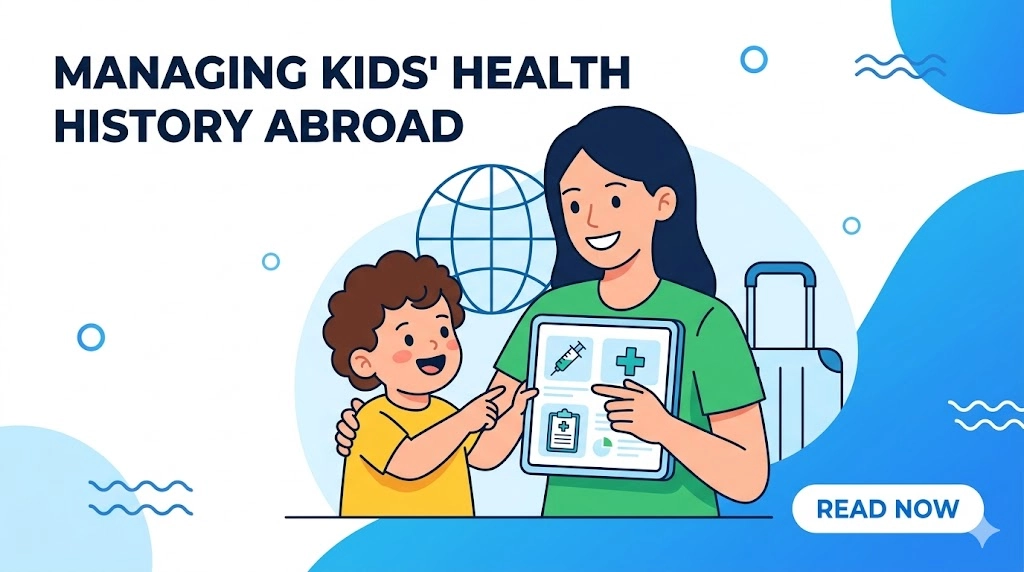
Bringing Children’s Medical Records: Managing Kids’ Health History Abroad
Navigating a new country is hard enough without the sheer panic of sitting in a foreign pediatrician’s office, desperately trying to remember the exact dates of your toddler’s vaccination history. I remember frantically scrolling through blurry photos of my daughter’s immunization card while the Mexican doctor waited for answers I couldn’t translate. This guide explains exactly how to organize, translate, and legally transfer your children’s medical records so their healthcare in Mexico continues without interruption.
Disclosure: This post may contain affiliate links. We may earn a commission at no extra cost to you if you make a purchase through these links. Read full disclosure.
Preparing Your Child’s Medical History Before You Move
The process of transferring your child’s healthcare to Mexico begins months before you actually board your flight. Waiting until you have already relocated to request medical files from your home country is a logistical nightmare, as pediatric offices often require physical signatures or notarized release forms to transfer sensitive health data internationally.
Gathering the Right Documents
When expats think of medical records, they usually only think of the basic vaccination card required for school. However, moving abroad requires a much more comprehensive approach. You need to request the complete pediatric file from your current doctor. This includes detailed growth charts, which are vital for a new pediatrician to understand your child’s developmental baseline over time rather than just seeing a single snapshot of their current weight and height.
If your child has been treated by specialists for conditions like asthma, severe allergies, or behavioral health needs, you must gather those specific clinical notes. Surgical histories, records of major hospitalizations, and results from comprehensive allergy panels are critical. I highly recommend asking your current pediatrician to write a one-page “Summary of Care” letter on official letterhead. This document should outline any chronic conditions, daily medications, and upcoming medical milestones. Having this concise overview makes the initial consultation with a new doctor much smoother, which is a crucial step when Finding English-Speaking Doctors and Specialists in Mexico.
Furthermore, if you are applying for international health coverage, having these documents perfectly organized is essential. If your child has a pre-existing condition, communicating their documented medical history to an insurer like Cigna Global during the underwriting process ensures you receive an accurate policy quote and prevents future claims from being denied due to lack of historical transparency.
Digital Backups and Cloud Storage
Paper documents get lost, damaged, or misplaced in shipping boxes during international moves. Relying solely on a physical folder of medical records is a massive risk. Before you leave, every single page of your child’s medical history must be scanned and saved as a high-resolution PDF.
Create a dedicated, encrypted cloud storage folder for your child’s health records and ensure that both you and your spouse have offline access to these files on your smartphones. Many expats rely on premium insurers like Cigna Global because their digital member portals allow you to securely upload and store these historical health documents, ensuring they are accessible to in-network doctors anywhere in the world.
In addition to cloud storage, if your child has undergone recent MRIs, CT scans, or extensive X-rays, ask the imaging center to burn these files onto a physical USB drive. Downloading massive diagnostic files from a foreign cloud server can be incredibly slow if you are in a Mexican clinic with a weak internet connection, so handing the doctor a physical drive saves valuable time.
Securing Prescriptions and Immediate Needs
Never assume that the exact brand of medication your child takes in the United States or Canada will be available in Mexico. While the active ingredients are almost always accessible, the commercial names, dosages, and delivery methods (like the specific mechanism of an asthma inhaler) can vary significantly.
Before relocating, work with your current pediatrician to secure a three-month buffer supply of any vital daily medications. This gives you ample time to navigate the local medical system without the stress of your child missing a dose. You should also ask your doctor to write down the generic, chemical name of the medication—not the brand name—along with the exact milligram dosage. Handing a Mexican pharmacist the chemical formula is the fastest way to overcome language barriers. For a deeper understanding of how to fill these needs locally, read our guide on Pharmacies in Mexico: How to Get Medications (OTC vs Prescription).
Translating and Authenticating Medical Records for Mexico
Once you have gathered the necessary documents, you must bridge the linguistic and legal gaps so that Mexican authorities and medical professionals can actually use them.
When to Use Certified Translators (Peritos)
Running a complex pediatric surgical history through Google Translate is dangerous. Medical terminology is highly nuanced, and a mistranslated allergy or medication dosage could have severe consequences. For routine check-ups, a bilingual Mexican pediatrician can usually read English medical records without issue. However, for complex ongoing care, official translations are required.
In Mexico, official translations must be performed by a “perito traductor”—a certified expert translator authorized by the Mexican government. You will need a perito to translate the formal Summary of Care letter, detailed specialist reports, and any documentation related to severe chronic illnesses. While you can find peritos online, leveraging your network or asking your local expat community for recommendations is often faster. If you struggle with communicating complex medical needs in Spanish, reviewing Overcoming Language Barriers at the Doctor: Tips for Expats provides practical workarounds for these daily interactions.
The Apostille Process for School Enrollment
There is often confusion among expats regarding what documents need an apostille. An apostille is an international certification that verifies the authenticity of a document for legal use in another country. Generally, your child’s daily medical records do NOT need an apostille for a Mexican pediatrician to read them and provide care.
However, the rules change drastically when you interact with the Mexican educational system. To enroll your child in school, you must provide their official birth certificate, which absolute must be apostilled in the state or province where it was issued. Furthermore, some highly prestigious private international schools may require that the official state-issued vaccination record from your home country also carries an apostille to be considered legally valid for enrollment. Because obtaining an apostille can take weeks or months, this must be initiated long before you move.
Transitioning to the Mexican Healthcare System
Arriving in Mexico means integrating your child’s health history into a new framework. The Mexican system is highly organized regarding pediatric preventative care, heavily relying on a standardized tracking method.
Understanding the Cartilla Nacional de Salud
The cornerstone of pediatric healthcare in Mexico is the Cartilla Nacional de Salud (National Health Card). This small, passport-like booklet is the official document used throughout the country to record immunizations, track growth, and schedule preventative screenings. There are different versions of this card based on age, specifically one for children from birth to 9 years old, and another for adolescents aged 10 to 19.
You cannot simply hand your child’s Canadian or US immunization printout to a Mexican school or public health official; the data must be transcribed into the Cartilla. To get this booklet, you can take your child’s translated home-country vaccination records to a local public health clinic (Centro de Salud) or ask your private pediatrician. A nurse will review your foreign records and carefully transcribe the dates of the administered vaccines into the corresponding sections of the Cartilla.
Because vaccine names differ, here is a helpful reference table comparing common US/Canadian vaccines to their Mexican equivalents found in the Cartilla Nacional de Salud:
| US / Canadian Vaccine Name | Mexican Equivalent (Cartilla) | Disease Prevented |
| MMR (Measles, Mumps, Rubella) | Triple Viral (SRP) | Sarampión, Rubéola, Parotiditis |
| DTaP | DPT or Pentavalente Acelular | Difteria, Tos ferina, Tétanos |
| Polio (IPV / OPV) | Sabin / Poliomielitis | Polio |
| Chickenpox / Varicella | Varicela | Varicela |
| Flu Shot | Influenza | Influenza |
| Pneumococcal (PCV13) | Neumocócica Conjugada | Infecciones por Neumococo |
Ensuring this translation is accurate is vital, as the Cartilla is mandatory for school registration and is heavily scrutinized during public health campaigns. If you want to review the full schedule of recommended shots, check out Vaccinations for Mexico: What You Need Before You Move.
Finding a Pediatrician and Sharing Records
The private healthcare sector in Mexico is phenomenal, and finding a deeply empathetic, highly qualified pediatrician is usually a straightforward process for expats. Mexican doctors are known for taking ample time during consultations and frequently provide their personal WhatsApp numbers to parents for after-hours questions—a level of accessibility that often shocks North Americans.
When searching for a specialist, utilizing the network provided by a premium insurer like Cigna Global ensures you are matched with board-certified, English-speaking pediatricians in your specific city. When you attend your first appointment, bring the translated Summary of Care letter, the physical USB drive with any imaging, and your child’s home-country vaccination card. The doctor will review these documents, help you establish the Cartilla Nacional de Salud, and create a localized care plan. If you are ever curious about how to evaluate a doctor’s credentials here, reading Healthcare in Mexico: Complete Guide for Expats (Public vs Private) will clarify the medical board certification process.
Managing Ongoing Healthcare and Insurance Abroad
Once you are settled, managing your child’s health history becomes an ongoing task of maintaining records across borders and ensuring your insurance coverage is properly optimized for your new lifestyle.
Maintaining Dual Records
Expat life is inherently transient. You may live in Mexico for a few years, move back to your home country, or relocate to a third nation. Because of this, it is highly advisable to maintain dual medical records.
Every time your child receives a new vaccine or undergoes a major medical procedure in Mexico, ask the pediatrician or the hospital administration for a formal, stamped printout of the intervention. You should then upload this document to your child’s cloud storage folder and, if possible, send a copy to your pediatrician back in your home country to keep their domestic file active. This dual-tracking prevents agonizing administrative delays if you suddenly move back and need to prove your child is up-to-date on their immunizations for middle school enrollment back home.
Leveraging Health Insurance for Continuity of Care
Having a comprehensive international policy through Cigna Global means your Mexican pediatrician can easily authorize complex lab work or specialist referrals without you having to front massive out-of-pocket costs and hope for reimbursement later.
Furthermore, continuity of care is drastically improved when your insurance provider acts as a centralized hub. If you face an emergency while traveling outside of Mexico, the direct-billing agreements established by Cigna Global with top international hospitals ensure your child receives immediate care, and the treating physicians can often coordinate with the insurer to access the medical history you have on file. For routine questions, you can often utilize telehealth services through Cigna Global to consult with an English-speaking doctor who has immediate access to your child’s uploaded health history, providing immense peace of mind when local clinics are closed. To understand the full scope of how these policies protect your family, dive into Choosing Private Health Insurance: Local Mexican Plans vs International Coverage.
References
Primary sources (official)
- Secretaría de Salud (SSa) – The official federal health ministry portal detailing the exact age brackets, required vaccines, and physical formats of the National Health Booklets used by Mexican pediatricians and schools. https://www.gob.mx/salud/articulos/cartillas-nacionales-de-salud
Other helpful sources
- CDC – General Best Practice Guidelines for Immunization (International Records): https://www.cdc.gov/vaccines/hcp/acip-recs/general-recs/index.html
Disclaimer
The information provided in this guide is for educational and informational purposes only and does not constitute medical, legal, or financial advice. Healthcare regulations, vaccination requirements for school enrollment, and the processes for authenticating medical documents in Mexico are subject to change. Always consult with a qualified, board-certified pediatrician in Mexico regarding your child’s specific medical needs and verify exact document requirements with your target educational institution and your insurance provider.