Renewing and Upgrading Residency in Mexico
The sudden realization that your Mexican residency card is about to expire can trigger a specific kind of panic, usually involving frantic searches for your original paperwork and a dash to the nearest INM office. I remember my first renewal in Querétaro; I was so nervous about the "30-day rule" that I showed up at the immigration office three hours early, only to realize I’d forgotten my passport copies. This guide solves the confusion surrounding the renewal timeline and the leap from temporary to permanent status.
Disclosure: This post may contain affiliate links. We may earn a commission at no extra cost to you if you make a purchase through these links. Read full disclosure.
Understanding the Residency Renewal Timeline
The most critical thing to internalize about living in Mexico is that the National Institute of Migration (INM) operates on strict windows. Most expats enter on a one-year temporary residency card. This is essentially a "probationary" year where the government makes sure you are actually living here and behaving yourself. After that first year, you have the option to renew for another one, two, or three years. This is often referred to as the "1+3" cycle.
If you don’t stay on top of your dates, you risk falling into "irregular" status, which is a bureaucratic nightmare I wouldn't wish on anyone. You are legally allowed to start the renewal process 30 days before your card expires. Do not try to go 31 days before; they will politely (or not so politely) tell you to come back tomorrow. Conversely, do not wait until the day before it expires. The goal is to have your "pieza" or application filed within that 30-day window to keep your status continuous.
The First Renewal: Moving Past Year One
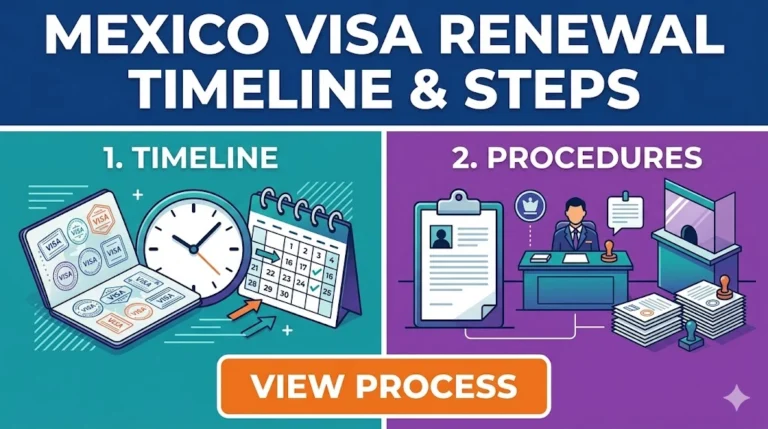
Your first renewal is a major milestone. For most, this is the moment you decide to commit to Mexico for the next three years. When you apply for Renewing Your Temporary Resident Visa: Timeline and Procedures, you aren't just getting a new plastic card; you are securing your right to remain in the country without having to visit a consulate abroad again for a long time. This renewal is generally simpler than the initial application because you are already in the system.
During this stage, you’ll be filling out the "Formato Básico" and paying two separate fees: the processing fee and the residency fee itself. One thing I learned the hard way is that INM offices can be very particular about how your name is written on the bank payment slips (comprobantes). If your bank teller misses a middle name that’s on your residency card, the immigration officer might reject the payment. Always double-check the printed receipt before leaving the bank ventanilla.
The 30-Day Expiration Window
The 30-day countdown is the golden rule of Mexican immigration. If your card expires on December 15th, you can walk into the INM office starting November 15th. If you happen to be outside of Mexico when your card expires, don't panic, but you must be careful. You generally have a 60-day grace period to re-enter Mexico after the expiration date, provided you go straight to the INM office within five days of crossing the border to start your renewal.
However, I always advise my friends to avoid being out of the country when their card expires. It complicates the "Salida y Regreso" process and can lead to uncomfortable questions at the airport. Staying within the country during that final month ensures you have all your original documents on hand and can respond to any "requerimientos" (requests for additional info) that the agents might throw your way.
Transitioning from Temporary to Permanent Residency
After four consecutive years of temporary residency, you reach the "promised land" of Mexican immigration: Permanent Residency. This is a massive relief because, as the name suggests, the card never expires (though you do need to update it if you change your address or marital status). The transition from Upgrading from Temporary to Permanent Residency: What You Need to Know is a specific procedure that officially ends your need to deal with the four-year renewal cycles.
The beauty of the four-year track is that you usually do not have to re-prove your financial solvency. Since you’ve already been a resident for four years, the government assumes you have the means to support yourself. You are essentially grandfathered into permanent status. This is a huge weight off the shoulders of retirees or freelancers whose income might fluctuate year to year.
The Four-Year Rule and Eligibility
The most common path to permanent status is simply time. Once you have completed four years as a Residente Temporal, you are eligible to "convert" your status. It is important to note that you must apply for this change within the same 30-day window before your fourth year expires. You aren't just "renewing" anymore; you are requesting a "Cambio de Condición" (Change of Condition).
I’ve seen some expats get confused and think they can skip a year or apply early. The system is quite rigid. You must have the full four years of temporary residency under your belt. The benefit of this status is immense—you get the right to work (lucrativa) without needing a separate permit, and you never have to pay the annual residency fees to INM again. It’s a one-time payment that covers you for life.
Benefits of the Permanent Resident Status
Beyond the lack of expiration dates, being a permanent resident changes how you interact with the Mexican state. You have almost all the rights of a citizen, except for the right to vote. This makes it easier to open certain types of bank accounts, register vehicles, and even qualify for senior discounts (INAPAM) if you are of age. Many people find that once they have that "Residente Permanente" card, the "permanent" feeling finally settles in.
You also gain the freedom to stay outside of Mexico for as long as you want without losing your status. Temporary residents often worry about how much time they spend abroad, fearing it might affect their renewal. While Mexico doesn't currently have a strict "days in country" requirement for renewing temporary residency, permanent residency removes any doubt. You could leave for five years, come back, and your card would still be valid, though you should always check for any Mexico Residency 2026: New Rules and Financial Criteria Updates before planning long absences.
Required Documentation for Renewals and Upgrades
The paperwork for an INM renewal feels like a mountain, but it’s manageable if you are organized. You will always need your current residency card, your valid passport, and the "solicitud" (application form) printed from the INM website. But the "hidden" requirements are what usually trip people up. For instance, you need a "carta de solicitud"—a formal letter addressed to INM explaining exactly what you are requesting.
If you have had any major life changes—like getting married or changing your job—you may need to provide supporting documents. If these documents are from outside Mexico, they must be apostilled and translated by a certified translator. For quick and reliable certified translations that meet Mexican standards, I often suggest using a service like RushTranslate. They understand the specific formatting required for official government submissions, which can save you a trip back to the office because a translation was deemed "informal."
The Importance of Certified Translations
Mexico is a country that runs on "peritos traductores" (certified translators). If you are upgrading your residency based on a foreign marriage certificate or a birth certificate, a simple translation from a friend won't work. The INM requires a translation that bears the seal and signature of an authorized translator. Using a professional service like RushTranslate ensures that your documents are accepted the first time, preventing the dreaded "rechazado" stamp on your application.
When I was helping a friend with her Residency in Mexico for Families: Visas for Spouses and Children, we realized at the last minute that her marriage certificate was only in English. We used RushTranslate to get it turned around in 24 hours, and the INM officer accepted the digital certified copy without a second thought. It’s one of those small expenses that prevents massive delays in your residency timeline.
Valid Passport and Residency Card Copies
It sounds simple, but the way you copy your documents matters. INM usually requires copies of every single page of your passport—even the blank ones. They want to see every entry and exit stamp to verify your travel history. Make sure your copies are clear and high-contrast. If the photo is too dark or the stamps are blurry, the agent might ask you to go find a "copiadora" and try again.
Your residency card must also be copied on both sides, usually on the same sheet of paper. I always recommend keeping a digital folder with scans of everything. Having a PDF of your current Mexico Temporary Resident Visa: Comprehensive Guide for Expats (2026 Update) and your passport can be a lifesaver if you lose your physical documents or if the INM office needs an extra copy that you didn't bring.
Financial Requirements for 2026
Every January, the Mexican government adjusts the fees for immigration services based on the Federal Rights Law. These fees are usually tied to the UMA (Unidad de Medida y Actualización), which accounts for inflation. For 2026, we have seen a slight increase in both the processing fees and the residency rights fees. It is vital to check the current year's cost before you go to the bank.
A common question is whether you need to show your bank statements again during a renewal. For a standard year-to-year renewal of temporary residency, the answer is usually no. INM assumes that if you were approved once, you are still meeting those requirements. However, if you are upgrading to permanent residency before the four-year mark (for example, through family unity), you might be asked to provide financial proof.
Comparing Renewal and Upgrade Costs
| Service Type | Estimated Fee (MXN) | Frequency | Key Requirement |
|---|---|---|---|
| 1-Year Renewal (Temporary) | $5,500 – $6,500 | Annual | Current Card & Passport |
| 3-Year Renewal (Temporary) | $10,500 – $12,500 | Once | Completion of 1st Year |
| Upgrade to Permanent | $6,500 – $7,500 | Lifetime | 4 Years Residency |
| Regularization Fee | $1,500 + Fine | Once | Expired Status |
Note: Fees are estimates for 2026 and can vary slightly by jurisdiction and annual UMA adjustments.
Paying the "Derechos" at the Bank
You cannot pay your immigration fees at the INM office. You must take a generated "e5" form to a local bank (BBVA, Santander, Banorte, etc.) and pay in cash or via a Mexican debit card. The bank will give you a stamped receipt. This receipt is arguably the most important piece of paper in your folder. Do not lose it! If you lose the original bank receipt, you will likely have to pay again, as INM needs the physical "comprobante" to attach to your file.
When you are at the bank, ensure the teller enters your Getting a CURP as a Foreigner in Mexico correctly on the receipt. If there is a typo in your CURP or your name, the migration agent's system won't be able to "link" the payment to your application. This is a common source of frustration that can add weeks to your processing time.
The Appointment and Interview Process
Years ago, you could just walk into an INM office and wait in line. Today, most offices require you to How to Book an INM Appointment in Mexico through their online portal. The portal can be finicky and is often "out of citas" (appointments) for weeks at a time. The trick is to check early Monday mornings when new slots are often released.
When you arrive for your appointment, dress "business casual." While there is no official dress code, showing respect for the process goes a long way with the agents. You will be asked to provide fingerprints and a signature, and in some cases, you might be asked basic questions about your life in Mexico. This isn't a high-pressure interrogation; they just want to confirm the details in your file.
What to Expect During the "Canje"
The "Canje" is the exchange of your approval paperwork for the actual plastic card. Sometimes this happens on the same day as your appointment, but in busier cities like Mexico City or Playa del Carmen, you might be asked to come back in two to four weeks. You will receive a "NUT" (Número de Usuario de Trámite) which allows you to track your application status online.
If your status shows "en trámite" for a long time, don't worry. It just means the background checks are being processed. Once it changes to "resuelto satisfactoriamente," you are ready to go back and pick up your new card. Remember that you will need to bring your old card and your passport again for the final pickup.
Handling Language Barriers at INM
Most INM officers speak very little English. If your Spanish is still in the "taco ordering" phase, I highly recommend bringing a friend who is fluent or hiring a professional "gestor" (immigration helper). However, if you are doing it yourself, have your documents organized in a clear folder with tabs. This shows the officer you are prepared and reduces the need for complex conversation.
If they ask for something you don't understand, ask them to write it down. You can then use a translation app or consult with a service like RushTranslate if they are asking for a specific How to Get a Certified Translation for Mexican Immigration that you missed. Being polite, patient, and prepared with your paperwork is 90% of the battle at the immigration office.
Leaving Mexico While Your Renewal is Processing
This is the biggest pitfall for expats. Once you submit your renewal application, your current residency card is technically "surrendered" or "in limbo." If you leave Mexico without a specific permit, the system will show that you left as a resident but without a valid card, which can cancel your entire application.
If you absolutely must travel for a family emergency or business, you must apply for a How to Obtain a Mexican Exit Permit (Salida y Regreso) During Visa Processing. This is a letter from INM that gives you permission to leave and re-enter while your new card is being printed. It is usually valid for 60 days and allows for one single exit and entry.
The Risks of Leaving Without a Permit
I have seen people lose their four-year residency streak because they flew home for a weekend without a Salida y Regreso permit. When they tried to re-enter, the airline saw their expired card and forced them to enter as a tourist. Once you enter as a tourist, your residency application is effectively abandoned, and you have to start over from scratch at a consulate.
Always check your travel dates against your expiration dates. If your card expires on June 1st and you have a trip planned for June 10th, you either need to finish the renewal before June 10th or have that exit permit in your hand. Never trust an airline agent who says "it will be fine"—they are not Mexican immigration officials.
Managing Your Digital Fingerprints
During your renewal or upgrade, you will likely have your fingerprints retaken. This is part of the updated security measures. Make sure your hands are clean and free of any cuts or ink, as the scanners can be quite sensitive. These fingerprints are linked to your Temporary vs Permanent Residency in Mexico: Key Differences and Benefits profile and help prevent identity theft within the immigration system.
If you find that your fingerprints have changed significantly due to age or injury, you might be asked to provide a secondary form of ID or a medical note. It’s rare, but it happens. The goal of the INM is to ensure that the person holding the card is the person who was originally vetted. This digital record-keeping is part of why the permanent residency card is so secure and valuable.
Dealing with Special Circumstances
Sometimes life doesn't follow the "1+3" plan. You might lose your card, or your passport might expire right in the middle of your renewal window. If you lose your card, your first step isn't INM—it’s the police. You need to file a report (acta) stating the card was lost or stolen. You then take that report to INM to apply for a replacement.
If you are in the middle of a renewal and your passport expires, you need to bring your new passport and a copy of the old one to the immigration office. They will "link" the two in their system. This is another area where having How to Get a Certified Translation for Mexican Immigration for any foreign embassy letters can be incredibly helpful to keep the process moving smoothly.
Upgrading Through Marriage or Family
If you marry a Mexican citizen or have a child born in Mexico, you can skip the four-year wait for permanent residency. This is known as "Family Unity." In the case of marriage, you typically get two years of temporary residency first, and then you can upgrade to permanent. If you have a Mexican child, you can often apply for permanent residency immediately.
This process requires significant documentation, including birth or marriage certificates. Again, if these are not Mexican documents, they will need an apostille and a certified translation. I’ve seen many couples get frustrated because they thought the marriage itself was enough; you still have to go through the How to Bring Your Spouse to Mexico on a Family Visa bureaucratic steps to "legalize" that status in the eyes of immigration.
What if Your Renewal is Denied?
While rare, denials can happen if there is a discrepancy in your background check or if you failed to provide a requested document within the allotted time (usually 10 business days). If you receive a "resolución negativa," you have the right to appeal or to "regularize" your status through a different program.
In these cases, I highly recommend consulting a specialized immigration attorney. Do not try to DIY a denied application. There are often Mexico's Regularization Programs: Giving Illegal Stays a Second Chance that can help you fix your status without having to leave the country, but the window to act is usually very short.
Disclaimer
The information provided in this guide is for educational and informational purposes only and does not constitute legal advice. Mexican immigration laws and fees are subject to change by the National Institute of Migration (INM) and the Secretariat of the Interior (SEGOB) at any time. While we strive to keep this information updated for 2026, always verify requirements with the official INM website or a qualified legal professional before beginning your application. Navigating immigration can be complex, and individual circumstances vary. Under no circumstances should this guide be a substitute for professional legal counsel.