Dealing With INM: Mexico’s Immigration Institute
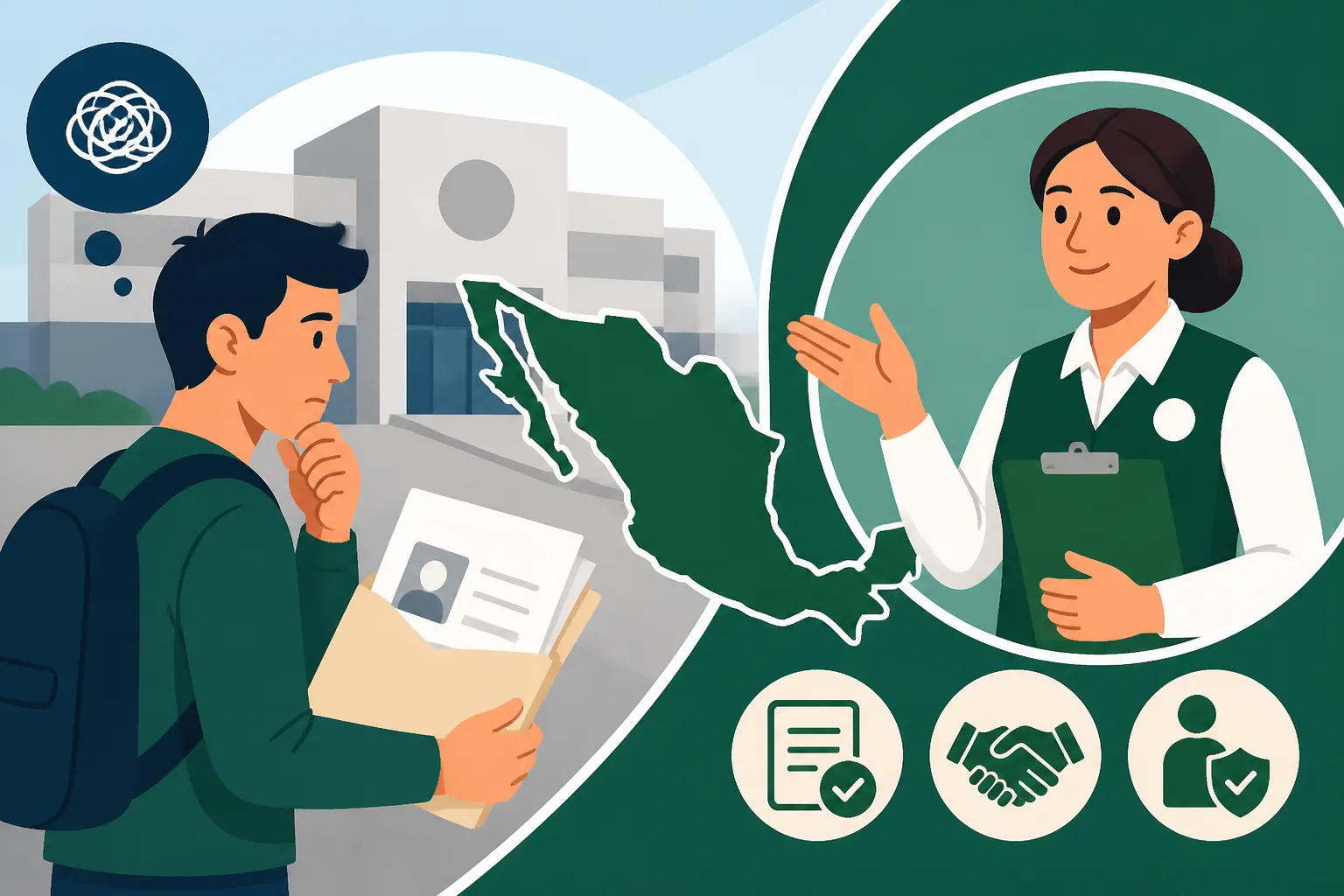
The administrative wall of the Instituto Nacional de Migración is often the first major hurdle that makes newcomers question their move to Mexico. I remember standing in the sweltering heat outside the Mérida office at 6:00 AM, clutching a folder of papers and feeling completely lost. This guide simplifies the complex world of dealing with INM so you can stay legal without the stress.
Disclosure: This post may contain affiliate links. We may earn a commission at no extra cost to you if you make a purchase through these links. Read full disclosure.
Understanding the Role of the Instituto Nacional de Migración (INM)
The Instituto Nacional de Migración, commonly referred to by its acronym INM, is the federal body responsible for overseeing all immigration matters within Mexican territory. Unlike the Mexican consulates abroad, which handle the initial visa interviews and sticker issuance, the INM is where the "real" work happens once you are physically in the country. They are the gatekeepers of your residency status, and their primary goal is to ensure that every foreigner is properly registered, tracked, and compliant with federal law.
What INM Does and Does Not Handle
It is a common mistake for expats to assume that the INM handles everything related to their legal identity in Mexico. In reality, the INM’s scope is specific. They handle the issuance of your physical resident card, renewals of temporary residency, transitions to permanent residency, and work authorizations. They also manage the How to Obtain a Mexican Exit Permit (Salida y Regreso) During Visa Processing if you need to travel while your application is pending.
However, they do not issue the CURP (the unique population registry code), nor do they handle tax IDs (RFC). While you might need your residency card to get those documents from other agencies, the INM staff generally won't help you with them. Understanding these boundaries saves you the frustration of asking for a service they simply do not provide.
The Different Offices and Regional Jurisdictions
Mexico is a vast country, and the INM is organized into regional delegations. This is a critical point: you must visit the office that has jurisdiction over your place of residence. If you live in Chapala, you go to the office in Guadalajara or the local satellite office in Ajijic; you cannot simply walk into an office in Mexico City because you happen to be visiting for the weekend.
Each office can feel like a different kingdom. While the law is federal, the interpretation of "required documents" or "appointment times" can vary wildly between a busy office in Playa del Carmen and a quieter one in San Miguel de Allende. This lack of uniformity is often the biggest complaint among expats. I’ve seen some offices accept a digital copy of a document, while others demand three physical copies, all signed in blue ink. Always check local expat forums for the specific "vibe" of your local delegation before you head out.
Why the INM Process Can Feel Overwhelming
The bureaucracy in Mexico is built on a foundation of paper. For many of us coming from highly digitized societies, the requirement for physical folders, specific colored pens, and "original" copies of everything feels archaic. The emotional weight of the INM comes from the high stakes; if you miss a deadline or provide the wrong form, you risk losing your legal status or being forced to leave the country to start the process over.
Validation is key here: it is okay to feel frustrated. The system is designed for compliance, not necessarily for user experience. However, once you accept that you are operating on "Mexican time" and following Mexican administrative logic, the process becomes a series of boxes to check rather than an insurmountable wall.
Preparing Your Paperwork: The Golden Rule of INM
If there is one thing that will determine your success at the INM, it is your "folder." In the expat world, we call this the "folder of life." It contains every possible document you might need, organized with tabs. Showing up under-prepared is the fastest way to a "no" from an immigration officer. They have hundreds of people to process; they will not wait for you to find a document on your phone or run to a nearby print shop.
The Essential Document Checklist
Every procedure starts with the basic requirements: your passport (valid for at least six months), your FMM (the entry permit, though this is becoming digital in many airports), and the specific "Formato Básico" printed from the INM website. You will also need "fotos infantiles"—specific small photos that must be taken at a local studio, as they have strict requirements regarding the absence of glasses or jewelry and the background color.
Beyond the basics, you must have proof of your address (comprobante de domicilio), which is usually an electricity (CFE) or water bill. Crucially, the bill does not always have to be in your name, but it must be recent—usually within the last three months. If you are moving from a consulate-issued visa to residency, you will also need the visa sticker in your passport and the official letter provided by the consulate.
Handling Certified Translations and Apostilles
This is where many applications hit a snag. If you are applying for residency based on family unity or marriage, your foreign birth or marriage certificates must be apostilled in your home country and then translated into Spanish by a certified translator in Mexico (perito traductor). INM is extremely strict about the quality and certification of these translations.
For those who need their home-country documents translated quickly and accurately before they even land in Mexico—or to ensure they meet the standard—using a service like RushTranslate can be a lifesaver. While you often need a local "perito" for certain final steps, having high-quality translations from RushTranslate for your initial records and internal filings ensures that nothing gets lost in translation during the high-pressure environment of the INM office. They provide certified translations that are widely recognized for their accuracy. Using RushTranslate can help you get your paperwork in order before you even face the immigration officer.
The Importance of Photocopies and "Originals"
A general rule of thumb: if you have an original document, bring three photocopies of it. The INM will often take your original "pago" (payment) receipt and a copy of your passport, but they will want to see the original passport to verify it. Do not expect them to make copies for you.
I once saw a man get turned away after a four-hour wait because he only had the original of his marriage certificate and refused to let them keep a copy. Save yourself the headache. Buy a sturdy expanding file folder and keep your originals in one section and at least two sets of copies in the others. How to Get a Certified Translation for Mexican Immigration is a process that often requires multiple copies as well, so stay organized.
The Canje Process: Exchanging Your Visa for a Resident Card
For most new expats, the first interaction with INM involves the "Canje." This is the process of exchanging the visa sticker you received at the consulate for your actual plastic residency card. You have 30 days from the moment you enter Mexico to start this process. If you wait until day 31, you are technically in the country illegally and could face fines or deportation.
Step-by-Step: The First Visit
Your first visit for the Canje is about "opening your file." You will present your documents at the window, and the officer will check them for completeness. If everything is in order, they will give you a "NUT" (Número de Usuario de Trámite), which allows you to track your application online. During this visit, they may also ask you to fill out additional forms or clarify your intent to live in Mexico.
It is during this phase that you must pay the government fees at a local bank. The officer will give you a "hoja de ayuda" (help sheet) with the payment codes. You take this to a bank, pay in cash, and bring the receipt back. This two-step dance between the INM office and the bank is a classic part of the Mexican administrative experience. To learn more about this specific transition, see How to Complete the Canje After Entering Mexico.
Biometrics: Fingerprints and Photos
Once your application is approved—which can take anywhere from a few days to several weeks depending on the office—you will be called in for biometrics. This is the stage where they take your fingerprints (all ten of them) and your official photo for the card.
The biometrics room is usually the most "official" part of the building. You’ll be asked to sign several documents. Ensure your signature matches the one in your passport exactly. I’ve seen applications delayed because a person used a "messy" signature that didn't look like their official one. After biometrics, you are usually just a few days or weeks away from holding your card in your hand.
Picking Up Your Resident Card
The final step is the most rewarding. You will receive an email (or check the portal) stating your card is ready for pickup. You must go in person and show your passport. When you finally hold that plastic card, you are officially a resident of Mexico. Take a photo of it immediately—both sides—and store it in the cloud. You will need your card for everything from How to Get a CURP in Mexico to opening a bank account.
| INM Procedure | Typical Timeframe | Key Requirement |
|---|---|---|
| Canje (Visa Exchange) | 2–6 Weeks | Must start within 30 days of entry |
| Renewal (Temporary) | 1–4 Weeks | Start 30 days before expiration |
| Address Change | 1–2 Weeks | Proof of new address (CFE bill) |
| Exit Permit | 1–3 Days | Proof of upcoming travel/emergency |
Navigating the Appointment System and the INM Portal
In the "old days," you just showed up at the INM office at 4:00 AM and hoped for the best. While some smaller offices still operate this way, most major hubs now use an online appointment system. Navigating this system is a skill in itself.
How to Book an INM Appointment in Mexico
The online portal is notoriously finicky. It often crashes on certain browsers (try Firefox or Chrome) and appointments can disappear in seconds. In cities like Querétaro or Mexico City, appointments are released on specific days of the week. You need to be ready to click "submit" the moment they go live.
If you cannot find an appointment online, some offices still allow a limited number of "walk-ins" for certain procedures like address changes or exit permits. However, for a Canje or a renewal, an appointment is almost always mandatory. For a deeper dive into the technicalities, read How to Book an INM Appointment in Mexico.
Using the Online Tracking Portal
The INM tracking portal is where you check the status of your "NUT." The status will move from "Trámite en proceso" (process in progress) to "Requerimiento" (they need more info) or "Resolución" (a decision has been made).
If you see "Requerimiento," do not panic. It usually means they want a clearer photocopy or a missing signature. You have a limited window to provide the missing info, so check the portal at least twice a week. If you’re feeling unsure about the language used in these notifications, RushTranslate can help you quickly translate official emails or letters so you know exactly what the government is asking for.
The "Gestor" vs. DIY Debate
Many expats choose to hire a "Gestor"—a local expert or lawyer who handles the paperwork and appointments for you. A good gestor knows the officers, knows exactly how they want the folders organized, and can often navigate the appointment system more effectively.
The downside is the cost, which can range from $200 to $500 USD plus government fees. If your Spanish is non-existent and your patience is thin, a gestor is a great investment. If you are on a budget and have decent Spanish, doing it yourself is a rite of passage that teaches you a lot about how Mexico works. Either way, ensure you have your How to Get a Certified Translation for Mexican Immigration handled by professionals like RushTranslate to avoid any legal hiccups.
Surviving the INM Office: Practical Tips for a Smooth Day
When the day of your appointment finally arrives, you need to be in the right headspace. The INM office is a place of high anxiety and low air conditioning. Success here is as much about your attitude as it is about your paperwork.
What to Wear and When to Arrive
Treat your INM visit like a job interview. While you don't need a suit, appearing "clean and professional" goes a long way with the officers. Avoid flip-flops and tank tops. Mexicans generally value formality in government dealings, and showing respect through your dress can set a positive tone for the interaction.
Arrive at least 30 minutes before your appointment. You will likely have to stand in a line outside just to get into the building. Bring a bottle of water, a portable battery for your phone, and a book. You will be waiting. Even with an appointment, "Mexican time" means your 10:00 AM slot might not actually happen until noon.
Surviving the Language Barrier
The vast majority of INM officers do not speak English. They are not required to, and in many cases, they won't even try. If your Spanish is basic, bring a friend who speaks the language or have a translation app ready on your phone. However, be aware that some offices prohibit the use of cell phones inside the building.
The best strategy is to have your documents so well-organized that you don't need to speak much. When an officer asks for something, you should be able to produce it instantly. If you have any foreign documents, ensure you have your How to Apostille Documents for Mexico completed and translated before you arrive. This level of preparation speaks louder than any broken Spanish.
Dealing with Unexpected Requests or Rejections
Sometimes, despite your best efforts, the officer will ask for something you don't have. This is the moment to remain calm. Do not argue. Do not get angry. Simply ask for a "hoja de requisitos" (requirement sheet) and ask when you can return to provide the missing document.
I’ve seen expats have meltdowns at the counter, which only results in the officer becoming more rigid. In Mexico, "gentileza" (gentleness) and "paciencia" (patience) will get you much further than demands. If they reject a document translation, for example, simply thank them and use a service like RushTranslate to get a fresh, professional version that meets their criteria.
Managing Your Status: Renewals, Address Changes, and Exit Permits
Getting your card is not the end of the journey; it is the beginning of your responsibilities as a resident. The INM requires you to keep them updated on your life, and failing to do so can result in significant fines when you eventually go to renew your card.
Reporting Changes: Address, Marital Status, and Job
By law, you must report a change of address or a change in your marital status within 90 days. This is a relatively simple procedure, but it requires a trip to the INM. You will need to provide proof of the new address and fill out a notification form.
Many expats ignore this rule, thinking "they'll never know." However, if you try to renew your residency and your utility bill doesn't match the address on file, you will be fined. The fines are calculated in "UMAs" (a daily unit of measurement) and can add up to hundreds of dollars. Stay on top of it. You can learn more about this in the guide on How to Change Your Address With INM in Mexico.
How to Renew Your Mexican Resident Card
Temporary residency is usually granted for one year initially, and then can be renewed for another three years. You must start the renewal process within 30 days before your card expires. Do not wait until the last week.
The renewal process is generally easier than the initial application because you are already in the system. You’ll need a new set of photos, proof of address, and the payment for the renewal fees. Once you reach the end of your fourth year of temporary residency, you can apply to become a permanent resident. Check out How to Renew Your Mexican Resident Card for a detailed timeline.
Getting a Mexican Exit Permit (Salida y Regreso)
If you are in the middle of a procedure—such as a renewal or a Canje—your residency status is technically "in process," and your physical card may have expired or not yet been issued. If you need to leave Mexico during this time, you must obtain a "Salida y Regreso" permit from the INM.
If you leave without this permit, you will effectively abandon your residency application and will have to start over from scratch at a consulate. The permit is usually valid for 60 days and allows for one exit and one entry. It’s a vital tool for anyone with family obligations back home. See How to Obtain a Mexican Exit Permit (Salida y Regreso) During Visa Processing for the exact steps to secure one.
Disclaimer
The information provided in this guide is for educational and informational purposes only and does not constitute legal advice. Immigration laws and procedures in Mexico are subject to frequent changes. Always consult with the official Instituto Nacional de Migración (INM) website or a qualified immigration attorney before making decisions regarding your legal status in Mexico.