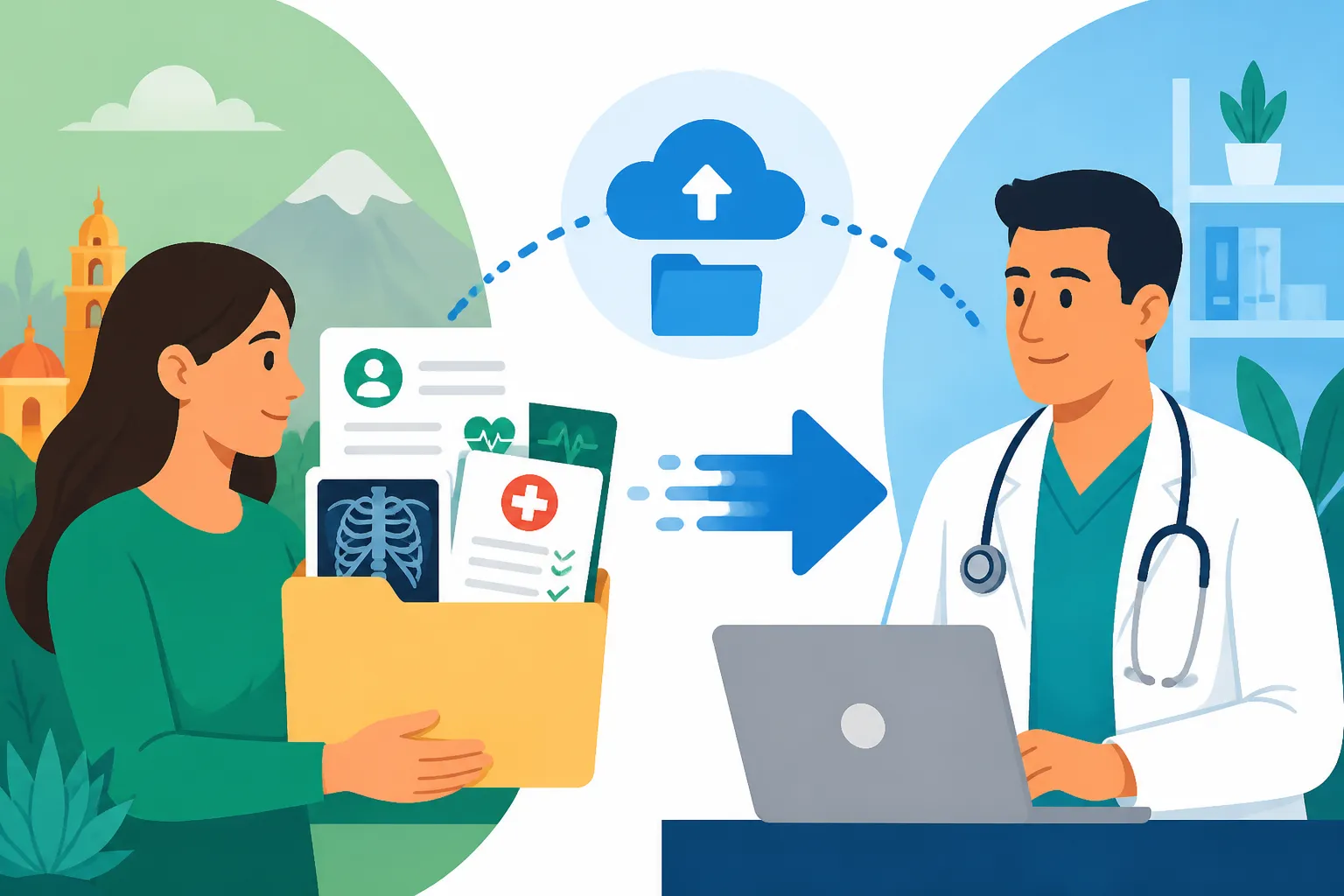
How to Transfer Medical Records to a Doctor in Mexico
Moving to Mexico is often a whirlwind of vibrant markets and sunset margaritas, but the dream hits a roadblock the moment you’re sitting in a specialist’s office trying to recall the exact date of a surgery from a decade ago. I remember the cold sweat I felt during my first appointment in Guadalajara, realizing that my entire health history was locked behind a portal I couldn't access without a domestic phone number from my home country. This guide solves the logistical puzzle of bringing your medical records across the border so you never face that administrative nightmare.
Disclosure: This post may contain affiliate links. We may earn a commission at no extra cost to you if you make a purchase through these links. Read full disclosure.
The Reality of Medical Data Portability in Mexico
In many countries, we are spoiled by centralized digital systems where one hospital can "ping" another to see your history. In Mexico, the system is much more fragmented. While top-tier private facilities like those in the Private Hospitals in Mexico: Hospital Ángeles and Major Networks system have sophisticated internal portals, they rarely "talk" to your doctor back home. You are essentially the curator of your own medical museum.
When you transition your life here, you cannot expect your Canadian or American GP to simply hit a button and send your files to a clinic in Merida. Mexican doctors, particularly those found through Finding English-Speaking Doctors and Specialists in Mexico, are incredibly thorough and will spend significant time with you, but they rely heavily on the data you provide. If you arrive empty-handed, you may end up paying for redundant blood tests or imaging that you had just months prior.
Furthermore, the public system, known as IMSS, operates almost entirely on physical "carnets" and paper records in many regions. If you are navigating Healthcare in Mexico: Complete Guide for Expats (Public vs Private), you must understand that being the "mule" for your own data is the only way to ensure continuity of care.
Audit Your Health History Before You Leave
Before you even pack your first suitcase, you need to conduct a comprehensive audit of what is actually in your medical file. Not every document is worth the weight in your luggage or the space in your cloud storage. You want to focus on high-value data that directly impacts your future treatment.
Start by requesting a "Patient Summary" from your current primary care physician. This is a condensed version of your history, including active diagnoses, chronic conditions, and current medications. This is particularly vital if you are Managing Chronic Illness in Mexico: Access to Medication and Specialists, as your new Mexican doctor will need to see the established protocol you’ve been following.
Beyond the summary, you need your immunization records. Mexico is very proactive about vaccinations, and having a clear record of what you’ve received—especially things like Hepatitis A and B, Typhoid, and Tetanus—will save you time and money. If you are bringing children, this is non-negotiable for school enrollment.
| Document Type | Preferred Format | Translation Recommended? | Veteran Tip |
|---|---|---|---|
| Surgical Reports | PDF & Physical | Yes (Summary only) | Focus on the "Discharge Summary" (Resumen de Alta). |
| Lab Results | Digital/PDF | No | Biological values (glucose, cholesterol) are universal. |
| Imaging (MRI/CT/X-Ray) | USB or Cloud Link | No | Mexican doctors want the DICOM files, not just the report. |
| Vaccination Logs | Original Booklet | Highly Recommended | Essential for residency and local health clinics. |
| Current Prescriptions | Scanned Copy | Yes | Helps in finding Mexican vs U.S. Medication Brands: Finding Equivalent Drugs. |
Digital vs. Physical: The Best Way to Carry Records
There is a common debate among expats: do I bring a massive three-ring binder, or do I put it all on a thumb drive? The "veteran" answer is both, but with a strategic tilt toward digital.
Mexican doctors are increasingly tech-savvy. If you are seeing a specialist in a major city, they will likely have a laptop on their desk. Handing them a USB drive with neatly organized folders (e.g., "Cardiology," "Lab Work 2024," "Surgical History") is often more efficient than making them flip through a hundred pages of paper. However, for initial intake at a hospital or for Healthcare Costs in Mexico: Doctor Visits, Hospital Stays, and Surgery Expenses paperwork, having physical copies of your ID and basic summary can speed up the process.
I always recommend using a secure, encrypted cloud service like Dropbox or Google Drive, but make sure the files are available offline on your phone. Cell service can be spotty inside the thick concrete walls of many Mexican clinics. If you have international coverage through a provider like Cigna Global, they may also have a member portal where you can upload and store records for easy access during a claim.
The Language Barrier: To Translate or Not?
One of the most frequent questions I get is Do You Need to Translate Medical Records into Spanish for Mexican Doctors?. The answer depends on the complexity of your situation.
If you have a straightforward health history—maybe just some managed high blood pressure or an old appendectomy—you probably don't need a certified translation. Most doctors in private practice speak enough medical English to understand terms like "hypertension" or "appendectomy." However, if you have a rare autoimmune disease, a complex oncology history, or detailed neurological reports, a professional translation is worth every penny.
Medical terminology in Spanish can be nuanced. Having a "Resumen Clínico" (Clinical Summary) in Spanish ensures there is zero room for misinterpretation regarding dosages or specific surgical techniques used. If you are Bringing Prescription Medications from Home: Rules and Tips for Expats, having a translated note from your doctor explaining why you need that specific brand can also help when dealing with customs or finding a local equivalent at Pharmacies in Mexico: How to Get Medications (OTC vs Prescription).
Navigating the Imaging Trap
In the US and Canada, we are often given a paper report that describes what an MRI or CT scan showed. In Mexico, the doctor wants to see the images themselves. They are very "hands-on" with diagnostics.
Before you leave your home country, go to the radiology department of the hospital where you had your last major scan and ask for your images on a CD or a USB drive. Make sure they are in DICOM format (the industry standard). Most hospitals will provide this for a small fee. When you visit a specialist here, they will pop that disc into their computer and look at the images while talking to you. This is far more valuable to them than a translated report of what another radiologist saw three years ago.
Integrating Records with Your Insurance
Whether you are using a nomad-focused plan like SafetyWing for short-term stays or a comprehensive policy from Cigna Global for long-term residency, your medical records are your best friend during the "pre-existing condition" dance.
Insurance companies in Mexico are notoriously strict about pre-existing conditions. When you apply for a local private policy, they will ask for your history. If you have your records organized, you can clearly demonstrate when a condition was diagnosed and that it has been stable. This transparency can sometimes prevent "blanket exclusions" that might otherwise be applied if your history is a mystery.
In the event of an emergency, having your blood type, allergies, and major surgeries documented in a "Life File" (a simple folder you keep by the door) is a critical part of Building a First Aid Kit: Essential Medical Supplies for Expats in Mexico. If you are unconscious, that piece of paper tells the paramedics what your records back home cannot.
How to Present Your History to a Mexican Doctor
The "Consulta" (consultation) in Mexico is often longer and more personal than the 10-minute slots we get in the North. Use this to your advantage. When you meet your new doctor:
- Lead with the Summary: Hand them the one-page overview first.
- Mention Medications by Ingredient: Don't just say "I take Advil." Say "I take Ibuprofen." Use the generic names of all drugs, as brand names vary wildly.
- Offer the Digital Files: Say, "Tengo mis estudios en este USB si gusta verlos" (I have my studies on this USB if you'd like to see them).
- Ask for a Local File: Once the appointment is over, ask the doctor for a written report of their findings (a "Reporte Médico"). Start building your Mexican medical file immediately.
Many expats make the mistake of thinking their records "belong" to the doctor. In Mexico, you are the owner. Always ask for copies of your blood work results and imaging. If you go to a lab like Laboratorios Ruiz or Chopo, they will usually give you a code to download your results online. Keep these! Don't let them just sit in the doctor's office.
Moving Toward a Healthier Transition
Transferring your medical records isn't a one-time event; it’s the beginning of a new relationship with the Mexican healthcare system. It takes work to gather the CDs, scan the old paper files, and perhaps pay for a few translations, but the peace of mind is invaluable.
The first time you walk into a pharmacy and can clearly show the pharmacist exactly what you need because you have the digital record of your previous script, you’ll realize why this effort matters. Mexico offers world-class care, often at a fraction of the cost you’re used to, but that care is only as good as the information you provide. By being your own medical advocate and data manager, you ensure that your "Mexican dream" stays healthy and vibrant for years to come.
Disclaimer
This guide is for informational purposes only and does not constitute professional medical or legal advice. Medical record requirements and healthcare regulations in Mexico are subject to change. Always consult with a qualified medical professional or immigration specialist regarding your specific health needs and legal obligations while living in Mexico.