How to Get a Referral to a Specialist in Mexico
Navigating the healthcare system in a new country often feels like trying to solve a puzzle where the pieces keep changing shape. When I first moved to Mexico, I spent three days trying to figure out which "gatekeeper" doctor I needed to see just to get a simple skin check, only to realize I was overcomplicating a system that is actually quite flexible once you know the secret handshakes. This guide will solve that frustration by explaining the two very different paths to seeing a specialist in Mexico so you can get the care you need without wasting time.
Disclosure: This post may contain affiliate links. We may earn a commission at no extra cost to you if you make a purchase through these links. Read full disclosure.
Understanding the Specialist Landscape in Mexico
The first thing you need to wrap your head around is that Mexico operates on a dual-track healthcare system. Depending on whether you are using the public system or the private sector, the process for seeing a cardiologist, endocrinologist, or orthopedic surgeon is night and day. There is no one-size-fits-all answer to how to get a referral because it depends entirely on who is paying the bill and which door you walk through.
The Private Sector: Direct Access and Speed
In the private sector, the concept of a "referral" is often optional. This is a massive culture shock for expats coming from the US or Canada, where insurance companies usually demand a primary care physician (PCP) write a formal referral before a specialist will even look at you. In Mexico, if you want to see a neurologist at Hospital Ángeles, you can generally just call their office and book an appointment for the next afternoon.
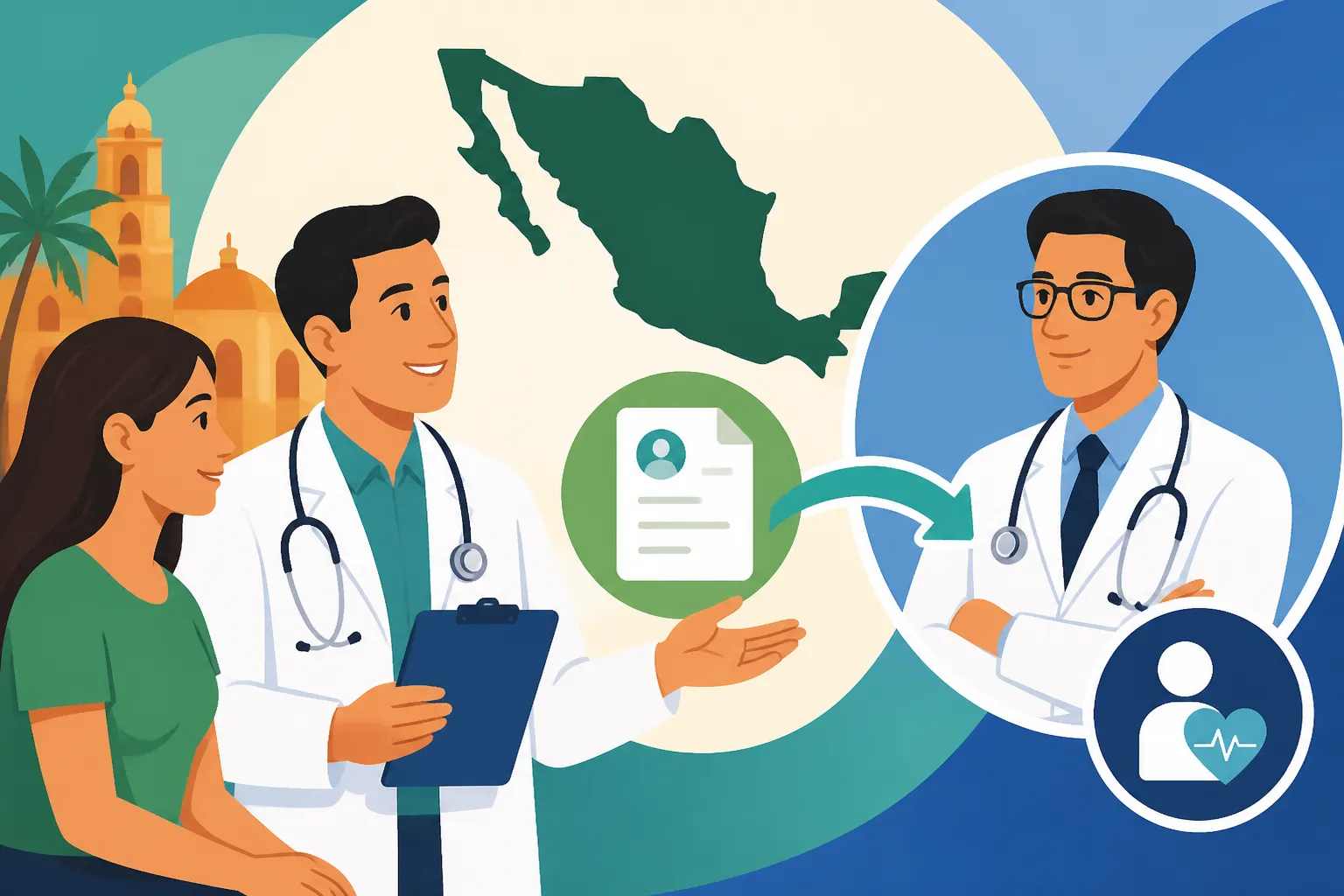
However, just because you can skip the GP doesn't always mean you should. A good family doctor in Mexico often acts as a coordinator, helping you find the specific type of specialist you need and ensuring your medical history is properly communicated. If you are navigating a complex issue, starting with a consultation at a local clinic can save you from booking the wrong type of specialist. For more on how these facilities differ, check out Navigating Hospitals and Clinics in Mexico: An Expat’s Guide to Medical Care.
The Public Sector: The Traditional Referral Path
If you are enrolled in the public system, such as IMSS (Instituto Mexicano del Seguro Social), the process is much more rigid and mirrors the "gatekeeper" model you might be familiar with. You cannot simply walk into a specialized IMSS hospital and ask for a consult. You must follow a strict hierarchy of care that begins at your local neighborhood clinic.
For expats who have gone through the process of How to Enroll in IMSS: Step-by-Step Guide for Foreign Residents, you know that paperwork is king. Within this system, a referral—known as a pase—is the only currency that matters. Without that stamped piece of paper from your family doctor, the specialist's door remains firmly closed.
How to Book a Specialist Privately Without a Referral
Most expats choose the private route because of the sheer speed and quality of care. If you have international coverage through a provider like Cigna Global, you might find that the process is incredibly streamlined. Here is exactly how I handle it when I need specialized care.
Finding and Vetting Your Specialist
You don't need a doctor to tell you who to see, but you do need to do your homework. The gold standard for finding specialists in Mexico is a platform called Doctoralia. It is essentially the Yelp of Mexican healthcare. You can filter by city, specialty, and most importantly for us, whether the doctor speaks English.
I always look for a doctor’s Cédula Profesional (their professional license number). In Mexico, specialists often display this prominently. You can even verify these numbers on government websites to ensure the person you are seeing is fully accredited. If you’re feeling overwhelmed, reading about Finding English-Speaking Doctors and Specialists in Mexico can give you a head start on building your local medical network.
The Direct Booking Process
Once you’ve found a specialist at a top-tier facility like the ABC Medical Center in Mexico City or Hospital San Javier in Guadalajara, you simply call the consultorio (office). You will speak with the asistente or secretaria. Unlike in many other countries, you rarely need to provide an insurance pre-authorization number just to get an appointment.
You will be asked for:
- Your full name.
- A brief description of the problem.
- Your contact information (WhatsApp is the primary mode of communication here).
Be prepared to pay the consultation fee in cash or via credit card at the time of the visit. If you are using a travel-friendly insurance like SafetyWing for shorter stays, keep all your receipts and a brief medical report from the doctor, as you will likely need these for reimbursement later.
When Your Insurance Requires a Referral
Even though the Mexican doctor doesn't require a referral, your insurance company might. If you are using a plan from Cigna Global, they may have "Direct Pay" agreements with certain hospitals, but they might still require a GP’s note for certain high-cost specialists or diagnostic tests like MRIs. Always call your insurance provider's international concierge before the appointment to see if they need a "Letter of Medical Necessity" from a local GP.
| Feature | Private Specialist Path | Public (IMSS) Specialist Path |
|---|---|---|
| Referral Required? | Usually No | Always Yes |
| Wait Time | 1–3 Days | Weeks to Months |
| Cost | 800–2,000+ Pesos per visit | Included in fees/taxes |
| Choice of Doctor | Total Freedom | Assigned by Clinic |
| Language | Often English-speaking | Primarily Spanish |
Navigating the Referral Process in the Public System (IMSS)
If you are a legal resident and have opted for public coverage, getting a referral is a test of patience and administrative stamina. The public system is divided into three levels: Level 1 (Family Medicine), Level 2 (General Hospitals), and Level 3 (Highly Specialized Centers).
Step 1: The UMF Visit
Everything starts at your Unidad de Medicina Familiar (UMF). This is the clinic assigned to you based on your home address. You must make an appointment with your designated family doctor. I recommend showing up early—very early. Even if you have an appointment time, the "first-come, first-served" mentality often prevails in the waiting room.
During this consult, you must explain your symptoms clearly. The doctor will decide if your case warrants a segundo nivel (second level) referral. If they agree, they will generate a digital and paper referral in the IMSS system. This is a crucial step in Public Healthcare in Mexico: IMSS and IMSS Bienestar Explained for Expats.
Step 2: Validating the Referral at the Archivo
Once the doctor hands you the referral, your work isn't done. You usually have to take that paperwork to the Archivo or Ventanilla de Referencias within the clinic. They will verify your vigencia (that your rights to healthcare are currently active) and then coordinate the appointment with the hospital that has the specialist you need.
Sometimes, they won't give you a date right then and there. They might tell you to "come back in three days" or wait for a phone call. In the public system, "tomorrow" is a flexible concept. If you have a chronic condition, managing your expectations is just as important as managing your symptoms. You can find more advice on this in Managing Chronic Illness in Mexico: Access to Medication and Specialists.
Step 3: Attending the Specialist Hospital
When your appointment date finally arrives, you must bring:
- Your original referral paper.
- Your IMSS Carnet (the little health ID booklet with your photo).
- A valid ID (Residency card or Passport).
- Any previous lab results or imaging you have had done privately (this can actually speed things up significantly).
Costs and Insurance Considerations for Specialist Care
One of the reasons Mexico is a top destination for Medical Tourism in Mexico: What to Know Before You Go is the cost-to-quality ratio. However, as an expat living here, you need to budget for specialist visits differently than you might back home.
Out-of-Pocket Expenses
A typical specialist consultation in a high-end private hospital usually ranges from 1,000 to 2,500 Mexican Pesos (roughly $60 to $150 USD). This fee covers the consultation only. If the doctor performs an ultrasound in the office or takes a biopsy, those costs are extra.
Always ask for a Factura (official tax invoice) if you plan to claim this on your Mexican taxes or if your international insurance requires it. Without a Factura, many insurance companies will reject the claim. If you are still weighing your options for coverage, read up on Health Insurance in Mexico: How Expats Can Get Coverage (2027).
Leveraging International Insurance
If you have a policy with Cigna Global, you are often paying for the peace of mind that comes with a high-level network. Many top-tier specialists in Mexico City, Monterrey, and Guadalajara are very familiar with these international giants. They may even have dedicated international departments to help you coordinate the paperwork.
For digital nomads or those on a tighter budget, SafetyWing offers a more "disaster-focused" approach. They generally don't care about referrals for initial specialist visits triggered by a new injury or illness, but they are very strict about pre-existing conditions. Always check the fine print of your policy before assuming a specialist visit will be covered. For more comparisons, see Choosing Private Health Insurance: Local Mexican Plans vs International Coverage.
Overcoming the Language Barrier with Specialists
Even if you find a specialist who speaks English, the administrative staff, nurses, and lab technicians often do not. This is where most expats get stuck. You might have a great conversation with the cardiologist, but then find yourself unable to book the follow-up stress test because the receptionist only speaks Spanish.
Useful Phrases for Specialist Referrals
If you are at a GP and believe you need a specialist, you can use these phrases:
- Creo que necesito ver a un especialista. (I think I need to see a specialist.)
- ¿Me puede dar una referencia para un cardiólogo? (Can you give me a referral for a cardiologist?)
- ¿Este especialista habla inglés? (Does this specialist speak English?)
- ¿Necesito una carta de necesidad médica para mi seguro? (Do I need a letter of medical necessity for my insurance?)
Don't be afraid to use translation apps, but remember that medical terms can sometimes get lost in translation. If you're feeling nervous about the language gap, I've put together a specific guide on Overcoming Language Barriers at the Doctor: Tips for Expats that includes a cheat sheet of common medical terms.
The Role of the Medical Report
In Mexico, it is very common for patients to keep their own medical records. When you see a specialist, they will often hand you a handwritten or typed nota médica. This is your property. Keep it in a dedicated folder. If you ever need to switch doctors or if you decide to see a specialist in the US or Canada for a second opinion, having these original Mexican reports is invaluable. It’s one of the quirks I mention in Healthcare Quality: Mexico vs Your Home Country – A Comparison.
Dealing with Diagnostic Referrals
Sometimes the referral you need isn't for a doctor, but for a test. Whether it's blood work at a Laboratorio or a CT scan at an imaging center, the process follows a similar "private vs. public" split.
In the private sector, you can often walk into a lab like Laboratorios Ruiz or Chopo and order your own blood tests. However, for complex imaging like an MRI or a PET scan, the facility will almost certainly require a written order from a physician. This doesn't have to be a "referral" in the insurance sense—just a signed prescription (receta) stating what needs to be scanned and why. For a deeper look at this, see Lab Tests and Blood Work in Mexico: Using Local Laboratories.
In the public system, the referral for the test is integrated into your specialist visit. The specialist will give you a voucher, and you will then head to the hospital's lab or imaging department to "schedule the schedule"—meaning you wait in line just to get a date for the actual test, which might be weeks away.
Summary of the Referral Experience
Getting to a specialist in Mexico is either the easiest thing you'll ever do or a masterclass in bureaucratic navigation. If you have the budget, the private route offers immediate gratification and high-touch service. If you are relying on the public safety net, you must respect the hierarchy and the paperwork.
My best advice? Even if you have IMSS, keep a "specialist fund" in your savings. There may be times when the wait for an IMSS neurologist is too long, and being able to self-refer to a private doctor for a 1,500-peso consult can give you the answers you need months sooner. This hybrid approach is how most veteran expats maintain their sanity and their health.
Disclaimer
This guide is for informational purposes only and does not constitute medical or legal advice. Healthcare regulations and insurance policies in Mexico can change rapidly. Always consult with a qualified medical professional in Mexico and verify your specific insurance coverage with your provider before seeking treatment. Specialist availability and referral requirements may vary significantly by state and municipality.