Maternity and Pregnancy Care in Mexico
Staring at a positive pregnancy test is an emotional rollercoaster, but when that test is sitting on a bathroom counter in a foreign country, the "what now?" feeling hits twice as hard. I remember the sheer panic of trying to translate medical terms while my mind was racing about hospital quality and citizenship laws. This guide breaks down every stage of maternity and pregnancy care in Mexico to ensure your journey is safe, supported, and clear.
Disclosure: This post may contain affiliate links. We may earn a commission at no extra cost to you if you make a purchase through these links. Read full disclosure.
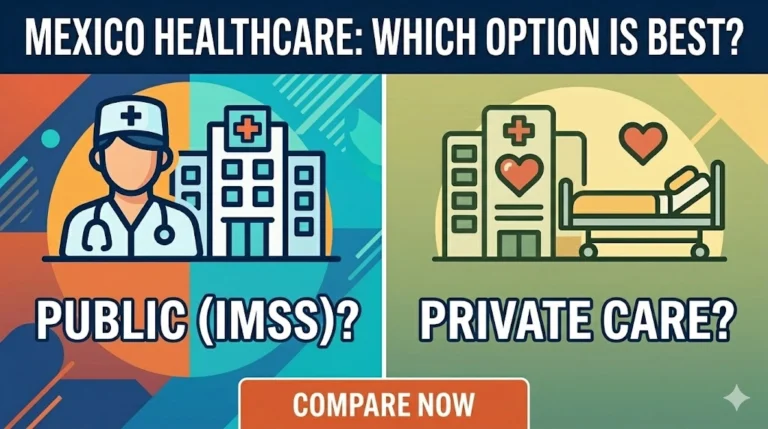
Choosing Your Path: Public vs. Private Maternity Care
The first crossroad every expat mother faces in Mexico is deciding between the public and private healthcare systems. This choice will dictate everything from the doctor you see to the level of "luxury" you experience during delivery. Unlike some countries where the public system is the only reliable choice, Mexico offers two very distinct experiences that cater to different budgets and priorities.
The IMSS Experience: Pros and Cons
For those who are legal residents and paying into the Mexican Social Security Institute, Public Healthcare in Mexico: IMSS and IMSS Bienestar Explained for Expats is an available route. The primary benefit of the public system is cost; prenatal care, the delivery itself, and postpartum medications are virtually free once you are enrolled. The medical staff at IMSS facilities are often the same top-tier specialists who work in private hospitals later in the afternoon, meaning the quality of the clinical care is generally high.
However, the "I've-been-there" reality is that the public system is plagued by bureaucracy and a lack of comfort. You will likely face long wait times in crowded waiting rooms, and you won't always see the same doctor at every appointment. Furthermore, IMSS hospitals often have strict policies regarding "acompañantes" (birthing partners), sometimes barring fathers from the delivery room entirely. If you value a personalized, intimate birth experience with English-speaking staff, the public route may feel isolating and stressful.
Private Hospitals: Luxury and Personalized Care
The majority of expats opt for the private system, and for good reason. Private hospitals in cities like Mexico City, Guadalajara, and Monterrey—think Hospital Ángeles or Star Médica—resemble high-end hotels more than clinical facilities. When you go private, you choose your "ginecólogo" (OB-GYN) from the start, and that specific doctor will be the one who attends your birth, regardless of what time of night you go into labor.
The level of personalized care in private facilities is exceptional. You’ll have a private suite, often with a sofa for your partner to sleep on, and the nursing-to-patient ratio is significantly better than in public wards. Most private OB-GYNs are accustomed to working with foreigners and often speak excellent English. For many, the peace of mind that comes with a Private Health Insurance in Mexico: GNP, AXA, and Major Insurers policy makes this the obvious choice to avoid the "tramites" (paperwork) of the public sector.
Midwifery and Home Birth Options
If you are looking for a more natural approach, Mexico has a deep, ancestral history of "partería" (midwifery) that is seeing a modern resurgence in expat hubs like San Miguel de Allende, Tulum, and Oaxaca. Modern "parteras" often work in "casas de parto" (birthing centers) that offer a middle ground between a clinical hospital and a home birth. These centers prioritize water births, delayed cord clamping, and immediate skin-to-skin contact.
It is important to note, however, that while midwives are highly skilled, they do not have the same surgical capabilities as a hospital. Most reputable midwives in Mexico have a "plan de traslado" (transfer plan) in place with a nearby private hospital in case of emergencies. If you choose this route, you’ll be paying out-of-pocket, as most standard insurance plans are hesitant to cover home births. You should weigh the cultural beauty of a traditional birth against the need for immediate medical intervention if complications arise.
Prenatal Care and Routine Screenings in Mexico
Once you've chosen your doctor, the rhythm of prenatal care in Mexico begins. You’ll find that the frequency of check-ups is quite high compared to the US or Canada, which can be very reassuring for a first-time mother in a new country.
Standard Check-up Schedules
In the private sector, you will typically see your OB-GYN once a month until the 32nd week, then every two weeks, and finally once a week as you approach your "fecha de parto" (due date). At each visit, it is standard practice for the doctor to perform a quick ultrasound right in their office. This was one of the biggest surprises for me; rather than waiting for a separate imaging appointment, I got to see my baby at every single check-up.
These visits are more than just clinical; they are social. Mexican culture is incredibly warm toward pregnant women. Don't be surprised if your doctor spends thirty minutes just chatting with you about how you're feeling emotionally. This holistic approach helps build a level of trust that is vital when you are Navigating Hospitals and Clinics in Mexico: An Expat’s Guide to Medical Care without your extended family nearby.
Finding an English-Speaking Obstetrician
Finding a doctor who speaks your language is about more than just convenience; it’s about safety and advocacy. You need to be able to express nuanced symptoms without fumbling for a dictionary. Most expats start their search in local Facebook groups or through Finding English-Speaking Doctors and Specialists in Mexico. In major cities, you can easily find doctors who did their residency in the US or Europe.
When interviewing a potential doctor, ask about their "tasa de cesáreas" (C-section rate). Mexico has one of the highest C-section rates in the world, particularly in private hospitals where they are often scheduled for the convenience of the hospital or the doctor. If you are committed to a vaginal birth, you need a doctor who is "pro-parto natural" and willing to wait for labor to start spontaneously.
Lab Work and Ultrasound Technology
Mexico’s private diagnostic labs, such as Laboratorio Médico del Chopo or Quest Diagnostics, are world-class. You will be sent for routine blood work, glucose tolerance tests, and specialized screenings like the "tamiz genético" (genetic screening) in the first trimester. The technology available for 3D and 4D ultrasounds is often more accessible and affordable than in many Western countries.
Most doctors will give you the orders for these tests, and you can walk into a lab without an appointment. Results are usually delivered via email within 24 to 48 hours. This efficiency is a breath of fresh air for those used to waiting weeks for lab results back home. For a deep dive into what these tests might run you, check out Healthcare Costs in Mexico: Doctor Visits, Hospital Stays, and Surgery Expenses.
Financial Considerations: Costs and Insurance
Understanding the financial landscape of having a baby in Mexico is crucial. While it is significantly cheaper than in the United States, it is still a major expense that requires planning, especially if you aren't covered by a local plan.
Out-of-Pocket Costs for Delivery
If you are paying out-of-pocket, most private hospitals offer "paquetes de maternidad" (maternity packages). These packages usually include the hospital room, operating room or delivery room fees, and basic supplies for a 24-to-48-hour stay. However, be very careful: these packages almost never include the fees for your OB-GYN, the pediatrician who attends the birth, or the anesthesiologist.
| Service Type | Estimated Private Cost (USD) | What's Included |
|---|---|---|
| Vaginal Delivery Package | $1,500 – $3,000 | Hospital stay, nursing, basic meds |
| C-Section Package | $2,500 – $4,500 | Surgery room, longer stay, recovery |
| Doctor Fees (OB + Ped) | $1,500 – $3,000 | Professional fees paid separately |
| Prenatal Visits | $40 – $100 per visit | Consultation and in-office ultrasound |
The total cost for a private birth usually lands between $4,000 and $8,000 USD, depending on the city and the complexity of the birth. This is where Health Insurance in Mexico: How Expats Can Get Coverage (2027) becomes essential.
Leveraging International Insurance
For many expats, international plans like Cigna Global are the gold standard. These plans often provide comprehensive maternity coverage, though they usually have a 10-to-12-month waiting period before you can conceive and be covered. Cigna Global is particularly favored because they often work on a "direct billing" basis with major Mexican hospital networks, meaning you aren't stuck paying a $6,000 bill and waiting months for reimbursement.
If you are a digital nomad or on a shorter stay, you might have a plan like SafetyWing, but it is important to check the fine print. Most travel-centric plans from SafetyWing do not cover routine maternity care or elective deliveries; they are designed for emergencies. If you find yourself pregnant while on a basic travel policy, you will likely need to transition to a more robust plan or prepare to pay out-of-pocket.
Hidden Fees and Pediatric Initial Costs
One thing I wish someone had told me was the "hidden" cost of the neonatologist. In Mexico, a pediatrician is legally required to be present at the moment of birth in a hospital setting. They will perform the initial Apgar tests and the "tamiz neonatal" (newborn screening). This fee is almost always separate from your OB-GYN's fee.
Additionally, if your baby needs to spend time in the NICU (UCIN in Spanish), costs can skyrocket. Make sure your insurance plan—whether it's a local Mexican policy or an international one like Cigna Global—covers the newborn from the moment of birth. Some plans require you to "add" the baby within 30 days, but they will backdate the coverage to the second of birth. Without this, a week in the NICU could cost more than your house.
The Delivery Experience: What to Expect in the Room
The day of delivery in Mexico is a mix of high-tech medicine and deep-rooted cultural traditions. Whether you are in a cutting-edge hospital in CDMX or a smaller clinic in Puerto Vallarta, the atmosphere is generally very supportive.
C-Section vs. Natural Birth Culture
As mentioned earlier, you must be your own advocate if you want a natural birth. In many private hospitals, the default is to schedule a C-section at 38 or 39 weeks. If you prefer a vaginal birth, look for a "doula" to accompany you. Doulas are becoming more common in Mexico and can act as a bridge between you and the medical staff, ensuring your "plan de parto" (birth plan) is respected.
Many hospitals now offer "parto humanizado" (humanized birth), which allows for movement during labor, the use of birthing balls, and less aggressive intervention. However, you must confirm that your specific hospital supports these practices. Some older facilities still insist on the lithotomy position (lying on your back) for the final stage of labor. For more on this, read Having a Baby in Mexico: Maternity Care Options for Foreigners.
Hospital Amenities and Support Staff
The service in a private Mexican hospital is often compared to a five-star hotel. You’ll have a private room where your partner can stay overnight. The "enfermeras" (nurses) are generally incredibly attentive, though they may not all speak English. Learning basic phrases like "Tengo dolor" (I have pain) or "Necesito ayuda con la lactancia" (I need help with breastfeeding) will go a long way.
One thing that is uniquely Mexican is the "canasta de regalo" (gift basket) culture. Friends and neighbors will often send massive floral arrangements or baskets of baby clothes to your hospital room. The hospital staff is used to a revolving door of visitors, though post-2020, many have implemented stricter limits on how many people can be in the room at once.
Postpartum Care and the "Cuarentena" Tradition
After the birth, you will be introduced to the concept of the "cuarentena." This is a traditional 40-day period where the mother is expected to rest, stay warm, and focus entirely on the baby. While you might not follow the strict traditional rules (like not washing your hair!), the cultural respect for this recovery period is a blessing.
Mexican doctors generally take postpartum recovery very seriously. You will have a follow-up appointment at 7 days and again at 40 days. During this time, you'll also be navigating the first few visits for your little one. You can find more about this in Pediatric Care in Mexico: Healthcare for Expat Children. The warmth of the community during this time is something I found much more profound in Mexico than back home; strangers will stop you on the street to bless the baby or offer advice (solicited or not!).
Legal and Administrative Steps After Birth
Once the baby is here and the "baby brain" has set in, you unfortunately have to deal with the most complex part of the process: the legalities. A baby born on Mexican soil is a Mexican citizen by birth, regardless of the parents' nationality.
Registering the Birth (Acta de Nacimiento)
The first step is obtaining the "Certificado de Nacimiento" from the hospital. This is a white and green form signed by the attending physician. You must then take this, along with your passports and marriage certificate (apostilled and translated if it's from abroad), to the "Registro Civil."
This is where the How to Get a CURP as a Foreigner: The Mexican ID Number Explained becomes relevant for your child. The "Acta de Nacimiento" (birth certificate) is your most important document. I highly recommend getting several "copias certificadas" (certified copies) immediately, as you will need them for everything from insurance claims to passport applications.
Dual Citizenship and Passports
Your child is likely a dual citizen. In addition to their Mexican birth certificate, you will need to report the birth to your home country’s embassy (for Americans, this is the Consular Report of Birth Abroad or CRBA). This process can take several months, so start as soon as you have the Mexican birth certificate.
Remember, a Mexican citizen must enter and exit Mexico using their Mexican passport. Even if your baby has a US or Canadian passport, you will need to apply for their Mexican passport at the SRE (Secretaría de Relaciones Exteriores) before you can travel internationally. This is a crucial step that many expats forget until they are trying to book a flight to show off the new arrival to the grandparents.
Obtaining the CURP for the Baby
The CURP (Clave Única de Registro de Población) is the unique identity code for everyone in Mexico. For a newborn, the CURP is often generated automatically when the birth is registered at the Registro Civil. You can usually print it out online a few days after registration. This number is required for the baby’s Pediatric Care in Mexico: Healthcare for Expat Children and for setting up any local savings accounts or future schooling.
Post-Birth Support: Pediatricians and Community
Navigating the first few months of parenthood in a foreign country can feel isolating, but Mexico has a way of wrapping you in a community if you know where to look.
Finding a Pediatrician
Your relationship with your pediatrician in Mexico will likely be much more informal and accessible than in your home country. Many Mexican pediatricians give out their personal WhatsApp numbers and are available for quick questions at almost any hour. This was a lifesaver for me during those 2:00 AM "is this a normal fever?" moments.
When looking for a pediatrician, try to find one who is "pro-lactancia" (pro-breastfeeding) if that is important to you, as the formula industry has a strong presence in Mexico. Many pediatricians operate out of small offices called "consultorios" attached to hospitals or in specialized medical buildings.
Expat Mom Groups and Support Networks
Don't try to do this alone. Every major city in Mexico has an "Expats with Kids" or "Moms in [City Name]" Facebook group. These groups are invaluable for finding English-speaking "nanas" (nannies), lactation consultants, and playgroups.
Beyond the digital world, look for "estimulación temprana" (early stimulation) classes. These are very popular in Mexico and are a great way to meet both local and expat parents while your baby works on their motor skills. Building this "chosen family" is what makes the experience of raising a child in Mexico truly special. It takes a village, and in Mexico, that village is usually ready and waiting with open arms and a lot of heart.
Disclaimer
The information provided in this guide is for informational purposes only and does not constitute professional medical, legal, or financial advice. Healthcare regulations, insurance policies, and immigration laws in Mexico are subject to change. Always consult with qualified professionals, such as certified OB-GYNs, immigration attorneys, and insurance brokers, regarding your specific situation and to ensure compliance with the most current Mexican laws and medical standards.