COVID-19 in Mexico 2026: Vaccination, Testing, and Travel Updates
Navigating the current endemic landscape of respiratory viruses in Mexico requires up-to-date knowledge for expats and tourists. This comprehensive guide details the latest vaccination campaigns, accessible testing options, travel protocols, and medical procedures to ensure your health remains fully protected abroad.
Disclosure: This post may contain affiliate links. We may earn a commission at no extra cost to you if you make a purchase through these links. Read full disclosure.
The Current Endemic Reality in Mexico
Shifting from Pandemic to Endemic Management
Mexico has officially transitioned its approach to COVID-19 from a state of acute pandemic emergency to an established endemic management model. This fundamental shift means the virus is treated similarly to the seasonal flu or other circulating respiratory illnesses that predictably spike during the cooler months. The federal Secretariat of Health no longer enforces nationwide lockdowns, strict mobility restrictions, or mandatory business closures. Instead, the government focuses heavily on decentralized epidemiological surveillance, tracking outbreaks through regional hospital admissions data rather than attempting to test every single individual who presents with a mild cough.
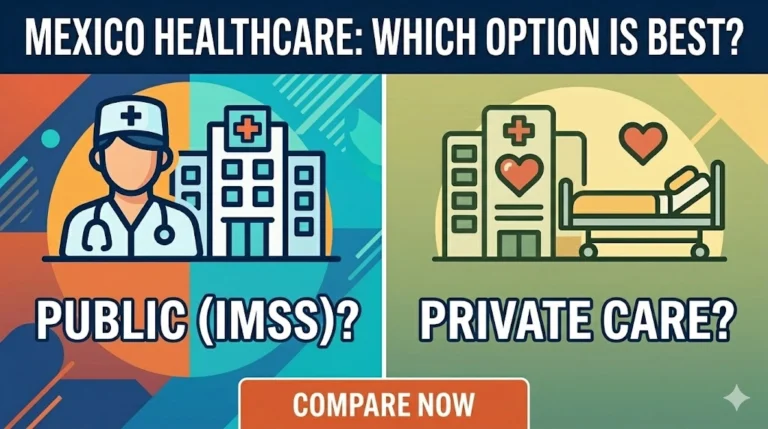
For expats residing in Mexico, this means a complete return to normal daily life, though with a heightened, normalized awareness of seasonal respiratory trends that typically peak during the winter months of December through February. Within the dual-track Mexican healthcare system, the approach to treating the virus varies significantly depending on whether you use public or private facilities. The public system treats cases largely on an outpatient basis unless severe, life-threatening respiratory distress is present. IMSS hospitals are frequently operating at maximum capacity handling a myriad of health issues, meaning public doctors rely heavily on advising rest and basic fever management for mild to moderate viral cases.
You can gain a deeper understanding of how this specific demographic of healthcare operates by reviewing our foundational guide on Public Healthcare in Mexico: IMSS and IMSS Bienestar Explained for Expats. Because public resources are stretched thin, expats enrolled in IMSS often find that rapid, personalized antiviral treatment is highly difficult to secure without enduring incredibly long wait times in crowded triage areas. Conversely, the private healthcare sector in Mexico has heavily optimized its approach to the virus, offering immediate, highly personalized care. If an expat experiences a sudden, severe spike in symptoms, private facilities have dedicated respiratory wards and sophisticated oxygen support systems ready at a moment’s notice.
Public Behavior and Masking Norms
The psychological transition among the Mexican population regarding the virus has been profound and fascinating to observe. In the early years of the pandemic, Mexico possessed one of the highest voluntary mask-wearing rates in the entire world, deeply rooted in a rich cultural respect for community health and a strong desire to protect elderly family members living in multi-generational households. Today, that intense vigilance has naturally subsided into a pragmatic, highly individualized approach to risk.
You will absolutely still see a significant minority of Mexican citizens voluntarily wearing high-quality N95 or KN95 masks in crowded supermarkets, inside banks, or while walking through dense, poorly ventilated street markets. However, the intense social pressure to conform to strict, universal masking has completely evaporated from public life. For expats, the primary adjustment is learning to intelligently read the subtle social cues of Mexican healthcare and corporate environments. While masks are no longer federally mandated in restaurants, shopping malls, or gyms, almost all private medical clinics, specialized dental offices, and standalone diagnostic laboratories still strictly enforce a mandatory mask policy for anyone stepping through their front doors.
If you confidently walk into a medical waiting room without a mask, the receptionist will politely but firmly hand you a surgical mask and expect you to wear it without argument. Understanding and deeply respecting these specific boundaries is crucial for navigating daily errands without unnecessary friction or cultural missteps. Beyond masking etiquette, the long-term legacy of the virus has fundamentally altered how proactive expats manage their daily wellness routines, shifting focus toward robust immune health and preventative daily measures.
Regional Variations in Health Policies
While the federal government in Mexico City dictates the overarching national health strategy, Mexico is a geographically massive and highly diverse country governed by thirty-two individual states. Each state maintains its own local Secretariat of Health, which holds the absolute legal authority to quickly implement or retract specific health protocols based on localized viral transmission rates. This deep decentralization means that the rules you experience in a high-altitude, dense urban center might be entirely different from the protocols enforced in a humid, heavily touristed coastal town.
For instance, in massive metropolitan hubs like Mexico City or Monterrey, local authorities might occasionally issue temporary, localized advisories strongly recommending mask usage on crowded public transportation networks during sudden winter surges. These urban environments naturally facilitate faster viral transmission. In stark contrast, in sprawling coastal retirement havens like Puerto Vallarta, Los Cabos, or Playa del Carmen, where life is lived predominantly outdoors in open-air restaurants and well-ventilated beach clubs, municipal health mandates are virtually non-existent, and respiratory illnesses generally spread at a much slower rate.
Furthermore, the quality and accessibility of medical infrastructure to handle regional outbreaks vary wildly. A surge of cases in a major city like Guadalajara is easily absorbed by its massive network of elite private hospitals and standalone diagnostic clinics. However, a sudden outbreak in a remote, isolated expat enclave in the mountains of Oaxaca or a small fishing village in Baja California Sur can rapidly overwhelm the tiny, underfunded local clinic. If you live in a rural area, understanding your evacuation options and regional capacities is absolutely vital. We cover this geographical disparity and how to plan for it extensively in our broader guide on Healthcare in Mexico: Complete Guide for Expats Public vs Private.

Entry Requirements and Travel Protocols
Arriving by Air and Land Borders
Mexico is globally famous for maintaining one of the most open, unrestricted border policies throughout the entirety of the historic global health crisis. That identical, economically driven philosophy strictly continues today. The Mexican federal government currently imposes absolutely no entry restrictions on international travelers arriving by air, land, or sea. You are absolutely not required to present a negative PCR or antigen test to cross the border, nor are you formally required to present any proof of vaccination against the virus.
Whether you are flying into the massive Cancun International Airport from snowy Toronto or walking across the busy pedestrian land border at Tijuana from San Diego, your immigration processing will be entirely focused on your visa validity and financial solvency, not your viral history. The complete elimination of the previously utilized digital health questionnaires and the dismantling of mandatory thermal temperature scanning cameras at immigration checkpoints means that arriving in Mexico feels exactly as it did prior to 2020.
However, expats must absolutely understand that a legally open border does not guarantee immediate, free medical care if they arrive actively and severely ill. Mexican immigration officials still firmly possess the overarching legal authority to deny entry to any foreign national who is visibly experiencing a severe medical emergency that could unnecessarily burden the local public health system. While Mexico does not actively restrict entry, highly mobile expats must be acutely aware of the constantly shifting rules governing their return trips or onward travel to other sovereign nations.
Domestic Travel Rules and Transportation
Traveling domestically within the vast, beautiful borders of Mexico is completely unrestricted and highly efficient. The massive domestic aviation network, dominated by modern carriers such as Aeromexico, Volaris, and VivaAerobus, operates hundreds of flights daily between major inland cities and sprawling coastal resorts without requiring any health passes, digital vaccination QR codes, or negative test results before boarding the aircraft. The boarding process is entirely standard: you present your physical or digital boarding pass alongside your passport or official Mexican residency card.
Similarly, the expansive luxury bus network that elegantly connects the country, featuring premier, highly comfortable lines like ADO, Primera Plus, and ETN, has completely returned to standard operational protocols. The previously mandatory health screening tents and aggressive sanitization tunnels outside major bus terminals have been permanently dismantled. You can comfortably book a first-class, fully reclining bus ticket from Mexico City to the colonial heart of Oaxaca, and travel overnight without any disruptive interruptions for government health checks.
However, because these long-haul luxury buses and domestic flights represent highly enclosed environments with heavily recirculated air, many cautious expats wisely choose to voluntarily wear high-grade masks during transit, specifically during the peak winter travel seasons when multiple respiratory viruses circulate heavily. If you are an older expat with underlying cardiovascular or respiratory issues, proactively practicing defensive hygiene during domestic transit is simply logical, intelligent risk management.
Managing Travel Insurance and Emergency Funds
While the Mexican government will absolutely not demand proof of active health insurance at the immigration desk upon arrival, traveling to or residing in Mexico without it is an incredibly reckless, potentially life-ruining financial gamble. Because the virus is now thoroughly endemic, the statistical probability of contracting it while traveling through crowded international airports or dining in busy resort towns remains highly significant. If an expat tragically contracts a severe strain of the virus and rapidly develops pneumonia requiring emergency oxygen therapy, the premier private hospitals will ruthlessly demand massive upfront financial guarantees before admitting them to a room.
Therefore, securing a highly robust health insurance policy that explicitly, unambiguously covers endemic respiratory illnesses is absolutely non-negotiable for responsible expats. If you are a short-term visitor, you must purchase a comprehensive travel medical policy. If you are a long-term resident, you must ensure your global policy from a top-tier provider like Cigna Global is fully active. A policy with Cigna Global ensures you can access the best private respiratory wards without facing bankruptcy, and it provides crucial medical evacuation coverage if your local town lacks an intensive care unit. We deeply analyze the fundamental differences between these specific policy types in our dedicated guide on Travel Insurance vs Local Insurance: Do Expats Need Both?.
When a sudden medical crisis actually strikes and you must urgently pay an upfront emergency room deposit or cover a high insurance deductible, traditional banking methods will frequently fail you. Swiping a foreign debit card for a sudden multi-thousand dollar hospital deposit often rapidly triggers an immediate fraud block from your home bank’s automated security algorithms. To flawlessly handle these terrifying financial moments, highly prepared expats proactively utilize Wise. By maintaining a dedicated medical emergency fund inside a secure Wise digital account, you can instantly transfer large sums of money directly to the Mexican hospital’s corporate billing department, utilizing the real mid-market exchange rate without exorbitant, hidden foreign transaction fees.
Navigating COVID Testing Facilities
Finding Reliable Diagnostic Laboratories
Despite the total cessation of global travel mandates, the demand for highly reliable, medically certified diagnostic testing in Mexico remains incredibly strong among the foreign community. Expats frequently require official tests to formally confirm a diagnosis before seeking highly specific antiviral prescriptions, to satisfy the uncompromising requirements of strict multinational employers before physically returning to a corporate office, or to provide absolute medical clearance before undergoing an elective surgery at a private Mexican hospital.
The absolute most reliable and professionally managed testing locations are the massive independent diagnostic laboratory chains that actively operate nationwide, such as Laboratorios Médico del Chopo, Salud Digna, and Laboratorios Polanco. These standalone facilities operate entirely independently of major hospitals and are meticulously, highly effectively designed for high-volume, rapid-turnaround diagnostic testing. You can easily locate a pristine branch in virtually any mid-sized Mexican city or major residential neighborhood.
While you can certainly request a viral test at the bustling emergency room of a major private hospital, doing so is highly inefficient and significantly, aggressively more expensive. The private hospital will inevitably charge you a premium triage consultation fee simply to walk through the door, strictly in addition to the highly inflated cost of the test itself. Therefore, intelligently utilizing the standalone diagnostic labs is the undisputed best practice for the expat community. We deeply detail exactly how this decentralized system efficiently operates for all types of blood work and advanced imaging in our article on Lab Tests and Blood Work in Mexico: Using Local Laboratories.
Rapid Antigen vs PCR Testing Options
The cost and speed of diagnostic testing in Mexico are remarkably competitive, frequently shocking expats who are heavily accustomed to the incredibly opaque and heavily inflated billing structures of North American healthcare systems. At the major diagnostic laboratory chains, the pricing is entirely transparent, heavily advertised directly on their public websites, and strictly payable at the point of service without the frustrating need for complex insurance pre-authorizations or doctor’s notes.
Premium commercial labs like Chopo offer highly streamlined online digital booking systems, significantly shorter wait times, and results flawlessly delivered securely via WhatsApp or email in highly verifiable digital PDF formats complete with official medical QR codes. Understanding which test to book depends entirely on why you need the result. An antigen test is ideal for immediate peace of mind, while a PCR is often mandated for official medical procedures.
To actively help you accurately budget for your specific diagnostic needs, review this comparative table of the most common testing options readily available to expats in Mexico:
| Type of Diagnostic Test | Primary Use Case | Average Cost (USD) | Typical Turnaround Time |
| Rapid Antigen Test | Quick confirmation of active symptoms | $15 – $35 | 15 to 45 Minutes |
| Standard PCR Test | Gold standard for surgical clearance | $45 – $90 | 12 to 24 Hours |
| Express PCR Test | Urgent medical or employer clearance | $100 – $150 | 2 to 6 Hours |
| Multiplex Panel | Determining exact respiratory virus | $60 – $100 | 12 to 24 Hours |
Utilizing Pharmacy Clinics for Immediate Needs
In addition to the massive laboratory chains, the sprawling Mexican retail pharmacy sector has heavily integrated rapid testing directly into its daily commercial operations. Major corporate pharmacy chains like Farmacias del Ahorro, Farmacias San Pablo, and Farmacias Guadalajara frequently offer Rapid Antigen testing directly inside their attached walk-in medical clinics. This localized option is incredibly convenient if you abruptly wake up feeling mildly ill and want immediate, cheap confirmation before interacting with your vulnerable expat community.
You simply walk up to the busy pharmacy counter, politely request an antigen test, quickly pay the highly affordable fee, and wait outside the clinic door. The attending licensed general practitioner will rapidly swab you, and you will securely receive a printed result within twenty minutes. However, it is absolutely vital to thoroughly understand that while these pharmacy tests are highly convenient for personal peace of mind, the basic printed receipts they provide rarely contain the sophisticated QR codes or official medical stamps strictly required for formal surgical clearance at top-tier private hospitals. For a complete understanding of exactly what these local clinics can and cannot legally provide, read Pharmacies in Mexico: How to Get Medications OTC vs Prescription.
When utilizing these various testing locations, actively carrying physical cash or a highly reliable, international debit card is essential. Some smaller, independent laboratories or localized neighborhood pharmacy clinics may suddenly charge a significant, unexpected surcharge for using a foreign credit card. Savvy expats seamlessly utilize their physical Wise debit cards for these transactions, ensuring the testing fee is instantly converted to pesos at the absolute best global exchange rate, entirely bypassing the massive conversion markups typically implemented by traditional banking institutions.
Vaccination Campaigns and Booster Availability
Government Sponsored Vaccination Programs
The Mexican federal government’s approach to mass vaccination heavily relies on highly publicized public health campaigns operated entirely through the federal Secretariat of Health and the sprawling IMSS infrastructure. During the colder winter months, the government routinely launches massive dual-track vaccination drives, heavily encouraging all citizens and legal residents to simultaneously receive their seasonal influenza shot and their updated viral booster. These public vaccines are provided entirely free of charge at hundreds of highly centralized locations, including government plazas and public health clinics.
For legally residing expats, accessing these free public vaccines is entirely possible, but it strictly requires navigating highly specific bureaucratic hurdles. To legally receive a free vaccine from a public health brigade, you must absolutely be a legal resident of Mexico holding a valid residency card, and you absolutely must possess a verified CURP (Clave Única de Registro de Población). The government nurses operating the public vaccination tables will aggressively demand to see your physical residency card and your printed CURP document to properly log your dose into the federal digital health registry.
However, the major point of intense contention for many expats regarding the public vaccination campaign is the highly specific brand of vaccine being freely offered. In recent years, the Mexican federal government has heavily procured and almost exclusively distributed vaccines manufactured in Cuba or Russia for its public booster drives. Because these highly specific vaccines completely lack emergency use authorization or formal, recognized approval from the United States FDA or the European Medicines Agency, a massive portion of the North American and European expat community aggressively declines them, actively seeking out Western-approved alternatives in the private sector instead.
Accessing Private Sector mRNA Vaccines
Recognizing the massive, undeniable demand from both wealthy Mexican citizens and the expansive expatriate community for highly trusted mRNA vaccines, the Mexican federal health regulatory agency completely opened the commercial pharmaceutical market. This monumental regulatory shift legally allowed global pharmaceutical giants to directly import and freely commercialize their updated, variant-specific mRNA vaccines strictly within the Mexican private healthcare sector.
Expats who strongly desire a premium mRNA booster can now completely bypass the crowded public health clinics and confidently purchase the vaccine entirely out of pocket. These highly coveted vaccines are widely available at top-tier private hospitals, specialized pediatric and family clinics, and select premium corporate pharmacy chains. The process is incredibly civilized and highly efficient; you simply walk into the private clinic or pharmacy, pay the commercial fee, and receive the injection from a highly licensed medical professional in a sterile, private room.
The out-of-pocket cost for a private mRNA booster in Mexico typically ranges from $45 to $85 USD per single dose. Because this is heavily classified as an elective, preventive measure, standard international health insurance policies generally absolutely do not reimburse this specific cost, meaning you must proactively budget for it personally. To highly effectively manage this expense without utilizing large amounts of cash, expats securely use their Wise cards directly at the pharmacy checkout counter, heavily ensuring the transaction is smooth and entirely free of hidden foreign transaction fees.
Documenting Your Immunization Status
Receiving the actual vaccine is only half the battle; ensuring that your medical status is officially, irrefutably documented and globally recognized is absolutely crucial for highly mobile expats who travel extensively across international borders. When you receive a free booster through the Mexican public health system, the nurses manually enter your CURP directly into the federal database. Theoretically, you can then log into the government’s portal a few weeks later to easily download a digital certificate complete with an official QR code, though the system frequently experiences technical delays.
If you actively choose to purchase an mRNA booster in the private sector, the documentation process is entirely different and heavily localized. Private pharmacies and boutique clinics are absolutely not digitally linked to the federal health database. When you receive a private vaccine, the clinic will simply provide you with a physical, heavily stamped medical receipt and a detailed lot number sticker physically pasted onto a clinic-issued vaccination card. You absolutely must guard this physical piece of paper with your life, as it is the absolute only legal proof that you successfully received the updated booster in Mexico.
For expats who urgently require flawless, digitally verifiable vaccine records for their strict multinational employers or for highly complex onward travel to specific countries that still maintain rigid health protocols, relying on a simple paper receipt from a Mexican pharmacy can be highly stressful. We deeply explore the massive, intricate complexities of managing cross-border medical documentation and international immunization schedules in our highly detailed guide on Vaccinations Needed for Mexico: Guidance for Expats 2027. Keeping multiple, high-resolution digital photographs of your private vaccination receipts securely stored in the cloud is highly recommended.
Handling a Positive Diagnosis as an Expat
Isolation Guidelines and Telemedicine
If you unfortunately develop severe symptoms or test positive for a respiratory virus while happily living or vacationing in Mexico, immediate, highly proactive medical intervention is the absolute best strategy for a rapid, complication-free recovery. While the Mexican federal government absolutely no longer legally mandates forced, monitored quarantines, the broader expat community culturally expects highly responsible, selfless behavior. If you officially test positive, you are strongly expected to strictly isolate in your home or hotel room for a minimum of five days.
If you are generally healthy and experiencing mild symptoms, your absolute first line of defense is a private general practitioner. However, if you are far too sick to safely leave your apartment or luxury resort hotel room, Mexico enthusiastically offers an incredibly robust, highly modernized network of telemedicine services. Many elite private hospitals and specialized expat clinics offer highly secure video consultations where a bilingual doctor can remotely, accurately evaluate your breathing and electronically prescribe necessary medications directly to your local neighborhood pharmacy. We extensively detail exactly how to aggressively leverage these remote services effectively in Telemedicine in Mexico: Accessing Online Doctor Consultations as an Expat.
Actively managing your physical isolation in a foreign country requires significant logistical planning, especially if you live entirely alone. Because you absolutely cannot safely go to the local market, you must actively rely heavily on Mexico’s incredibly robust, highly efficient delivery infrastructure. Applications like UberEats, Rappi, and Didi Food are absolute lifelines, allowing you to instantly order fresh groceries, hot restaurant meals, and massive jugs of purified drinking water directly to your front door without any physical contact with the delivery driver.
Nutritional Support and Symptom Management
Aggressively supporting your body’s highly complex recovery process is absolutely paramount during an active viral infection. While powerful prescription antiviral medications explicitly target stopping viral replication, your exhausted body desperately needs intense, highly targeted nutritional support to heavily repair damaged respiratory tissue and actively overcome profound post-viral fatigue. Ensuring your immune system has the raw materials it needs can significantly shorten the duration of your illness.
Unfortunately, finding highly specialized, high-dose Vitamin D3, bioavailable Zinc, potent NAC, or immune-boosting liposomal Vitamin C in standard Mexican pharmacies can be incredibly frustrating. Local retail pharmacies are primarily stocked with basic pain relievers and generic multivitamins, often completely lacking premium recovery supplements. Relying on local availability while you are actively sick and confined to your home is not a viable strategy.
Consequently, the educated expat community relies almost entirely on iHerb to proactively stockpile their medicinal cabinets. Utilizing iHerb allows expats to securely bulk-order premium, globally trusted immune supplements at standard international market prices. By ordering through iHerb before the winter respiratory season begins, you strongly ensure you have a vital, highly potent recovery arsenal waiting patiently in your kitchen cabinet the exact moment a severe fever strikes. For broader insights on optimizing your daily diet and environmental health, consult Staying Healthy in Mexico: Essential Tips for Food Water and Preventive Care.
When to Seek Advanced Hospital Care
Thoroughly understanding precisely when to abandon outpatient self-isolation and immediately escalate your care to a full, intensive hospital admission is the single most critical, life-saving decision you can successfully make. If your severe fever remains dangerously high for multiple days despite heavy medication, or absolutely most critically, if you experience sudden, severe shortness of breath and a rapid, dangerous drop in your blood oxygen saturation levels, you must immediately head to the emergency room of a major private hospital.
Absolutely do not attempt to drive yourself. Actively call a private, highly equipped ambulance service directly, ensuring they transport you rapidly to a top-tier facility like the elite ABC Medical Center in Mexico City or Hospital San Javier in Guadalajara. We firmly provide exact, actionable protocols and life-saving Spanish emergency phrases for this terrifying scenario in our guide on Medical Emergencies in Mexico: What Expats Should Know and Prepare. Upon arrival at the private emergency room, the administrative billing staff will instantly demand a massive, non-negotiable upfront financial deposit before safely transferring you to the Intensive Care Unit.
This is the exact, utterly terrifying moment when holding a highly premium global health insurance policy from Cigna Global unequivocally proves its massive, undeniable worth. By immediately presenting your physical Cigna Global card, the hospital’s bilingual international patient coordinator can rapidly contact the insurer’s massive 24/7 emergency dispatch team. The global insurer will aggressively negotiate the massive admission deposit strictly on your behalf, immediately issue a direct-billing Letter of Guarantee, and seamlessly allow the Mexican medical team to focus entirely on saving your life. By aggressively preparing for this absolute worst-case scenario, highly responsible expats can securely enjoy the immense cultural beauty of Mexico with absolute confidence in their total medical security.
References
Primary sources (official)
- Secretariat of Health (Secretaría de Salud) Mexico – COVID-19 Official Portal: https://coronavirus.gob.mx/
- World Health Organization (WHO) – Mexico Health Dashboard: https://data.who.int/countries/484
Other helpful sources
- Centers for Disease Control and Prevention (CDC) – Travel Health Mexico: https://wwwnc.cdc.gov/travel/destinations/traveler/none/mexico
Disclaimer
The detailed information strictly provided in this extensive article is for educational and informational purposes only and absolutely does not constitute professional medical, legal, or financial advice. Healthcare laws, endemic disease management protocols, international travel restrictions, and specific vaccine availability in Mexico are highly complex and subject to rapid, entirely unpredictable change by federal and state authorities. Always deeply consult with a certified medical professional regarding your specific health issues, strictly verify all hospital admission protocols locally, and securely speak directly to a fully licensed, independent insurance broker before making any financial decisions regarding health insurance policies.