Learning to Drive in Mexico: Getting Your License as a Foreigner
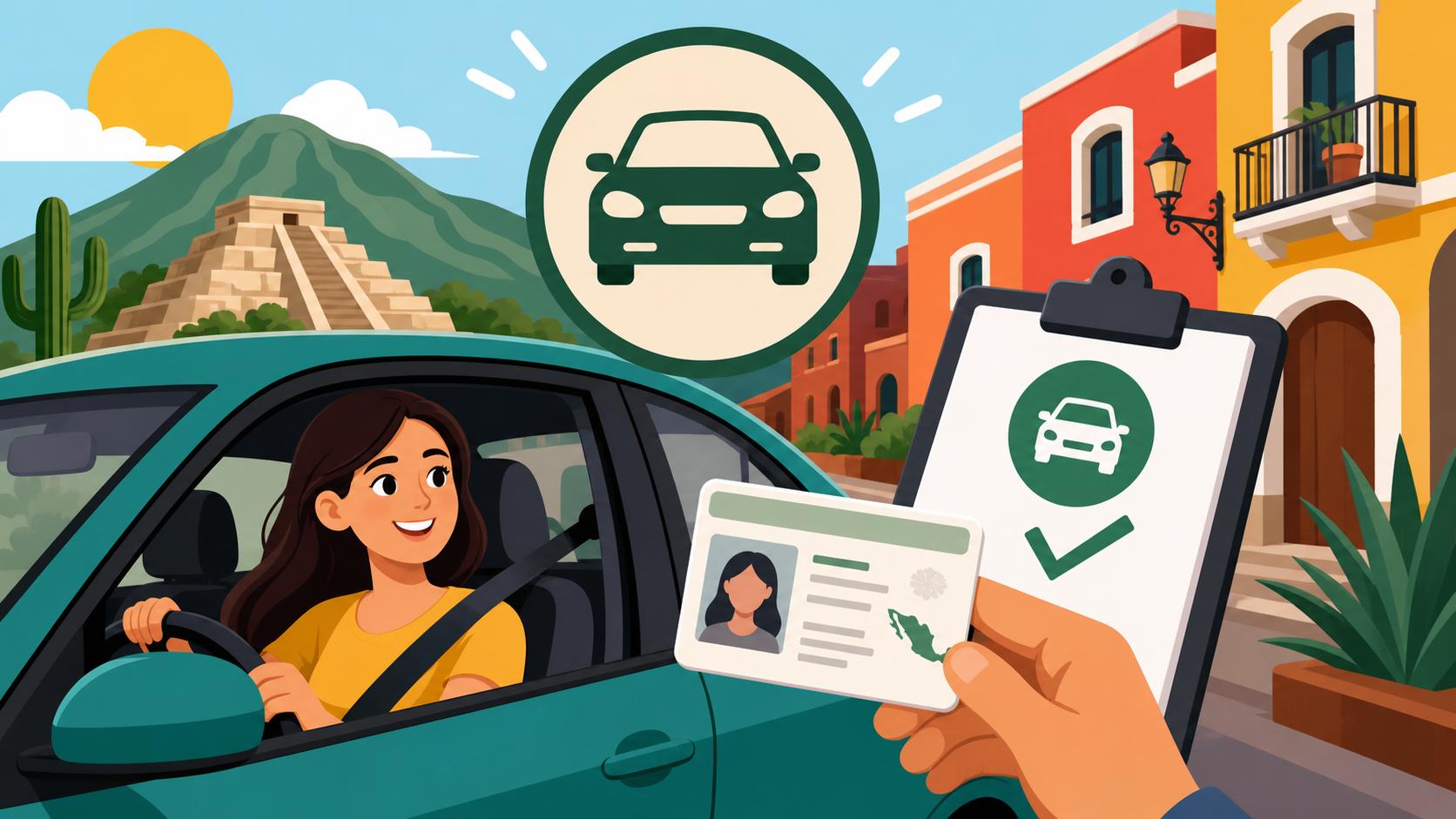
The stomach-dropping panic of seeing a police officer signal you to pull over on a dusty Mexican highway is a rite of passage for many of us. I remember my hands shaking as I fumbled for my foreign license, praying the officer wouldn't ask why I hadn't switched to a local one yet. This guide settles that anxiety by walking you through exactly how to secure your Mexican driver’s license.
Disclosure: This post may contain affiliate links. We may earn a commission at no extra cost to you if you make a purchase through these links. Read full disclosure.
Understanding the Rules: Can You Use Your Home Country License
One of the most common questions I get from newcomers is whether their license from the US, Canada, or Europe is "good enough." The short answer is: for a while, yes. If you are in Mexico on a tourist permit (the FMM), your home country license is generally valid for the duration of your 180-day stay. However, the moment you transition to being a resident—whether temporary or permanent—the clock starts ticking. Technically, once you are a resident, you are expected to have a local license to be fully compliant with local traffic laws.
Beyond the legal technicality, having a Mexican driver’s license is a massive "quality of life" upgrade. It serves as an official government-issued photo ID that is accepted everywhere, from banks to domestic airport security. It means you don't have to carry your passport around, risking loss or theft. Furthermore, if you are involved in a fender bender, having a local license makes the insurance process infinitely smoother. Some insurance companies may even use the lack of a valid local license (for residents) as a loophole to deny a claim.
If you are staying at a Selina or another hub for digital nomads, you might feel like you can get by with just your foreign ID, but if you plan on staying through a residency permit, you need to start the paperwork. While you’re out exploring, having a reliable data connection via Airalo is essential because the location of the licensing offices can sometimes change, or you might need to quickly translate a specific requirement on the state government’s website.
The Step-by-Step Process of Getting Your Mexican Driver’s License
Navigating the Secretaría de Movilidad (SEMOVI) or its local equivalent in your state is often described as a "paperwork dance." I’ve spent my fair share of mornings in fluorescent-lit waiting rooms, and the secret to success is always over-preparation. You cannot just show up with your foreign license and expect a swap. Mexico does not have "reciprocity" agreements with most countries in the same way some European nations do.
First, you must gather your "folder of doom." This includes your valid passport, your residency card, and a proof of address (comprobante de domicilio) that is no more than three months old. This proof is usually a CFE (electricity) bill or a Telmex (phone) bill. Crucially, the name on the bill does not always have to be yours, but it must be a physical address in the state where you are applying. You will also need to know your CURP. If you haven't sorted that out yet, you should look into Getting a CURP as a Foreigner: The Mexican ID Number Explained before heading to the DMV.
Once your documents are in order, the process usually involves a medical exam, a written test, and sometimes a driving test. The medical exam is often just a quick eye test and a question about your blood type. If you don't know your blood type, you may need to get a quick lab test at a local pharmacy like Farmacias del Ahorro. After the exam, you'll pay the fee. I highly recommend checking the current Understanding Mexico's UMA: How It Determines Financial Requirements because license fees are often calculated based on these units and can change annually.
| Document Required | Importance Level | Expat Tip |
|---|---|---|
| Residency Card (Temporary/Permanent) | Mandatory | You cannot get a license as a tourist in most states. |
| Proof of Address (Comprobante) | Mandatory | Must be a physical bill (CFE/Water), not a printout of an online bank statement. |
| Blood Type Certificate | High | Many states require a lab-verified blood type on the card. |
| CURP | Mandatory | Print the most recent version from the government portal. |
| Foreign License | Optional/Helpful | Sometimes used to waive the practical driving test. |
The written test is almost always in Spanish. While some offices in high-expat areas like San Miguel de Allende or Puerto Vallarta might offer an English version, don't count on it. I suggest ordering a Spanish-English driving dictionary or road rule guide on Amazon Mexico a week before your appointment to familiarize yourself with terms like glorieta (roundabout) and alto (stop). If you are nervous about the test, you can also look into the specifics of Exchanging a Foreign Driver’s License for a Mexican License to see if your specific state allows for a simpler "exchange" process which might skip the exam.
State-by-State Variations and What They Mean for You
Mexico is a federation, and that means every state has its own rules. Getting a license in Mexico City (CDMX) is a completely different experience than getting one in Yucatan or Jalisco. For example, in Mexico City, for a long time, you could practically "buy" a license by paying the fee and skipping the test entirely—though they have recently moved toward more stringent requirements. In contrast, states like Guanajuato are known for being quite strict with their practical driving exams.
You should also be aware of the "coyotes" who hang out outside the licensing offices. These are fixers who claim they can get you to the front of the line or help you "pass" for a fee. My advice? Avoid them. Not only is it legally gray, but you risk being scammed with a counterfeit license that will be detected the first time a police officer scans it. It is much better to do it the right way, even if it takes a few hours of your time. If you do get pulled over and find yourself in a tricky situation, it helps to understand the cultural nuances of Dealing with Corruption: Should Expats Pay “Mordida” (Bribes)? so you can handle the interaction professionally and legally.
Another major variation is the validity period. Some states offer licenses for 2, 3, or 5 years, and some even offer "permanent" licenses that never expire (though these are becoming rarer). Always opt for the longest duration possible. The cost difference is usually minimal, and it saves you from having to repeat the "folder of doom" process every couple of years. For those who are worried about the safety of the roads while they learn the local ropes, I suggest reading up on Safety in Mexico: What Expats Need to Know About Staying Safe to understand the driving environment better.
Practical Tips for Driving Success in Mexico
Once you have that plastic card in your wallet, the real learning begins. Driving in Mexico is an exercise in intuition and assertiveness. You’ll quickly learn that turn signals are often treated as suggestions, and hazard lights are used to indicate everything from "I'm stopping to buy a taco" to "there is a massive pothole ahead." Speaking of potholes, they are a legitimate hazard. After you get your license and your car, ensure you have robust Car Insurance in Mexico: Understanding Coverage and Costs because the suspension-destroying baches (potholes) and the infamous topes (speed bumps) are everywhere.
If you brought your own car from home, there are additional layers of bureaucracy to handle alongside your license. You must keep your papers in order to avoid the vehicle being impounded. Residents have specific obligations regarding their vehicles, and you should definitely check the rules for Temporary Import Permit (TIP) for Cars: What Residents Should Know to ensure your car stays legal as your residency status changes. The intersection of your visa and your driving privileges is a common area of confusion, so take a look at How to Get a Mexican Driver's License as a Resident (Visa Implications) for the finer legal details.
Finally, remember that the "uno y uno" rule is your best friend. In many Mexican cities, at intersections without a working light, drivers take turns—one from the north-south street, then one from the east-west street. It is a beautiful, self-regulating system that works surprisingly well. If you approach every drive with a mix of caution and the "I've-been-there" patience of a veteran expat, you’ll find that driving in Mexico is not just a necessity, but a way to truly unlock the hidden gems of this incredible country.
Disclaimer
This guide is intended for informational purposes only and reflects the personal experiences of the author and general practices in Mexico as of 2026. Immigration laws and transit regulations in Mexico are subject to frequent changes at both the federal and state levels. Always verify requirements with the official Secretaría de Movilidad or the Instituto Nacional de Migración (INM) before proceeding with any legal applications. The author and publisher are not responsible for any legal issues, fines, or denied applications resulting from the use of this information.