Can You Be Denied Entry to Mexico? Common Reasons and How to Avoid Them
Standing in a long, humid line at the Mexico City airport after a ten-hour flight is the ultimate test of expat patience, especially when you realize that entry isn't a guaranteed right. I remember the cold sweat I broke into during my third border run when the officer started questioning why I didn't have a residency card yet. This guide solves the mystery of entry denials, helping you navigate the interview and paperwork to ensure you aren't sent back on the next flight.
Disclosure: This post may contain affiliate links. We may earn a commission at no extra cost to you if you make a purchase through these links. Read full disclosure.
Understanding the Discretionary Power of the INM Officer
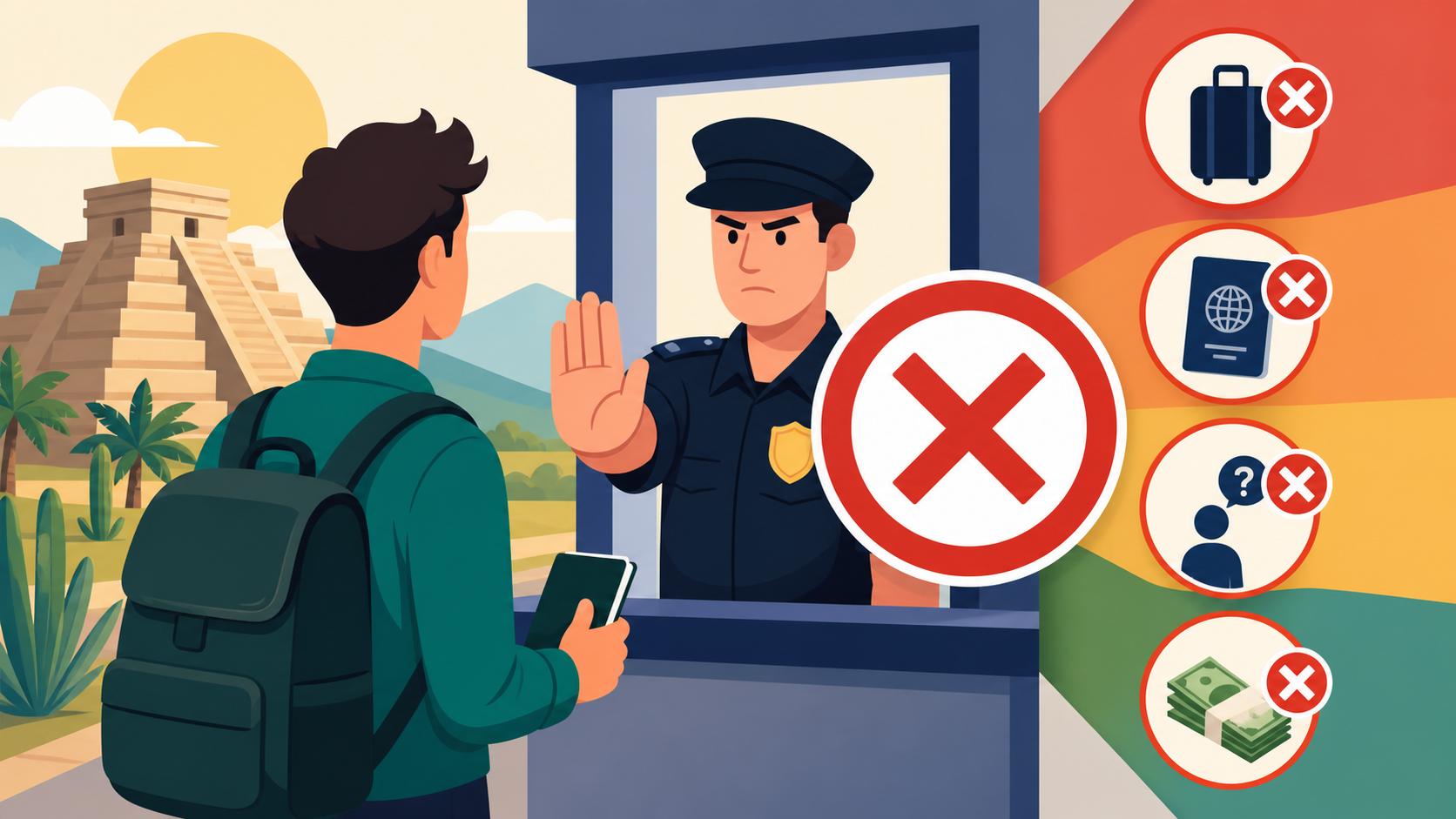
The most important thing to understand about entering Mexico is that the Instituto Nacional de Migración (INM) officer standing behind the glass booth has immense discretionary power. While most tourists and future expats sail through with a smile and a stamp, that officer is legally empowered to decide whether your stated purpose of travel matches your documentation and behavior. In my years of living here, I have seen people with every document in order get grilled simply because they were combative or appeared nervous.
The interview is the most critical stage. It is not just a formality; it is a brief psychological and administrative assessment. The officer is looking for inconsistencies. If you say you are here for a week of vacation but you have three massive suitcases and a desktop computer, they are going to suspect you are moving here permanently without the proper visa. This is often where the trouble starts. Many travelers believe that the Mexico Tourist Card (FMM) Explained: Entry Requirements for 2026 is a "right" to 180 days, but in reality, that number is the maximum allowed, not the default. The officer can give you 7 days, 30 days, or deny you entirely if they feel you are circumventing the immigration system.
Furthermore, the shift toward a digital system has changed the landscape. In many major airports, you no longer receive a paper FMM; instead, your entry is recorded digitally. While this speeds things up, it also means your entire history is visible at a glance. If you have been doing "border runs" for years to avoid getting residency, the officer will see that pattern instantly. Understanding Will I Get 180 Days? Understanding Mexico's Tourist Entry Stamp Policies is essential before you land, as the "automatic six months" is largely a thing of the past in high-traffic hubs like Cancun and CDMX.
Common Reasons for Being Turned Away at the Border
One of the most frequent reasons for entry denial is the lack of a return or onward flight. If you arrive on a one-way ticket claiming to be a tourist, you are waving a massive red flag. The officer wants to see that you have a plan to leave. I always advise friends to have a printed copy of their return itinerary. If you are asked Do I Need a Return Flight to Enter Mexico as a Tourist? and you don't have a clear answer, the officer may conclude you intend to stay illegally.
Financial solvency is another sticking point. While officers rarely ask to see your bank balance, they can do so if they suspect you don't have the means to support yourself during your stay. This is particularly true for younger travelers or digital nomads who look like they might try to find under-the-table work. If you are in the process of applying for residency and need to prove your income, using a service like RushTranslate to have your foreign bank statements translated into Spanish can show the officer that you are prepared and serious about following the rules. Showing a reputable health insurance policy from a provider like Cigna Global can also serve as secondary proof that you are a responsible traveler who won't become a burden on the Mexican state.
Criminal records are a non-negotiable barrier. Mexico has access to international databases, and if you have a record of serious crimes—specifically those that are also considered felonies in Mexico—you will likely be denied entry. This includes crimes of moral turpitude or anything involving violence. Even previous administrative issues, such as Overstaying in Mexico: Consequences and How to Fix Your Status in the past, can lead to a denial. If you were previously deported or left the country with an expired permit without paying the fine, that "alert" will pop up the moment they scan your passport.
| Scenario | Risk Level | How to Mitigate |
|---|---|---|
| One-way ticket (Tourist) | High | Book a refundable return flight or onward bus ticket. |
| Multiple back-to-back entries | High | Apply for a Mexico Temporary Resident Visa: Comprehensive Guide for Expats (2026 Update). |
| Lack of hotel reservation | Medium | Have a printed confirmation of your first 3 nights of stay. |
| Aggressive or rude behavior | Medium | Remain calm, polite, and answer only what is asked. |
| Criminal record (Interpol alert) | Critical | Consult an immigration attorney before attempting travel. |
The "Second Inspection" and What to Expect
If the first officer isn't satisfied with your answers, you won't be immediately handcuffed, but you will be led to a "second inspection" area, often referred to as the "cuartito" (the little room). This is where the real stress happens. I’ve seen people sit in these rooms for hours while officials verify their hotel bookings or call their supposed host. During this phase, they may ask for more detailed documentation. This is why having your papers organized is so vital. If your documents are in a foreign language, having them handled by RushTranslate ensures there is no "lost in translation" moment that could cost you your entry.
During the second inspection, immigration officers may check your phone or laptop if they suspect you are coming to work illegally. In Mexico, "work" means earning money from a Mexican source. While being a digital nomad is generally accepted, if you tell the officer you are "looking for a job" or "starting a local business" without the proper work permit, you are effectively asking to be denied. It is much safer to be clear about your status. If you are a resident, make sure you know the rules for Leaving Mexico and Re-entering: Travel Tips for Residents and Visa Holders so you don't accidentally enter as a tourist and invalidate your residency.
If the final decision is a denial of entry, the airline that brought you is legally responsible for flying you back to your point of origin. You will be held in a secure area of the airport until the next available flight. You usually won't have access to your checked luggage, and your passport will be handed to the flight crew and returned to you only once you land back in your home country. It is a traumatic and expensive experience that can be avoided with proper preparation and a bit of "immigration etiquette."
Practical Tips to Ensure a Smooth Entry
The best way to avoid a denial is to look and act like a prepared resident or a high-value tourist. This means having your "folder of life" ready. This folder should contain your printed flight itinerary, hotel or Airbnb confirmation, and proof of international health insurance. Even if you don't think you need it, having a policy from Cigna Global ready to show can demonstrate that you have the resources to handle any medical emergencies without relying on the public system. The officer is essentially looking for reasons to trust you; give them those reasons before they have to ask.
Language can also be a barrier. While many INM officers speak some English, especially in tourist zones, they are not required to. If you struggle with Spanish, do not get frustrated. Use simple sentences and remain humble. If you are nervous about the language gap, reviewing Overcoming Language Barriers at the Doctor: Tips for Expats can give you some general strategies for communicating important information in high-stakes environments. Being able to say "I am here for vacation for 30 days and I have a return flight" in clear Spanish goes a long way.
Finally, if you are planning on staying in Mexico long-term, stop playing the "tourist card" game. The immigration climate is much stricter than it was a decade ago. The most "denial-proof" way to enter is to have your residency visa sticker in your passport. If you haven't started that process yet, I highly recommend checking out Mexican Consulate Appointments: Tips to Succeed in Your Visa Interview to begin your journey toward legal residency. Once you have that card, the entry process becomes a simple "welcome home" rather than an interrogation.
Essential Documentation Checklist for Arrival
Before you board your flight, go through this checklist. Being over-prepared is never a disadvantage at the Mexican border.
- Passport Validity: Ensure your passport is valid for at least six months. While Mexico doesn't strictly require this for tourists, many airlines will refuse to board you if you have less.
- Visa or Residency Card: If you are a resident, you must present your card. Never enter as a tourist if you hold residency.
- Onward Travel: A printed flight or bus confirmation leaving Mexico.
- Accommodation Details: The exact address and phone number of where you are staying. If staying with a friend, have their full name and a copy of their ID or a utility bill from their home.
- Translated Documents: If you are carrying specific medical or financial records to prove solvency, use a certified service like How to Translate Documents for Your Mexican Visa Application (Certified Translations) to ensure they are accepted.
- Knowledge of Terms: Familiarize yourself with Mexico Immigration Terminology 101: FMM, CURP, RFC and Other Essentials so you understand what the officer is asking for.
By treating the entry process with the respect it requires, you can avoid the heartbreak of being turned away. Mexico is a welcoming country, but like any sovereign nation, it wants to ensure that those entering are doing so honestly and legally. Take the time to prepare, keep your cool at the booth, and you'll be out of the airport and sipping a margarita in no time.
Disclaimer
This guide is for informational purposes only and does not constitute legal advice. Immigration policies in Mexico can change without notice, and the final decision on entry always rests with the individual INM officer at the port of entry. For specific legal concerns or complex cases, we recommend consulting with a certified Mexican immigration attorney or contacting your nearest Mexican consulate.