Lost Your FMM or Residency Card? Steps to Replace Lost Immigration Documents
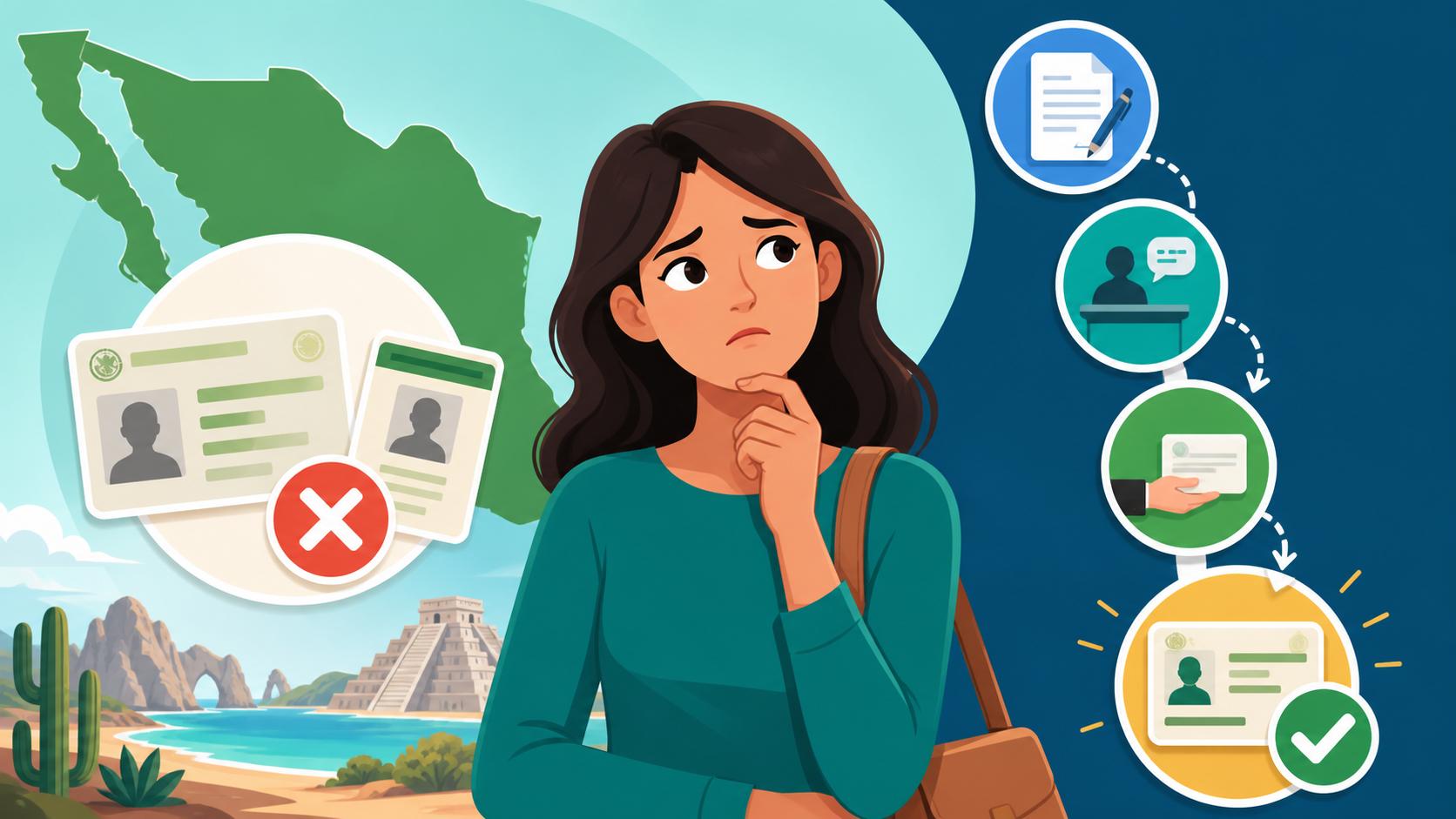
Losing your Mexican residency card or FMM is a heart-stopping moment that usually happens at the worst possible time, like forty-eight hours before an international flight. I remember the cold sweat I felt when I realized my wallet—and my precious plastic card—was gone after a crowded market visit in Oaxaca. This guide walks you through the exact steps to replace your lost immigration documents legally and efficiently.
Disclosure: This post may contain affiliate links. We may earn a commission at no extra cost to you if you make a purchase through these links. Read full disclosure.
The Immediate Response What to Do in the First 24 Hours
The moment you realize your residency card (tarjeta de residente) or your FMM (Forma Migratoria Múltiple) is missing, your priority shifts from panic to paperwork. This isn't just about the physical loss; it is about your legal standing in the country. In Mexico, your residency card is your primary identification, and without it, you are technically unable to prove your right to be in the country if stopped by authorities.
Filing the Police Report (Acta de Hechos)
The most critical step—and the one most expats want to skip because of the language barrier—is filing a formal report with the Ministerio Público. You cannot walk into a National Institute of Migration (INM) office and ask for a new card without a certified police report stating that the document was lost or stolen. This document is known as an Acta de Hechos or Denuncia.
When you go to the station, be prepared to wait. You will need to explain exactly where and when you believe the document was lost. If your Spanish isn't fluent, this is a great time to bring a friend or a translator. You should also check out Overcoming Language Barriers at the Doctor: Tips for Expats for general advice on navigating high-stakes conversations in Spanish, as the logic applies to police stations too. The officers will issue a stamped, signed paper. Ensure all the details are correct, especially your name as it appears on your passport and your Mexico Immigration Terminology 101: FMM, CURP, RFC and Other Essentials details.
Protecting Your Identity and Finances
If your card was in a wallet that was stolen, the immigration document is only half the battle. You need to immediately freeze any Mexican bank cards and contact your home-country banks. Identity theft is a real concern, and your residency card contains your CURP, which is linked to your tax and banking records.
While you are dealing with the immediate stress of the loss, check if your international health or renters insurance offers any assistance for lost travel documents. Companies like Cigna Global often provide resources or coverage for emergency assistance when you are living abroad, which can help mitigate the costs of travel or expedited document replacement if you are far from your home INM office.
Assessing Your Current Legal Timeline
Are you a Temporary Resident or a Permanent Resident? The replacement process is largely the same, but the urgency might differ if you are close to an expiration date. If you were about to start Renewing Your Temporary Resident Visa: Timeline and Procedures, the loss of the card adds a layer of complexity because you cannot renew a card you do not have. You must replace the lost card first before the renewal process can technically begin, though some INM offices may allow you to bundle the "Reposition" and "Renewal" if you catch a particularly helpful officer on a good day.
Navigating the INM Replacement Process for Residency Cards
Once you have your police report in hand, the real "fun" begins at the Instituto Nacional de Migración. The process for replacing a lost or stolen card is officially called a Reposición de Documento Migratorio.
Securing an Appointment and Initial Paperwork
Most INM offices require you to start the process online. You will need to access the INM portal and fill out the Solicitud de trámite migratorio. Under the "Trámite" section, select "Reposición de documento." This will generate a form that you must print and sign.
The appointment system can be notoriously glitchy. If you cannot find an appointment online, some smaller offices still allow for early morning walk-ins, but in major hubs like Mexico City or Playa del Carmen, you will likely need to follow the digital queue. To better understand the environment you are walking into, read Surviving the INM Office: Tips for a Smooth Visa Processing Day to prepare your mindset and your briefcase.
The Required Document Checklist
Do not show up to the INM with just the police report. You need a complete dossier. In my experience, it is better to have three copies of everything than to be sent away for lacking one. You will typically need:
- The original police report (Acta de Hechos) plus two copies.
- Your valid passport (original and copies of the ID page and any previous Mexican visas).
- Three "Infantil" size photos (front-facing, no glasses, no jewelry, white background). Note that some offices now take digital photos on-site, but many still require the physical prints.
- The printed and signed application form from the INM website.
- Proof of payment of the replacement fees.
If you have any foreign documents that need to be presented for the replacement (for example, if you changed your name recently and need to prove the identity on the lost card), you will need certified translations. Using a service like RushTranslate can ensure your documents meet the strict legal standards required by Mexican authorities. They are familiar with the specific phrasing that Mexican bureaucrats look for.
Understanding the Costs and Fees
Replacing a card is not free. In fact, it can be quite a hit to the budget. You will have to pay two separate fees: one for the "reception and study" of the application and another for the physical card itself. These fees are calculated based on the Federal Fee Law and usually increase every January. For 2026, expect the total to be somewhere between 1,600 and 2,000 pesos, though you should check the latest Mexico Immigration Fees and Costs: Budgeting for Your Residency update for the exact figures. You must pay these fees at a local bank using the "Hoja de Ayuda" generated by the INM website before your appointment.
| Document Type | Replacement Fee (Estimated 2026) | Processing Time | Key Requirement |
|---|---|---|---|
| Temporary Resident Card | 1,800 – 2,100 MXN | 1 – 4 Weeks | Police Report (Acta) |
| Permanent Resident Card | 1,800 – 2,100 MXN | 1 – 4 Weeks | Police Report (Acta) |
| FMM (Tourist Card) | 700 – 900 MXN | Immediate / Same Day | Entry Proof |
| Digital FMM (E-FMM) | Free / Low Cost | Instant | Online Portal Access |
Replacing a Lost FMM or Digital Entry Record
If you are in Mexico as a tourist or are in the middle of a residency application and lost your FMM (the paper slip you used to get at the border), the process is slightly different and, thankfully, often a bit faster.
The Shift to Digital FMMs
Most major airports in Mexico have moved to a digital system (E-FMM). If you entered through an airport like Cancun or Mexico City, you likely didn't even get a paper slip; instead, you got a stamp in your passport. If you lose your passport, the entry record is still in the system. You can log into the INM portal to download your digital entry record.
However, if you entered at a land border or a smaller port that still uses the paper FMM, losing that little slip is a major headache. You will need that paper to leave the country. If you arrive at the airport to fly home and realize it is gone, you will be directed to the INM booth at the airport. You will have to pay a fine/fee for a replacement on the spot. I always tell people to keep a photo of their FMM on their phone the second they get it—it saves hours of stress at the airport terminal.
The Replacement Procedure for Residency Applicants
If you are in the middle of a process—perhaps you just had your Mexican Consulate Appointments: Tips to Succeed in Your Visa Interview and are waiting for your final card—and you lose the temporary FMM given to you at the border, you must notify the INM immediately. Without that FMM, your residency "canje" (exchange) cannot be completed. The officer will require a payment for a replacement FMM before they can proceed with your fingerprinting and card issuance.
This is also a good time to ensure your How to Get a CURP as a Foreigner: The Mexican ID Number Explained information is stored elsewhere, as you will need that number to pay the replacement fees at the bank.
What Happens if You Lose Your Card Outside of Mexico?
This is the ultimate expat nightmare. You are on vacation in the US, Canada, or Europe, and your Mexican residency card is lost or stolen. You cannot simply fly back to Mexico and explain it at the border. The airline will likely refuse to let you board the plane because you don't have a valid visa or residency card to enter Mexico as a resident.
Obtaining a Replacement Visa at a Consulate
If this happens, you must visit the nearest Mexican consulate in the country where you are currently located. You will need to apply for a "Visa de Reposición." This is a temporary sticker placed in your passport that allows you to enter Mexico one time for the purpose of getting a new card.
You will need the police report from the country where the loss occurred. If that report is in English or another language, the INM in Mexico may later require it to be translated into Spanish. Again, using a professional service like RushTranslate is often the fastest way to get this done while you are stuck in limbo. Once you enter Mexico with this replacement visa, you have 30 days to visit an INM office to finalize the replacement of your physical card.
Costs and Complications of International Loss
The consular fee for a replacement visa is usually around $50 USD, but the real cost is the time and travel to the consulate. If you are traveling, this is where having high-quality insurance like Cigna Global becomes invaluable. Some premium policies cover the cost of emergency travel or provide a concierge service to help you navigate consular appointments in a foreign country.
While you wait for your replacement, it is worth staying informed on any Mexico Residency 2026: New Rules and Financial Criteria Updates in case the laws regarding re-entry have changed while you were away. Mexico has been moving toward more digital integration, but the physical card remains the "gold standard" for border officials.
Practical Tips for Preventing Future Loss
After you have gone through the stress and expense of replacing your documents, you will want to make sure it never happens again. Mexican bureaucracy is a "once is enough" type of experience for most of us.
Digital Backups and Physical Security
The first thing you should do when you get your new card is to take a high-quality photo of the front and back. Upload these to a secure cloud drive (like Google Drive or iCloud) and email a copy to yourself. Also, make a color photocopy of the card and keep it in a safe place in your home, separate from where you keep your passport.
Many expats choose to carry a color photocopy of their card and a photo of it on their phone while keeping the actual plastic card locked in a home safe. Legally, you are supposed to carry the original, but in practice, many local police officers are satisfied with a photocopy and a photo of your passport ID page if you are just going about your daily life. However, if you are traveling between cities or passing through military checkpoints, you must have the original.
Using Document Organizers
Invest in a high-quality, RFID-blocking document organizer. When you are traveling, keep your passport and residency card in a zipped pocket that is not easily accessible to pickpockets. If you are living in a high-theft area or a busy tourist zone, consider using a "dummy" wallet with a few small bills and old expired cards, keeping your actual residency documents in a slim money belt under your clothes.
If you ever find yourself needing a "clean slate" or a background check for other legal reasons in the future, knowing How to Get a Mexican Police Clearance Letter for Visa or Citizenship is a useful skill that often follows the same bureaucratic logic as replacing a lost card. Staying organized is the only way to survive the paperwork-heavy lifestyle of a foreign resident in Mexico.
Disclaimer
The information provided in this guide is for informational purposes only and does not constitute legal advice. Immigration laws and procedures in Mexico are subject to frequent change. Always verify current requirements with the official website of the Instituto Nacional de Migración (INM) or consult with a certified immigration attorney before proceeding with legal filings. Regardless of the circumstances of your document loss, following official channels is the only way to ensure your continued legal status in Mexico.