Buying on Installments: How “Meses Sin Intereses” Works in Mexico
Walking into a major retailer like Liverpool or Palacio de Hierro for the first time can be a dizzying experience when you see price tags displaying two different numbers. I remember standing in the electronics aisle in Mexico City, completely baffled as to why a refrigerator appeared to cost only 1,500 pesos, only to realize that was a monthly installment. This guide explains how the "Meses Sin Intereses" system works so you can leverage it without falling into common financial traps.
Disclosure: This post may contain affiliate links. We may earn a commission at no extra cost to you if you make a purchase through these links. Read full disclosure.
Understanding the Mechanics of Meses Sin Intereses
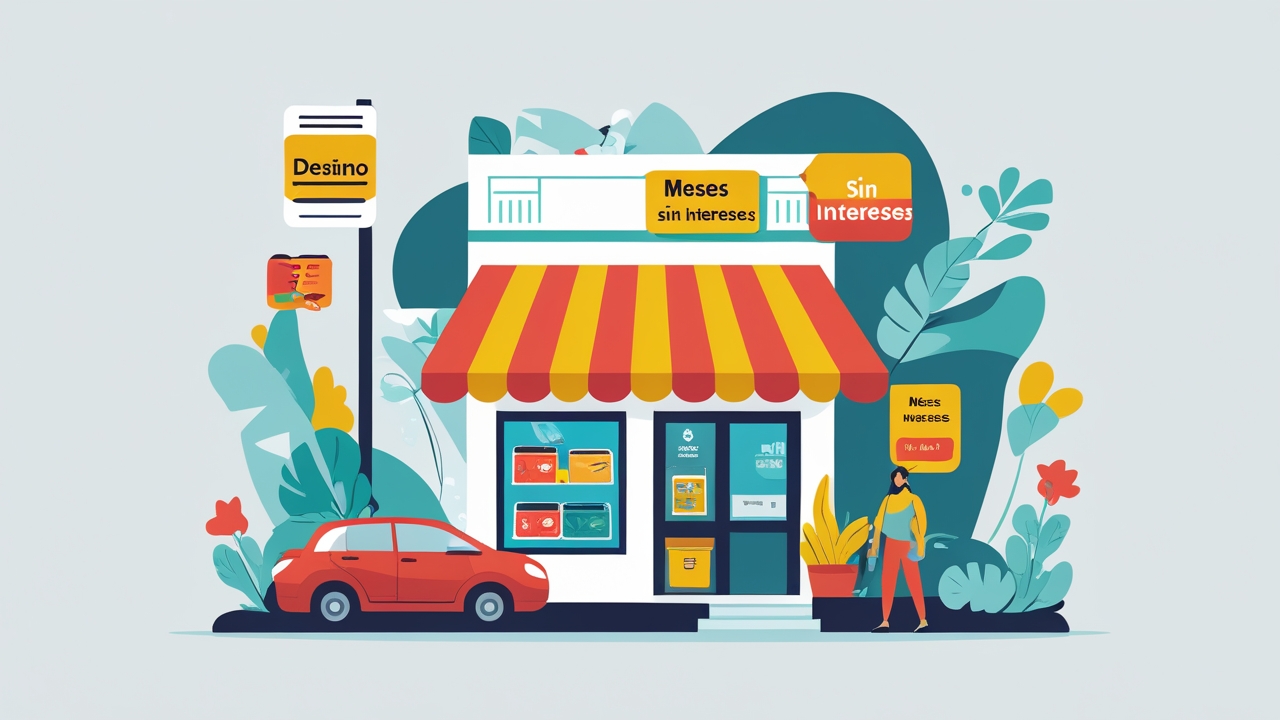
The term Meses Sin Intereses, commonly abbreviated as MSI, translates literally to "months without interest." While installment plans exist in many countries, the Mexican version is a deeply ingrained cultural and financial institution. It is not merely a "buy now, pay later" scheme offered by a third-party app; it is a direct agreement between the retailer, the bank, and the consumer. When you purchase an item on MSI, the bank pays the merchant the full amount upfront (minus a small commission), and you then owe the bank that total amount divided into equal monthly parts.
The Difference Between MSI and Pagos Fijos
One of the most dangerous mistakes a newcomer can make is confusing "Meses Sin Intereses" with "Pagos Fijos" or "Pagos Chiquitos." If you are shopping at stores like Coppel or Elektra, you will frequently see advertisements for very small weekly or bi-weekly payments. Often, these are not interest-free. In fact, the interest rates on these fixed payment plans can be astronomical, sometimes doubling the price of the item over the course of a year.
True MSI means that if a television costs 12,000 pesos and you opt for 12 months without interest, you will pay exactly 1,000 pesos every month. There are no hidden finance charges added to that monthly bill, provided you pay your credit card statement in full. If you find yourself needing to budget for a large purchase, it is vital to check the Cost of Living in Mexico: 2026 Comprehensive Guide to see how these payments might fit into your overall monthly expenditures.
The Concept of the CAT (Costo Anual Total)
In Mexico, financial institutions are legally required to disclose the CAT, which stands for Costo Anual Total. This is an all-encompassing percentage that includes interest, bank fees, and even the annual cost of the credit card itself. Even on an MSI promotion, you will see a CAT listed in the fine print. For a true "0% interest" offer, the interest component of the CAT should be zero, but the total percentage might still be 20% or higher because it factors in the annual fee you pay just to have the credit card.
I learned early on that reading the small print is essential. Sometimes a store will offer a "cash price" that is 10% lower than the "MSI price." In this case, the interest is essentially baked into the higher price. Always ask the salesperson, "Hay un descuento por pago de contado?" (Is there a discount for cash payment?). If there is, you aren't truly getting 0% interest; you are paying a premium for the convenience of installments.
Seasonal Promotions and El Buen Fin
While MSI is available year-round for high-ticket items, there are specific times of the year when the offers become aggressive. The most famous is "El Buen Fin," Mexico’s version of Black Friday, which typically occurs in mid-November. During this event, banks and retailers collaborate to offer staggering installment periods, sometimes reaching 18, 24, or even 36 months.
During these periods, it is common to see "bonificaciones," where the bank might give you back one or two monthly payments as a credit if you spend over a certain threshold. Navigating these deals requires a solid understanding of Banking in Mexico: Complete Guide for Foreigners to ensure your specific bank is participating in the promotion.
Practical Requirements for Expats Using MSI
The most significant hurdle for any expat wanting to use MSI is that it almost exclusively requires a Mexican credit card. International cards from the US, Canada, or Europe—even high-end ones like American Express Gold or Platinum—will generally not trigger the MSI software at a Mexican point-of-sale terminal. When you swipe a foreign card, the machine typically only offers the "pago en una sola exhibición" (payment in a single display/one go) option.
Navigating the Mexican Credit Card Application
To access MSI, you will need to open a local account. This process can be notoriously bureaucratic. Most banks will require you to show proof of residency (your temporary or permanent resident card), a utility bill in your name (comprobante de domicilio), and a tax ID. Understanding How to Open a Bank Account in Mexico: Requirements and Tips is your first step toward getting that plastic.
Once you have the account, you might still be denied a credit card because you lack a local credit history. I had to start with a "secured" credit card where I deposited 20,000 pesos as collateral to get a 20,000-peso credit limit. After six months of diligent use, I was finally able to access the MSI promotions that make large purchases like furniture or appliances manageable. This is a critical part of Building Credit in Mexico: How Foreigners Can Establish Credit History.
The Importance of the RFC Number
You will find that the "Registro Federal de Contribuyentes" (RFC) is the skeleton key for all things financial in Mexico. Even if you aren't working locally, having an RFC is often necessary to get a credit card with a high enough limit to make MSI useful. If you are confused about why the bank keeps asking for this 13-digit code, you should read about Do You Need an RFC Number? Why a Tax ID Matters for Expats' Finances.
Without an official RFC registered with the tax authorities (SAT), many banks will limit your account's monthly deposit capacity, which in turn limits how much you can pay off on your credit card each month. This can lead to a frustrating cycle where you have the money to pay for your MSI installments but the bank blocks the incoming transfer from your home country.
Foreign Credit Cards and the MSI Conflict
As mentioned, your Chase, Scotiabank (Canadian), or Barclays cards usually won't work for MSI at the register. However, some online platforms like Amazon Mexico or Mercado Libre have started to allow certain international cards to participate in installment plans, though they often add an internal financing fee. This effectively turns the "Sin Intereses" into a standard loan.
If you choose to use your home country card to avoid the hassle of local banking, you must be aware of Using Credit and Debit Cards in Mexico: What Expats Need to Know. The foreign exchange fees and the lack of 0% interest options usually make this the most expensive way to shop in Mexico.
Financial Management and Strategies for Success
While MSI is a powerful tool for cash flow management, it requires a different kind of discipline than standard credit card use. In Mexico, the billing cycle revolves around the "quincena" (the 15th and the last day of the month), and missing a payment on an MSI plan can cause the entire remaining balance to default into a high-interest category.
Managing Your Credit Limit
One thing that surprises many expats is how the bank handles your credit limit during an MSI purchase. If you have a 50,000-peso limit and you buy a 30,000-peso sofa on 12 months MSI, the bank immediately "blocks" the full 30,000 pesos from your available credit. You do not get that credit back all at once; it only frees up 2,500 pesos at a time as you make each monthly payment.
If you aren't careful, you can easily "max out" your card with three or four MSI purchases, leaving you with no available credit for emergencies. This is a common pitfall that I’ve seen many expats fall into during their first year. It's essential to factor these "frozen" amounts into your Monthly Budget in Mexico: Living Well on $1,500, $2,500, and $4,000 calculations.
Leveraging Foreign Currency Advantage
If you are a digital nomad or a retiree receiving income in USD, CAD, or EUR, MSI can be a brilliant strategic move. By stretching a purchase over 12 or 18 months, you aren't just spreading the cost; you are also potentially benefiting from currency fluctuations. If the peso weakens against your home currency over that year, your monthly payment effectively becomes "cheaper" in your own currency.
To make this work, you need a reliable way to move money into your Mexican bank account to pay the monthly credit card bill. Using a service like Wise is often the best approach, as it offers the mid-market exchange rate with very low fees. I personally use Wise every month to send exactly what I need for my MSI payments from my US account to my BBVA account. This ensures I get the best Currency Exchange in Mexico: Getting the Best Rates on Pesos possible.
The Role of Investments
For those who have significant capital, using MSI allows you to keep your money invested rather than tied up in a depreciating asset like a refrigerator or a computer. You could keep your funds in a brokerage account like Interactive Brokers, where they can continue to earn a return or be invested in global markets, while you pay off your Mexican purchase with 0% interest.
If your investments at Interactive Brokers are returning 7-10% annually and you are paying 0% on your Mexican couch, you are effectively making money on the "float." This is a high-level financial strategy that seasoned expats use to maximize their wealth while living in Mexico. Just ensure you always have enough liquidity in your local account to meet the monthly deadline.
| Feature | Cash / Contado | Standard Credit | Meses Sin Intereses (MSI) |
|---|---|---|---|
| Total Cost | Usually the lowest (potential discounts) | High (Interest rates 40-80%) | Same as Cash (if no discount) |
| Cash Flow Impact | Immediate and high | Spreads cost but adds interest | Spreads cost over 3-36 months |
| Credit Requirement | None | High (Mexican Card) | High (Mexican Card) |
| Credit Limit Impact | None | Temporary (until paid) | High (Full amount blocked) |
| Availability | Everywhere | Everywhere cards are accepted | Participating retailers only |
Common Pitfalls and How to Avoid Them
The biggest danger of the MSI system is the "accumulation effect." It feels very easy to agree to a 500-peso monthly payment for a coffee maker, another 800 for a vacuum, and 1,200 for a new mattress. Individually, these numbers look small, but they aggregate quickly.
The Default Interest Trap
If you fail to pay the "pago para no generar intereses" (payment to not generate interest) amount on your credit card statement by the due date, the bank can cancel the MSI benefit for that month. They will then charge you their standard interest rate—which in Mexico can easily exceed 60%—on the entire balance of that purchase.
I always recommend setting up "pago automático" (auto-pay) for the full balance. Never, under any circumstances, pay only the "pago mínimo" (minimum payment) if you have MSI plans active. Doing so is the fastest way to ruin your financial life in Mexico. If you ever find yourself short on cash, it is better to transfer money quickly through Wise than to miss that deadline.
Retailer Surcharges
While it is technically against the terms of service for most credit card processors, some smaller "mom and pop" electronics stores might try to charge you a 3% to 5% "comisión" for using MSI. They claim this is to cover the fee the bank charges them. In larger retailers like Costco or Home Depot, this doesn't happen, but in smaller plazas, you should be on the lookout.
If a merchant tries to add a fee for MSI, the deal is likely no longer worth it. You are better off paying "de contado" or looking for a different retailer that absorbs the cost of the promotion. You should also keep an eye on your Transferring Money Internationally: Best Ways to Send Money to/from Mexico options to see if paying the merchant via a direct transfer (SPEI) might get you a better "cash" price than using the MSI system at all.
Returns and Cancellations
Returning an item bought on MSI is a logistical nightmare. The retailer has already been paid by the bank, and the bank has already set up your 12-month amortization schedule. If you return the item, the store will issue a "refund" to your credit card. However, this refund often appears as a lump sum credit to your account, while the monthly MSI charges continue to hit your statement every month until the end of the term.
This can be incredibly confusing. You might have a "negative balance" on your card because of the refund, but you still see the 1,000-peso charge every month. Navigating this requires a high level of Spanish and a lot of patience with bank customer service. My advice: only use MSI for items you are 100% sure you are keeping.
Final Thoughts on Installment Buying in Mexico
The Meses Sin Intereses system is a fantastic tool for managing your money in Mexico, provided you have the residency and the local credit card to access it. It allows you to maintain a higher standard of living without draining your liquid savings, and when combined with smart currency transfers through Wise or keeping your capital working in Interactive Brokers, it becomes a cornerstone of an expat's financial strategy.
Just remember that in the Mexican market, "0% interest" is a privilege earned through credit history and maintained through strict payment discipline. Treat your MSI payments as fixed obligations, just like your rent or utilities, and you will find that living in Mexico becomes significantly more affordable and manageable over the long term.
Disclaimer
This guide is for informational purposes only and does not constitute professional financial, legal, or tax advice. Financial regulations and interest rates in Mexico can change rapidly. Always consult with a qualified financial advisor or accountant familiar with Mexican law before making significant financial decisions.