What Is a CLABE? Understanding Mexican Bank Account Numbers
You finally find the perfect apartment in Roma Norte, but when it is time to pay the deposit, the landlord asks you to transfer the funds to their “CLABE,” leaving you staring at an 18-digit string of numbers in sheer panic. I remember standing in a local bank branch, completely confused about why my 10-digit account number wasn’t working. This guide breaks down exactly what a CLABE is, how to find yours, and how to use it safely.
Disclosure: This post may contain affiliate links. We may earn a commission at no extra cost to you if you make a purchase through these links. Read full disclosure.
The Anatomy of a Mexican CLABE
When you first arrive in Mexico, the banking system feels like a maze of acronyms. You hear about RFCs, CURPs, and SPEIs, but the one you will use most often on a daily basis is the CLABE. Standing for Clave Bancaria Estandarizada (Standardized Banking Code), the CLABE was introduced jointly by the Bank of Mexico (Banxico) and the Mexican Banking Association (ABM).
Its sole purpose is to guarantee that domestic interbank electronic funds transfers hit the exact right account, without the risk of human error or misrouting. In the United States, you might rely on a routing number and an account number. In Europe, you use an IBAN. In Mexico, the CLABE is your absolute financial identifier.
Cracking the Eighteen Digit Code
An 18-digit number looks incredibly intimidating when you are trying to type it into a mobile banking app on a tiny smartphone screen. However, this long string of numbers is actually a highly logical, structured code. It tells the central banking system exactly where your money needs to go, down to the specific city branch.
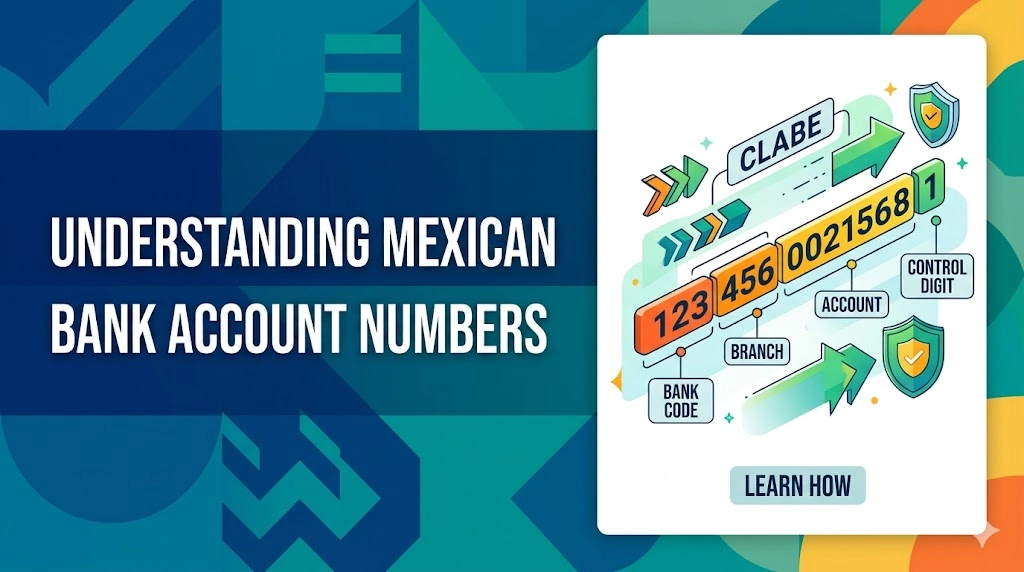
Here is exactly how those eighteen digits are broken down:
| Section | Number of Digits | Purpose in the Transfer |
| Bank Code | 3 Digits | Identifies the specific banking institution (e.g., 012 for BBVA, 014 for Santander). |
| Branch / Plaza Code | 3 Digits | Identifies the specific city or region where the account was opened. |
| Account Number | 11 Digits | The unique internal identifier for the individual’s specific bank account. |
| Control Digit | 1 Digit | A mathematical checksum used to validate that the previous 17 digits were typed correctly. |
The brilliance of the Mexican CLABE lies in that final Control Digit. It is generated through a specific mathematical algorithm based on the preceding 17 numbers. If you accidentally transpose two numbers while trying to pay a contractor, the algorithm will recognize that the control digit no longer matches the sequence. Your banking app will instantly flag the CLABE as invalid before the money ever leaves your account, saving you from a massive financial headache.
Standard Account Numbers Versus CLABEs
One of the most frustrating early hurdles for expats is understanding when to use which number. When you successfully navigate Opening a Bank Account in Mexico, the bank teller will hand you a contract that lists several different numbers. You will see a standard Número de Cuenta (usually 10 or 11 digits) and your 18-digit CLABE.
If you are transferring money to someone who uses the exact same bank as you (for example, transferring from your BBVA account to your landlord’s BBVA account), you can often just use their 10-digit standard account number. This is an intra-bank transfer.
However, if you are transferring money to a completely different bank (for example, moving funds from your BBVA account to your landlord’s Banorte account), you must use the 18-digit CLABE. If you try to send an interbank transfer using a standard 10-digit account number, the system will reject it. As a general rule of thumb for expats: always ask for the CLABE. It works universally across all Mexican institutions and eliminates any guesswork.
How to Find Your CLABE and Navigate the SPEI System
Before you can start receiving payments, your salary, or transfers from back home, you need to know exactly where to locate this crucial piece of information.
Locating It on Your Bank Statement
Your CLABE is not a secret, but it is also not printed on the front of your plastic debit card. The easiest way to find your CLABE is to log into your Mexican mobile banking app. On almost all major banking apps, if you click on “Detalle de cuenta” (Account Details) or “Información,” your 18-digit CLABE will be displayed prominently, often with a convenient “copy” button next to it.
If you prefer paper trails, your CLABE is always printed on the first page of your estado de cuenta (monthly bank statement), usually located in the top right corner alongside your name and branch address. Guard this PDF statement carefully, as many government and utility offices will require a printed copy of your statement displaying your CLABE if you ever need to set up direct debits or request a refund.
The Magic of Instant Transfers
You cannot talk about the CLABE without talking about SPEI (Sistema de Pagos Electrónicos Interbancarios). SPEI is the electronic network operated by the Bank of Mexico that processes all CLABE transfers.
For expats coming from the United States, where an ACH transfer can agonizingly take two to three business days to clear, the Mexican SPEI system feels like science fiction. SPEI operates 24 hours a day, 7 days a week, 365 days a year. When you input a CLABE and hit “send” on your banking app, the money arrives in the recipient’s account in a matter of seconds.
This instant transfer system is the absolute backbone of daily life in Mexico. Whether you are splitting a restaurant bill with friends, paying the señora who cleans your apartment, or navigating the massive deposits required when Finding an Apartment in Mexico: Renting Guide for Expats, you will use your CLABE and the SPEI network constantly.
There is one critical local security quirk you must prepare for: when you add a new CLABE to your Mexican banking app as a new payee, many banks impose a mandatory 30-minute to 2-hour “cooling off” period before you can actually send the funds. This is an anti-fraud measure. Do not wait until your landlord is standing in your living room tapping their foot to add their CLABE to your app; set up the contact a few hours in advance.
International Transfers and Expat Financial Realities
Understanding how to move money locally is vital, but as an expat, your biggest financial challenge is usually bridging the gap between your home country and your new life in Mexico.
Moving Funds Without Losing a Fortune
If you walk into a traditional bank in London or New York and ask to wire money to your Mexican account, they will ask for a SWIFT code and your CLABE. While this works, it is wildly expensive. Traditional international wires hit you with outgoing fees, terrible exchange rate markups, and intermediary “correspondent” bank fees that eat away at your capital. If you want to dive deeper into how banks drain your money, review our guide on Bank Fees in Mexico: Tips to Avoid Unnecessary Charges.
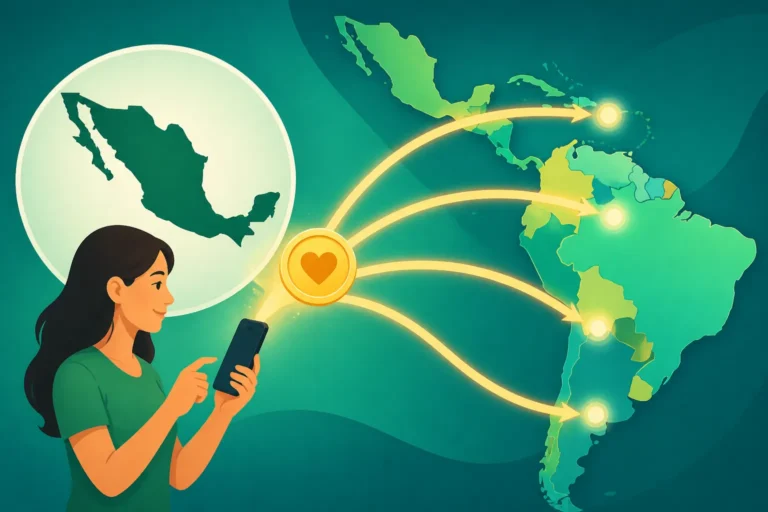
To survive the international exchange game, veteran expats rely heavily on digital platforms. Using Wise is arguably the most empathetic and cost-effective way to fund your Mexican life from abroad. You simply log in, input your Mexican 18-digit CLABE, and Wise executes the transfer by converting your home currency and pushing the funds through the local Mexican SPEI network. Because Wise bypasses the traditional international SWIFT network entirely, your money arrives in seconds with highly transparent, minimal fees.
This strategy is absolutely essential when you are trying to stick to a strict financial plan. Accurately managing your Cost of Living in Mexico: A Realistic Budget Breakdown is impossible if you are losing $40 to hidden wire fees every time you need to pay your rent or buy groceries.
Integrating Investment Accounts Across Borders
For expats who are moving larger sums of money, the financial logistics become slightly more complex. If you are relocating permanently, you might be liquidating assets back home or managing a complex global portfolio while living in Mexico.
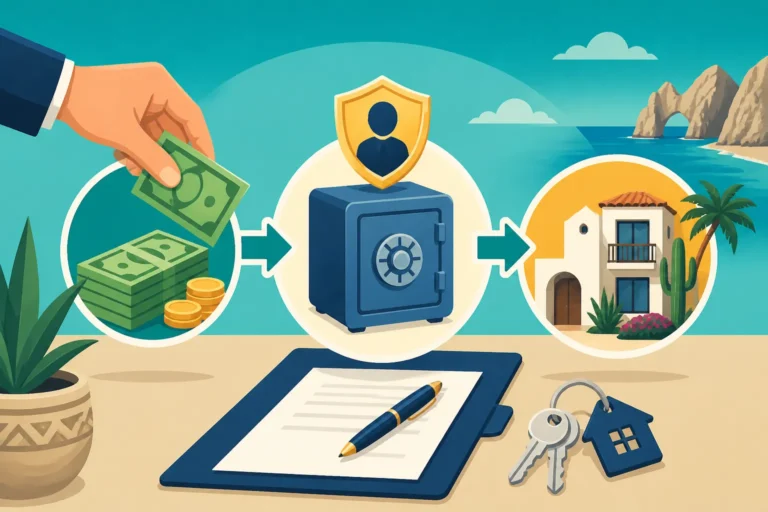
When you are preparing for a massive purchase—like navigating the down payments detailed in Buying Real Estate in Mexico: A Step-by-Step Guide for Foreigners—you need institutional-level exchange rates. This is where utilizing a platform like Interactive Brokers becomes a phenomenal tool for the expat community.
You can hold your primary capital in USD within Interactive Brokers, protecting it from emerging market volatility. When it is time to buy a home or fund a large local investment, Interactive Brokers allows you to execute currency conversions at the true, institutional spot rate. You can then wire those funds directly to your Mexican CLABE (using the corresponding SWIFT code of your Mexican bank). While it requires a bit more technical setup than a standard consumer app, the thousands of dollars saved on exchange rate spreads make it the ultimate tool for serious expats.
Common Bureaucratic Mistakes to Avoid
Even with a solid understanding of how the system works, the Mexican bureaucracy leaves plenty of room for newly arrived foreigners to make highly stressful mistakes.
The Danger of Incorrect Digits
While the control digit algorithm protects you from simple typos, what happens if you accidentally copy and paste the entirely wrong CLABE from an email? If you authorize an SPEI transfer to a valid, but incorrect, 18-digit CLABE, the money will instantly leave your account. Because SPEI transfers are instantaneous, they are functionally irreversible.
Reclaiming money sent to the wrong person requires filing a formal dispute with your bank, which then must request the funds back from the receiving bank. The receiving bank has to ask the recipient for permission to reverse the charge. If they say no, or if they have already withdrawn the cash, your money is gone. Always, always send a 1-peso “test transfer” to a new CLABE before sending a massive sum for rent or a vehicle purchase.
Maintaining meticulous records of the CLABEs you send money to is also a vital part of your legal residency. If you are operating under a Digital Nomad Life in Mexico: Remote Work Living Guide setup and receiving freelance payments, the Mexican Tax Authority (SAT) can audit your domestic transfers. Understanding how these electronic trails impact your fiscal liabilities is covered extensively in Taxes in Mexico for Expats: A Complete Guide to Income Tax and More.
Debit Card Numbers Are Not Transfer Codes
This is the single most common mistake expats make during their first month in the country. You are trying to pay a friend for dinner, and they ask for your account details. You pull your shiny new Mexican debit card out of your wallet and read them the 16 digits printed across the front.
Your 16-digit debit card number is not your CLABE.
While it is technically possible to send money to a 16-digit debit card number through certain ATMs or convenience store deposits (like OXXO), it should never be used for formal, interbank electronic transfers. Debit cards expire, get lost, and are replaced, which changes the 16-digit number. Your 18-digit CLABE is tied permanently to the underlying bank account, regardless of how many times you replace your plastic card.
Learning the rhythm of the Mexican financial system takes time, patience, and a healthy dose of humility. But once you memorize where to find your CLABE and understand the sheer speed and convenience of the SPEI network, you will wonder how you ever survived the sluggish, fee-heavy banking systems back in your home country.
References
Primary sources (official)
- Banco de México (Banxico) – SPEI System: The definitive federal portal explaining the mechanics of the Interbanking Electronic Payment System (SPEI), the requirement of the 18-digit CLABE, and the central bank’s role in processing same-day domestic transfers. https://www.banxico.org.mx/services/interbanking-electronic-payme.html
- Banco de México (Banxico) – Financial Market Infrastructures: Official documentation outlining the architecture of Mexican payment systems, including the integration of CLABE numbers for receiving international remittances safely and securely. https://www.banxico.org.mx/payment-systems/directo-mexico-remittances-ba.html
Other helpful sources
- Asociación de Bancos de México (ABM): The Wikipedia entry detailing the specific history and structural breakdown of the CLABE as instituted by the ABM, providing the exact digit-by-digit algorithmic definitions. https://es.wikipedia.org/wiki/CLABE
- Wise – Mexico Banking Guide: A highly practical, expat-focused breakdown of what a CLABE is, how it differs from a SWIFT code, and how to utilize it for seamless cross-border transfers. https://wise.com/us/blog/clabe-rfc-curp-abm-meaning-mexico
Disclaimer
The information provided in this guide is for educational, logistical, and informational purposes only and does not constitute formal financial, legal, or tax advice. However, domestic banking regulations, SPEI transfer limits, and mobile banking application interfaces are subject to frequent updates by the Bank of Mexico (Banxico) and individual financial institutions. International transfer platforms like Wise and Interactive Brokers operate under their own strict terms of service and fluctuating fee structures. Always double-check the 18-digit CLABE with your recipient before initiating any transfer, and consult with a certified cross-border financial advisor to ensure your domestic banking activities comply with SAT tax regulations.