Maintaining Permanent Resident Status in Mexico: Dos and Don’ts
Congratulations. If you are reading this, you have likely reached the ultimate milestone in your Mexican immigration journey: you are holding a physical Residente Permanente (Permanent Resident) card. You have successfully navigated the consular interviews, the strict UMA financial thresholds, the notoriously bureaucratic Canje process, and perhaps even years of Temporary Residency renewals. This comprehensive, 2500+ word guide is your definitive 2026 operational manual. We will break down exactly what you must do to keep your status active, the critical mistakes that can trigger a deportation order, the reality of the RFC tax mandate, and the “Dos and Don’ts” of living your forever life in Mexico.
Disclosure: This post may contain affiliate links. We may earn a commission at no extra cost to you if you make a purchase through these links. Read full disclosure.
1. The Myth of “Indefinite” Validity
Let us clarify the exact legal standing of your new status. When you look at the front of your plastic Tarjeta de Residente Permanente, you will see the word INDEFINIDA where an expiration date used to be.
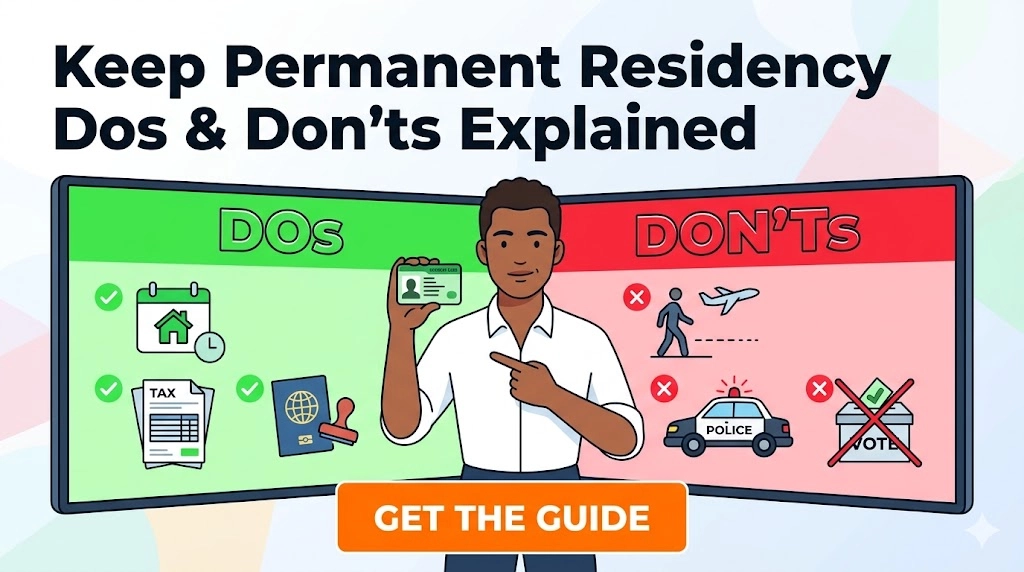
DO: Understand what “Indefinite” actually means.
In Mexican immigration law, “indefinite” simply means that the underlying status does not expire. You do not have to return to the INM every one to four years to beg for permission to stay, nor do you have to present your bank statements ever again to prove you can afford to live in Mexico.
However, your physical plastic card is the property of the Mexican government, and your legal status is entirely conditional on your continued compliance with Mexican law.
DON’T: Assume you can ignore the INM forever.
While the status doesn’t expire, the physical card may need to be replaced if it is damaged, lost, or if you undergo a significant physical transformation (such as massive weight loss or facial surgery) that makes your photograph unrecognizable to immigration officials at the airport e-gates. More importantly, you are legally required to report major life changes to the INM to keep your federal file accurate.
2. DO: Report Major Life Changes (The 90-Day Rule)
This is the number one reason Permanent Residents are hit with massive financial penalties in 2026. Under Article 61 of the Ley de Migración (Migration Law), you are legally obligated to notify the INM of specific changes to your personal situation.
You have a strict, non-negotiable 90-day window to report these changes.
The Mandatory Notifications
You must file a notification procedure at your local INM office if you experience any of the following:
- Cambio de Domicilio (Change of Address): If you move from a condo in Roma Norte to a house in Coyoacán, or if you move from Puerto Vallarta to Guadalajara, you must notify the INM within 90 days of signing your new lease or closing on your new home.
- Cambio de Estado Civil (Change of Marital Status): If you get married, divorced, or widowed, the INM must be informed so they can update your civil status in the national registry.
- Cambio de Nacionalidad (Change of Nationality): If you are a UK citizen who subsequently acquires US citizenship, or if you acquire a passport from a third country, you must inform the INM of your new dual-national status.
- Cambio de Lugar de Trabajo (Change of Workplace): Because Permanent Residents have the inherent right to work, you do not need permission to change jobs. However, if you are formally employed by a Mexican corporation, you are technically supposed to notify the INM when you switch employers so they can maintain accurate labor statistics.
The Procedure and Penalties
To report a change, you must log into the INM Micrositio, fill out a notification form, print a formal request letter (signed in blue ink!), and bring proof of the change (like a new utility bill for an address change) to the INM office.
If you fail to notify the INM within 90 days, you will face severe financial penalties. In 2026, the INM calculates these fines using the UMA metric. Missing the deadline will result in a fine ranging from 20 to 100 days of UMA (roughly $120 to $600 USD). If you ignore this for years and the INM discovers it during a routine check or when you try to replace a lost card, they can initiate administrative proceedings against your residency.
The Translation Mandate for Foreign Life Changes
If your marital status changes because you got married or divorced outside of Mexico, the INM will not accept your foreign English or French certificate as proof.
Any foreign document submitted to the INM must be Apostilled by the issuing country and translated into Spanish by a legally recognized, sworn translator (Perito Traductor). We strongly recommend utilizing RushTranslate to process your updated life documents. They specialize in certified, sworn translations specifically formatted for the INM’s rigid standards. By sending your apostilled marriage or divorce decrees to RushTranslate before your 90-day INM deadline, you ensure your file update is legally flawless and immune to rejection.
3. DON’T: Fall into the Permanent Resident “Car Trap”
We cannot emphasize this point enough. It is the single most destructive mistake a Permanent Resident can make, and it routinely leads to tears, financial devastation, and vehicle confiscations at roadside checkpoints.
The Law of Aduana (Federal Customs)
When you were a Temporary Resident, you were legally permitted to drive a foreign-plated (US or Canadian) vehicle in Mexico under a Temporary Import Permit (TIP).
As a Permanent Resident, you are strictly forbidden by federal customs law from driving, possessing, or importing a foreign-plated vehicle in Mexico.
The legal logic is simple: By accepting Permanent Residency, you have declared to the Mexican government that your permanent home is Mexico. Therefore, you are no longer a “tourist” or a “temporary visitor” bringing a car down for a vacation. If you want a car in your permanent home, you must buy a local Mexican vehicle or formally pay the massive import taxes to nationalize your foreign vehicle.
The Consequences of Violation
Your TIP became legally void the exact second the INM approved your Permanent Residency. Your US or Canadian vehicle instantly transformed into illegal, smuggled contraband.
If you are pulled over by the National Guard, state police, or SAT/Aduana agents while driving a foreign-plated car as a Permanent Resident, they have the absolute legal authority to confiscate the vehicle on the spot. You will not get the car back. You will be left standing on the side of the highway, and you will face massive smuggling fines. Do not attempt to “risk it” because you haven’t been pulled over yet. The digital license plate scanners on Mexican toll roads flag expired TIPs and mismatched residency statuses in real-time.
If you still have a foreign-plated car in Mexico, you must immediately apply to SAT/Aduana for a Retorno Seguro (Safe Return) permit, which grants you a strict 5-day window to legally drive the illegal car to the border to remove it from the country. For a comprehensive overview of how to replace your vehicle, read Bringing Your Car vs Buying in Mexico: Pros and Cons for Expats.
4. DO: Register with the SAT and Manage Your RFC
With permanent status comes permanent fiscal responsibility. The era of living in Mexico off the grid, ignoring local tax laws because your pension comes from Ohio or your remote clients are in London, is officially over.
The Mandatory RFC (Registro Federal de Contribuyentes)
In 2026, the Mexican Tax Authority (SAT) legally mandates that all Permanent Residents possess an RFC. This is the Mexican equivalent of a Social Security Number or Tax ID.
Even if you are a retiree who owes absolutely zero Mexican taxes because your pension is fully taxed in your home country, you still must register for an RFC. Without it, your permanent life in Mexico is paralyzed. You cannot:
- Open a local bank account or a high-yield investment portfolio (like CetesDirecto).
- Legally purchase a vehicle from a Mexican dealership.
- Sign formal, post-paid utility, cellular, or fiber-optic internet contracts.
- Buy or sell real estate without facing massive, punitive 20% withholding taxes.
Immigration Residency vs. Tax Residency
Holding a Permanent Resident card from the INM does not automatically make you a “tax resident” who owes taxes to Mexico on your global income. Tax residency is determined by the SAT, primarily through the 183-Day Rule and the “Center of Vital Interests” test.
However, as a Permanent Resident, the SAT will naturally presume that Mexico is your primary home. If you are earning local Mexican Pesos (which you have the constitutional right to do now), you must declare that income. If you are working remotely for a foreign company while living permanently in Mexico, you must consult a cross-border tax specialist to ensure you are utilizing the double-taxation treaties correctly. To understand your exact liabilities, thoroughly read Taxes in Mexico for Expats: A Complete Guide to Income Tax and More.
5. DON’T: Lose Your Card Abroad (The Reposición Nightmare)
Your Tarjeta de Residente Permanente is your golden ticket. Guard it with your life. If you lose it, replacing it is a bureaucratic nightmare—especially if you lose it outside of Mexican territory.
Scenario A: Lost or Stolen Inside Mexico
If your purse is stolen in Mexico City or you drop your card in the ocean in Playa del Carmen, the process is annoying but straightforward:
- Go to the local Ministerio Público (State Prosecutor’s Office) and file a formal police report (Acta por Robo o Extravío).
- Take that police report, your passport, and your blue pens to the INM.
- File a Reposición de Documento Migratorio (Replacement of Migratory Document).
- Pay the replacement fee (roughly $1,800 MXN in 2026) and wait a few weeks for a new plastic card.
Scenario B: Lost or Stolen Outside of Mexico
If you lose your residency card while visiting family in the US, Canada, or Europe, you are in a highly precarious situation. You cannot board a flight back to Mexico as a resident without your physical card. Airlines will not accept a photocopy. If you enter Mexico as a tourist using your passport, you risk voiding your Permanent Residency.
- The Consular Visit: You must immediately book an emergency appointment at the nearest Mexican consulate abroad.
- The Replacement Visa: You will present a local police report and your passport. The consulate will verify your Permanent Resident status in their federal database. They will then issue a single-use “Replacement Visa” sticker in your passport.
- The 30-Day Canje (Again): You fly back to Mexico using this sticker. Once you land, you have exactly 30 days to report to your local INM office to execute a full Canje process to get a newly printed plastic card.
Never pack your residency card in checked luggage, and keep digital, high-resolution color scans of the front and back of the card on a secure cloud server at all times.
6. DO: Protect Your Long-Term Health and Wealth
You are staying in Mexico indefinitely. That means you are going to age in Mexico. The healthcare strategy you used as a 40-year-old digital nomad or a 60-year-old new retiree must evolve to protect your golden years.
The IMSS Safety Net
As a Permanent Resident, you have the right to buy into the Instituto Mexicano del Seguro Social (IMSS). For a few hundred dollars a year, you gain full access to the public healthcare system. This is an excellent baseline safety net for routine medications and pre-existing conditions (after strict waiting periods).
The Private Healthcare Imperative
However, relying on IMSS as your only healthcare strategy as you age is a massive gamble in 2026. The public system is chronically underfunded, heavily backlogged, and operates exclusively in Spanish. If you require an urgent hip replacement, complex oncology care, or emergency cardiac bypass surgery, waiting for an available bed in an IMSS hospital can take agonizing months.
Mexico boasts exceptional, world-class private hospitals (such as Hospital Ángeles, Star Médica, and Hospital San Javier). These elite facilities operate with clinical standards that frequently surpass those in the US or Canada, and they are heavily staffed by English-speaking specialists.
But these facilities are strict for-profit businesses. In the event of a severe emergency, hospital administrators will demand a massive, upfront credit card deposit—often ranging from $3,000 to $10,000 USD—before they will admit you to the emergency room or begin stabilization. US Medicare does not cover you in Mexico.
Attempting to self-insure against catastrophic medical trauma in your retirement is financial suicide. You must secure robust international health coverage to guarantee VIP access to these elite private hospitals.
We highly recommend securing an expat-tailored policy through Cigna Global. Their comprehensive international retiree plans offer direct billing networks with Mexico’s top private hospitals. This means that in a crisis, the hospital coordinates the massive bills directly with Cigna Global, completely bypassing the need for you to drain your retirement checking account or navigate complex reimbursement forms in Spanish while under duress. Securing this coverage ensures your permanent life in Mexico is physically and financially protected. For a deeper understanding of this dual medical system, read Healthcare in Mexico: Complete Guide for Expats Public vs Private.
7. DON’T: Jeopardize Your Path to Citizenship
One of the greatest benefits of Permanent Residency is that it is the final stepping stone to full Mexican Naturalization. If you wish to vote in Mexican elections, hold direct title to coastal real estate without paying for a Fideicomiso (bank trust), and secure a powerful Mexican passport, you can apply for dual citizenship.
However, the Secretariat of Foreign Affairs (SRE), which handles naturalization, has different rules than the INM regarding your physical presence in the country.
The Physical Presence Requirement for Naturalization
The INM allows Permanent Residents to leave Mexico for years at a time without losing their residency card. The SRE does not.
To qualify for Mexican citizenship, you must prove five years of continuous legal residency (or two years if you are married to a Mexican citizen or have a Mexican child). Crucially, during the two years immediately preceding your citizenship application, you cannot have spent more than 180 days outside of Mexico.
If you decide to spend a year traveling through Europe as a Permanent Resident, your residency card will be perfectly fine when you return. However, you will have completely reset the clock on your citizenship eligibility. If your ultimate goal is a Mexican passport, you must carefully track your international travel dates. For a complete guide on taking this final step, read How to Become a Mexican Citizen: The Complete Naturalization Guide.
8. DO: Understand Your Labor and Property Rights
Now that you are a Permanent Resident, you are deeply integrated into the Mexican economy. You should exercise your rights confidently.
Your Constitutional Right to Work
You possess the inherent, constitutional right to work in Mexico. You do not need to ask the INM for a separate Permiso para Trabajar. You can walk into any Mexican corporation and accept a job offer, start a boutique hotel, or operate as an independent contractor.
The only bureaucratic requirement is that you must ensure your SAT profile (via your RFC) accurately reflects your economic activity. If you transition from being a non-working retiree to a local business owner, your accountant must update your SAT Régimen Fiscal to ensure you are invoicing and paying taxes correctly.
Buying Property
Permanent Residents can freely purchase property in the interior of Mexico. However, the Mexican Constitution’s Article 27 still applies to you regarding the “Restricted Zone” (50km from the coast, 100km from borders). Even as a Permanent Resident, if you want to buy a beachfront condo in Playa del Carmen, you must still use a Fideicomiso (a bank trust). Only full Mexican citizens are exempt from the Fideicomiso requirement in the Restricted Zone. To navigate real estate laws safely, review Real Estate in Mexico: Renting vs Buying for Expats.
9. DON’T: Commit Infractions Leading to Deportation
Finally, we must discuss the absolute worst-case scenario. Permanent Residency is indefinite, but it is not irrevocable. Under Article 64 of the Ley de Migración, the INM has the legal authority to cancel your residency and deport you.
Grounds for Revocation
Your Permanent Residency can be instantly revoked, and you can be permanently expelled from Mexico, for the following reasons:
- Providing False Information: If the INM discovers that you used forged bank statements, a fake marriage certificate, or lied during your initial consular interviews years ago, your residency is retroactively nullified.
- Criminal Convictions: If you are convicted of a serious crime (delito grave) under Mexican law, you will serve your sentence and then be immediately deported.
- National Security: If you engage in activities that compromise national security, public order, or participate in illegal political interference (foreigners are strictly forbidden by Article 33 of the Constitution from participating in Mexican political affairs or protests).
- Outstanding Arrest Warrants Abroad: If Interpol or your home country issues a valid international arrest warrant for serious crimes, Mexico will revoke your residency and extradite you.
Stay out of local political protests, pay your taxes, and obey the law, and your Permanent Residency will remain secure for the rest of your life.
10. Summary Checklist for Permanent Residents
To ensure your status remains perfectly intact through 2026 and beyond, use this quick-reference operational checklist:
| The Rule | The Action Required |
| Address/Marital Changes | Notify the INM within 90 days using the Micrositio portal. |
| Foreign Document Updates | Translate all new foreign vital records using RushTranslate before INM submission. |
| Foreign-Plated Vehicles | Never drive one. Remove or nationalize your vehicle immediately. |
| Taxes and Banking | Register with the SAT and secure your RFC to prevent financial freeze-outs. |
| Healthcare Protection | Maintain an elite international private policy via Cigna Global. |
| Losing Your Card | Report to the Ministerio Público immediately; apply for Reposición. |
| Citizenship Goals | Do not spend more than 180 days outside Mexico in the 2 years prior to applying. |
Conclusion: Thriving in Your Forever Home
Achieving Permanent Residency in Mexico is a profound accomplishment. You have successfully navigated one of the most complex, rigorous immigration systems in Latin America, earning the right to call this vibrant, beautiful country your permanent home.
While the rules regarding tax registration, vehicle ownership, and address updates are strict, they are entirely manageable. By staying organized, respecting the INM’s 90-day notification windows, keeping your taxes in order, and securing your long-term health safety net, you can confidently transition out of “survival mode” and truly begin thriving in your Mexican life.
References
Primary Sources (Official)
- Instituto Nacional de Migración (INM): The definitive federal portal detailing the exact procedures and the strict 90-day deadline for updating your personal file, as well as the Reposición process for lost cards. https://www.inm.gob.mx/mpublic/publico/inm-tramites.html
Other Helpful Sources
- Mexperience: A highly trusted portal providing simplified explanations of the rights and responsibilities of Permanent Residents, including the Fideicomiso rules. https://www.mexperience.com/lifestyle/mexico-immigration-guide/
- ExpatDen Mexico: A detailed, firsthand resource offering granular breakdowns of navigating private healthcare, integrating into the local economy, and long-term expat survival strategies. https://www.expatden.com/mexico/
Disclaimer
The information provided in this comprehensive guide is for educational, logistical, and informational purposes only and does not constitute formal immigration, legal, tax, or medical advice. Federal fine structures and UMA valuations fluctuate annually. The enforcement of vehicle confiscation laws for Permanent Residents is strict and non-negotiable. Always verify the most current requirements directly with your local INM office, the SAT, or Aduanas. We strongly recommend consulting with a certified bilingual Mexican immigration attorney or a registered Mexican accountant regarding complex tax residencies or citizenship applications.