How to Apply for a Mexico Temporary Resident Visa: Step-by-Step Process
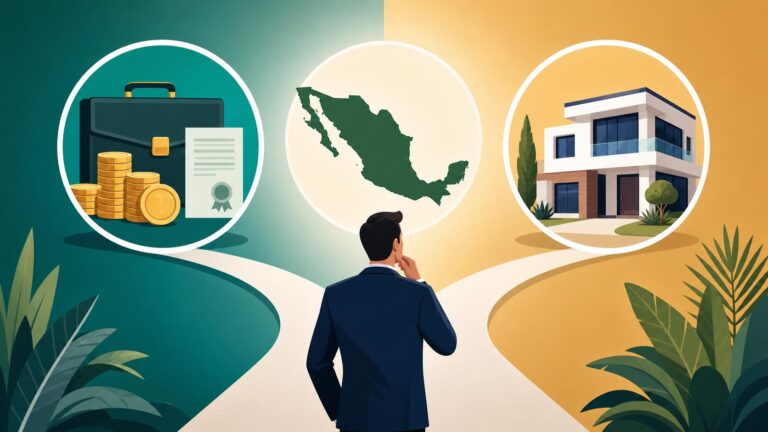
The transition to living in Mexico is an incredible, life-altering decision. The food is unparalleled, the culture is profoundly rich, and the landscapes are diverse. But the bureaucratic bridge you must cross to get there, specifically, securing your Residente Temporal (Temporary Resident) visa, is an endurance test. This comprehensive, step-by-step guide strips away the confusion and walks you through the exact process of securing your Temporary Resident Visa from start to finish.
Disclosure: This post may contain affiliate links. We may earn a commission at no extra cost to you if you make a purchase through these links. Read full disclosure.
Phase 1: Determining Your Eligibility
Before you print a single form or book a flight, you must ensure you actually qualify for residency. The Mexican government welcomes foreigners, but it strictly requires proof that you will not become a financial burden on its public systems.
You must prove Economic Solvency (Solvencia Económica). In 2026, these financial thresholds are calculated using a federal metric known as the UMA (Unidad de Medida y Actualización). Because the UMA adjusts for inflation annually, the requirements are higher now than they were just a few years ago. You must qualify under one of the two following options.
Option A: Economic Solvency via Monthly Income
This is the most common route for remote workers, digital nomads, and pensioners. You must prove that you receive a steady, reliable monthly income.
- The Metric: You must demonstrate a consistent monthly income equivalent to 300 days of the current minimum wage or UMA, depending on the specific consulate’s internal policies.
- The Timeframe: You must show this consistent income over the last six consecutive months.
- 2026 Target Estimate: You need to show deposits of approximately 4,400 USD to 4,800 USD every single month after taxes.
Option B: Economic Solvency via Savings and Investments
If you do not have a steady monthly income (for example, you are taking a sabbatical or living off the sale of a property), you can qualify using your liquid assets.
- The Metric: You must demonstrate an average monthly balance equivalent to 5,000 days of the minimum wage or UMA.
- The Timeframe: You must show this average balance over the last twelve consecutive months.
- 2026 Target Estimate: You need to show a consistently maintained balance of approximately 75,000 USD to 85,000 USD across your checking, savings, or investment accounts.
Crucial Dependency Note: If you are bringing a spouse or minor children, they are considered your dependents. You must prove an additional 1,100 USD to 1,500 USD in monthly income (or an additional 25,000 USD in savings) for each dependent.
Phase 2: Gathering and Translating the Dossier
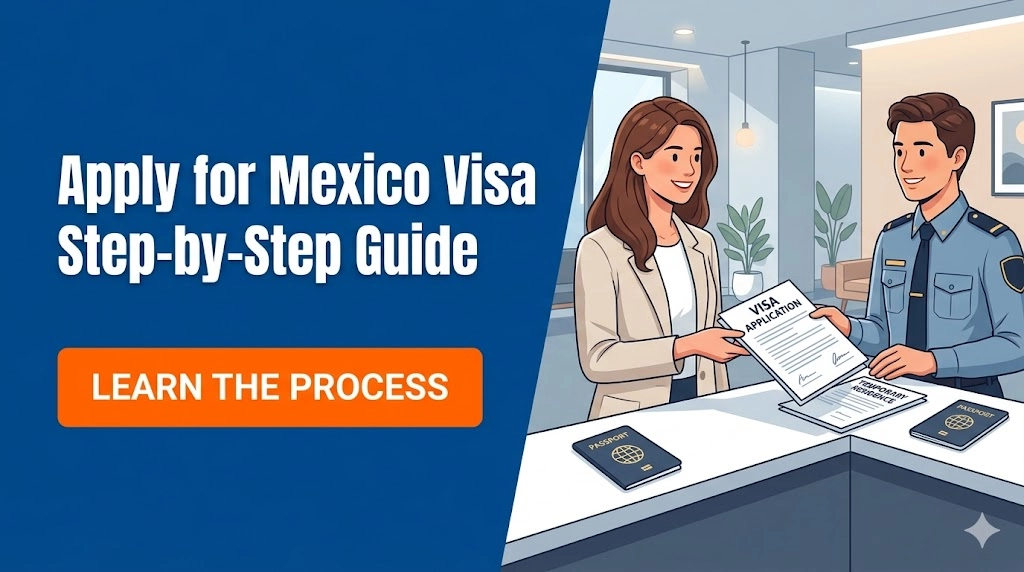
Mexican consulates are notoriously strict about documentation. A single missing page or an improper format will result in an immediate rejection, and consular fees are non-refundable.
The Required Documents
- Valid Passport: Your passport must be valid for at least six months beyond your intended date of entry, though having a year of validity is highly recommended. Bring the original and a clear color photocopy of the main data page.
- Visa Application Form: This must be downloaded from your specific consulate’s website, printed double-sided on a single sheet of paper, and filled out flawlessly.
- Passport Photographs: Most consulates require one or two recent passport-sized photos. They must be in color, with a white background, no glasses, no jewelry, and your ears clearly visible.
- Financial Proof: Original bank statements. If your bank only provides digital statements, you must take them to a local branch and have a bank manager physically stamp and sign every single page.
The Translation Mandate
If you are applying from the US, Canada, the UK, or Australia, your bank statements, marriage certificates, and birth certificates will be in English. Mexican law dictates that official foreign documents submitted for immigration purposes must be accompanied by a certified Spanish translation.
You cannot translate these documents yourself, and you absolutely cannot use an automated web translator. The consulate requires translations performed by a recognized, sworn translator. This is where many applicants face massive delays. We strongly recommend utilizing RushTranslate for your entire application dossier. They specialize in certified translations for complex immigration cases that are universally accepted by Mexican consulates. By sending your financial statements and vital records to RushTranslate, you ensure your documentation is legally flawless, eliminating the risk of a rejection on the day of your high-stakes interview.
Phase 3: The Consular Interview (Outside of Mexico)
The first half of the residency process must take place outside of Mexican territory. You cannot apply for a Temporary Resident visa from within Mexico if you entered as a tourist.
Booking the Appointment
Appointments are managed centrally through the Secretariat of Foreign Affairs (SRE) digital portal called MiConsulado (formerly Mexitel).
- You must create an account on the portal.
- Select the specific consulate you wish to visit (usually the one nearest your legal residence in your home country).
- Search for available “Visas” appointments.
- Patience is required: Appointments in heavily populated expat hubs (like Los Angeles, Chicago, or Toronto) book up months in advance. You may need to check the portal daily to catch a cancellation.
The Interview Experience
Arrive at the consulate at least 15 minutes early. Dress neatly, as you are presenting yourself to a foreign government official.
The consular officer will review your dossier meticulously. They will count the months on your bank statements and verify the daily balances. They will also interview you—often in a mix of English and Spanish—about your intentions. They want to ensure your primary goal is to live in Mexico legally, spend your foreign income locally, and not illegally enter the Mexican labor market.
If the officer approves your application, you will pay the consular processing fee (approximately 53 USD, usually payable by credit card or exact cash, depending on the consulate).
The Visa Sticker
The consulate will process your passport and affix a physical visa sticker to one of the pages.
This sticker is NOT your residency card. It is a single-use entry permit. It is typically valid for 180 days from the date of issuance. You must enter Mexico within this timeframe, or the visa expires and you must start over.
Phase 4: The Critical Port of Entry
You have your visa sticker, you have packed your bags, and you are landing in Mexico. This exact moment at the airport or land border is where thousands of expats accidentally sabotage their entire application.
Bypassing the E-Gates
Mexico has installed automated e-gates at major airports like Mexico City (MEX) and Cancún (CUN) to speed up tourist processing. Do not use the e-gates. The automated gates are programmed to grant tourist entry. If you use one, you will enter as a tourist, and your visa sticker will be technically voided.
Speaking to the Immigration Officer
You must go to the physical counter and speak to a human INM immigration officer.
- Hand them your passport, open directly to the page with the Mexican visa sticker.
- Explicitly state: “Vengo para el canje de mi visa de residente.” (I am coming for the exchange of my resident visa).
- The officer will process your entry and stamp your passport.
- Verify the Stamp: Before you walk away from the counter, look at the stamp. The officer must have written “Canje” or marked the box indicating residency. If they wrote “180 days” or marked it as “Turismo,” you must politely but firmly ask them to correct it immediately. Once you leave the arrivals hall, fixing an improper entry stamp is a bureaucratic nightmare.
To understand the broader logistics of moving your belongings and deciding whether to drive or fly, review Bringing Your Car vs Buying in Mexico: Pros and Cons for Expats.
Phase 5: The “Canje” Process at the INM
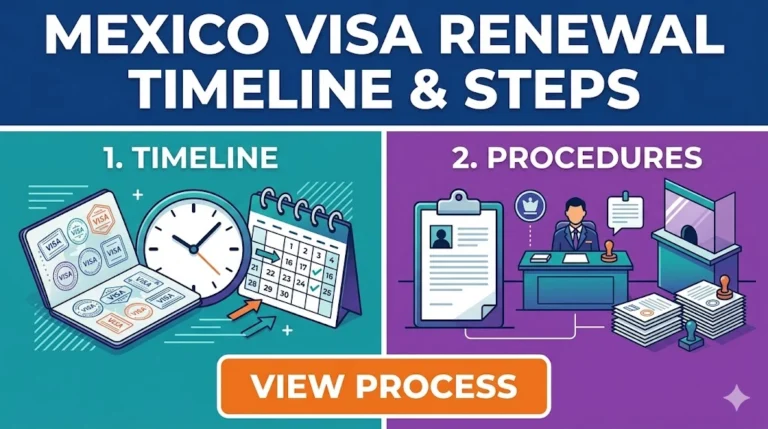
You are now in Mexico. The clock is ticking. From the exact date stamped in your passport by the airport officer, you have a strict, unforgiving 30-day window to initiate the Canje (Exchange) process at the local National Institute of Migration (INM) office.
If you wait until day 31, your visa is invalid, you will face massive fines, and you may be required to leave the country.
Step 5.1: Preparing the INM Paperwork
You cannot simply walk into the INM and hand them your passport. You must prepare a new, localized dossier.
- Formato Básico: A digital form detailing your biographical information.
- Trámite Request Form: A formal request generated on the INM website asking for the “Expedición de Documento Migratorio por Canje.”
- Carta de Petición: A formal letter, written in Spanish and signed in blue ink, formally requesting the exchange of your consular visa for a residency card, stating your local Mexican address.
- FMM Download: Since paper FMMs are gone, you must log onto the INM portal using your passport details, download your digital entry record, and print it.
- Photographs: You need specialized photos (tamaño infantil). They must be exactly 2.5 x 3.0 cm, in color, with a white background. You must not be wearing glasses, earrings, or makeup that alters your appearance. Your forehead and ears must be completely visible, and you must not smile. Go to a local Mexican pharmacy or photo studio and ask for “Fotos para Migración.”
Step 5.2: The First INM Visit
Arrive at the INM office early. Offices open at 9:00 AM, but lines often form by 7:00 AM.
When you reach the front, an agent will review your paperwork. If everything is in order, they will issue you a Formato para Pago de Derechos (a payment line document).
Step 5.3: Paying the Federal Fees
The INM does not accept cash or credit cards directly at the desk. You must take the payment document to a local Mexican bank (like BBVA, Santander, or Banorte). You will wait in line at the bank and pay the federal residency fee.
- For a one-year Temporary Resident card in 2026, the fee is approximately 5,500 MXN to 6,000 MXN.
- The bank teller will stamp your payment form. You must make copies of this stamped receipt.
- To understand the complete breakdown of these costs, including future renewal fees, review Mexico Immigration Fees and Costs: Budgeting for Your Residency.
Step 5.4: Fingerprints and Finalization
You return to the INM with your stamped bank receipt. Your file is officially accepted, and you are given a tracking number (NUT).
Depending on the specific office (Mexico City can take months; smaller coastal towns might take days), you will wait for an email notifying you that your card is ready for printing. You will return to the INM one final time to provide your digital fingerprints, a digital signature, and to receive the physical plastic Tarjeta de Residente Temporal.
Important: While your Canje is processing, your passport is essentially locked to the application. You cannot leave Mexico. If you fly out of the country before the physical card is in your hand (without obtaining a special, complex exit permit), your entire application is canceled.
Phase 6: Protecting Your New Life (Healthcare)
Once you hold the residency card, you are officially a legal resident of Mexico. However, securing the card is only the administrative beginning of your relocation. Protecting your physical and financial health in a foreign country is the next mandatory step.
The Mexican government does not require you to hold private health insurance to issue the visa, but living in Mexico without it is a massive risk. While residents can buy into the public healthcare system (IMSS), it is chronically underfunded, heavily backlogged, and operates exclusively in Spanish.
If you suffer a severe emergency—a car accident, a cardiac event, or require sudden surgery—you will want access to Mexico’s elite private hospital networks (such as Hospital Ángeles or Star Médica). These facilities offer world-class, bilingual care, but they are strict for-profit businesses. In an emergency, they will mercilessly demand a massive, upfront credit card deposit (often between 3,000 USD and 10,000 USD) before admitting you to the ER.
Attempting to self-insure is a dangerous gamble. You must secure robust international health coverage. We highly recommend securing an expat-tailored policy through Cigna Global. Their international plans offer direct billing networks with Mexico’s top private hospitals. In a crisis, the hospital coordinates the bills directly with Cigna Global, bypassing the need for you to drain your checking account or navigate complex reimbursement forms in Spanish. Securing this coverage ensures your transition to Mexico is genuinely protected. For a comprehensive overview, read Healthcare in Mexico: Complete Guide for Expats Public vs Private.
Phase 7: Post-Residency Integration (RFC and Housing)
With your residency card and health insurance secured, you must formally integrate into the Mexican economic system.
The Inescapable RFC (Tax ID)
The Mexican Tax Authority (SAT) requires all legal residents to possess an RFC (Registro Federal de Contribuyentes). This is the Mexican equivalent of a Social Security Number.
Without an RFC, your life in Mexico will be paralyzed. You absolutely need it to:
- Open a Mexican bank account.
- Sign a formal, post-paid cellular or fiber-optic internet contract.
- Buy a car from a dealership.
- Purchase or sell real estate.
Securing an appointment at the SAT is notoriously difficult, so you should begin trying to book one online the exact day your physical residency card is issued. To understand your global tax liabilities and how the Mexican government tracks your financial footprint, thoroughly read Taxes in Mexico for Expats: A Complete Guide to Income Tax and More.
Renting Your First Home
With your residency and RFC, you can now legally sign a long-term lease. Be prepared for the Mexican rental market reality: most apartments are rented completely unfurnished (lacking even appliances). Furthermore, landlords will typically demand an Aval (a local co-signer with property). Since you will not have one, you will need to pay for a Póliza Jurídica (legal insurance policy) to secure the lease. To navigate this effectively, review Real Estate in Mexico: Renting vs Buying for Expats.
If you are a remote worker, setting up your home office internet infrastructure is critical. To optimize your digital connectivity, review our Digital Nomad Life in Mexico: Remote Work Living Guide.
Bureaucratic Pitfalls: The Common Mistakes Table
The INM operates on strict, unforgiving rules. Here is a quick reference table of the most common mistakes that ruin applications:
| The Mistake | The Consequence | The Solution |
| Using Black Ink | Immediate rejection of paperwork at the INM window. | The Blue Pen Rule: All Mexican government forms and signatures MUST be in blue ink. |
| Automated Translations | Consulate rejects your financial documents; visa denied. | Use certified, sworn translation services like RushTranslate. |
| Using Airport E-Gates | You enter as a tourist; your 180-day visa sticker is voided. | Wait in line for a human officer and demand the “Canje” stamp. |
| Leaving Mexico During Canje | INM cancels your application; you must restart abroad. | Plan to remain strictly inside Mexico for 4 to 6 weeks after arriving. |
| Incorrect Photo Specs | INM rejects the file; you lose your place in line. | Ask explicitly for “Fotos tamaño infantil para Migración” (no smiling, no glasses). |
Conclusion: The First Step to a New Horizon
Navigating the Mexican immigration system is a profound test of patience, organization, and respect for the host country’s laws. The bureaucracy is undeniably heavy, and there will be moments of intense frustration. However, the reward—access to a vibrant, welcoming culture, a lower cost of living, and an unparalleled lifestyle—is entirely worth the effort.
By meticulously preparing your documents, respecting the strict deadlines, and securing your health safety net, you transform the stress of immigration into the unshakeable foundation of an extraordinary life abroad.
References
Primary Sources (Official)
- Secretaría de Relaciones Exteriores (SRE): The official portal for booking your initial consular interview and reviewing specific embassy requirements. https://www.gob.mx/sre/acciones-y-programas/visas-para-extranjeros
- Instituto Nacional de Migración (INM): The definitive federal portal for initiating your Canje, downloading the Formato Básico, and tracking your residency card status. https://www.inm.gob.mx/mpublic/publico/inm-tramites.html
Other Helpful Sources
- ExpatDen Mexico: A highly detailed, firsthand resource offering granular breakdowns of the cost of living, healthcare navigation, and localized advice for securing housing. https://www.expatden.com/mexico/
- Mexperience: A trusted portal providing simplified explanations of Mexican bureaucracy, the UMA shift, and the exact financial metrics required for visas. https://www.mexperience.com/financial-criteria-for-residency-in-mexico/
Disclaimer
The information provided in this comprehensive guide is for educational, logistical, and informational purposes only and does not constitute formal immigration, legal, tax, or medical advice. Mexican immigration laws, SRE consular requirements, the UMA valuation, SAT tax regulations, and federal INM fee structures are subject to frequent, sudden, and unannounced legislative changes in 2026. Always verify the most current requirements directly with your specific Mexican consulate or the INM. We strongly recommend consulting with a certified bilingual Mexican immigration attorney or a registered immigration facilitator before submitting applications, paying government fees, or executing cross-border relocations.