Home Security in Mexico: Tips for Securing Your House or Apartment
Arriving in Mexico, the sight of towering concrete walls and electrified fences around residential homes can feel intensely overwhelming for new expats. I still remember the jolt of anxiety I felt locking three separate deadbolts on my first apartment door, wondering if I had moved into a warzone. This guide breaks down the cultural reality of Mexican home security, stripping away the paranoia to show you exactly how to fortify your house and daily habits like a seasoned local.
Disclosure: This post may contain affiliate links. We may earn a commission at no extra cost to you if you make a purchase through these links. Read full disclosure.
1. The Fortress Mentality Redefining Mexican Residential Security
Unlearning North American Open Concept Living
In the United States, Canada, and much of Northern Europe, residential wealth is signaled through open space. Expansive, manicured front lawns sweep directly up to the street, and a simple wooden front door with a single deadbolt is often considered sufficient security. When you relocate to Mexico, you must entirely unlearn this architectural vulnerability. Mexican residential design operates on an entirely different philosophy: the home is an inward-facing fortress.
This architectural shift is deeply jarring for newly arrived expats. Walking down a residential street in Guadalajara or Mérida, you will rarely see front lawns or large picture windows facing the sidewalk. Instead, you are greeted by continuous, eight-foot-tall concrete walls, heavy steel garage doors, and restricted entryways. At first glance, it feels incredibly isolating and defensive. However, you will quickly discover that behind those intimidating walls lie stunning, open-air interior courtyards, lush private gardens, and a profound sense of tranquility.
The fortress mentality serves a dual purpose. Yes, it is a formidable physical barrier against intrusion, but it also creates a stark boundary between the chaotic, vibrant noise of the Mexican street and the quiet sanctuary of the home. Once you adapt to this architectural style, the walls stop feeling like a prison and start feeling like a comforting cocoon. Understanding this cultural baseline is a vital part of your psychological adjustment, a reality we explore deeply in Safety in Mexico: What Expats Need to Know About Staying Safe.
The Psychology of Visible Deterrence
Home security in Mexico relies heavily on the psychology of visible deterrence. The goal is not to turn your home into an impenetrable military bunker capable of surviving a localized siege; the goal is simply to make your property the absolute hardest target on the block. Residential burglaries in Mexico are overwhelmingly crimes of opportunity. Intruders are looking for the path of least resistance.
If a burglar walks down your street and sees a home with a low wall, no security cameras, and a wooden side gate, while your home features high walls, prominent motion-sensor floodlights, and heavy iron bars on the windows, they will entirely bypass your property. You are shifting the risk calculus away from your front door. You want your security measures to be glaringly obvious from the street.
This mindset requires you to actively showcase your defenses. In North America, homeowners often try to hide their security cameras so they do not ruin the aesthetic of the house. In Mexico, you mount the camera directly above the street-facing gate with a bright, blinking red recording light. You want everyone walking past to know they are being monitored. Embracing visible deterrence is the single most effective strategy for keeping your property off the radar of local opportunists.
Understanding the Local Threat Landscape
To secure your home effectively, you must understand what you are actually securing it against. The sensationalized media narrative surrounding Mexico focuses entirely on transnational cartel conflicts. As an expat, cartels are not breaking into your house to steal your television. Your primary, daily concern is robo a casa habitación (residential burglary).
These break-ins are almost exclusively non-violent and occur when the property is empty. Burglars scout neighborhoods looking for patterns of absence. They wait for you to leave for a weekend trip or head out to a prolonged dinner. Their objective is to breach the perimeter, grab highly liquid assets—laptops, smartphones, cash, jewelry, and passports—and escape within minutes. They are not bringing moving trucks to steal your heavy sofas.
Your security strategy must therefore focus heavily on perimeter delays and immediate notification. If it takes an intruder ten minutes of loud, exhausting grinding to cut through your window bars, they will abandon the attempt. If an alarm instantly pings your phone and triggers a deafening siren the moment the gate is touched, the element of surprise is gone. Protecting these high-value electronics is especially crucial given the high import costs detailed in our Cost of Living in Mexico: 2026 Comprehensive Guide.
2. Perimeter Defenses Fortifying Your Property Lines
High Walls and Broken Glass Picos
The absolute first line of defense for any standalone Mexican house is the barda (perimeter wall). In traditional neighborhoods, this wall completely encompasses the front, sides, and rear of the property, effectively severing it from the public right-of-way. These walls are typically constructed of thick cinder block and cement, standing between eight and twelve feet tall.
If you look closely at the top of these walls, you will often spot a surprisingly brutal, old-school security measure: shattered glass bottles set into wet cement. These are known locally as picos. While it may look like a chaotic, DIY deterrent, it is incredibly effective at preventing someone from throwing a blanket over the wall and vaulting over. In more modernized or affluent neighborhoods, the glass is replaced by razor wire (concertina) or sharp, decorative iron spikes.
As a renter, you will generally inherit whatever perimeter defense the landlord has installed. However, before you sign a lease, you must walk the entire perimeter of the property. Look for vulnerable points where a neighboring roofline, a low-hanging tree branch, or a utility pole might provide an easy stepping stone over your high wall. If a wall seems dangerously low in the backyard, you have the right to request that the landlord extend it before you hand over your deposit.
Electrified Fences Cerca Electrificada
Sitting just above the perimeter wall, the most iconic symbol of modern Mexican residential security is the cerca electrificada (electrified fence). These are comprised of four to six thin, taut steel wires strung between tension poles along the entire crown of the property wall, accompanied by bright yellow warning signs featuring a lightning bolt.
Despite their terrifying appearance, these fences are non-lethal. They run on a pulsing, high-voltage, low-amperage current. If an intruder touches the wire, they receive a severe, agonizing muscle shock that forcefully repels them, but it is not enough to cause permanent physical damage or cardiac arrest. More importantly, the fence is wired to a central alarm box inside your house. If the wire is cut or grounded out by an intruder, a deafening siren immediately activates.
If you are renting a house that already has an electrified fence, you must ask the landlord to demonstrate that the backup battery is functional. The power grid in Mexico fluctuates, and skilled thieves will occasionally cut the neighborhood power lines before attempting a breach. A functional backup battery ensures the fence and the siren remain active even during a blackout. If you are outfitting a bare-bones rental property, navigating the installation of these fences is a complex reality we discuss in Furnished vs Unfurnished Rentals in Mexico: What to Expect and Cost Differences.
The Essential Protecciones Iron Bars
If an intruder manages to breach the perimeter wall and enter your patio, your secondary line of defense is the physical structure of your house. In Mexico, large glass sliding doors and massive ground-floor windows are enormous liabilities. To counteract this, every functional home utilizes protecciones (heavy iron security bars).
These bars are permanently cemented into the brickwork surrounding every single window and glass door on the ground floor, and frequently on the second floor if the windows are accessible via a balcony. Mexican blacksmiths (herreros) have turned these protecciones into an art form, crafting beautiful, ornate wrought-iron designs that look more like architectural features than prison bars.
However, protecciones are only effective if you actually use them correctly. Many iron gates over sliding glass doors feature heavy padlocks. If you leave the padlock open while you run to the grocery store, the bars are completely useless. Furthermore, you must balance security with fire safety. Ensure that at least one set of bars in the bedrooms features an internal release latch or a padlock with a key stored immediately nearby, allowing you to escape the house quickly in the event of an emergency.
3. Tech Enabled Security Smart Homes in Mexico
Wi Fi Cameras and Video Doorbells
While physical iron and concrete delay an intruder, modern technology provides the critical element of notification and documentation. Standardizing your home security with smart Wi-Fi cameras is an absolute necessity for any expat. Systems from brands like Ring, Wyze, or Arlo are immensely popular south of the border.
A video doorbell is arguably the most crucial piece of hardware you can install. Mexican delivery drivers, utility workers, and occasional street vendors will frequently ring your exterior street gate. You do not want to walk outside and unlock a heavy steel door just to see who is standing on the sidewalk. A smart doorbell allows you to visually verify the visitor’s identity and speak to them through the two-way radio from the safety of your kitchen.
Furthermore, installing wide-angle Wi-Fi cameras overlooking your interior patio and the street-facing perimeter provides a massive psychological deterrent. If a potential intruder approaches your gate and a camera immediately illuminates with a blue tracking ring, they will recognize that the property is actively monitored and move on to a softer target.
Motion Sensor Lighting and Smart Alarms
Darkness is the greatest ally of a residential burglar. Many Mexican streets suffer from poor municipal lighting, leaving the immediate exterior of your high walls cloaked in shadows. You must aggressively combat this by installing ultra-bright, motion-sensor LED floodlights along your exterior walls and within your interior courtyards.
When an intruder scales a wall and drops into a courtyard, the sudden, blinding activation of a 3000-lumen floodlight is often enough to send them scrambling back over the wall in a panic. Integrating these lights with a smart home alarm system compounds the effectiveness. Modern smart alarms immediately ping your smartphone with push notifications the second a perimeter motion zone is breached.
Many expats debate whether to hire a local, monitored alarm company (like ADT Mexico). While these services exist, local police response times are notoriously unreliable and slow. By the time the monitoring center calls you, verifies the alarm, and dispatches a patrol car, the thieves are already gone. A self-monitored smart home system that allows you to instantly trigger a 110-decibel siren from your phone is significantly faster and more effective.
Sourcing Reliable Security Gear Locally
When you realize you need to upgrade your deadbolts, buy a video doorbell, and install motion sensors, your first instinct might be to visit a local Mexican hardware store (ferretería). You will quickly discover that these small, neighborhood shops mostly carry basic plumbing supplies and cement, while massive stores like Home Depot Mexico often charge staggering import markups on smart home tech.
To bypass this frustrating retail friction, seasoned expats heavily leverage Amazon Mexico. The e-commerce logistics network in Mexico is phenomenal. Instead of wasting an entire weekend fighting traffic, you can order high-end Ring cameras, heavy-duty smart locks, commercial-grade deadbolts, and Wi-Fi mesh routers directly from your smartphone.
Utilizing Amazon Mexico ensures you have access to international-grade security technology with reliable, tracked delivery to your front door. You can order everything on a Tuesday and spend your Saturday afternoon completely digitizing your home’s perimeter, a massive logistical shortcut that allows you to feel secure immediately upon moving in.
4. Neighborhood Dynamics The Power of Social Security
The Role of the Desvelador and Night Watchmen
Security in Mexico is not just physical and digital; it is deeply social. In many traditional, middle-class Mexican neighborhoods, you will encounter an informal, highly localized security system in the form of the night watchman, often referred to as the velador or desvelador.
This is typically an older gentleman from the neighborhood who rides a bicycle up and down your specific block from dusk until dawn. He is armed with nothing more than a bright flashlight and a shrill whistle, which he blows periodically to announce his presence to the street. He knows exactly which cars belong in the neighborhood and who should be walking around at 3:00 AM.
While he is not a tactical security guard, he acts as an incredible human tripwire. If he sees a strange van idling outside your house, he will confront them or alert the neighbors. It is a deep cultural expectation that you pay the velador a weekly voluntary tip (propina), usually around 50 to 100 pesos. Paying this small fee ensures he keeps a particularly close eye on your gate. Introducing yourself to the velador on your first day is a mandatory step in community integration.
WhatsApp Neighborhood Watch Groups
The true backbone of modern Mexican neighborhood security is the block WhatsApp group. Almost every residential street or condominium building maintains a hyper-active group chat dedicated entirely to neighborhood watch protocols and local gossip.
If a neighbor’s dog starts barking aggressively at a shadowy figure, or if someone spots individuals taking photos of houses, a warning is instantly blasted into the WhatsApp group. This creates a highly responsive, localized swarm intelligence. If an alarm goes off, five neighbors will step out onto their balconies within seconds to investigate.
When you move into a new rental, you must find out who the neighborhood administrator is and ask to be added to the WhatsApp group immediately. It is your best real-time security alert system. You cannot operate as a silent, invisible ghost in a Mexican neighborhood; building polite, communicative relationships with your immediate neighbors is the ultimate perimeter defense.
Choosing the Right Colonia Before Signing a Lease
No amount of smart cameras or iron bars can compensate for moving into a fundamentally dangerous neighborhood. The vibe of a Mexican colonia (neighborhood) can shift drastically from a bustling, charming commercial zone at 2:00 PM to an unlit, desolate, and sketchy corridor at 11:00 PM.
This is why veteran expats universally advise against ever signing a long-term lease sight unseen from the United States or Europe. You must perform a “soft landing.” Instead of committing to a vulnerable apartment on day one, you should book your first three to four weeks at a secure, premium coliving basecamp like Selina.
By establishing your initial footprint at a Selina property, you immediately secure a safe, professionally monitored environment with 24/7 front desk security. You can use this secure base to aggressively explore different colonias on foot, both during the day and late at night, assessing the street lighting and the vibe before you ever sign a legally binding contract. This strategic patience is a concept we outline heavily in Renting a Home in Mexico: Complete Expat Guide to Leases, Deposits, and More.
5. Apartment Living vs Standalone Houses
The type of property you choose to rent or buy drastically alters your security posture. Here is a breakdown of the specific vulnerabilities and advantages of different Mexican housing styles.
| Housing Type | Security Advantages | Vulnerabilities | Best Expat Demographic |
| Standalone House (Casa) | Total control over perimeter, massive walls, private garages. | You are solely responsible for maintaining cameras, fences, and gates. | Large families, expats with large pets, long-term retirees. |
| Gated Community (Coto) | 24/7 private guards, boom gates, high shared walls, extremely safe. | HOA fees (mantenimiento), guards can occasionally be negligent or bribed. | Safety-conscious families, expats seeking quiet, suburban environments. |
| High-Rise Condo | Keycard access, lobby cameras, package management, no street access. | Shared walls (noise), reliance on building management for security tech. | Digital nomads, single female travelers, lock-and-leave travelers. |
| Ground-Floor Apartment | No stairs, easy access to courtyards or street. | Heavily exposed to street noise and break-ins. Requires aggressive protecciones. | Budget renters (generally advised against for severe security concerns). |
Gated Communities Cotos and Privadas
If you want to entirely bypass the anxiety of managing electrified fences and street-level cameras, the Mexican coto or privada (gated community) is the ultimate solution. These sprawling subdivisions feature massive, shared perimeter walls and a single point of entry controlled by 24/7 private security guards.
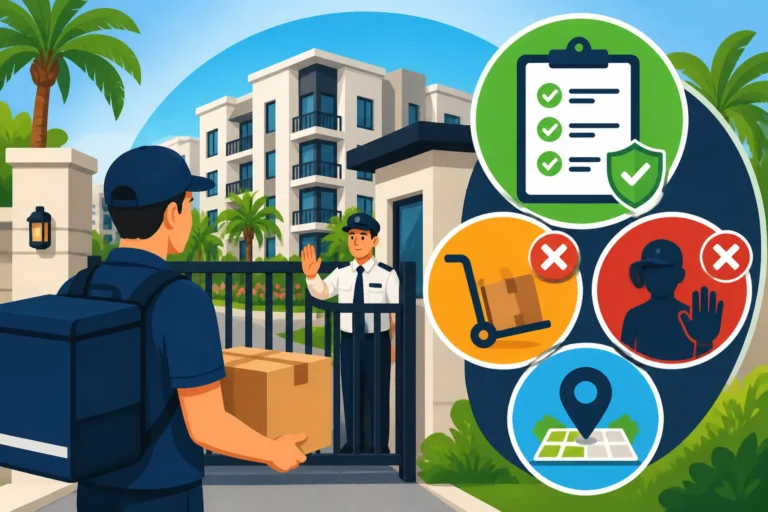
In a premium coto, guests and delivery drivers must surrender their physical ID at the gate, and the guard will call your house to verify you are expecting them before raising the boom gate. This provides an incredible layer of insulated safety, allowing children to play in the streets and expats to leave their front doors unlocked. However, you are entirely reliant on the diligence of the guards, who are often underpaid and can become complacent.
High Rise Condos and Controlled Access
For digital nomads and remote workers, modern high-rise condominiums are the undisputed gold standard for lock-and-leave security. Neighborhoods like Puerta de Hierro in Guadalajara or Polanco in Mexico City are packed with these luxury towers.
Because your front door is located on the 14th floor, you completely eliminate the threat of a street-level perimeter breach. Intruders cannot scale a high-rise. Access to the building is restricted by encrypted key fobs, and the lobby is monitored continuously by staff. Furthermore, delivery drivers from Amazon or local restaurants are strictly prohibited from coming up to your floor; they must leave the items at the front desk, ensuring total privacy. We heavily recommend this housing style in our Digital Nomads in Mexico: Remote Work Guide.
Vulnerabilities in Traditional Ground Floor Units
If you are renting a traditional apartment in an older building, you must be exceptionally wary of ground-floor units that face the street. These units are highly vulnerable to crimes of opportunity.
If a window faces the sidewalk, a thief can simply smash the glass, reach through the iron bars, and grab a laptop off your dining table in three seconds. Furthermore, ground-floor apartments suffer from immense street noise and exhaust fumes. Unless the ground-floor unit is tucked deeply into the rear of a highly secure interior courtyard, it is always tactically superior to rent an apartment on the second floor or higher.
6. Digital Security and Connectivity Preparedness
Physical locks are useless if the underlying digital infrastructure fails. Modern home security in Mexico is entirely dependent on your ability to maintain continuous power and data connectivity.
Why Your Smartphone is Your Primary Alarm
Your smartphone is the central command center for your Mexican life. It is where you view your live camera feeds, trigger your smart sirens, communicate with your local velador, and monitor the neighborhood WhatsApp group.
If your phone dies, or if you lose cellular connection while away from home, you are completely blind to any security breaches occurring at your property. You must treat your smartphone with the same level of security as your passport. Do not flash a $1,200 iPhone on a dark street corner, and always utilize biometric locks to ensure thieves cannot access your smart home apps if the device is stolen.
Backup Power and Uninterruptible Power Supplies UPS
The greatest vulnerability to your smart home security is the Mexican power grid. The state-owned electricity provider (CFE) struggles with volatility, and localized blackouts (apagones) are incredibly common during summer thunderstorms. Furthermore, sophisticated thieves will occasionally attempt to cut the power lines to a house to disable the Wi-Fi cameras before breaching the wall.
If your power drops, your internet router dies, taking your entire camera system offline instantly. To counteract this, you must purchase an Uninterruptible Power Supply (UPS) battery backup. You can source heavy-duty UPS units via Amazon Mexico and plug your fiber-optic router and primary security hub directly into them. A good UPS will keep your internet broadcasting for several hours during a blackout, ensuring your cameras continue to upload footage to the cloud and send alerts to your phone. We explore the broader realities of the CFE grid in Home Utilities in Mexico: Setting Up Electricity, Water, Gas, and Internet.
Maintaining Redundant Mobile Data
Even with a UPS keeping your router alive, the actual fiber-optic line outside your house might be severed by a falling branch or a careless truck driver. If your home internet connection is physically severed, your security cameras are useless.
This is why maintaining a redundant mobile data connection on your smartphone is an absolute non-negotiable security protocol. If your home Wi-Fi goes down while you are out to dinner, you cannot rely on the restaurant’s public Wi-Fi to receive an emergency alert. By keeping an active Airalo eSIM installed on your device, you ensure your phone remains locked onto the local Telcel or AT&T 5G networks.
Using an Airalo data pack guarantees that even during a massive, neighborhood-wide blackout that wipes out the local fiber networks, you will still receive instantaneous push notifications from your battery-powered cameras and emergency messages from your neighborhood WhatsApp group. Redundant connectivity is the ultimate failsafe. We discuss setting up this exact digital safety net in Internet and Mobile Phone Plans in Mexico: Staying Connected as an Expat.
7. Daily Habits Blending In and Staying Off the Radar
The most sophisticated smart home technology in the world cannot protect you if your daily habits constantly broadcast that you are a wealthy, unaware foreigner. Security in Mexico requires an active, disciplined lifestyle.
The Concept of No Dar Papaya
Adopted widely across Latin America, the phrase “No dar papaya” (Don’t give papaya) translates to: Do not make yourself an easy, tempting target.
In the context of your home, this means practicing extreme discretion. If you order a massive 65-inch OLED television or a new iMac, do not leave the highly branded cardboard boxes sitting on the curb outside your gate on trash day. You are actively advertising high-value, liquid assets to everyone walking past. Break the boxes down, put them inside black trash bags, and hand them directly to the sanitation workers.
Similarly, if your ground-floor windows face the street, do not set up your home office so that your dual monitors and expensive MacBook are highly visible through the glass to anyone walking on the sidewalk. Keep your blinds drawn at night. If you look like you have nothing worth stealing, thieves will move on.
Securing Doors and Windows Habitually
It sounds absurdly simple, but complacency is the expat’s worst enemy. In a secure American suburb, you might leave the front door unlocked while you run to the grocery store for ten minutes. You must violently break this habit in Mexico.
Every single time you close your front door, you must throw the deadbolt. If you have a heavy sliding steel gate for your car, you must lock the padlock the second you pull out of the driveway. A massive iron gate is functionally useless if it is simply pulled shut and not locked. Make perimeter discipline a subconscious habit.
Managing Domestic Staff and Access
One of the greatest luxuries of living in Mexico is the affordability of domestic help. Having a maid (empleada doméstica), a gardener, or a regular handyman is incredibly common. However, granting external contractors access to the interior of your fortress introduces a massive security variable.
The vast majority of domestic workers in Mexico are incredibly hardworking, honest people. However, you must still exercise caution. Do not hire someone off the street. Always hire domestic staff through verified recommendations within the trusted expat community or through highly reputable local agencies. When contractors are inside your home, do not leave stacks of physical cash, expensive jewelry, or unlocked passports sitting on your nightstand. Trust is earned over years, not days; maintaining polite, professional boundaries while protecting your high-value assets is the hallmark of a seasoned expat.
References
Primary sources (official)
- Secretaría de Seguridad y Protección Ciudadana (SSPC): The Mexican federal agency responsible for national public security, offering data on crime prevention and citizen protection strategies. https://www.gob.mx/sspc
- Secretaría de Desarrollo Agrario, Territorial y Urbano (SEDATU): The federal agency overseeing urban development, offering context on Mexican housing infrastructure and neighborhood planning. https://www.gob.mx/sedatu
Other helpful sources
- Amazon Mexico: The essential e-commerce lifeline for expats to source international-grade smart locks, Ring video doorbells, and UPS battery backups securely. https://www.amazon.com.mx/
- Airalo: Global eSIM provider ensuring you maintain redundant, unbreakable cellular data to manage your smart home security feeds and neighborhood WhatsApp groups during Wi-Fi outages. https://www.airalo.com/
Disclaimer
The information provided in this article is for educational and informational purposes only and does not constitute official legal, tactical security, or law enforcement advice. Residential crime dynamics and localized safety conditions in Mexico are highly variable by state, municipality, and specific neighborhood. No combination of physical barriers or smart home technology can guarantee absolute security against property crime. Always exercise high situational awareness, verify local crime trends with trusted residents, and consult certified local security professionals before making significant infrastructural changes to a property. Ensure that any services, hardware, or platforms mentioned meet your specific individual requirements and legal residency status.