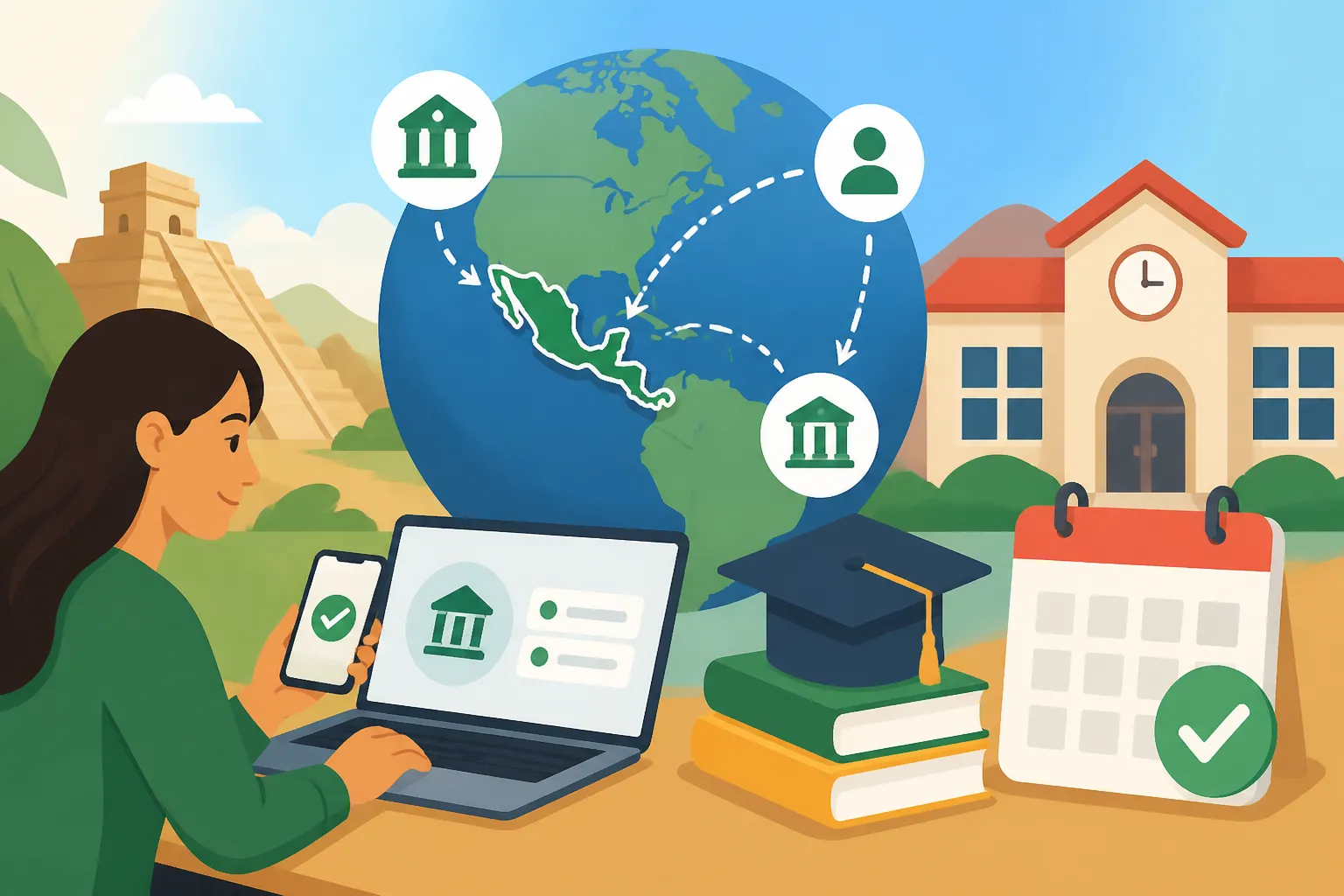
Paying International School Fees in Mexico: Transfer Routes and Deadlines
Alright, let's talk about something that can cause quite a bit of stress for expat parents here in Mexico: getting those international school fees paid on time. It’s not just the amount, but the sheer headache of currency conversions, bank charges, and chasing deadlines that can turn a simple transaction into a monthly ordeal. This guide is going to walk you through the ins and outs of paying international school fees in Mexico, from understanding payment schedules to choosing the smartest transfer route, so you can breathe a little easier.
Disclosure: This post may contain affiliate links. We may earn a commission at no extra cost to you if you make a purchase through these links. Read full disclosure.
The Reality of International School Fees in Mexico
When you’re a parent living abroad, ensuring your children get a quality education is paramount, and for many, that means international schools. But let’s be honest, the fees can be astronomical, and figuring out the best way to pay them from your home country, or even from your Mexican bank account, adds another layer of complexity. It's not just about having the money; it's about making sure it gets where it needs to go efficiently and without eating into your budget with exorbitant transfer fees.
Understanding Tuition Structures and Hidden Costs
International schools in Mexico, whether they’re in bustling Mexico City, sunny Guadalajara, or the expat haven of San Miguel de Allende, often have tuition structures that differ significantly from local schools. Most operate on an annual tuition fee, but that's rarely the only fee. You'll often find additional costs for registration, enrollment, books, uniforms, school supplies, technology use, and even mandatory extra-curricular activities. These can sometimes be paid upfront at the start of the academic year, or spread out quarterly or semi-annually.
Then there are the less obvious "hidden" costs. Think about field trips, sports teams, school plays, or even a small fee for specialized tutoring. While these are part of the enriching international school experience, they also add up. Many schools will require payment in a specific currency, often US dollars, even if you’re living and earning in Mexican Pesos, which brings us to our next point. It’s crucial to get a clear breakdown of all potential fees from the school and their preferred payment methods and currencies right from the start.
The Currency Conundrum: Pesos, Dollars, and Exchange Rates
One of the biggest headaches for expat parents is dealing with currency conversions. Many international schools in Mexico will quote their fees in US dollars, regardless of Mexico's national currency. This means that if your income is in pesos, or if you're transferring money from a different foreign currency, you're constantly at the mercy of the fluctuating exchange rate.
A seemingly small difference in the exchange rate can amount to hundreds, if not thousands, of dollars over a school year, especially when you're transferring large sums. Banks often offer notoriously poor exchange rates, marking them up significantly to make a profit. This hidden cost can easily be overlooked when you’re just looking at the wire transfer fee. It's not just about finding a service with low upfront fees; it's about getting the best possible exchange rate for your money. Understanding the dynamics of the Mexican Peso against your primary currency and the school's preferred payment currency is key to optimizing your payments. For a deeper dive into managing your finances, check out our guide on Currency Exchange in Mexico: Getting the Best Rates on Pesos.
Traditional Methods vs. Modern Solutions for International Transfers
For years, the go-to method for sending money internationally was the traditional bank wire transfer. And while they still exist, they are far from the most efficient or cost-effective solution for expat parents making regular, substantial payments like school fees. The financial landscape has evolved dramatically, offering much better alternatives.
The Old School Way: Bank Wires and Their Drawbacks
Let's talk about bank wires. Most of us are familiar with them – you go to your bank, fill out a form, and they send money to another bank. Sounds straightforward, right? In practice, for international school fees, it's often a frustrating experience.
First, there are the fees. Banks typically charge a flat fee for outgoing international wire transfers, which can range from $25 to $50 USD per transaction. But that’s usually not all. They also profit from the exchange rate, often giving you a much worse rate than the actual mid-market rate you see on Google. This hidden markup is where banks really rake it in, and it can add significantly to the overall cost of your payment.
Then there’s the speed. While some bank wires might be processed within a day or two, many can take 3-5 business days, sometimes longer, especially if there are intermediary banks involved. These intermediary banks can also add their own fees, further eroding the amount that actually reaches the school's account. And trying to track a delayed payment through multiple banks? Believe me, that’s a special kind of administrative hell that no expat parent needs. This lack of transparency and often slow service can be particularly problematic when you're up against strict payment deadlines.
Exploring Other Transfer Services and Their Limitations
Beyond traditional banks, there are other money transfer services you might consider, each with its own pros and cons. Services like PayPal or Western Union come to mind.
PayPal is convenient for smaller, personal transactions, but it typically charges higher fees and offers less favorable exchange rates for larger international transfers. Plus, it’s not always accepted by schools for tuition payments. The fees can quickly add up, making it an impractical choice for recurring, significant sums.
Western Union is excellent for sending cash quickly to someone who needs to pick it up, but it’s generally not set up for direct bank-to-bank tuition payments, and its fees and exchange rates for larger amounts can also be less competitive. It's more geared towards urgent, person-to-person transfers rather than institutional payments.
These services might work in a pinch for a smaller, one-off payment, but for the ongoing, substantial cost of international school tuition, they simply don’t offer the efficiency, cost-effectiveness, or transparency that expat parents truly need. For managing your overall finances in Mexico, understanding your options for Transferring Money Internationally: Best Ways to Send Money to/from Mexico is essential.
The Smart Choice: Why Dedicated Transfer Services Like Wise Stand Out
This is where modern financial technology, and specifically services like Wise, truly shine. When you're consistently transferring significant amounts for school fees, you need a solution that prioritizes low costs, excellent exchange rates, and reliable speed. Wise (formerly TransferWise) was built precisely to address the frustrations of traditional banking for international money transfers.
What makes Wise the go-to for expat parents? It’s primarily about transparency and fairness. Wise uses the real mid-market exchange rate – the one you see on Reuters or Google – and charges a small, upfront fee that is clearly displayed before you even initiate the transfer. There are no hidden markups, no surprise intermediary bank charges. This means you know exactly how much your transfer will cost and how much money the school will receive, down to the cent.
For parents juggling budgets and living costs in Mexico, like those outlined in our Cost of Living in Mexico: 2026 Comprehensive Guide, every peso saved on transfer fees and unfavorable exchange rates makes a tangible difference. Wise integrates seamlessly into the life of an expat, allowing you to focus on your family and your life here, rather than battling with banking bureaucracy.
Navigating Payment Deadlines and Avoiding Late Fees
Missing a tuition payment deadline can result in late fees, disruption to your child's enrollment, and a whole lot of unnecessary stress. International schools, like any institution, have strict financial calendars, and staying on top of them is crucial for expat parents.
Typical Payment Schedules for International Schools
Most international schools in Mexico offer a few payment options. The most common are:
- Annual Payment: A single lump sum paid at the beginning of the academic year. This often comes with a slight discount for paying in full.
- Semi-Annual Payments: Two larger payments, typically at the start of the first and second semesters.
- Quarterly Payments: Four payments spread throughout the year, usually aligned with academic quarters.
- Monthly Payments: Less common for the full tuition amount, but sometimes available, usually with a small administrative fee.
Beyond the tuition, remember those additional fees we talked about earlier? Registration, books, and uniforms are usually due right at the start of the school year. Make sure you have a clear schedule of all due dates for all fees. Some schools might also have separate deadlines for application fees for new students, which might be months before the actual enrollment.
Staying organized is key. Create a calendar or set up digital reminders for each payment due date, ideally a week or two in advance, to give yourself ample time for the transfer process.
The Importance of Timely Transfers and Communication
Missing a deadline, even by a day or two, can trigger late fees, which can quickly add up. These fees aren't just an annoyance; they're an unnecessary drain on your budget. Moreover, consistent late payments can sometimes lead to issues with re-enrollment or even temporary suspension of services, which is the last thing any parent wants for their child.
It’s always better to communicate proactively with the school’s finance department if you anticipate any delays. A quick email explaining a potential lag in transfer processing can go a long way. However, the best defense against late fees is using a reliable, fast transfer service. Wise is known for its speed, often completing transfers within hours or a day, which gives you confidence that your payments will arrive when they need to.
Consider setting up an account with a Mexican bank if you haven't already; our guide on Banking in Mexico: Complete Guide for Foreigners can help. This can sometimes make the final leg of the payment process smoother if the school has a local bank account, even if the initial transfer to Mexico is still international.
Setting Up Automated or Scheduled Payments
One of the most powerful features that can eliminate payment stress is the ability to schedule or automate your transfers. Imagine not having to remember a payment deadline for school fees ever again!
With services like Wise, you can often set up recurring payments. This means you can schedule your tuition installments in advance for the entire school year. You decide the amount, the currency, and the date, and Wise handles the rest. This feature is a game-changer for busy expat parents, removing the mental load of remembering multiple due dates and manually initiating transfers. You’ll receive notifications about upcoming payments and confirmations once they are sent. This level of control and automation ensures your child’s education payments are always on time, without you having to lift a finger each month or quarter.
Why Wise is the Go-To for Expat Parents Paying School Fees
Alright, let's get down to brass tacks about why Wise isn't just an option, but truly the best option for handling international school fees here in Mexico. As expats, we're constantly looking for ways to simplify complex processes and save money, and Wise delivers on both fronts, making it a hero for parents like us.
Unbeatable Exchange Rates and Transparent Fees
This is arguably the biggest selling point. Traditional banks, as we discussed, make a significant chunk of their money by marking up exchange rates. They'll tell you they offer "fee-free" transfers, but then quietly give you an exchange rate that's several points worse than the real market rate. With large sums like tuition fees, this difference adds up to hundreds, sometimes thousands, of dollars each year that simply vanish from your pocket.
Wise operates differently. It uses the real mid-market exchange rate, the one you'd find on independent financial news sites. Their fees are transparent, small, and shown upfront before you commit to the transfer. You always know exactly how much you're paying in fees and how much the school will receive. This honesty is incredibly refreshing and can lead to substantial savings over time compared to conventional banking methods. When you're looking at the big picture of your Cost of Living in Mexico City 2026: Detailed Expat Budget Guide, saving money on transfers is a no-brainer.
Speed and Reliability for Critical Payments
Beyond cost, speed and reliability are paramount when it comes to school fees. You don't want to be biting your nails, wondering if your payment will arrive before the deadline.
Wise leverages a network of local bank accounts around the world. When you send money from, say, the US to Mexico, your money typically goes into Wise's US bank account, and then Wise sends the equivalent amount from its Mexican bank account to the school's account. This ingenious system cuts out the slow, expensive international SWIFT network, making transfers much faster. Many transfers are completed within hours, and most arrive within 1-2 business days. This means less stress for you and ensures the school receives the funds promptly, avoiding any late fees or administrative headaches.
Easy Setup and Recurring Payments Feature
Another huge benefit for busy expat parents is the sheer ease of use. Setting up a Wise account is straightforward and can be done entirely online. You'll need to verify your identity, which is a standard procedure for financial services and usually quick.
Once your account is set up, sending money is intuitive. You simply enter the recipient’s bank details (the school's account information), the amount, and the currency. Wise will show you the exact fees and exchange rate upfront.
But for school fees, the recurring payments feature is where Wise truly shines. You can schedule weekly, bi-weekly, monthly, or even custom recurring payments. This is perfect for tuition paid in installments. Set it once for the academic year, and you can practically forget about it. You'll get email notifications when payments are sent, giving you complete peace of mind. This kind of automation simplifies your financial life immensely, freeing you up to enjoy your expat journey. Imagine spending more time exploring a Pueblos Mágicos: Mexico's Magic Towns Explained instead of wrestling with bank forms!
Let's quickly compare traditional bank transfers with Wise for school fee payments:
| Feature | Traditional Bank Wire | Wise |
|---|---|---|
| Exchange Rate | Marked up from mid-market rate (hidden cost) | Real mid-market rate (transparent) |
| Transfer Fees | High fixed fees, potential intermediary bank fees | Low, transparent upfront fees |
| Speed | 3-5 business days, sometimes longer | Hours to 1-2 business days, typically faster |
| Transparency | Often unclear total cost due to hidden exchange rate markups | Full cost (fees + rate) shown upfront |
| Recurring Payments | Generally not available or cumbersome | Easy to set up and manage for automated, scheduled payments |
| Ease of Use | Can involve branch visits, complex forms | Fully online, intuitive interface |
| Peace of Mind | Worry about hidden costs, delays | Confident payments, clear arrival times |
As you can see, when it comes to consistently paying large sums like international school fees, Wise offers a significantly more expat-friendly, cost-effective, and less stressful solution. Take control of your school payments today and consider making Wise your go-to transfer service.
Disclaimer
The information provided in this guide is for general informational purposes only and does not constitute financial, legal, or immigration advice. While we strive to provide accurate and up-to-date information, regulations and circumstances can change. Always consult with qualified professionals for advice tailored to your specific situation, and verify all information directly with the relevant institutions, such as international schools and financial service providers.