Paying a Notario and Closing Costs From a Foreign Account
Navigating the financial maze of buying property in Mexico is, let's be honest, a rite of passage that often feels less like an adventure and more like a never-ending quest for a hidden treasure map written in legalese and broken Spanish. When it comes to the crucial final steps – paying your Notario and those inevitable closing costs from a foreign bank account – the process can bring even the most seasoned expat to their knees. This guide is here to untangle that knot, offering a clear path and highlighting how services like Wise can truly simplify what feels like an insurmountable hurdle.
Disclosure: This post may contain affiliate links. We may earn a commission at no extra cost to you if you make a purchase through these links. Read full disclosure.
Understanding Notario Fees and Closing Costs in Mexico
Before we dive into the nitty-gritty of making international payments, it's absolutely vital to grasp what you're paying for. Many new expats, understandably, confuse a Mexican Notario with a simple notary public back home. Let me tell you, they are worlds apart, and understanding their role is key to understanding the costs involved.
What Exactly is a Notario Publico and Why Are They So Important?
In Mexico, a Notario Publico is far more than just someone who stamps documents. They are high-ranking, government-appointed legal professionals who hold public faith. Their primary role in a real estate transaction is to provide legal certainty, ensuring that the sale is legitimate, free of fraud, and properly registered according to Mexican law. They are essentially impartial arbiters who oversee the entire closing process.
Think of them as a combination of a lawyer, a title agent, and a tax collector, all rolled into one powerful individual. They draft the public deed (escritura pública), verify the identities of all parties, ensure the property title is clear, calculate and collect taxes and fees on behalf of the government, and then register the new owner with the Public Registry of Property. Their involvement is not optional; it's mandatory for all real estate transactions, especially when foreigners are involved, such as setting up a The Fideicomiso: Bank Trusts for Foreign Property Buyers.
This means the Notario's office will be the central hub for the final transfer of funds, and you'll be making a substantial payment directly to them to cover their fees and other closing costs. It's a significant financial step, so clarity is paramount.
Breaking Down Typical Closing Costs
Beyond the Notario's direct fee, which is a percentage of the property's value, there's a whole host of other expenses lumped into "closing costs" that the Notario's office collects and distributes. These are the costs that can sometimes catch new buyers off guard, adding a sizable chunk to the overall property purchase.
Here's a breakdown of what typically constitutes closing costs in Mexico:
- Acquisition Tax (Impuesto sobre Adquisición de Inmuebles, or ISAI/ISABI): This is usually the largest closing cost and varies by state, typically ranging from 2% to 5% of the appraised value of the property (which might be higher than the sale price).
- Registration Fees: Payments to the Public Registry of Property to officially record your ownership.
- Appraisal Fees: An independent appraisal is often required to determine the fiscal value of the property for tax purposes.
- Permit Fees: For foreigners, if you're buying in the "restricted zone" (within 50 km of the coast or 100 km of a border), there's a fee for the permit from the Ministry of Foreign Affairs (SRE) to hold the property via a bank trust (fideicomiso).
- Notario Fees: This is the Notario's direct compensation for their extensive legal services, typically a percentage of the transaction value, though often capped at certain amounts.
- Certificate of No Liens: A document proving there are no debts or legal encumbrances on the property.
- Certificates of No Debt for Utilities: Ensuring the previous owner has paid all electricity, water, and property taxes.
- Title Insurance (Optional but Recommended): While not technically part of the Notario's fees, it's an important cost to consider during closing to protect your investment.
These costs aren't trivial. Depending on the state where you're buying and the property's value, closing costs can easily add another 4% to 8% (or even more for lower-value properties) on top of the purchase price. It’s crucial to get a detailed breakdown from your Notario early in the process so you can budget accurately.
The Headache of International Payments for Mexican Property
So, you've found your dream home, the Notario has done their due diligence, and now it's time to send the money. This is where many expats encounter their first real frustration with Mexican banking – especially when dealing with large sums from across borders. It's not just about the money; it's about the hidden costs, the delays, and the sheer lack of transparency that can turn an exciting purchase into a nail-biting ordeal.
Why Traditional Bank Wires Are Often a Nightmare
Oh, the dreaded international bank wire. If you've ever tried to send money the "traditional" way, you know the drill. It's like sending a message in a bottle across the ocean, hoping it reaches its destination intact and on time, without too many barnacles clinging to it along the way.
Here’s why traditional bank wires often become a nightmare for large payments like Notario fees:
- Exorbitant Fees: Both your originating bank and the receiving bank in Mexico will likely charge you fees. Sometimes there are even intermediate banks that take a cut, often without you even knowing until the money arrives short. These fees can quickly add up to hundreds of dollars for large transfers.
- Terrible Exchange Rates: This is arguably the biggest silent killer of your budget. Banks rarely offer you the actual mid-market exchange rate (the one you see on Google). Instead, they add a significant markup, often several percentage points, which they pocket. For a large sum like closing costs, this hidden markup can literally cost you thousands of dollars, far more than any upfront transfer fee.
- Sluggish Processing Times: While banks might quote a few business days, in reality, international wires can take much longer due to internal processing, compliance checks, and different banking hours across time zones. Imagine the stress of a closing deadline looming, and your funds are still stuck in transfer limbo!
- Lack of Transparency: You often don't know the exact amount that will arrive until it's there. The fees from intermediary banks are unpredictable, and the exchange rate applied might not be the one you were quoted or expected. This uncertainty is incredibly frustrating when you need precise amounts for closing.
I've heard countless stories from expats, myself included, who've lost sleep over wire transfers for property or large expenses. It's a game of waiting and hoping, and nobody wants that when their home purchase is on the line.
The Problem with Large Sums and Foreign Account Restrictions
Beyond the fees and delays, sending large sums from a foreign account runs into another layer of complexity: restrictions and regulations designed for financial security.
- Daily/Weekly Transfer Limits: Your home country bank might have strict daily or weekly limits on how much you can transfer internationally, especially online. You might have to physically visit the bank or make multiple transfers, which means more fees and more exposure to fluctuating exchange rates.
- Increased Scrutiny (AML): Banks are legally obligated to prevent money laundering. When you send a large sum internationally, both your bank and the receiving bank in Mexico will flag it for additional scrutiny. This means you’ll likely need to provide extensive documentation: proof of funds, the purpose of the transfer, details of the recipient (the Notario's office), and potentially even your underlying contract of sale. This isn't just a minor inconvenience; it can cause significant delays if your paperwork isn't perfectly in order.
- Coordination Challenges: Trying to coordinate all this documentation, explain the purpose of the funds to a bank representative who might not understand the Mexican Notario system, and ensure the funds arrive on time and in the correct amount, can be a full-time job in itself. And let's not forget potential language barriers if you're dealing with Mexican bank staff directly on the receiving end.
It's a lot to handle, and honestly, it’s unnecessary stress when there are better, more modern solutions available for Transferring Money Internationally: Best Ways to Send Money to/from Mexico.
The Smarter Way to Pay: Using Wise for Property Costs
After years of dealing with the headaches of traditional international transfers, I can tell you there's a sigh of relief when you discover services designed for the modern expat. When it comes to significant payments like Notario fees and closing costs for property in Mexico, Wise (formerly TransferWise) truly stands out as the hero. It's a game-changer for moving large sums across borders transparently, affordably, and quickly.
How Wise Streamlines Your Notario and Closing Cost Payments
Wise was built from the ground up to solve the exact problems we just discussed with traditional banks. Their entire model is based on transparency and giving you the real exchange rate.
Here's how Wise streamlines your payments:
- Mid-Market Exchange Rate: This is the real exchange rate, the one banks use when they trade with each other. Wise charges a small, upfront fee (which is clearly displayed), but they don't add hidden markups to the exchange rate. This alone can save you thousands of dollars on a large property payment compared to a bank.
- Transparent, Low Fees: You see the exact fee you'll pay before you commit to the transfer. No surprises, no hidden charges from intermediary banks. What you see is what you get.
- Speedy Transfers: While bank wires can drag on, Wise transfers to Mexico are often completed within hours or the next business day. For large sums, it might take a little longer due to regulatory checks, but it's still significantly faster and more reliable than many traditional bank transfers.
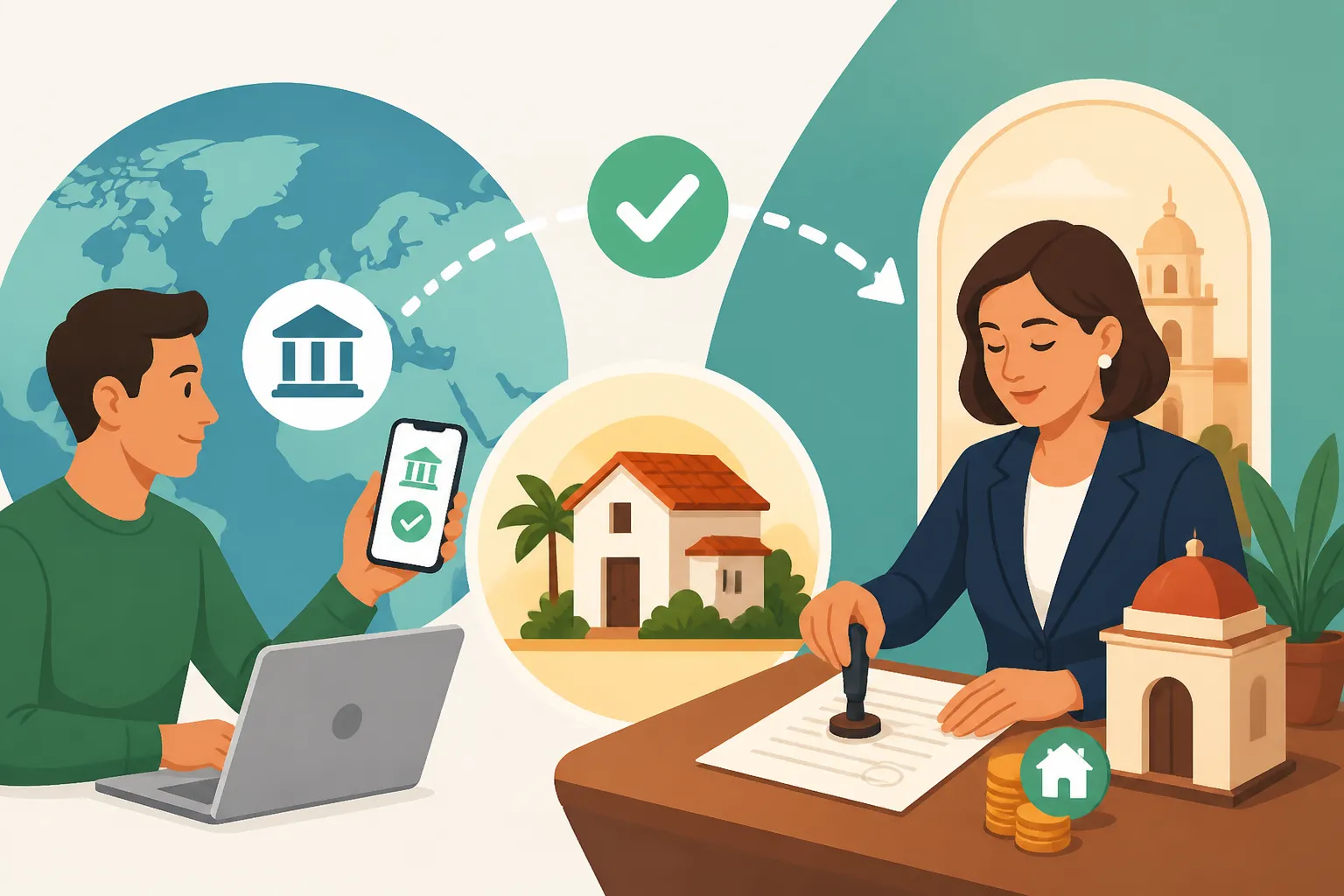
- Simple Process: You initiate the transfer from your foreign bank account, specifying the amount in your home currency. Wise converts it at the mid-market rate, applies its small fee, and then sends the money directly to the Notario's Mexican bank account (in MXN pesos). It's a direct, efficient route.
- Dedicated Customer Support: If you ever have questions or need assistance with a large transfer, their customer support is generally responsive and helpful, which is a huge comfort when dealing with big money.
By using Wise, you’re cutting out the opaque layers and hidden costs associated with traditional banking, ensuring more of your hard-earned money actually goes towards your property, not bank profits.
Step-by-Step: Paying Your Mexican Property Costs with Wise
Ready to make your life a whole lot easier? Here’s a detailed, step-by-step guide to using Wise for your Notario and closing cost payments:
- Create a Wise Account: If you don't already have one, head to the Wise website or download their app. The sign-up process is straightforward and usually involves identity verification, which is standard for financial services.
- Initiate a Transfer: Click on "Send money" or "Get started."
- Enter Transfer Details:
- Specify the amount you want to send in your home currency (e.g., USD, CAD, EUR).
- Select Mexican Pesos (MXN) as the recipient currency.
- Wise will immediately show you the exact amount in MXN that your Notario will receive, the current exchange rate, and the transparent fee. This is your chance to compare and see the significant savings!
- Choose Recipient: Select "Someone else" as you're sending to the Notario.
- Enter Notario's Bank Details: This is crucial. Get the exact bank information from your Notario's office. You will need:
- Full Name of Beneficiary: This will be the Notario's full name or the name of their official trust account (e.g., "Notaria Pública No. X"). Double-check every letter.
- CLABE Number: This is Mexico's 18-digit interbank routing code. It's like a combination of account number and routing number. It's unique and essential for electronic transfers.
- Bank Name: The name of the Mexican bank where the Notario's account is held (e.g., BBVA Bancomer, Banorte, Santander).
- Address: Though sometimes optional for online transfers, it's good practice to have it.
- Review and Confirm: Carefully review all the details – the amount, the recipient's name, the CLABE, and the bank name. Any mistake here can cause significant delays or even send the money to the wrong account, which you absolutely want to avoid!
- Fund Your Transfer: Wise will give you options on how to pay them. You can typically:
- Bank transfer (ACH/Wire): You send the money from your foreign bank account to Wise's local account in your country. This is usually the cheapest option for large sums.
- Debit/Credit card: Faster, but often incurs higher fees for large amounts.
- Wire transfer: If sending a very large sum, your bank might require this.
- Track Your Transfer: Once funded, you can track the progress of your transfer directly in the Wise app or on their website. You'll receive notifications when the money is on its way and when it arrives.
- Notify Your Notario: Once you initiate the transfer, inform your Notario's office, providing them with the confirmation of your Wise transfer. This helps them monitor their account for the incoming funds and ensures a smooth reconciliation.
It really is that straightforward. Many expats also use Wise for other regular expenses, helping them budget on a Cost of Living in Mexico: 2026 Comprehensive Guide.
Why Wise is the Preferred Choice for Expats
Wise hasn't just gained popularity by chance; it has earned its reputation as a preferred choice for expats in Mexico because it genuinely solves real-world financial problems.
- Significant Cost Savings: The primary reason is often the money saved. By consistently offering the mid-market exchange rate and transparent, low fees, Wise ensures more of your funds reach their intended destination. This isn't just marketing hype; for a property purchase of, say, $200,000 USD with 5% closing costs ($10,000 USD), a 2-3% hidden exchange rate markup from a traditional bank could easily mean an extra $200-$300 or more in lost value on just the closing costs alone, not to mention the property price itself.
- Unmatched Transparency: The ability to see exactly what you're paying in fees and the precise amount the recipient will receive before you even commit to the transfer provides invaluable peace of mind. No more guessing games or surprise deductions.
- Reliability and Speed: Knowing that your large payment will arrive quickly and reliably is paramount when dealing with property deadlines. Wise’s efficient network often means same-day or next-day delivery to Mexican banks, minimizing stress and allowing for smoother coordination with your Notario.
- User-Friendly Experience: Their platform and app are intuitively designed, making the process of setting up and tracking transfers incredibly simple, even if you’re not particularly tech-savvy.
- Security: Wise is a regulated financial institution in multiple countries, meaning your money is held securely and transfers are compliant with international financial regulations. This provides a strong level of trust, especially for large sums.
- Versatility for Expat Life: Beyond closing costs, Wise is also excellent for regularly sending money to your Mexican bank account, paying rent, utilities, or even funding a local How to Open a Bank Account in Mexico: Requirements and Tips once you have one. It truly simplifies your entire financial life as an expat.
For anyone looking to move large sums for a property purchase, Wise offers a modern, efficient, and cost-effective solution that drastically reduces the typical frustrations associated with international payments. It's how you make sure your money gets to where it needs to be without unnecessary complications, aligning with your goal of How to Send Money to Mexico With Low Fees.
Essential Considerations for Payments and Closing
Even with a smooth service like Wise, buying property in Mexico involves careful coordination and attention to detail. These aren't just minor points; they are critical for ensuring your payments go through without a hitch and your closing process is successful.
Coordination with Your Notario and Real Estate Agent
This cannot be stressed enough: communication is paramount. Your Notario and real estate agent (if you're using one) are your boots on the ground, and their guidance is invaluable.
- Early and Clear Communication: As soon as you know you'll be making payments from a foreign account, inform your Notario's office. Ask them about their preferred method for receiving funds and confirm they accept direct transfers from services like Wise. While most reputable Notarios are familiar with Wise and similar platforms, it’s always best to verify.
- Obtain Exact Bank Details: Request the Notario’s official bank details in writing. This includes the full beneficiary name (Notario's name or their official trust account name), the 18-digit CLABE number, and the precise bank name. Do not rely on verbal information or details from unofficial sources. Double-check, triple-check every digit and letter. A single mistake could send your funds astray.
- Confirm Payment Deadlines: Your Notario will provide a timeline for when certain funds (e.g., initial deposit, acquisition tax, final closing costs) need to be received. Factor in potential transfer times, even with fast services like Wise, to avoid last-minute panic.
- Verify Amounts in Mexican Pesos: Always clarify the exact amount due in Mexican Pesos (MXN). While you'll be sending from your foreign currency, the Notario expects to receive a specific MXN amount. Wise will show you the exact MXN amount that will arrive, which you can then match against the Notario's figures.
- Keep All Records: Retain every confirmation, receipt, and communication related to your payments. This digital trail is your proof of payment and invaluable if any discrepancies arise.
Your agent can also assist in bridging any communication gaps or helping to clarify details with the Notario, especially if Spanish isn't your strong suit.
Navigating Exchange Rate Fluctuations
The Mexican Peso, like many currencies, can be a bit of a rollercoaster. Exchange rate fluctuations can significantly impact the final cost of your property, especially when dealing with large sums and precise deadlines.
- Monitor the Rate: Keep an eye on the exchange rate between your home currency and the Mexican Peso. Websites like XE.com or even a quick Google search can show you the current mid-market rate.
- Timing Your Transfers: If you have some flexibility, you might consider breaking large payments into smaller chunks (if permitted by the Notario and your bank) to mitigate risk, or timing your transfers when the exchange rate is more favorable. However, for closing costs, it's often a single, large payment, so you'll have less room to maneuver.
- Locking in Rates: One of the benefits of Wise is that when you initiate a transfer, the exchange rate shown is often locked in for a certain period (e.g., 24-48 hours), giving you certainty on the exact amount the Notario will receive. This helps remove some of the anxiety associated with market volatility.
A small shift in the exchange rate can mean hundreds or even thousands of dollars difference on a large property purchase, so being aware and strategic is important.
Documentation and Reporting for Large Sums
Mexico, like every other country, has strict anti-money laundering (AML) regulations. When a Notario handles property transactions, they are obligated to report significant cash transactions or large transfers. This is why thorough documentation from your side is so important.
- Proof of Funds: Be prepared to provide proof of the origin of your funds. This could include bank statements, investment account statements, or even documentation of a property sale in your home country. Your bank, Wise, and the Notario may all request this.
- Purpose of Transfer: Clearly state that the transfer is for "payment of real estate closing costs and Notario fees" (or similar wording) when initiating the transfer.
- RFC (Registro Federal de Contribuyentes): While not strictly required for the transfer itself, if you are a resident or plan to become one, you will need an Do You Need an RFC Number? Why a Tax ID Matters for Expats' Finances for many financial activities in Mexico, including potential future property sales or renting out your property. Your Notario might even ask for your RFC during the closing process, if you have one.
- Tax Implications: Understand the tax implications of owning and potentially selling property in Mexico. While your Notario handles the immediate acquisition tax, you should be aware of Property and Capital Gains Tax in Mexico: A Guide for Foreigners down the line. Keep all your property purchase documents, including the closing cost breakdown, meticulously organized.
Being proactive with documentation will save you a lot of headaches and ensure a smooth, legally compliant transaction.
Alternative Payment Methods (and Their Drawbacks)
While Wise is my strong recommendation for paying Notario fees and closing costs from a foreign account, it's worth briefly touching on other options and why they might not be the best fit for this specific, large-sum transaction. Understanding the landscape can help you make informed decisions.
Bank-to-Bank Wire Transfers
As discussed, this is the traditional method, but it comes with a litany of frustrations when dealing with large, time-sensitive payments for property.
- Drawbacks: The main issues are consistently high fees (often both sender and receiver fees, plus potential intermediary bank fees), unfavorable exchange rates with hidden markups, and unpredictable processing times that can cause major stress when you have a closing deadline. There's also the frustrating lack of transparency; you often don't know the final amount received until it hits the Notario's account, which makes reconciliation difficult. For a transaction where exact amounts and timely delivery are critical, these drawbacks become deal-breakers.
While your bank can send a wire, it's rarely the best option for expats trying to maximize their pesos and minimize their stress.
Transferring Money to a Local Mexican Bank Account First
Some expats choose to transfer a lump sum to their own Mexican bank account and then pay the Notario directly from there. This can work, but it adds an extra step and introduces its own set of potential issues for large property payments.
- Drawbacks:
- Requires a Mexican Bank Account: This is the first hurdle. Opening a Mexican bank account as a foreigner can be a process in itself, often requiring residency status and specific documents (see How to Open a Bank Account in Mexico: Requirements and Tips). If you're buying property before establishing residency, this might not be a viable immediate option.
- Daily Transaction Limits: Even once you have a Mexican bank account, there might be daily limits on how much you can transfer via SPEI (Mexico's interbank electronic payment system) to the Notario's account. This could mean making multiple transfers over several days, incurring more fees or causing delays.
- Compliance: Receiving a large sum into your personal Mexican account from abroad will also trigger scrutiny from Mexican banks for AML purposes. You'll need to provide similar documentation about the source and purpose of funds to your Mexican bank.
- Extra Step, Extra Risk: You're essentially adding an unnecessary intermediary step. Each transfer is a point of potential error or delay. The most direct route to the Notario is usually the safest for large property-related payments.
While this strategy is excellent for regular expenses and managing your budget, for the high-stakes world of property closing costs, it's generally more cumbersome than a direct payment to the Notario.
Other Money Transfer Services
You might be familiar with other money transfer services like Xoom (a PayPal service), Western Union, or Remitly. While these are often great for sending smaller amounts or for cash pick-ups, they typically fall short for large property payments.
- Drawbacks:
- Higher Fees for Large Amounts: While they can be competitive for small sums, their fees for transferring thousands or tens of thousands of dollars often become less attractive than Wise.
- Exchange Rate Markups: Many of these services, while better than traditional banks, still apply a slight markup on the exchange rate compared to Wise's mid-market rate.
- Transaction Limits: They often have stricter daily or monthly transaction limits that might not accommodate the full amount of your closing costs in a single transfer.
- Not Ideal for Direct Notario Payments: Their primary use case isn't usually direct bank transfers to official entities like a Notario's office for large real estate transactions; they're more geared towards person-to-person transfers or bill payments.
In summary, for paying your Notario and those hefty closing costs, the transparency, speed, and real exchange rates offered by Wise make it an almost unparalleled choice. It simplifies what can otherwise be a very complex and costly part of your property purchase journey.
Here's a handy table to help summarize the comparison between common methods for large international transfers to Mexico:
| Feature | Traditional Bank Wire (e.g., from US Bank to Mexico) | Wise | Other Money Transfer Services (e.g., Xoom, Western Union) | Transfer to Personal MX Bank then to Notario |
|---|---|---|---|---|
| Fees | High (sender, receiver, intermediate banks) | Low, transparent (clearly stated upfront) | Variable, can be high for large sums | Fees for international transfer to your MX account, then internal MX transfer fee |
| Exchange Rate | Marked up (significantly worse than mid-market) | Mid-market rate (real rate) | Often slightly marked up (better than bank, worse than Wise) | Mid-market or slightly marked up on initial transfer |
| Speed | Slow (3-7+ business days, often unpredictable) | Fast (hours to 1-2 business days for large sums) | Fast (often minutes to hours for smaller sums) | Fast for initial transfer, then local MX transfer is fast |
| Transparency | Low (hidden fees, unknown final amount) | High (exact fee & received amount shown upfront) | Moderate (fees usually clear, exchange rate varies) | High for Wise to MX bank; internal MX transfer is clear |
| Transaction Limits | Can be high, but often manual & with extra scrutiny | High limits, but subject to regulation/verification | Often lower limits, designed for smaller amounts | High for Wise to MX bank, then local MX bank transfer limits apply |
| Ideal Use Case | Rarely ideal for expat property payments | Highly recommended for property payments & large sums | Small, frequent transfers or cash pickup | Best for funding your own local expenses regularly |
| Documentation Needed | Extensive (proof of funds, purpose) | Extensive (proof of funds, purpose) | Basic to Moderate | Extensive for initial international transfer |
Final Thoughts on Paying Your Notario and Closing Costs
Navigating the financial landscape of buying property in Mexico is undeniably complex, and paying those essential Notario fees and closing costs from abroad can feel like the final, most daunting hurdle. From personal experience and countless stories shared by fellow expats, the traditional banking system often adds unnecessary stress, hidden costs, and frustrating delays to what should be an exciting time.
That's why modern solutions like Wise have become such a lifesaver for our community. By offering transparent, low fees and the true mid-market exchange rate, Wise isn't just a convenience; it's a financial advantage that ensures more of your money goes towards your beautiful new property and not into bank profits. Its speed and user-friendly platform also mean less nail-biting anxiety as deadlines approach.
Remember, clear and proactive communication with your Notario's office, meticulous attention to detail when entering bank information, and being prepared with any necessary documentation are all critical pieces of the puzzle. Combine these best practices with a reliable, cost-effective service like Wise, and you'll streamline your property purchase significantly. Don't let the payment process overshadow the joy of becoming a property owner in Mexico!
Disclaimer
The information provided in this guide is for general informational purposes only and does not constitute financial, legal, or immigration advice. While every effort has been made to ensure accuracy, laws and regulations in Mexico, particularly regarding property transactions and financial transfers, can change. It is highly recommended to consult with a qualified Mexican Notario, real estate attorney, and financial advisor for personalized advice regarding your specific situation before making any property purchase or large financial transfers.