Mexico Visitor Visa vs Temporary Residency: Which One Should You Get?
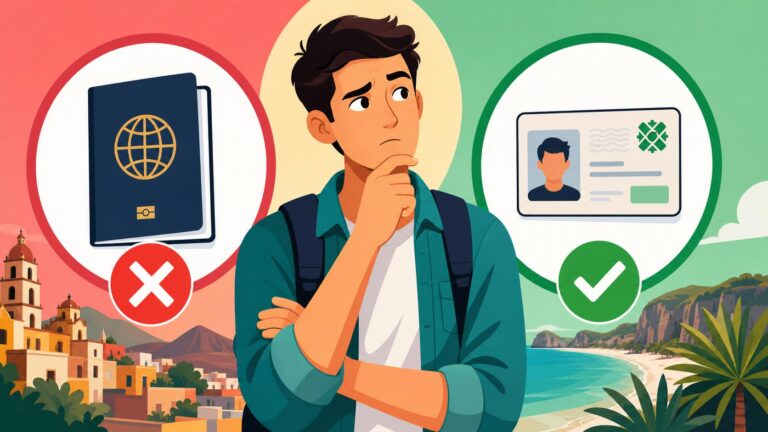
Choosing between staying on a simple tourist stamp or committing to legal residency is a crossroads almost every foreigner in Mexico eventually faces. I remember sitting in a sun-drenched cafe in Oaxaca, clutching my passport and wondering if the "border run" stress was really worth avoiding a few trips to the immigration office. This guide settles the debate once and for all by breaking down exactly which path suits your specific lifestyle, budget, and long-term goals in the land of the Aztecs.
Disclosure: This post may contain affiliate links. We may earn a commission at no extra cost to you if you make a purchase through these links. Read full disclosure.
Understanding the Mexico Visitor Visa FMM
When most people talk about a "tourist visa," they are actually referring to the Forma Migratoria Múltiple (FMM). Technically, for many nationalities like Americans, Canadians, and Europeans, this isn't a visa you apply for at a consulate; it is a permit granted upon arrival. However, the landscape has changed drastically in the last couple of years, and the days of guaranteed 180-day stays are largely a thing of the past. You are now at the mercy of the immigration officer at the airport or land border, who decides whether to give you seven days or six months.
The 180 Day Rule Myth vs Reality
For years, the "180-day rule" was the gold standard for backpackers and snowbirds. You’d fly into Cancun, get your 180-day stamp, and go about your life. When it expired, you’d hop over to Belize or fly to Texas for a weekend and come back for another 180 days. I personally know people who did this for a decade. But today, the Mexican government is cracking down on "perpetual tourists." Officers are now looking at your travel history in their system. If they see you have been living in Mexico for years on back-to-back tourist permits, they are increasingly likely to give you a much shorter stay—sometimes just 7 or 15 days—effectively forcing you to leave or regularize your status.
This unpredictability is the biggest downside of the visitor permit. Imagine planning a four-month stay in San Miguel de Allende, signing a lease, and then being told at the border you only have 30 days to leave. It creates a constant state of low-level anxiety that can really ruin the "mañana" vibe you moved here for. If you are serious about spending significant time here, you need to understand the Mexico Tourist Card (FMM) Explained: Entry Requirements for 2026 and how it differs from actual legal residency.
Limitations of the Visitor Visa
Beyond the uncertainty of your stay length, being a "visitor" means you are legally a ghost in the Mexican system. You cannot open a traditional bank account, you cannot legally work for a Mexican company, and you certainly cannot buy or register a car in your own name in most states. You are essentially a long-term guest, which is fine for a vacation, but a nightmare if you want to build a life. For instance, if you want to sign up for a post-paid internet plan or a local cell phone contract, you will often find yourself blocked because you lack a CURP (unique population registry code).
Furthermore, as a visitor, you have no path to permanent status or citizenship. Every time you leave and re-enter, you are starting from zero. There is also the issue of "Residente Temporal" car permits. If you drive a foreign-plated car into Mexico on a visitor permit, your car’s legal stay is tied to your FMM. If your FMM expires, your car is technically in the country illegally and could be confiscated. This is a massive risk that many people don't realize until they are facing a hefty fine at a checkpoint.
Breaking Down Mexico Temporary Residency
Temporary Residency (Residente Temporal) is a giant leap forward in terms of stability and rights. This status is designed for people who want to stay in Mexico for more than six months but less than four years. It is the bridge between being a visitor and becoming a permanent fixture in the community. While the process requires more paperwork and an initial interview at a Mexican consulate outside of the country, the peace of mind it provides is unparalleled.
Financial Solvency and Other Requirements
The most common hurdle for the Mexico Temporary Resident Visa: Comprehensive Guide for Expats (2026 Update) is proving financial solvency. The Mexican government wants to ensure you won't be a burden on their social systems. Usually, this means showing bank statements with a certain average balance over the last 12 months or proving a steady monthly income from a pension or foreign job. The numbers change every year because they are tied to the Mexican minimum wage or the UMA (Unit of Measure and Update).
When I went through this, the most stressful part was the paperwork. You have to provide months of original bank statements, often stamped by the bank, and if they aren't in Spanish, you might need professional help. Using a service like RushTranslate can be a lifesaver here because Mexican consulates are notoriously picky about the quality and certification of your translated documents. One small error in a translation can result in a rejected application and a lost appointment fee.
The Benefits of Having a Residency Card
Once you have that plastic Residente Temporal card in your wallet, the country opens up to you. You get a CURP, which is the "skeleton key" to life in Mexico. With a CURP, you can finally open a local bank account, which saves you a fortune in ATM fees. You can also get a Mexican driver's license and register a vehicle. For those planning to stay long-term, the Rights and Benefits of Permanent Residents in Mexico start feeling much closer once you’ve cleared the temporary hurdle.
Perhaps the biggest benefit is the ability to come and go as you please. You no longer have to worry about what an immigration officer thinks of your travel history. As long as your residency is valid, you have the right to enter Mexico. You also gain access to the public health system if you choose to pay into it, though most expats prefer to keep a private policy. Having residency often makes it easier to secure Health Insurance in Mexico: How Expats Can Get Coverage (2027), as local providers see you as a lower-risk, stable resident rather than a transient tourist.
Comparative Analysis Which One Fits Your Lifestyle
Deciding which status to pursue depends entirely on how you plan to spend your time. I've met people who were perfectly happy on tourist permits for years, and others who felt "trapped" until they got their residency. Let's look at a few common scenarios to see where you might fit.
| Feature | Visitor Visa (FMM) | Temporary Residency |
|---|---|---|
| Max Stay | Up to 180 Days (not guaranteed) | 1 year (renewable up to 4) |
| Work Rights | None (Remote work for foreign company only) | Can apply for work authorization |
| Bank Accounts | Generally Not Possible | Yes, with CURP |
| Car Ownership | Limited/Difficult | Yes, full rights |
| Path to Permanent | No | Yes, after 4 years |
| Consulate Visit | Not required (at border) | Required (outside Mexico) |
Snowbirds and Short-Term Visitors
If you only plan to spend three or four months a year in a place like Puerto Vallarta or Playa del Carmen during the winter, the Visitor Visa is likely sufficient. As long as you have a return ticket and a clear plan, most officers will give you enough time. However, even snowbirds are starting to find that Residency vs Tourist Visa for Snowbirds: Which Is Better for Part-Time Expats is a conversation worth having. If you own a condo, having residency can actually save you money on capital gains tax when you eventually sell the property.
If you are a true "vacationer" who moves around a lot and doesn't want the "anchor" of a legal status, stay with the FMM. Just be prepared for the occasional "short stamp" and have a backup plan (like a quick flight to Guatemala or the US) if you are given fewer days than you expected.
Digital Nomads and Long-Term Expats
If you are working remotely and plan to make Mexico your home base for a year or more, Temporary Residency is the only logical choice. The "digital nomad" lifestyle is great until you need a high-speed fiber internet installation and the provider asks for your residency ID. I've seen digital nomads lose their minds trying to navigate the Digital Nomads in Mexico: Remote Work Living Guide while technically being on a tourist permit.
Moreover, as a resident, you aren't just a guest; you are a member of society. This matters when you are trying to integrate. Locals, landlords, and even utility companies treat you differently when you can produce a Mexican ID card. If you plan to stay in one spot, build a community, and perhaps one day transition into Mexico Permanent Residency Explained: A Complete Guide (2027), you should start the temporary process as soon as possible.
Navigating the Transition and Legal Hurdles
The transition from "visitor" to "resident" is where most people get tripped up. The most important thing to know is that, in 95% of cases, you cannot change from a tourist to a resident while staying inside Mexico. You must start the process at a Mexican consulate in your home country or another country (like the US, Canada, or even Belize/Guatemala).
Can You Switch in Mexico
There are very few exceptions to the "must apply outside" rule. Usually, these involve family unity—for example, if you marry a Mexican citizen or have a child born in Mexico. There have also been special "Regularization Programs" in recent years for people who had expired visas from previous years, but you cannot count on these being available. If you want to know Can You Change from a Tourist Visa to Residency Without Leaving Mexico?, the answer is almost always a resounding "No" for the standard solvency path.
This means you need to plan your move carefully. Don't wait until your 180 days are almost up to decide you want residency. You'll need to book an appointment at a consulate (which can be hard to get), fly there, do the interview, get the visa sticker in your passport, and then re-enter Mexico to finish the process at a local INM office.
Essential Documents and Translations
When you head to your consulate appointment, you need to be prepared. This isn't a casual chat; it's a formal interview. You’ll need your passport, photos, application form, and the aforementioned financial records. This is where the "administrative hurdles" I mentioned earlier really come into play. If your bank statements are in English, some consulates will accept them, but others—especially if you are applying in a non-English speaking third country—will demand certified translations.
Using a professional service like RushTranslate ensures that your documents meet the rigorous standards of the Mexican government. I’ve heard horror stories of people being turned away because their self-translated documents didn't use the specific legal terminology required by the Secretariat of Foreign Affairs (SRE). Don't let a $50 translation fee be the reason you have to spend another $800 on a last-minute flight and hotel for a second appointment.
Costs and Practical Considerations
Living in Mexico is famously affordable, but the immigration process itself has costs that can add up quickly. You aren't just paying for the visa; you are paying for the lifestyle and the security that comes with it.
Budgeting for Your Immigration Status
When budgeting for residency, you need to account for the consulate fee (usually around $50 USD), the "Canje" fee at the INM office in Mexico (which can be several hundred dollars depending on how many years you are paying for), and travel costs. If you are comparing Mexico Immigration Fees and Costs: Budgeting for Your Residency, remember that while the FMM is often "free" (included in your airfare), the lack of a CURP might cost you more in the long run through higher utility deposits and banking fees.
Healthcare and Insurance for Residents
One of the smartest moves you can make as a new resident is securing comprehensive health coverage. While Mexico has excellent private hospitals, they aren't cheap if you’re paying out of pocket for a major emergency. Many residents opt for an international policy from a provider like Cigna Global. This gives you the flexibility to be treated in the best hospitals in Mexico (like the ABC Medical Center in CDMX or Star Médica in Mérida) while also having coverage if you travel back home or elsewhere in the world.
Having residency makes the insurance process smoother. It shows the provider you are a stable resident, which can sometimes help with underwriting. Whether you are looking into Choosing Private Health Insurance: Local Mexican Plans vs International Coverage or sticking with a global plan, being a legal resident gives you a more solid foundation to manage your long-term health in the tropics.
Summary Table Visitor Visa vs Temporary Residency
| Criterion | Visitor Visa (FMM) | Temporary Residency |
|---|---|---|
| Best For | Tourists, short-term snowbirds | Long-term expats, remote workers |
| Ease of Acquisition | Very Easy (at the border) | Moderate (Consulate + INM office) |
| Renewal | Not renewable (must leave) | Renewable for up to 4 years |
| CURP Eligibility | No | Yes |
| Vehicle Rights | Temporary Import only | Permanent or Temporary Import |
| Peace of Mind | Low (subject to officer's whim) | High (guaranteed stay) |
Disclaimer
This guide is for informational purposes only and does not constitute legal or immigration advice. Mexican immigration laws and financial requirements change frequently, often with little notice. Always consult with the nearest Mexican Consulate or a qualified immigration attorney before making significant travel or residency plans. While I've shared my personal experience and research, your specific situation may vary based on your nationality, financial status, and the specific policies of the local INM office.