Coworking Spaces in Mexico: Top Locations for Remote Workers
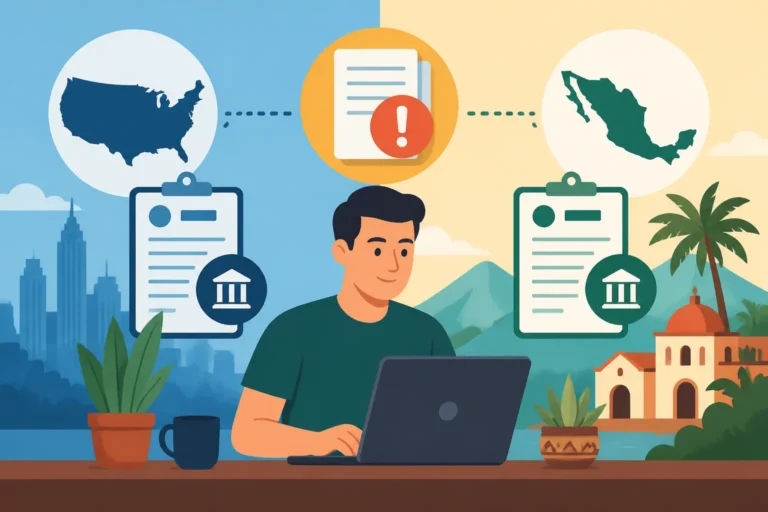
Trying to lead a crucial video presentation while your cafe’s unstable Wi-Fi drops and the barista starts blending ice is a remote worker’s ultimate nightmare in Mexico. I lost a major freelance contract during my first month in Oaxaca simply because I relied on a residential router. This guide breaks down the most reliable, professional coworking spaces across the country so your remote career never skips a beat.
Disclosure: This post may contain affiliate links. We may earn a commission at no extra cost to you if you make a purchase through these links. Read full disclosure.
The Coworking Landscape in Mexico City (CDMX)
Mexico City is the undisputed heavyweight champion of remote work in Latin America. The sheer scale of the city means that coworking spaces are not just places to open a laptop; they are highly specialized micro-communities that cater to entirely different industries and lifestyles depending on which neighborhood you choose to base yourself in.
Premium Spaces in Roma and Condesa
The adjacent neighborhoods of Roma and Condesa serve as the epicenter for digital nomads, creatives, and independent freelancers. The streets are heavily canopied by trees, the architecture is stunningly Art Deco, and the energy is incredibly vibrant. However, trying to work from the trendy specialty coffee shops here is often an exercise in frustration due to limited outlets, two-hour table limits, and overwhelming background noise. Moving into a dedicated coworking space is essential for actual productivity.
Spaces like Impact Hub in Roma Norte and Openhub Coworking in Condesa have mastered the balance between professional infrastructure and boutique aesthetics. Impact Hub is particularly famous for its outdoor yard and patio rooms, which provide a fantastic environment for collaborative brainstorming. These spaces typically offer high-speed fiber-optic internet, unlimited local coffee, and access to a deeply international community of remote workers. You will frequently find yourself sitting next to a UX designer from Berlin on one side and a local Mexican e-commerce founder on the other.
The community aspect of these specific neighborhoods cannot be overstated. The staff at these hubs actively organize weekly networking breakfasts, pitch nights, and rooftop mixers to force interaction among members. If you want to successfully participate in these events and move beyond the superficial “expat bubble,” dedicating time to SpanishPod101 is highly recommended. Learning how to casually introduce your business and ask thoughtful questions in Spanish completely changes how local entrepreneurs perceive and engage with you during these community events.
Corporate Hubs in Polanco and Reforma
If Roma and Condesa are the creative heart of the city, Polanco and Paseo de la Reforma are its corporate spine. The atmosphere here shifts dramatically from casual streetwear to tailored suits. These areas are dominated by multinational enterprise outposts, high-level finance firms, and expats on lucrative corporate assignments. The coworking spaces located along these prestigious avenues reflect this elevated, deeply corporate standard.
Facilities such as WeWork Reforma Latino and The Pool Polanco are housed inside towering skyscrapers offering panoramic views of the city skyline. The amenities in these corporate hubs are vastly different from the boutique spaces; expect biometric security access, enterprise-grade encrypted internet networks, soundproofed podcasting studios, and formal boardrooms equipped with the latest video conferencing technology. They are designed to impress visiting clients and host formal board meetings rather than casual creative workshops.
The demographic and pricing structure in these corporate hubs are notably higher. You are paying a premium for the prestigious business address and the polished, distraction-free environment. If your remote job involves handling sensitive financial data, conducting high-stakes legal negotiations, or reporting to a strict corporate hierarchy, this is where you need to be. To understand how these higher operational costs fit into your broader financial planning, you should review our detailed breakdown on the Cost of Living in Mexico City (2026): Detailed Expat Budget Guide.
Budget-Friendly and Niche Options
For expats who want to escape the highly gentrified, English-dominated central bubble, neighborhoods like Coyoacan in the south and San Rafael closer to the historic center offer incredible, niche coworking experiences. These areas move at a slower, more deliberate pace and offer a much deeper immersion into daily Mexican life, all while maintaining the necessary infrastructure for remote work.
Colmena Creativa, located in San Rafael, is actually housed inside a property designed by the legendary Mexican architect Luis Barragán. It is a stunning, inspiring place to work that attracts local writers, architects, and independent artists. Similarly, Inhouse Coyoacan operates out of an elegant traditional house with a sunny roof terrace, offering a peaceful alternative to the manic energy of the central business districts. These spaces are significantly more affordable than their Polanco or Condesa counterparts.
Choosing a space in these deeply local neighborhoods means you will be surrounded primarily by Mexican professionals rather than foreign digital nomads. This is a tremendous advantage if your goal is true cultural immersion. However, it also means the front desk staff and your fellow coworkers are much less likely to speak fluent English. Using SpanishPod101 to build a solid foundation of daily conversational skills will ensure you can confidently navigate the neighborhood, order your lunch, and banter with the community managers without feeling isolated.
Guadalajara: The Tech Hub’s Best Workspaces
Often referred to as the “Silicon Valley of Mexico,” Guadalajara is an absolute powerhouse for software development, engineering, and IT infrastructure. The coworking spaces here are heavily tailored to the tech industry, offering robust technological amenities and fostering an intensely collaborative atmosphere for developers and tech entrepreneurs.
The Americana and Providencia Districts
Colonia Americana has consistently been ranked as one of the coolest neighborhoods in the world, and it serves as the beating heart of Guadalajara’s startup scene. It is gritty, artistic, and completely saturated with restored mansions that have been converted into trendy bars and coworking hubs. Metta Coworking and Nevermind are standout options in this area, offering heavily design-focused environments that appeal to creative agencies and independent developers.
In contrast, Providencia offers a much more upscale, manicured, and residential working environment. The coworking spaces here, such as Beethoven Business Center, are surrounded by high-end gastronomy and leafy parks. The vibe is significantly quieter than Colonia Americana, making it an excellent choice for remote workers who need absolute silence for complex coding sprints or intensive data analysis. The infrastructure in both neighborhoods is excellent, with reliable power grids and multiple fiber-optic providers.
The choice between the two districts often comes down to your preferred after-work lifestyle. Americana offers immediate access to a vibrant, chaotic nightlife, while Providencia provides a serene, highly secure environment for families and older professionals. To help weigh these lifestyle factors, you can explore our comprehensive overview in Living in Guadalajara: Pros, Cons, and Tips for Expats.
Corporate Facilities in Puerta de Hierro
For remote workers who need to project absolute corporate prestige, the Zapopan financial district—specifically the Puerta de Hierro area—is the only logical choice. This is the wealthiest district in the metropolitan area, characterized by massive luxury shopping malls, luxury automotive dealerships, and towering glass office buildings.
IOS Offices, specifically their Andares location, sets the absolute gold standard for luxury coworking in Mexico. The amenities are staggering, often including access to private helipads, premium concierge services, and direct VIP access to the adjacent luxury malls. WeWork Midtown Jalisco offers a similarly high-end, highly structured corporate environment. These spaces are heavily utilized by foreign executives, venture capitalists, and the leadership teams of major multinational tech firms operating in the city.
Locating your business here is a strategic move. If you are a B2B consultant targeting Mexican enterprise clients, hosting a meeting in a glass boardroom overlooking the Andares skyline establishes immediate credibility. While the monthly hot desk memberships are premium-priced, the return on investment in terms of perceived professional legitimacy is immense for expats trying to break into the local corporate hierarchy.
Networking and Community-Focused Hubs
The true value of coworking in Guadalajara lies in the aggressive, highly organized tech community. Spaces like Colabora are not just landlords; they act as incubators and community organizers. You will find that these spaces host a relentless schedule of hackathons, agile development workshops, and venture capital pitch nights.
For an expat, participating in these events is the fastest way to build a lucrative local network. However, while code is universal, the subsequent networking, team building, and post-event socializing happen entirely in Spanish. Attempting to navigate a technical hackathon or pitch a local investor through a translator is highly ineffective. Dedicating time to the technical and business modules on SpanishPod101 allows you to learn the specific industry jargon needed to hold your own in a room full of Mexican software engineers and tech founders.
Building these relationships can lead to incredible collaborative opportunities, joint ventures, or simply finding a reliable local accountant. The nuances of how these professional relationships are forged differ greatly from the US or Europe. For a deeper dive into the unwritten rules of local business interactions, review Networking in Mexico: Building Professional Connections as an Expat.
Beachfront Productivity in Playa del Carmen and Tulum
Working from the Mexican Caribbean coast is the ultimate digital nomad cliché, but the reality of executing a demanding remote job from the jungle or the beach requires intense logistical planning. The infrastructure challenges here are severe, and choosing the wrong workspace can directly jeopardize your employment.
Top Facilities in Playa del Carmen
Playa del Carmen offers the best balance of tropical lifestyle and functional urban infrastructure on the coast. The city is highly walkable, deeply accustomed to foreign residents, and features a dense concentration of professional coworking spaces right in the city center. You do not need a car to commute, which is a massive logistical advantage.
Nest Coworking and BUNKER Coworking are two of the most established and reliable spaces in the city. BUNKER, located just a few blocks from the beach, is particularly beloved by software developers for its fanatical devotion to internet stability and its highly ergonomic chairs—a rarity in beach towns where aesthetics often trump spinal support. These spaces operate 24/7, which is an absolute necessity for expats working Asian or European time zones.
The ability to close your laptop at 5:00 PM and be swimming in the Caribbean Sea by 5:10 PM is the primary draw of Playa del Carmen. However, this lifestyle comes with a very specific price tag that fluctuates wildly depending on the tourist high season. If you are budgeting for a long-term stay, it is crucial to study the seasonal economic shifts outlined in Cost of Living in Playa del Carmen: Living Costs in 2026.
The Unique Vibe of Tulum’s Workspaces
Tulum has exploded in popularity, transitioning from a sleepy backpacker yoga retreat into a massive, globally recognized hub for digital nomads and crypto-entrepreneurs. The coworking spaces here lean heavily into the “eco-chic” jungle aesthetic. You will be working from spaces constructed of bamboo and polished concrete, surrounded by lush tropical foliage and ambient house music.
Selina Tulum and Los Amigos are prominent players in this space. They offer an incredibly vibrant social scene, making it effortlessly easy to meet other remote workers. However, the severe reality of Tulum is that the town’s electrical and internet infrastructure has completely failed to keep up with its explosive population growth.
When you pay for a premium coworking space in Tulum, you are not paying for the bamboo desks; you are paying for their commercial-grade diesel backup generators. When a localized blackout hits the hotel zone—which happens frequently—the coworking space will be the only building on the block with functioning A/C and internet. Do not attempt to work a strict 9-to-5 corporate job from a cheap Airbnb in Tulum; you will inevitably drop off critical calls.
Navigating Connectivity on the Coast
The overarching threat to remote workers anywhere on the Yucatan Peninsula is internet instability. Beyond standard infrastructure overload, the region is subject to intense tropical storms and hurricanes that can knock out the primary Telmex fiber lines for days.
Professional coworking spaces mitigate this by paying for dedicated, symmetric enterprise fiber lines and, increasingly, redundant satellite internet systems like Starlink. Before you hand over a monthly membership fee, you must aggressively question the community manager about their specific backup protocols. Do they have a secondary ISP? Do they have a physical generator, or just battery backups for the routers?
Because the IT staff at these coastal hubs are often local technicians, you need to be able to communicate your technical needs clearly. If the network drops during your presentation, waving your hands and shouting in English is useless. Practicing troubleshooting vocabulary on SpanishPod101 ensures you can quickly ask the staff to reset the specific router node or switch you to the failover network. For broader strategies on maintaining personal connectivity outside the office, consult Internet and Mobile Phone Plans in Mexico: Staying Connected as an Expat.
Emerging Hubs: Oaxaca City and Merida
As Mexico City and the coastal hubs become increasingly expensive and saturated, veteran remote workers are migrating to regional capitals. These emerging hubs offer a drastically lower cost of living, incredible safety, and a much more authentic cultural experience, provided you are prepared to adapt to their unique rhythms.
Cultural Immersion Workspaces in Oaxaca
Oaxaca City is the cultural and culinary heart of Mexico. It attracts a different breed of remote worker—those who prioritize art, indigenous history, and a slower, more deliberate pace of life over high-speed networking and nightlife. The city’s colonial architecture dictates the design of its workspaces.
Places like Convivio and Centrico operate out of stunningly restored colonial mansions, featuring massive central courtyards, stone arches, and natural light. The community focus here is intense, with spaces frequently hosting local art exhibitions, mezcal tastings, and artisan markets right alongside the hot desks. It is an incredibly inspiring place for writers, designers, and creative directors.
The primary challenge of working in Oaxaca is the city’s strong tradition of political activism. Protest marches and teacher strikes frequently block major avenues, and occasionally, activists will blockade government buildings, which can inadvertently disrupt local utility grids. Remote workers here must be flexible, patient, and deeply respectful of the local political climate.
The Digital Nomad Scene in Merida
Merida, the capital of the Yucatan state, is routinely ranked as the safest city in Mexico and one of the safest in North America. This unparalleled security has drawn a massive influx of expat families and older digital nomads who want the tropical lifestyle without the chaos of the Riviera Maya.
The defining characteristic of Merida is its brutal, unrelenting heat, which regularly exceeds 100°F (38°C) with high humidity for most of the year. Therefore, a coworking space in Merida is not a luxury; it is a life-support system. Spaces like Conexion 60 and Clustar differentiate themselves not just by their internet speeds, but by the sheer power and reliability of their central air conditioning systems.
The infrastructure in Merida is excellent, and the city is rapidly expanding outward with modern corporate parks in the northern suburbs. It is a highly functional, peaceful city for remote work. To see how Merida stacks up against other emerging destinations in terms of long-term livability, read our comparative analysis in Best Cities in Mexico for Digital Nomads: Connectivity and Lifestyle.
Language Integration and Local Etiquette
When you move away from international hubs like Playa del Carmen or Roma Norte, you can no longer rely on English as a crutch. In cities like Oaxaca and Merida, the service staff, your landlords, and many of your fellow coworking members will speak little to no English.
Furthermore, Mexican workplace etiquette is highly formal and structured around personal acknowledgment. It is considered incredibly rude to walk into a shared office or kitchen space without offering a general “Buenos días” or “Buen provecho” to the room, even if you do not know anyone. Understanding these subtle social contracts is vital, and you can learn more about them in Mexican Etiquette and Customs: Do’s and Don’ts for New Expats.
To truly thrive in these emerging hubs, active language learning is non-negotiable. You cannot build meaningful relationships with local creatives if you cannot hold a basic conversation. Incorporating 20 minutes of SpanishPod101 into your morning commute to the coworking space allows you to consistently build the practical vocabulary needed to charm the local baristas, chat with the front desk guards, and fully integrate into the community.
Practical Considerations for Remote Workers
Beyond choosing a city and a neighborhood, the day-to-day logistics of operating out of a Mexican coworking space require a sharp understanding of local billing practices, security norms, and immigration law.
Pricing Structures and Membership Types
The business model for coworking in Mexico mirrors the global standard, offering a tiered system: day passes, open hot desks, dedicated desks, and private lockable offices. However, expats are frequently caught off guard by the local tax system when it comes time to pay the invoice.
In Mexico, the Value Added Tax (IVA) is 16%. Many boutique coworking spaces advertise their monthly rates without IVA included on their websites or flyers. When you arrive to sign the contract and hand over your credit card, the final bill is suddenly 16% higher than you budgeted for. You must always explicitly ask, “¿El precio incluye IVA?” (Does the price include tax?) before agreeing to a price.
If you are committing to a space for six months or a year, the advertised monthly rate is almost always negotiable. Community managers have the authority to waive registration fees or throw in extra boardroom hours to secure a long-term contract. Because these negotiations happen entirely in Spanish outside of major corporate hubs, using SpanishPod101 to master polite but firm business negotiation phrases will easily save you hundreds of dollars over the course of your lease.
| City Hub | Average Monthly Cost (Hot Desk, USD) | Primary Vibe & Best For | Internet Reliability | Top Recommended Space |
| Mexico City (CDMX) | $150 – $300 | Fast-paced, intense networking, corporate outposts. | Excellent (Fiber optic standard) | Impact Hub (Roma) / WeWork (Polanco) |
| Guadalajara | $120 – $250 | Software developers, tech startups, highly collaborative. | Excellent (Tech-focused infrastructure) | Metta Coworking / IOS Offices |
| Playa del Carmen | $150 – $280 | Walkable beach town, high turnover nomad scene. | Good (But highly vulnerable to storms) | BUNKER Coworking / Nest |
| Tulum | $200 – $350 | Eco-chic aesthetics, crypto enthusiasts, jungle parties. | Poor (Commercial generator backups are mandatory) | Selina Tulum |
| Oaxaca City | $100 – $180 | Artistic, culturally immersive, slow-paced lifestyle. | Moderate (Subject to local grid issues) | Convivio |
| Merida | $120 – $200 | Extremely safe, brutally hot, older remote workers. | Very Good (Modern northern suburbs) | Conexion 60 |
Equipment, Ergonomics, and Security
A persistent issue in the boutique coworking market—particularly in places like Tulum and Oaxaca—is the prioritization of aesthetics over ergonomics. A handcrafted wooden chair looks fantastic on a promotional Instagram post, but sitting on it for nine hours while auditing spreadsheets will destroy your lower back.
Before committing to a monthly pass, always buy a single day pass to “test drive” the physical infrastructure. Ensure the chairs are actually adjustable, that the desk height allows for proper posture, and that the ambient lighting does not create massive glare on your screen. Many veteran digital nomads travel with portable laptop stands, external keyboards, and their own orthopedic seat cushions to mitigate these issues.
Security within the spaces is generally excellent, featuring keycard access, security cameras, and often an armed guard at the building’s main entrance. However, the golden rule of coworking remains: never leave your laptop, phone, or expensive noise-canceling headphones unattended on a hot desk while you go out for a one-hour lunch. Petty theft is a crime of opportunity. Utilize the lockers provided by the space, and if you need to ask the front desk to hold a package or secure a specific locker for your expensive gear, practicing your requests via SpanishPod101 ensures nothing is lost in translation.
Legalities of Working Remotely in Mexico
The sudden influx of remote workers has pushed Mexican immigration law into a highly publicized gray area. Millions of digital nomads enter Mexico on a standard 180-day tourist visa (FMM) and work from coworking spaces every day.
Legally, you are permitted to work remotely while inside Mexico on a tourist visa only if your income is generated entirely from sources outside of Mexico. If you are a graphic designer paid in USD into a US bank account by a Canadian client, you are not violating local labor laws. However, if you attempt to use the coworking space to solicit local Mexican clients and accept payment in Pesos without proper authorization, you are committing immigration fraud and risk immediate deportation.
Relying on the 180-day tourist visa is becoming increasingly risky as immigration agents at the airports have begun cracking down on “perma-tourists” who do continuous border runs. If you plan to make Mexico your long-term remote base, you must apply for a Temporary Resident Visa for Economic Solvency, which grants you a formal, legal right to reside in the country while working for foreign entities. To fully understand your legal standing and avoid a disastrous encounter at the border, you must rigorously review the guidelines in Remote Work Legalities: Do Digital Nomads Need a Visa or Permit in Mexico? and our comprehensive Digital Nomads in Mexico: Remote Work Guide for 2027.
References
Primary sources (official)
- Secretaría de Economía (Ministry of Economy) – Foreign Direct Investment and Business Setup: https://www.economia.gob.mx/datamexico/en/profile/geo/mexico
Other helpful sources
- Coworker – Global Coworking Space Directory and Reviews for Mexico: https://www.coworker.com/mexico
- Nomad List – Mexico City Remote Work Metrics and Cost of Living: https://nomadlist.com/mexico-city
Disclaimer
The information provided in this guide is for educational and informational purposes only and does not constitute legal, financial, or immigration advice. Coworking space amenities, pricing, and operational statuses fluctuate frequently. Furthermore, Mexican immigration laws and the enforcement of remote work regulations are subject to change. Always verify pricing and internet capabilities directly with the coworking facility before signing a contract, and consult a qualified Mexican immigration attorney regarding your specific visa requirements and legal right to work remotely while in the country.