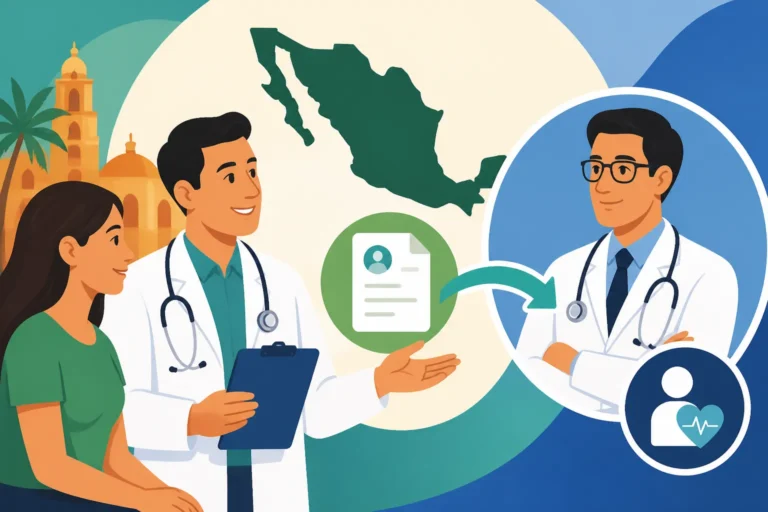
Seeing Specialists in Mexico: Do You Need a Referral or GP Recommendation?
Trying to figure out if you need a permission slip from a general doctor to see a specialist in Mexico can be incredibly confusing for newly arrived expats. I remember suffering through a terrible knee injury, waiting weeks to establish a primary care doctor, only to learn I could have just called an orthopedic surgeon directly. This guide explains exactly when you need a referral, how the public and private systems differ, and how to book the specialized care you need.
Disclosure: This post may contain affiliate links. We may earn a commission at no extra cost to you if you make a purchase through these links. Read full disclosure.
How the Private Healthcare Sector Works (No Referrals Needed)
For the vast majority of expats living in Mexico, the private healthcare sector is the go-to choice. If you are accustomed to healthcare systems in the United States, Canada, or the United Kingdom, where Health Maintenance Organizations (HMOs) or the National Health Service (NHS) use general practitioners as strict gatekeepers to specialized care, the Mexican private system will feel incredibly liberating.
Direct Access to Top-Tier Specialists
In the Mexican private healthcare system, you do not need a referral or a general practitioner’s recommendation to see a specialist. The system operates as a free market. If you develop a strange rash, you do not need to waste time and money seeing a family doctor first just to get permission to see a dermatologist. You simply find a dermatologist, contact their office, and book an appointment.
Most private specialists in Mexico operate independently or rent office space within larger private hospital networks like Hospital Angeles or Star Médica. Booking an appointment is astonishingly informal compared to the US. In many cases, you do not even need to call a central hospital switchboard; you just send a WhatsApp message directly to the doctor’s receptionist or use scheduling apps like Doctoralia. Because many of these private doctors have completed fellowships or residencies abroad, finding a bilingual professional is highly achievable. If you are unsure where to begin your search, reviewing our guide on Finding English-Speaking Doctors and Specialists in Mexico is the best first step.
Furthermore, if the specialist determines you need an MRI, an X-ray, or extensive blood work, they will simply write you an order. You can take that order to any private diagnostic clinic in the city. You have complete autonomy over your medical journey. For a deeper understanding of how these diagnostic clinics operate, check out Lab Tests and Blood Work in Mexico: Using Local Laboratories.
The Cost of Private Consultations
Because you are bypassing the general practitioner, you might assume that seeing a specialist directly is prohibitively expensive. In reality, paying out-of-pocket for specialist care in Mexico is remarkably affordable.
The cost of a private consultation depends entirely on the doctor’s specialty, their reputation, and the city you are in. However, the prices are generally a fraction of what they would be north of the border. When paying for these services, it is important to note that many private doctors prefer cash or direct bank transfers over credit cards to avoid merchant fees. To navigate this, savvy expats use Wise to transfer funds from their home currency directly to their Mexican bank account, securing the mid-market exchange rate so they can withdraw pesos or transfer funds directly to the clinic without paying exorbitant foreign transaction fees.
Here is a breakdown of what you can generally expect to pay out-of-pocket for an initial specialist consultation in the private sector:
| Medical Specialist | Estimated Cost (MXN) | Estimated Cost (USD) | Referral Required? |
| Cardiologist | $1,000 – $2,000 | $55 – $110 | No |
| Dermatologist | $900 – $1,500 | $50 – $85 | No |
| Orthopedic Surgeon | $1,000 – $1,800 | $55 – $100 | No |
| Gastroenterologist | $900 – $1,600 | $50 – $90 | No |
| Psychiatrist | $1,200 – $2,500 | $65 – $140 | No |
For a broader look at how these consultation fees fit into the larger picture of private medical expenses, including inpatient care, you should read Healthcare Costs in Mexico: Doctor Visits, Hospital Stays, and Surgery Expenses.

Navigating the Public IMSS System (Referrals Required)
While the private sector offers total freedom, the rules change entirely if you rely on Mexico’s public healthcare system. The Instituto Mexicano del Seguro Social (IMSS) provides coverage for formally employed workers and expats who enroll voluntarily, but it is a heavily bureaucratic, heavily regulated system.
The Role of Your Assigned Family Doctor
If you are enrolled in IMSS, you cannot simply walk into an IMSS hospital and ask to see an endocrinologist. The public system uses strict gatekeeping to manage its massive patient load and limited resources.
When you complete your IMSS registration, you are assigned to a specific local clinic, known as an Unidad de Medicina Familiar (UMF), based on your residential zip code. Within that clinic, you are assigned to a specific family doctor (a general practitioner) and a specific shift (morning or afternoon). This assigned doctor is your sole gateway to the rest of the IMSS network. If you need any specialized care, you must first book an appointment with your family doctor, present your symptoms, and have them determine if your condition warrants a formal referral to a higher-level IMSS specialist. If you are currently trying to navigate this initial bureaucratic setup, our How to Enroll in IMSS: Step-by-Step Guide for Foreign Residents explains the exact paperwork required.
Wait Times and the “Unifila” Reality
The referral process within IMSS requires immense patience. Simply getting the initial appointment with your family doctor can be a challenge. If you use the IMSS digital app to book an appointment, you might find that the next available slot is weeks away.
If your need is urgent but not an absolute emergency, you must utilize the “Unifila” (single line) system for walk-ins. This usually involves arriving at your assigned clinic at 5:00 AM to secure one of the limited daily walk-in tokens. Once you finally see your family doctor and they grant the referral, you are placed in a queue for the specialist at a regional IMSS hospital. Because the public system is chronically understaffed, waiting three to six months to finally see the specialist is standard operating procedure. This stark difference in accessibility is a major factor expats must weigh, which is discussed thoroughly in Wait Times in Mexico: Public vs Private Healthcare Services.
The Role of Pharmacy Doctors and General Practitioners
Even if you exclusively use the private sector, you will likely still interact with general practitioners for minor ailments. Understanding how these doctors interface with specialists is key to navigating the system efficiently.
When to Use a Consultorio
For basic health issues—like traveler’s diarrhea, a minor sinus infection, or a mild allergic reaction—the most efficient option is the consultorio adyacente a farmacia (pharmacy clinic). Major corporate chains like Farmacias del Ahorro and Farmacias Similares have small doctor’s offices attached to their stores.
You do not need an appointment for these clinics; you simply walk in. The doctors are fully licensed general practitioners, and the consultation costs between $3 and $5 USD (and is sometimes free). They can diagnose basic ailments and write prescriptions for antibiotics or basic maintenance medications on the spot. To understand what medications you can get here versus what you can just buy off the shelf, review Over-the-Counter Medications: What Can You Get in Mexico Without a Prescription?.
Transitioning from a GP to a Specialist
It is critical to understand the legal limitations of these pharmacy doctors. They cannot prescribe heavy, controlled substances (like strong psychiatric medications or heavy narcotics), and they cannot perform specialized diagnostic procedures.
If a pharmacy doctor suspects you have a severe condition—for example, if they listen to your chest and suspect a complex heart arrhythmia—they will tell you to see a cardiologist. This is a recommendation, not a mandatory referral. They will not print out a formal transfer document that you must hand to the private cardiologist. You simply take their medical advice, leave the pharmacy, and book a private specialist on your own.
Sometimes, a specialist will recommend a holistic treatment protocol or a highly specific dietary supplement to accompany your prescribed pharmaceuticals. Because Mexican pharmacies primarily stock standard allopathic medications, they often lack diverse, high-quality nutritional supplements. If your private specialist recommends a specific probiotic strain for your gut health or a specialized joint supplement, expats frequently rely on iHerb. By using iHerb, you can order exactly what the specialist recommended from a massive global inventory and have it shipped directly and securely to your Mexican address, bypassing the limited local selections entirely.
Managing Specialist Costs and Insurance
While a $60 USD consultation with a top-tier neurologist is incredibly cheap compared to US prices, the financial reality shifts drastically if that specialist decides you need ongoing treatment, complex imaging, or surgery.
Paying Out-of-Pocket vs Using Insurance
An initial consultation is affordable, but a specialized surgical procedure or a week-long stay in a private hospital’s intensive care unit can easily run into the tens of thousands of dollars. Relying entirely on out-of-pocket cash for catastrophic specialist care is a massive gamble.
This is why securing a robust international health insurance policy like Cigna Global is arguably the most important financial decision you will make as an expat. A premium Cigna Global plan grants you access to the absolute best private hospitals in Mexico without the fear of bankrupting yourself if a specialist diagnosis requires immediate surgery.
Furthermore, international plans like those from Cigna Global generally respect the freedom of Mexico’s private sector. They usually do not require you to get a referral from a general practitioner before they will cover a specialist visit, though you should always verify if pre-authorization is required for massive diagnostic scans (like MRIs) or scheduled surgeries. If you are debating whether to buy a local Mexican policy or a global one to cover these scenarios, carefully read our comparative breakdown in Choosing Private Health Insurance: Local Mexican Plans vs International Coverage.
Managing a chronic condition requiring frequent specialist visits also involves navigating pharmacy runs and ongoing lab tests. Using a borderless account like Wise allows you to pay for your recurring international insurance premiums and local out-of-pocket pharmacy costs seamlessly, moving your home currency into pesos at the optimal mid-market rate. For a comprehensive look at how to coordinate your long-term medical strategy across borders, read Managing Chronic Illness in Mexico: Access to Medication and Specialists.
References
Primary sources (official)
- Banco de México (Banxico) – Official Exchange Rates for Healthcare Budgeting: https://www.banxico.org.mx/
Other helpful sources
- Mexperience – How to Access the Mexican Healthcare System (IMSS): https://www.mexperience.com/how-to-access-the-mexican-healthcare-system-imss/
- International Citizens Insurance – The Healthcare System in Mexico: https://www.internationalinsurance.com/countries/mexico/healthcare/
Disclaimer
The information provided in this guide is for educational and informational purposes only and does not constitute formal medical or legal advice. Healthcare regulations, IMSS referral protocols, and private medical costs in Mexico are subject to frequent changes. Always consult directly with a licensed, board-certified Mexican physician regarding your specific health condition, and verify all referral and pre-authorization requirements directly with your private health insurance provider before seeking specialized care.