Mexican Cooking Classes: Mexico City, Oaxaca, and Yucatan Compared
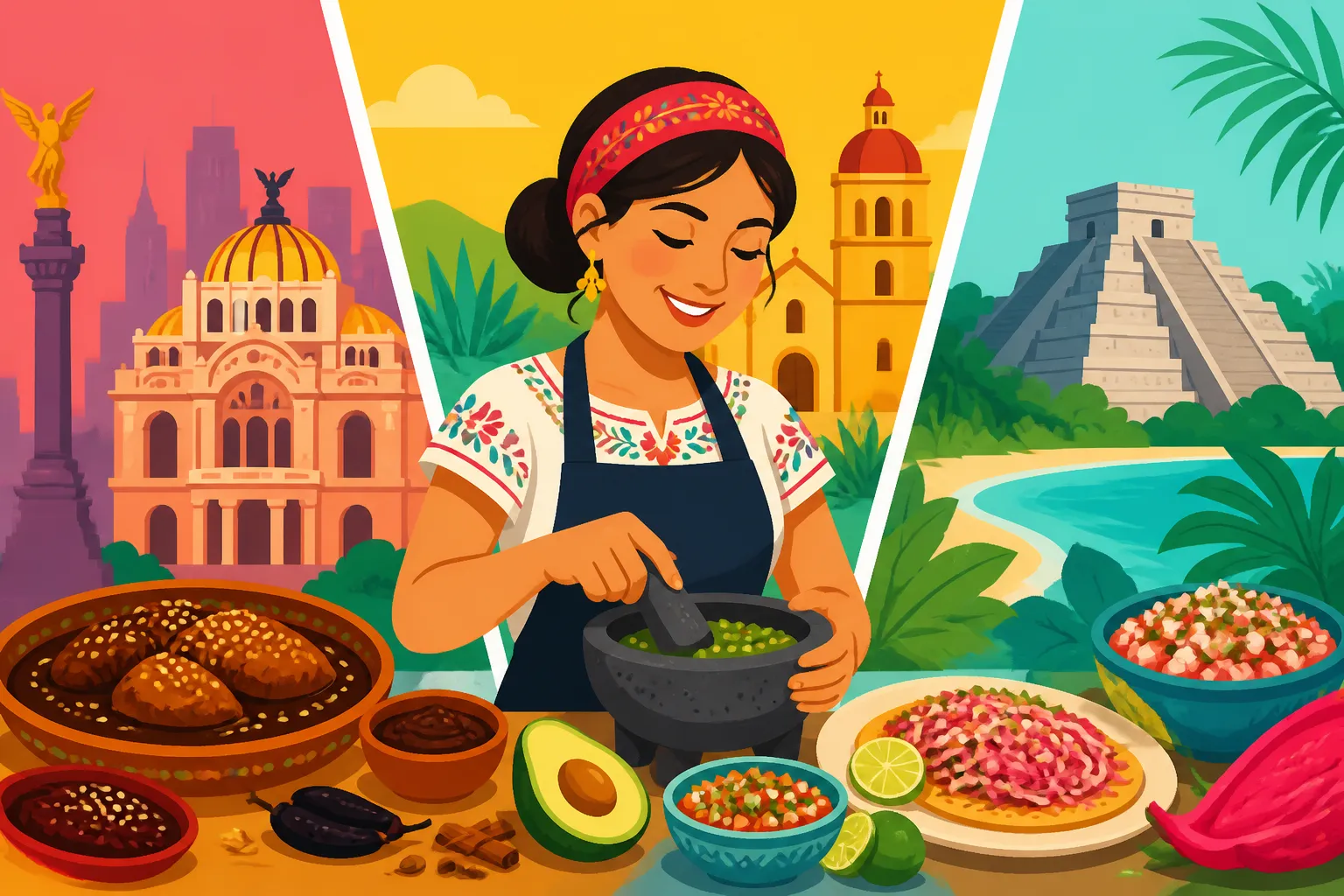
Searching “Mexican cooking class” turns up hundreds of listings that all promise “authentic” food. They range from a hotel demo with guacamole and margaritas to a morning grinding corn on a volcanic-stone metate in a Zapotec village. This guide compares classes in Mexico City, Oaxaca, and the Yucatán, explains what each region actually teaches, and shows how to book through Viator without picking the wrong one.
Disclosure: This post may contain affiliate links. We may earn a commission at no extra cost to you if you make a purchase through these links. Read full disclosure.
Why the Region You Cook In Changes Everything
When I first moved to Mexico, I thought “Mexican food” was one cuisine. Then I took a class in Coyoacán, another in Oaxaca’s Valles Centrales a few months later, and a third in a village outside Valladolid. The three felt like they came from three different countries. The chiles were different, the cooking fats were different, the techniques were different, and so was the whole philosophy of a meal.
That is the most important thing to understand before you book anything. A cooking class here is a lesson in one regional kitchen, and the region decides most of what you will learn. If you want the bigger picture of how food shifts from north to south, see Mexican Regional Cuisine: How Food Changes Across Mexico. For this guide, we will stay with the three regions where cooking classes are most developed and easiest for visitors to book.
Mexico City Is the Melting Pot Kitchen
Mexico City draws migrants from every state, so its food is a mix of everything. A good class here usually teaches what Chilangos eat day to day: street-style tacos, salsas made on a comal, quesadillas (which may or may not contain cheese, a debate you will hear all about), tlacoyos, sopes, and pozole. In late summer and early autumn some teachers add chiles en nogada, the dish of Puebla-style stuffed poblano peppers in walnut sauce topped with pomegranate seeds.
What sets Mexico City apart is variety and polish. Teachers are often trained chefs or seasoned home cooks with years of hosting tourists. Many classes take place in bright apartments in Roma, Condesa, or Coyoacán and start with a guided walk through a market such as Mercado de Medellín, Mercado de Coyoacán, or the famously odd Mercado de San Juan, where you can find anything from exotic fruit to insects.
The downside is that the city’s food is so broad that some classes feel like a “greatest hits” menu. That works well on a first trip. If you have lived here for a while and already know your al pastor from your suadero, you may find it too basic.
Oaxaca Is the Heart of Corn and Mole
Oaxaca is where I tell people to go if they only take one cooking class in Mexico. The state is famous for its moles, usually counted as seven core varieties, with mole negro the darkest and most labour-intensive. Classes here also teach tlayudas, memelas, tamales wrapped in banana leaf, fresh salsas ground in a molcajete, and sometimes chapulines (toasted grasshoppers) for the adventurous.
What makes Oaxaca special is how close it stays to pre-Hispanic technique. Many of the best classes are not in the city at all. They are held in villages such as Teotitlán del Valle, where Zapotec women teach in their family kitchens. You may learn nixtamalisation, the process of cooking dried corn with lime so it can be ground into masa. Then you grind it on a metate and pat tortillas onto a clay comal over a wood fire. It is slow, physical, smoky work, and it will change how you taste a tortilla for the rest of your life.
If mole is the main reason you are coming, see How to Try Mole and Oaxacan Cuisine for more on how Oaxacans eat it outside a classroom. Many visitors also pair a class with mezcal; Booking a Mezcal Tasting Tour: Operator Options and Price Tiers covers that side of the trip.
The Yucatán Is the Maya and Caribbean Table
Yucatecan food barely resembles central Mexican cooking, and many visitors are surprised by that. The flavour base is recado, a seasoning paste, with recado rojo built on achiote (annatto seed). That is paired with the juice of naranja agria, a sour orange, and with habanero chiles, which are used far more carefully than you might expect.
The headline dish is cochinita pibil, pork marinated in achiote and sour orange, wrapped in banana leaves, and slow-cooked. It is traditionally done in a pib, an underground pit oven. Classes also commonly teach sopa de lima (a lime-scented chicken soup), papadzules (tortillas filled with egg and covered in pumpkin seed sauce), relleno negro made with charred chiles, and xnipec, a fiery habanero and onion salsa whose Maya name roughly means “dog’s nose” because it makes your nose run.
Classes in this region come in two main types. In Mérida, they often start at Mercado Lucas de Gálvez or the smaller Mercado de Santiago. In the countryside, around Valladolid, near Cobá, or in the villages inland from Tulum, Maya families sometimes show you an actual pib being dug and lit. For context on the city, see Mérida City Guide: Colonial Charm in the Yucatán.
Comparing the Three Regions Side by Side
Once you know the regional differences, the decision usually comes down to what you want from the day: breadth, depth, or atmosphere. Here is how I would break it down for a friend asking over coffee.
What You Cook, Where, and How It Feels
| Factor | Mexico City | Oaxaca | Yucatán |
|---|---|---|---|
| Signature dishes | Tacos, salsas, pozole, sopes, seasonal chiles en nogada | Mole negro and other moles, tlayudas, memelas, tamales | Cochinita pibil, sopa de lima, papadzules, relleno negro |
| Key ingredients | Dried chiles, nopales, corn masa, epazote | Chilhuacle chiles, chocolate, hoja santa, chapulines | Achiote, sour orange, habanero, pumpkin seed |
| Typical setting | Urban apartment or chef’s studio | Village family kitchen or city home | Mérida home, hacienda, or Maya village |
| Market visit common | Very common | Very common | Common, especially in Mérida |
| Pre-Hispanic technique | Moderate | Very strong | Strong, especially the pib oven |
| Pace | Brisk and structured | Slow and immersive | Relaxed, often longer days |
| Best for | First-timers and short city stays | Serious food lovers | Visitors combining beaches and culture |
| Hardest part | Choosing among so many options | Travel time to villages | Heat and humidity in open kitchens |
Which Region Suits Which Traveller
If you have a long weekend in the capital and want a fun, well-organised morning that leaves you with a few salsas you can make at home, Mexico City is the obvious choice. Classes there tend to be tightly timed, which matters if you are trying to squeeze in the Anthropology Museum the same afternoon.
If you are a home cook who wants to come back with technique rather than recipes, go to Oaxaca. My neighbour, a retired chef from Vancouver, spent a full day in Teotitlán del Valle and told me afterwards it was the first time he understood why his tortillas at home never tasted right. The answer was the nixtamal, and nobody had ever shown him the process.
If you are staying in Playa del Carmen or Tulum and want a cultural break from the beach, a Yucatecan class fits neatly into the trip. Many rural classes include transport from the Riviera Maya, and the cochinita pibil you dig out of the earth tastes very different from anything served in a resort buffet.
Dietary Needs Across the Regions
Vegetarians do best in Oaxaca and Mexico City, where squash blossoms, huitlacoche (corn fungus), beans, and mushroom dishes are easy to build a class around. The Yucatán is harder, because so many signature dishes are built on pork, although papadzules are naturally meat-free. The bigger catch everywhere is lard. Traditional tamales, refried beans, and many masa preparations use it, so ask whether the host can switch to vegetable oil.
For a wider look at eating meat-free here, see Vegetarian and Vegan Food in Mexico. Whatever your restriction, put it in writing before the day. That is one of the practical reasons I book through a platform that has a messaging system, which I will come back to below.
Why Viator Is the Easiest Way to Book a Cooking Class
I have booked cooking classes every possible way: by turning up at a hostel noticeboard, through a WhatsApp number a waiter gave me, through a hotel concierge, and online. For visitors and newer expats, Viator has become my default. It is not perfect, but it solves the specific problems that make cooking classes risky to book in Mexico.
Reviews That Tell You What Actually Happens
The biggest risk with cooking classes is the gap between what the listing says and what you get. The word “authentic” costs nothing to write. On Viator, verified reviews from people who actually attended show you the details that matter. Did the market tour really happen, or was it a ten-minute walk to a corner shop? Did everyone get hands-on time, or did twelve people watch one person stir a pot? Was the “village” class actually in a village?
I read reviews in a specific way. I skip the five-star “amazing!!” posts and look for three-star and four-star reviews with detail. They tend to say things like “lovely host, but the group was too big for the kitchen” or “we waited forty minutes for the van.” That tells you far more about the real experience.
Free Cancellation and Flexible Plans
Plans in Mexico change. A bus from Mexico City to Oaxaca runs late, a stomach bug hits on day three, or a tropical storm rolls across the Yucatán in September. Many cooking class listings on Viator offer free cancellation up to a set point before the start time. The exact window is shown on each listing, so check it before you pay.
That flexibility is valuable for village classes in particular. Those often depend on transport and small family hosts, who cannot always reschedule easily if you deal with them directly. For a deeper look at how refunds work across tour types, see Cancellation Policies on Mexican Tours: What You Get Back and When.
Payment, Language, and Messaging
Many small cooking hosts, especially in rural Oaxaca and the Yucatán, prefer cash or a bank transfer. That is awkward if you are a visitor without a Mexican account. Booking through Viator lets you pay by card in your own currency in advance, so you are not carrying a stack of pesos into a village or trying to explain an overseas transfer in Spanish.
The messaging tool matters too. You can confirm allergies, ask whether the class runs in English, or ask for a pickup point, and you have a written record. If language worries you, see English-Speaking Guides in Mexico: How to Confirm Before Booking for the right questions to ask any operator.
How to Choose and Book the Right Class Step by Step
Here is the exact process I walk friends through when they visit and ask me to “just find them something good.” It takes about twenty minutes and saves a lot of disappointment.
A Practical Booking Walkthrough
- Decide on your region and your goal first. Are you after breadth (Mexico City), technique (Oaxaca), or atmosphere and a pit-oven experience (Yucatán)?
- Search Viator for cooking classes in your chosen city, such as Mexico City, Oaxaca, Mérida, Valladolid, or Tulum, and sort by review count rather than by price alone.
- Open the full itinerary of your top three choices and check whether a market visit is included, how long it lasts, and whether the kitchen is in the city or a village.
- Check the maximum group size. Classes of eight or fewer usually mean real hands-on time; larger groups often become demonstrations.
- Read the inclusions closely. Look for meals, drinks, transport, recipe booklets, and whether alcohol such as mezcal is part of the price.
- Read at least ten detailed reviews, paying close attention to mid-range ratings and anything posted in the last few months.
- Confirm the cancellation window on the listing before paying, especially in rainy season.
- Message the host through the platform about dietary needs, language, and the exact meeting point.
- Save the confirmation and the host’s contact details offline, because signal can be patchy in rural villages.
- Arrive a few minutes early, eat a light breakfast, and wear closed-toe shoes for the kitchen and market.
Private Versus Group Classes
Group classes are the classic option. They are sociable, cheaper per person, and often the most fun. I have made lasting friends standing over a shared molcajete. The trade-off is less control over the menu and less one-on-one teaching.
Private classes cost more but let you shape the day. You can focus on one mole, cook only vegetarian dishes, or bring children who need a slower pace. For a couple celebrating something or a family with picky eaters, it is often worth paying extra. Private vs Group Tours in Mexico: The Real Price Difference breaks down how that premium works across tour categories.
Booking Online Versus Finding a Class on the Ground
Some people prefer to wait until they arrive and ask around. That can work, especially in Oaxaca, where word of mouth is strong. However, popular classes fill up during peak periods such as Día de Muertos, Christmas, and Semana Santa, and walk-in options are often the ones with spare capacity for a reason.
| Booking Method | Strengths | Weaknesses | Best For |
|---|---|---|---|
| Viator | Verified reviews, card payment, cancellation window, messaging, wide choice | Some small family hosts are not listed | Visitors, first-timers, peak-season trips |
| Direct with host | Personal contact, sometimes more flexible menus | Harder to vet, often cash or transfer only, limited recourse | Long-term residents with Spanish and local contacts |
| Hotel concierge | Convenient, sometimes includes transport | Narrow selection, may favour partner businesses | Resort guests who want zero planning |
| Walk-in on arrival | Spontaneous, sometimes last-minute deals | Risk of sold-out classes, no reviews | Flexible travellers in low season |
For a fuller comparison across all tour types, see Booking Tours in Mexico Online: Platform Prices vs Booking on the Ground.
Getting the Most From Each City’s Class
Picking the right class is half the job. The other half is setting up the rest of your stay so the class fits in. Here is what I have learned from years of eating my way around these three regions.
Mexico City Tips
Morning classes are best in the capital, because markets are liveliest early and the afternoon traffic is brutal. If your class starts in Roma or Condesa, stay nearby so you can walk. A morning crossing the city at rush hour can eat into your cooking time.
Many visitors combine a cooking class with a guided street food walk on another day. They complement each other: the class shows you how things are made, and the walk shows you where locals actually eat them. See Street Food Tours in Mexico City: What a Guide Adds Over Wandering for how to pair them.
One more tip: the capital sits at high altitude, and a long morning standing in a warm kitchen after a market walk can tire you out more than you expect. Drink plenty of water and do not plan a strenuous afternoon.
Oaxaca Tips
Village classes in Oaxaca usually include a pickup in the city centre, so where you stay matters. Staying close to the Zócalo or in a walkable barrio makes early meetups much easier. Where to Stay in Oaxaca City: Centro, Jalatlaco, and Xochimilco compares the main bases.
Leave room in your schedule. A mole class can run long, because some moles take hours, and hosts in villages do not rush. I once planned a mezcal tasting for the same afternoon, and it simply did not happen. Nobody minded, least of all me, but plan as if you might lose the whole day.
Oaxaca is also a chocolate region, and many moles start with grinding cacao. If that side interests you, see Chocolate, Coffee, and Vanilla Tours: Regional Options Worth Booking.
Yucatán Tips
Heat is the main issue in the Yucatán. Open-air kitchens and pit ovens are wonderful, but by late morning in April or May the temperature can feel overwhelming. Choose an early start, bring a hat and water, and wear light clothing you do not mind getting achiote on, because it stains everything bright orange.
If you are based in Mérida, the market-plus-class format is easy to reach on foot from the centro. See Where to Stay in Merida: Centro, Santa Ana, and the North for neighbourhood choices. From the Riviera Maya, check whether transport is included, because rural Maya villages can be a long drive from the coast.
Finally, ask whether the cochinita is actually cooked in the pib during your class or prepared in advance. Real pit cooking takes many hours, so many hosts start it the night before and unearth it with you. That is fine and completely traditional, but it is good to know what to expect.
Bringing the Experience Home
The best cooking class is one you can repeat in your own kitchen. A few habits help the lessons stick long after the trip.
Recipes, Ingredients, and Practice
Ask your host if a written recipe is included, and take photos of each step, especially the colour of toasted chiles and the texture of the masa. Those visual cues matter more than measurements. Mexican home cooks rarely measure anything, and you will hear “al gusto” (to taste) constantly.
Before you leave the market, ask the host which ingredients are hard to replace abroad. Dried chiles, achiote paste, and Mexican oregano are worth looking for. Your home country’s customs authority sets its own rules on bringing food in, so check those before you pack.
Making a Class Part of a Bigger Food Trip
The visitors who get the most from a class usually build a small food itinerary around it. That might be a market tour one day, a cooking class the next, and a mezcal or chocolate experience at the end. Viator makes it easy to put these together in one place, compare reviews side by side, and keep every booking and cancellation window in a single account. Market and Mercado Tours: Booking a Guided Food Walk is a good next read if you want to add a market day.
Whether you are grinding masa in Teotitlán del Valle, rolling sopes in a Roma apartment, or watching steam rise from a freshly opened pib near Valladolid, a good cooking class is one of the most rewarding things you can do here. Choose your region on purpose, read the reviews closely, and book your class on Viator early enough to get the one you actually want.
Disclaimer
This article is for general informational purposes only and does not constitute professional advice. Laws, prices and regulations vary by location and change over time. Consult a qualified professional for guidance on your specific situation.