Dental Emergencies in Mexico on a Travel Policy: What Actually Gets Paid
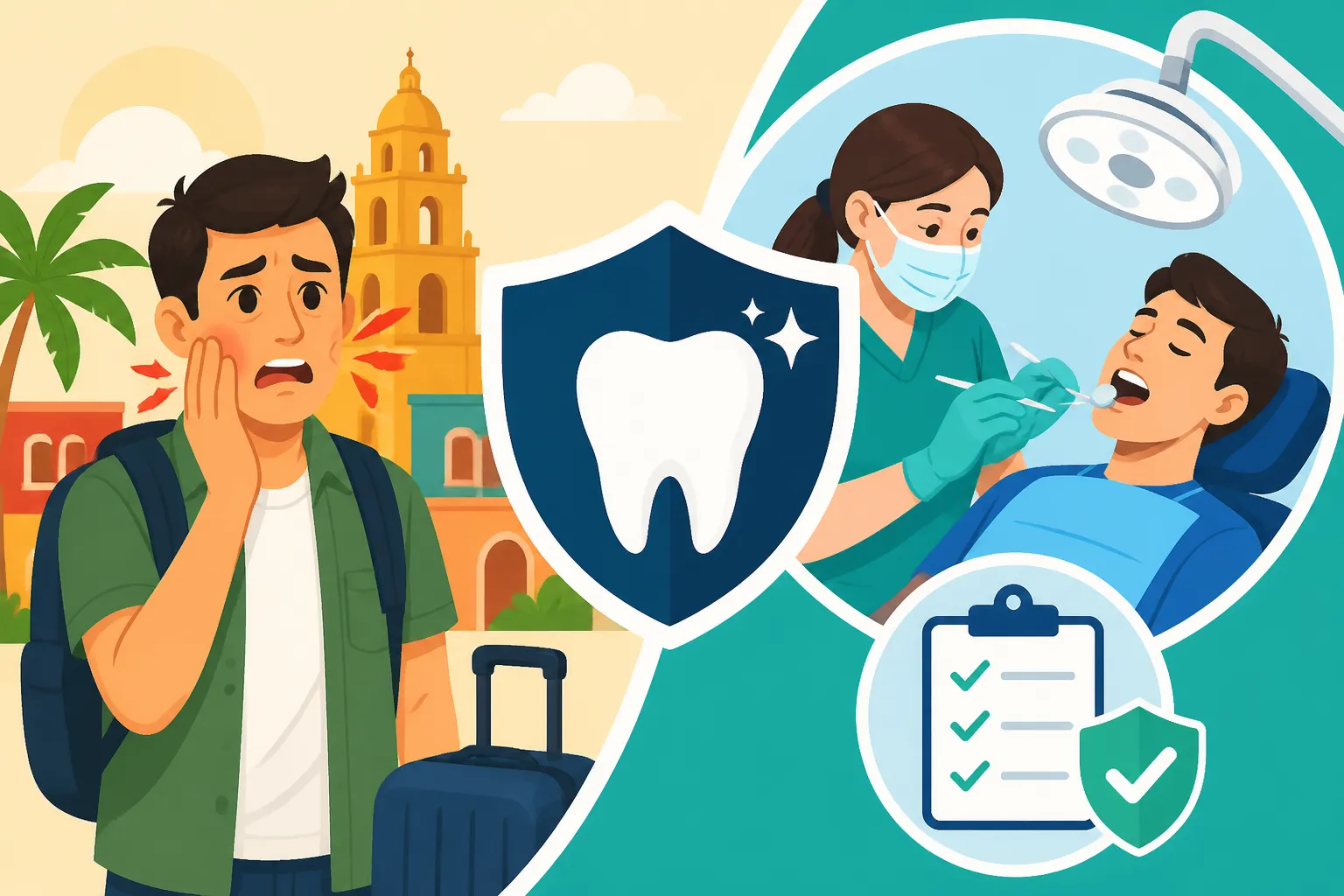
Imagine this: you're finally enjoying that amazing trip through Mexico, perhaps savoring some tacos al pastor or exploring an ancient pyramid, when suddenly, a sharp, excruciating pain shoots through your tooth. A dental emergency in a foreign country is truly one of the most unwelcome surprises, often leaving you scrambling for solutions, wondering where to go, and, most importantly, how on earth you're going to pay for it. This guide is here to cut through the confusion and explain exactly what your travel policy, specifically a reliable option like SafetyWing, might actually cover when your pearly whites decide to stage a rebellion in Mexico.
Disclosure: This post may contain affiliate links. We may earn a commission at no extra cost to you if you make a purchase through these links. Read full disclosure.
The Harsh Reality of Dental Emergencies Abroad and Travel Insurance
Getting hit with a dental emergency while traveling can feel like a nightmare. You’re far from your usual dentist, navigating a new healthcare system, and often dealing with a language barrier, all while in significant pain. It’s enough to make anyone want to pack up and go home. But before you panic, understanding the landscape of dental care and travel insurance in Mexico is key.
Common Dental Woes While Traveling in Mexico
From a chipped tooth after a mishap to a sudden, throbbing toothache that keeps you up all night, dental emergencies come in many forms. Maybe a filling fell out, an old crown decided to abandon ship, or an abscess has flared up unexpectedly. These aren't just minor inconveniences; they can severely impact your travel experience, causing intense pain, infection, and even fever. You might find yourself searching desperately for an "odontólogo" when all you wanted to do was find the best mezcal bar.
The climate, different foods, or even the stress of travel can sometimes trigger these issues. For example, the change in air pressure during a flight can sometimes irritate a pre-existing cavity or a compromised tooth, leading to sudden pain upon landing. Or perhaps you bit down on something a little too hard at a bustling market. These scenarios are not uncommon, and they happen to thousands of travelers every year in Mexico. The important thing is to be prepared.
Why Standard Health Insurance Falls Short for Travel
Many people assume their regular health insurance from back home, whether it's a domestic plan in the U.S. or Canada, or a European national health service, will cover them fully when they travel internationally. This is almost never the case for routine care, and often, even for emergencies, the coverage is limited, complex to access, or non-existent outside your home country. You might find yourself needing to pay upfront and then jumping through countless hoops for reimbursement, often at an unfavorable exchange rate, and sometimes only after a substantial deductible.
For instance, your typical U.S. health insurance might offer "out-of-network" coverage internationally, but this usually comes with a much higher deductible and only reimburses a fraction of the cost. Or, in the case of something like Medicare, you might find that Does Medicare Cover You in Mexico? A Guide for U.S. Retirees is a very different answer when you're outside the U.S. borders. This is precisely why dedicated travel medical insurance, like the policies offered by SafetyWing, becomes indispensable for covering unexpected medical and dental incidents while you're on the road. Without it, you could be facing hefty out-of-pocket expenses that quickly dwarf your entire travel budget.
Understanding Your Travel Insurance Policy: What "Emergency Dental" Really Means
When you're sifting through travel insurance policies, the term "emergency dental" can seem straightforward, but it's often where the devil is in the details. It's crucial to understand that travel medical insurance isn't typically designed to replace your routine dental check-ups or cover elective procedures. Its primary purpose is to protect you from catastrophic, unexpected events.
Defining a True Dental Emergency (and What Isn't)
Most travel insurance policies, including SafetyWing, define a dental emergency as sudden, unexpected pain that requires immediate treatment to alleviate suffering. This usually covers things like:
- Acute pain relief: If you wake up with a searing toothache that demands urgent attention.
- Accidental injury: A chipped or broken tooth resulting from an unforeseen accident, like a fall or a sports injury.
- Abscesses or infections: Swelling and pain due to an infection that needs drainage or antibiotics.
What it doesn't typically cover are things you could have, or should have, addressed before your trip. This includes:
- Routine check-ups or cleanings: Travel insurance is not your regular dental plan.
- Cosmetic procedures: Whitening, veneers, etc., are never covered.
- Pre-existing conditions that are not acute: If you knew you needed a root canal before you left, and it just got worse, it might be tricky unless the policy has specific acute-onset clauses for pre-existing conditions, which SafetyWing often does for medical but dental can be more restricted.
- Extensive restorative work: While they might cover pain relief, a full root canal, crown, or extraction might only be covered up to a certain, often lower, sub-limit, unless it's directly caused by an accident during your trip.
It's about immediate relief and stabilization, not long-term solutions or comprehensive dental work. Always read the policy wording very carefully, especially the sections on "Dental Treatment" or "Emergency Dental."
The Limits of Coverage: Deductibles, Caps, and Exclusions
Every travel insurance policy comes with limits, and emergency dental coverage is no exception. These are typically much lower than general medical emergency limits.
Deductibles: Just like your regular insurance, you'll likely have a deductible to pay upfront before your insurance kicks in. For example, if your deductible is $250 and your dental emergency costs $300, you'll pay $250, and the insurance will cover the remaining $50. SafetyWing policies often have a reasonable deductible, so always factor that in.
Sub-limits and Caps: Dental emergencies almost always have a separate, lower maximum benefit than your overall medical coverage. A common cap for emergency dental work, specifically for pain relief not related to an accident, might be anywhere from $300 to $1,000. This means even if your overall medical coverage is in the hundreds of thousands, your dental coverage could be much less. If you need extensive work, like a root canal and crown that costs $1,500, your policy might only pay out $500, leaving you to cover the rest. However, if the dental issue is a direct result of a covered accident (e.g., you fell and broke a tooth), the coverage might fall under the general accident benefit, which usually has a higher limit.
Exclusions: Be vigilant about exclusions. Some policies explicitly exclude dental work related to any pre-existing condition, even if it's an acute flare-up. Others might exclude dental issues that arise from chewing hard foods or negligence. You’ll want a policy like SafetyWing that offers clarity and reasonable coverage for the most common urgent situations.
Here’s a simplified comparison of typical coverage scenarios:
| Scenario | Standard Domestic Health Insurance (International) | Typical Travel Medical Insurance (e.g., SafetyWing) |
|---|---|---|
| Routine Cleaning/Check-up | Generally No (or very limited) | No |
| Minor Cavity (no pain) | Generally No (or very limited) | No |
| Acute Toothache (pain relief) | Maybe (high deductible, pay upfront, seek reimbursement) | Yes, for acute pain relief (within sub-limit, after deductible) |
| Chipped Tooth (Accident) | Maybe (high deductible, complex claims) | Yes, generally covered under accidental injury (higher limits possible) |
| Abscess/Infection (Urgent) | Maybe (high deductible, complex claims) | Yes, for immediate treatment to resolve infection and pain |
| Extensive Work (Root Canal, Crown, not accidental) | Very unlikely to be covered fully | Limited to emergency sub-limit for pain relief; remaining out-of-pocket |
Note: This table is a general guide. Always refer to your specific policy document.
SafetyWing's Approach to Dental Emergencies in Mexico
When planning your adventures in Mexico, you need travel insurance that truly understands the unique needs of expats and digital nomads. This is where SafetyWing shines. Their policies are specifically designed for people living and working abroad, offering flexible, comprehensive coverage that includes unexpected medical and dental emergencies. It's a lifesaver when you're far from home and suddenly need a dentist.
How SafetyWing Covers Acute Dental Pain
SafetyWing's Nomad Insurance policy typically offers coverage for "acute onset of pain to natural sound teeth," meaning if you suddenly experience severe tooth pain, they've got your back for immediate, necessary treatment. This is crucial because, as we discussed, these things happen without warning.
Their policy provides a specific benefit for emergency dental treatment needed for the relief of sudden, acute pain. This usually comes with a sub-limit (e.g., up to $300 to $1,000 depending on your specific policy and terms) and is subject to your deductible. What this means in practice is that if you develop a raging toothache that needs an emergency extraction or medication to get you out of pain, SafetyWing will help cover those costs. It's not for a full root canal or a new set of veneers, but it's absolutely vital for addressing immediate discomfort and preventing a small issue from becoming a much larger, more expensive one.
They also cover dental treatment that is medically necessary due to an accidental injury. So, if you're exploring the pyramids and trip, chipping a front tooth, that repair would generally fall under their accidental injury benefits, which usually have much higher limits than the acute pain dental sub-limit. This distinction is important and provides a broader safety net than many other travel policies.
The Process for Making a Dental Claim with SafetyWing
Navigating an insurance claim in a foreign country can be daunting, but SafetyWing aims to make the process as straightforward as possible. If you experience a dental emergency while in Mexico, here's a general outline of what to do:
- Seek Immediate Care: Your first priority is to get out of pain. Don't delay seeking treatment. You can find dentists in Mexico through recommendations, online searches, or even by asking at your accommodation. Remember, in many parts of Mexico, excellent dental care is available, often at a fraction of the cost you'd pay in your home country, so even if you pay out-of-pocket initially, it might not be as bad as you fear. Many clinics, particularly in expat-heavy areas or larger cities like Cancun, Guadalajara, or Mexico City, have English-speaking staff. You might even find relief at a Pharmacy Consultorios in Mexico (Farmacias Similares and More) where a general dentist can assess your situation and prescribe pain medication or antibiotics.
- Notify SafetyWing: As soon as reasonably possible, contact SafetyWing to let them know about your emergency. You can usually do this through their online portal or by phone. They can guide you on the next steps, advise on covered procedures, and confirm your benefit limits and deductible.
- Gather Documentation: This is crucial.
- Keep all receipts: For the dentist visit, any X-rays, medications, and procedures.
- Get a detailed medical report: Ask the dentist for a written report explaining the diagnosis, the treatment provided, and why it was deemed an emergency. Make sure it's as detailed as possible and, if possible, in English or with a certified translation.
- Before and After (if applicable): If it's an injury, photos can be helpful.
- Submit Your Claim: Once you have all the necessary documentation, submit your claim through SafetyWing's online platform. Be thorough and provide all requested information. The clearer and more complete your submission, the faster it will likely be processed.
- Reimbursement: After your claim is approved, SafetyWing will reimburse you for the covered expenses, minus your deductible, up to your policy's sub-limit.
While the thought of dealing with paperwork while in pain is unpleasant, SafetyWing's process is designed for digital nomads and travelers, making it relatively user-friendly. Just remember, thorough documentation is your best friend when it comes to insurance claims.
Navigating a Dental Emergency in Mexico with Your Travel Policy
So, you're in Mexico, and that toothache just hit. What do you do? The process can seem overwhelming, but by taking a few structured steps, you can get the care you need and maximize your chances of a successful insurance claim, especially with a travel medical policy like SafetyWing.
Immediate Steps When Dental Pain Strikes
Don't wait. Dental pain usually only gets worse.
- Assess the Severity: Is it a dull ache or a sharp, throbbing pain? Is there swelling, fever, or difficulty swallowing? These indicate a more urgent situation.
- Temporary Relief: OTC pain relievers (like ibuprofen or acetaminophen), available at any farmacia in Mexico, can help manage pain temporarily. Some pharmacies might even have a small consultorio where a dentist can offer a quick assessment or prescribe an antibiotic if an infection is suspected. For more on getting medication, check out Pharmacies in Mexico: How to Get Medications (OTC vs Prescription).
- Contact Your Travel Insurance: This is an important, though often overlooked, step. Before you head to a clinic, give SafetyWing a call or message them through their online portal. They can help you understand your coverage, confirm your deductible and sub-limits for emergency dental, and sometimes even recommend English-speaking dentists in your area. This proactive step can save you headaches later.
- Locate a Dentist: Ask your hotel or Airbnb host for recommendations. Word-of-mouth from fellow expats or locals is often the best way to find a good dentist. Online searches for "dentista de emergencia [city name]" or "English speaking dentist [city name]" are also excellent starting points.
Finding a Reputable Dentist in Mexico
Mexico is well-known for its excellent and affordable dental care, attracting many for "dental tourism." This means you'll likely find high-quality care, but due diligence is still key.
- Look for well-regarded clinics: In major expat hubs like Puerto Vallarta, San Miguel de Allende, Mérida, or Cancun, you'll find numerous dental clinics catering to foreigners, often with English-speaking staff and state-of-the-art equipment. These tend to have clearer pricing and a better understanding of the documentation needed for insurance claims. You can often find a good Dental Care in Mexico: Quality of Service and Costs for Expats in these locations.
- Check credentials: While it can be harder abroad, look for dentists who are members of national dental associations (like the Asociación Dental Mexicana). Online reviews can also be very helpful.
- Don't be afraid to ask questions: Discuss the proposed treatment, costs, and payment options upfront. Clarify what constitutes an emergency and what might be considered follow-up care.
- Consider private hospitals: In larger cities, private hospitals like Hospital Angeles or Star Médica often have excellent dental departments or can refer you to a trusted specialist. While a hospital visit for just a toothache might seem extreme, if it's a severe infection or trauma, they are equipped to handle it. For more on navigating facilities, read Navigating Hospitals and Clinics in Mexico: An Expat’s Guide to Medical Care.
Remember that while costs are lower, you will almost certainly be expected to pay upfront, especially for the first consultation and immediate treatment. This is where your travel medical insurance like SafetyWing comes into play, as they're there for reimbursement, not direct payment to the provider in most cases for dental. Keep those receipts!
Documenting Your Visit and Claim Submission
Once you've received treatment, the critical final step is to meticulously document everything for your SafetyWing claim.
- Get an Itemized Bill/Receipt: This should clearly list each service performed (e.g., consultation, X-ray, extraction, prescription), the date, and the cost. Ensure the dentist's name, address, and contact information are on it.
- Request a Medical Report: A simple note saying "toothache treated" isn't enough for an insurance company. Ask the dentist to write a brief report detailing:
- The diagnosis (what was wrong).
- The symptoms you presented (the acute pain).
- The treatment provided (what they did).
- Why the treatment was necessary and urgent (e.g., "to relieve acute pain and prevent further infection").
- Any medications prescribed.
- Keep Prescription Information: If you were prescribed medication, keep the prescription slip and the pharmacy receipt.
- Payment Proof: Keep records of how you paid (credit card statement, cash withdrawal receipt).
- Submit Promptly: Don't sit on your documentation. Once you're able, submit your claim to SafetyWing through their online portal. Upload clear photos or scans of all your documents. Being organized and submitting a complete claim package significantly speeds up the process and reduces the chance of denials or requests for additional information.
While it's never fun to deal with a dental emergency, having a robust travel medical insurance policy like SafetyWing in your corner means you can focus on getting better, knowing that a significant portion of your unexpected expenses will be covered. It allows you to continue enjoying the beauty and adventure of Mexico without the constant worry of medical bills hanging over your head.
Disclaimer
Please remember that this article provides general information and guidance based on typical travel insurance policies and common expat experiences in Mexico. Specific coverage details, exclusions, and claim processes can vary between insurance providers and even between different policies from the same provider. It is absolutely essential to read and understand your individual insurance policy document, including any terms, conditions, deductibles, sub-limits, and exclusions related to dental emergencies, before you travel. The information provided here does not constitute professional financial or medical advice.