Insurance and Mexican Residency Applications: What Consulates Actually Ask For
Navigating the labyrinthine world of Mexican residency applications can be an emotional rollercoaster, and one area that often leaves expats scratching their heads is health insurance. While the official requirements from the National Institute of Migration (INM) or Mexican consulates abroad might not always explicitly spell it out, understanding the unspoken expectations and securing the right coverage is absolutely crucial. This comprehensive guide is here to cut through the confusion and show you how to confidently address the insurance aspect of your Mexican residency application, especially by leveraging flexible, expat-friendly solutions.
Disclosure: This post may contain affiliate links. We may earn a commission at no extra cost to you if you make a purchase through these links. Read full disclosure.
The Elephant in the Room: Do You REALLY Need Health Insurance for Residency?
You'd think a question this fundamental would have a straightforward "yes" or "no" answer, right? But this is Mexico, and immigration is rarely black and white. Many expats have been caught off guard by the varying expectations from one consulate to another, or even from one consular officer to the next. Let's dig into why this topic is so nuanced.
The Consulate's Unspoken Expectations
Here's the deal: Mexican consulates, particularly those in the U.S. and Canada, operate with a significant degree of autonomy. While the official INM guidelines for a temporary resident visa or a permanent resident visa focus heavily on financial solvency, proving you won't be a burden to the state, the expectation of health coverage often falls under this broader umbrella. They want to see that you are self-sufficient in every sense of the word. Imagine being a consular officer reviewing hundreds of applications; naturally, they're looking for individuals who appear prepared and responsible. Someone who has thought about their health coverage, even if not explicitly mandated by the general requirements, often fits that profile.
Some consulates might have a tiny line in their local requirements asking for proof of health insurance, while others won't mention it at all. Yet, in the interview, they might still ask about it, or even just make a mental note. It's not about catching you out, but about ensuring you understand the practicalities of living abroad. You don't want to be in a situation where a medical emergency forces you to rely on public services without having contributed or made provisions.
Why Mexico Cares About Your Health Coverage
Mexico, like any other nation, is looking out for its own. While the public healthcare system, primarily IMSS, is robust for its citizens and legal residents who contribute, it's not a free-for-all for newcomers. If you arrive in Mexico and immediately fall ill or have an accident without any insurance, the burden could potentially fall on the Mexican healthcare system, which is already stretched in many areas.
Think about it from their perspective: they are granting you the privilege of residing in their country. They want to be assured that you are a responsible individual who has considered all aspects of living here, including what happens if you get sick or have an accident. This becomes even more critical for older expats or those with Pre-Existing Conditions: Will Mexican Health Insurance Cover You? because healthcare costs can quickly escalate.
The "Catch-22" of Getting Insurance Before Residency
This is where it gets tricky. Many local Mexican private health insurance providers will not issue a policy to someone who doesn't yet have a Mexican resident card (either temporary or permanent). They often require a CURP (Clave Única de Registro de Población), which you typically only receive after your residency application is complete and you have your physical card. This creates a classic "chicken and egg" situation: you might need proof of insurance for your visa application, but you can't get local insurance without the visa.
This is precisely why international health insurance options are a game-changer for expats in the pre-residency and initial residency phases. They bridge this gap, offering coverage from the moment you leave your home country and throughout your early months or even years in Mexico. This is where a solution like SafetyWing truly shines, providing flexible, reliable coverage designed specifically for digital nomads and expats who are in motion and haven't fully settled into a local system yet. It allows you to satisfy potential consulate inquiries while ensuring you're covered for any unexpected medical needs during your move.
Deciphering Consulate Requirements: What They Might Ask For
Given the varying nature of consulate demands, it’s vital to be prepared for possibilities, not just certainties. Trying to find a definitive, universal list of required documents for insurance can feel like chasing a ghost.
The Elusive "Proof of Funds" Connection
While direct requests for health insurance might be rare, almost every consulate will scrutinize your proof of financial solvency. This is usually presented through bank statements, investment accounts, or pension statements, showing consistent income or substantial savings. The thinking is simple: if you can prove you have sufficient funds to support yourself, this implicitly covers your ability to pay for healthcare.
However, a savvy consular officer might still prod. For instance, if your stated income or savings are just barely above the minimum requirements for a Mexico Temporary Resident Visa: Comprehensive Guide for Expats (2026 Update), and you're an older applicant, they might explicitly ask about your health coverage. They want reassurance that a single medical incident won't wipe out your savings and leave you destitute, potentially becoming a burden. Having an insurance policy in place, even a basic one that covers emergencies, strengthens your overall financial solvency argument significantly. It demonstrates foresight and a practical approach to your relocation.
Specific Documentation Demands (or Lack Thereof)
I've heard countless stories from fellow expats:
- "My consulate asked for a letter from an insurance company stating I'd be covered for X amount for medical emergencies."
- "They didn't ask me for anything about insurance, just my bank statements."
- "The consular officer simply asked, 'Do you have health insurance for Mexico?' A verbal 'yes' was enough."
- "They explicitly required proof of international medical insurance for the first year of my residency."
As you can see, consistency is not a hallmark of the process. If a consulate does ask for documentation, they typically want to see proof of an international medical insurance policy, often covering a specific amount (e.g., $50,000 USD or more) for medical emergencies, hospitalization, and possibly even repatriation. The key is that it must cover you in Mexico. A standard travel insurance policy might be too short-term and not provide the robust coverage they're looking for, which is why a flexible expat-oriented plan like SafetyWing is a better fit. Its Nomad Insurance offers both travel medical and some limited home country coverage, making it suitable for those extended stays that blur the lines between travel and residency.
Understanding the Discretionary Nature of Consulates
This bears repeating: the individual consular officer holds significant power. They have the discretion to interpret the general guidelines and ask for additional information or clarification as they see fit. This is why being overly prepared is always better than being underprepared. If you walk into your interview armed with your financial documents and a clear, comprehensive international health insurance policy, you're projecting competence and responsibility.
Don't go in expecting them to know all the nuances of your specific situation or the limitations of Mexican insurance for non-residents. Be ready to present your solution clearly and concisely. Having a policy from a reputable international provider like SafetyWing not only gives you peace of mind but also gives the consular officer confidence that you've thought this through. It shows you're proactive about your well-being and won't be relying on the goodwill of strangers or the local public health system if something goes wrong.
Your Best Bet: International Health Insurance for Residency Applicants
When you're caught in that awkward phase of applying for residency, an international health insurance plan isn't just a good idea; it's often the only practical solution to ensure you're covered and can satisfy potential consulate requirements.
Why International Plans Are Often the Go-To
The primary advantage of international health insurance is its global portability and the fact that it doesn't usually require you to be a legal resident of any specific country to purchase. These plans are designed for people on the move – digital nomads, long-term travelers, and, yes, expats in the process of relocating.
Consider the journey: you might be spending a few months in Mexico on a tourist visa while preparing your residency application documents, then returning to your home country for the consulate interview, and finally moving back to Mexico as a resident. A single international plan can cover you through all these transitions, ensuring continuous protection. This is a stark contrast to typical travel insurance, which is often very short-term and geared towards brief vacations, not the complexities of an international move. International plans are built for this exact scenario, providing a safety net when your life is in flux across borders.
Key Features to Look for in a Residency-Friendly Plan
When choosing an international health insurance plan, especially with your residency application in mind, look for the following:
- Proof of Coverage: Can they issue a document in English (and ideally, a simplified statement in Spanish) that clearly states your coverage limits, policy period, and the geographic scope of your coverage (including Mexico)?
- Emergency Medical Coverage: This is paramount. Look for substantial coverage for accidents and sudden illnesses, typically $50,000 to $250,000 USD or more.
- Hospitalization and Surgery: Ensure it covers inpatient care, surgical procedures, and intensive care.
- Medical Evacuation: This is critical in Mexico, especially if you plan to live in a smaller town. If you need highly specialized care not available locally, you want to be transported to a major city or even back to your home country. This can be astronomically expensive without insurance.
- Repatriation of Remains: While grim to consider, this is a vital component for expats.
- Flexibility: Can you start and stop the plan easily? Is it subscription-based, allowing you to pay monthly? This flexibility is invaluable for those navigating uncertain timelines.
This is where a service like SafetyWing really stands out. Their Nomad Insurance product is specifically designed with these needs in mind. It's affordable, subscription-based, and covers medical emergencies, travel delays, and even offers limited coverage in your home country for short visits. For someone applying for residency, this means you can have continuous coverage during the application process, your initial move, and until you're settled enough to explore local options like Private Health Insurance in Mexico: GNP, AXA, and Major Insurers.
How SafetyWing Fits the Bill for New Expats
Let's talk specifically about why SafetyWing is often lauded by the expat community and why it's a stellar choice for your Mexican residency application journey.
First, its Nomad Insurance is built for the nomadic lifestyle. This means it understands that you might not have a fixed address in Mexico yet, or even a local bank account or resident card. Their enrollment process is straightforward and doesn't require these things. You can purchase it online, often just a few days before your departure or even while already in Mexico.
Secondly, the flexibility is unmatched. It operates on a monthly subscription, so you're not locked into a long-term contract. You can cancel anytime, which is perfect if your residency timeline is uncertain or if you eventually transition to a local Mexican plan like IMSS or a private provider. This pay-as-you-go model makes budgeting easier and reduces financial commitment upfront.
Third, the coverage is robust for what it is: an international travel medical insurance that extends to long-term expat scenarios. It covers unexpected illness and injury, hospital stays, doctor visits, prescription drugs (in emergencies), and critical aspects like emergency medical evacuation and travel interruptions. While it's not a full-fledged comprehensive health plan with routine check-ups and preventative care (you'd look for that in a more traditional international private health insurance later), it absolutely covers the medical emergencies that consulates implicitly worry about. You can confidently present SafetyWing as your chosen health coverage during your consulate interview, demonstrating your commitment to responsible living abroad.
Navigating the Application Process with Insurance in Hand
Once you've chosen your international insurance, the next step is effectively incorporating it into your residency application. It's not just about having the policy; it's about knowing how to present it.
Presenting Your Proof: What to Provide at Your Interview
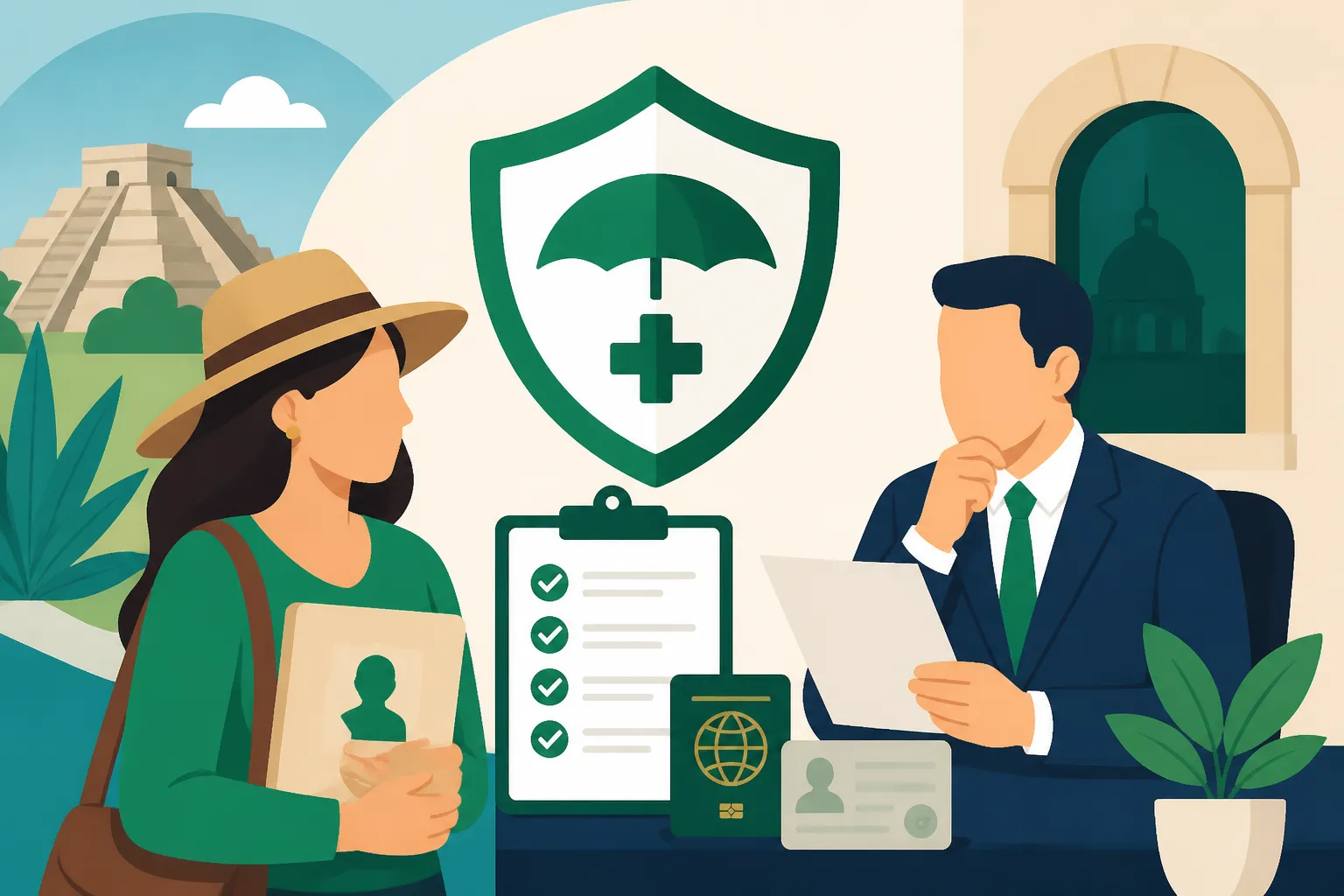
When you attend your consulate interview for your Mexican visa, whether it's for temporary or permanent residency, you'll have a stack of documents proving your financial solvency, your passport, photographs, and the application form itself. If you have an international health insurance policy like SafetyWing, print out your policy documents clearly. Look for the pages that show:
- Your name (matching your passport)
- The effective dates of coverage (make sure it covers your intended period of stay in Mexico, ideally at least the first year)
- The maximum coverage amount for medical expenses
- A clear statement that it covers you in Mexico
- Emergency contact information or claims process details
Even if the consulate doesn't explicitly ask for it, have it neatly organized with your other financial documents. If the consular officer asks about your plans for healthcare, or even just generally about your preparations for living in Mexico, you can proactively present your policy. A simple statement like, "Yes, I have secured international health insurance that covers me for medical emergencies and hospital stays in Mexico for my initial period of residency," along with handing over the document, can make a very positive impression. It shows initiative and responsibility.
What Happens After You Get Residency
Congratulations, you've got your Mexican resident card! This is a huge milestone. Now that you're a legal resident, your options for healthcare coverage expand significantly. You can now consider:
- Enrolling in IMSS (Instituto Mexicano del Seguro Social): This is Mexico's public healthcare system. As a resident, you can How to Enroll in IMSS as a Foreign Resident in Mexico on a voluntary basis. It's generally very affordable, particularly for retirees, and offers comprehensive coverage once approved (which can take a few weeks to months, and usually excludes pre-existing conditions for a waiting period).
- Purchasing Private Mexican Health Insurance: With your resident card and CURP, you can now apply for policies with local Mexican providers such as GNP Seguros, AXA Seguros, or Bupa Mexico. These can be more expensive than IMSS but offer greater flexibility in choosing doctors and hospitals, often with shorter wait times for specialists.
- Continuing with your International Private Health Insurance: Many expats choose to stick with their international private health insurance long-term, especially if they travel frequently outside Mexico or prefer the consistent coverage they had before moving. These plans are often more comprehensive than local options, including things like dental and vision, or a wider network of English-speaking doctors.
During this transition period, it's wise to maintain your international coverage (like your SafetyWing plan) until you're fully set up with a new local plan, or you've decided to keep your international coverage long-term.
The Importance of Continuous Coverage
One critical point often overlooked by new expats is the need for continuous coverage. A gap in insurance, even for a few weeks, can be financially devastating if an unexpected medical emergency occurs. Imagine you cancel your international plan the day you receive your resident card, assuming you'll enroll in IMSS immediately. The IMSS enrollment process isn't instant, and there can be waiting periods for certain conditions or services.
Having a flexible, month-to-month plan like SafetyWing means you can easily overlap your coverage. Keep it running while you apply for IMSS or shop for a local private plan. Once your new coverage is fully active and you're confident in its scope, then you can cancel your international plan. This staggered approach ensures you're never caught unprotected, a smart move for anyone living abroad, especially in a new country.
Common Concerns and What to Avoid
While the dream of living in Mexico is exciting, ignoring the practicalities, especially concerning health insurance, can lead to serious headaches. Let's address some common pitfalls.
The Pitfalls of Going Uninsured or Underinsured
Choosing to forgo health insurance entirely, or opting for a bare-bones policy that offers minimal coverage, is one of the biggest risks an expat can take. Even in Mexico, a simple appendectomy can run into thousands of dollars, and a major accident or illness could easily cost tens of thousands, or even hundreds of thousands, especially at high-quality private hospitals.
Without adequate insurance:
- You could face exorbitant medical bills: Mexican hospitals, particularly private ones, often require payment upfront or a substantial deposit if you don't have insurance or a letter of guarantee. You might even be denied non-emergency treatment until you can prove financial capability. For more on this, check out Do Mexican Hospitals Require Payment Upfront? How Billing Works for Expats.
- Limited access to quality care: While public hospitals offer care, private facilities generally provide higher standards, better equipment, and often English-speaking staff. Without insurance, these options become largely inaccessible.
- Financial ruin: A single serious medical event could wipe out your life savings, force you into debt, or even necessitate an emergency return to your home country, compounding your stress and financial burden.
- Immigration complications: If a consular officer asks about your insurance plans and you have none, it can reflect poorly on your application, potentially jeopardizing your visa.
This is where a plan like SafetyWing provides essential protection without breaking the bank, covering those crucial unexpected medical costs that could otherwise derail your expat dream.
Misconceptions About Medicare/Travel Insurance
Many American expats, especially retirees, mistakenly believe their existing U.S. Medicare will cover them in Mexico. This is a critical misconception. Generally, Medicare does not cover you in Mexico, except in very limited circumstances near the border or on a cruise ship. For more detailed information, read Does Medicare Cover You in Mexico? A Guide for U.S. Retirees. Relying solely on Medicare is a recipe for disaster.
Similarly, standard "travel insurance" is often insufficient. These policies are typically designed for short trips (a few days to a few weeks) and have limited medical benefits, often with low maximums. They might cover trip cancellation or lost luggage, but they aren't structured for long-term stays or residency applications. What you need is an international medical insurance or expat insurance policy, which is specifically designed for individuals living abroad long-term. This distinction is vital, and it's why products like SafetyWing are so well-suited – they bridge the gap between basic travel insurance and full-blown private international health insurance.
Language Barriers and Clarity in Your Policy
Mexico is a Spanish-speaking country, and while many doctors and hospital staff in tourist areas or major cities like Mexico City or Guadalajara might speak English, it's not guaranteed, especially in an emergency. Ensure your insurance policy documents are clearly written in English.
If you anticipate potential consulate questions or hospital interactions, it might be helpful to have a concise summary of your policy's key benefits and coverage limits translated into Spanish. Some international providers can offer this, or you can prepare a simple sheet. This proactive step can save immense stress during critical moments, as detailed in Overcoming Language Barriers at the Doctor: Tips for Expats.
Having all your policy details readily accessible, preferably in both digital and printed format, is always a good idea. This applies whether you're dealing with a consular officer in your home country or a hospital administrator in Mexico.
Making the Transition to Local Healthcare in Mexico
Securing your initial international health insurance is a smart first step, but once you're a legal resident, you'll want to explore Mexico's local healthcare landscape. This often involves considering the public system, private options, or even a combination of both.
Understanding IMSS and IMSS-Bienestar
Once you have your Temporary or Permanent Resident card, you become eligible to voluntarily enroll in the IMSS (Instituto Mexicano del Seguro Social), which is Mexico's social security and public health system. IMSS provides extensive medical coverage, including doctor visits, specialist care, hospitalization, surgeries, and medications, often for a very affordable annual fee based on your age. For many expats, especially retirees, IMSS offers incredible value. However, it's important to understand that:
- Enrollment takes time: The process can be bureaucratic and require multiple visits to local offices.
- Waiting periods: There are usually waiting periods for pre-existing conditions and certain procedures.
- Public system challenges: While IMSS provides good care, you might encounter longer wait times, less choice in doctors, and sometimes limited English-speaking staff compared to private facilities.
Another public option is IMSS-Bienestar, which is a system for those without social security or health insurance. While it offers free healthcare, it's primarily designed for low-income citizens and often has limited resources. As an expat with residency and financial means, voluntary IMSS is generally the more appropriate and robust public option. You can learn more about this in Public Healthcare in Mexico: IMSS and IMSS Bienestar Explained for Expats.
Exploring Private Health Insurance Options in Mexico
For those who prioritize speed, convenience, and choice, private health insurance in Mexico is an excellent option once you're a resident. Major Mexican insurers like GNP Seguros, AXA Seguros, Seguros Monterrey New York Life, and Bupa Mexico offer a range of plans. These plans generally provide:
- Access to private hospitals and specialists: You can choose your doctors and facilities, often with shorter wait times.
- English-speaking staff: Many private hospitals cater to expats and have bilingual staff.
- More comprehensive coverage: Depending on the plan, you might get better coverage for preventative care, diagnostics, and elective procedures.
The cost of private Mexican insurance varies widely based on age, health, and chosen coverage, but it's generally significantly less expensive than comparable plans in the US or Canada. For more details, see Choosing Private Health Insurance: Local Mexican Plans vs International Coverage.
The Hybrid Approach: Combining International and Local Plans
Many expats find a hybrid approach to be the most effective for their healthcare needs in Mexico. This often means:
- Starting with international coverage: Using a flexible international plan like SafetyWing for the initial residency application and the first few months in Mexico. This provides immediate, broad coverage during a transitional period.
- Adding IMSS for basic care: Once settled, enrolling in IMSS for routine doctor visits, basic specialist care, and medications, taking advantage of its affordability.
- Supplementing with private or maintaining international: Keeping a higher-tier international plan (like those from Cigna, Aetna, or the more robust expat plans from SafetyWing beyond the Nomad Insurance) for major medical events, critical illness, or if you plan to travel outside Mexico frequently. Alternatively, some choose a local private plan to cover major emergencies while using IMSS for day-to-day needs.
This layered approach offers robust coverage, balances costs, and ensures you're prepared for anything, from a common cold to a major medical emergency. It gives you peace of mind that you're well-covered no matter where you are in your expat journey.
Here's a quick comparison of popular insurance options for expats in Mexico:
| Feature | Travel Insurance (Typical) | SafetyWing Nomad Insurance | Local Mexican Private Insurance | IMSS (Voluntary) |
|---|---|---|---|---|
| Purpose | Short trips, emergencies, travel mishaps | Long-term travel, digital nomads, expat transition | Comprehensive private care in Mexico | Affordable public care in Mexico |
| Residency Requirement | No | No | Yes (Mexican Resident Card/CURP) | Yes (Mexican Resident Card/CURP) |
| Policy Duration | Days to 1-2 months | Monthly subscription, renewable | Annually | Annually |
| Coverage Scope | Emergencies, trip issues | Travel medical, emergency, limited home country | Comprehensive in Mexico | Comprehensive in Mexico |
| Major Medical Coverage | Limited, low maximums | Good for emergencies, high maximums | Excellent | Excellent |
| Pre-existing Conditions | Often excluded | Excluded (some acute exceptions) | Often excluded initially, waiting periods | Excluded initially, waiting periods |
| Flexibility | Low | High (month-to-month) | Moderate | Low (fixed enrollment) |
| Acceptance for Residency Application | Generally insufficient, too short-term | Excellent (covers expat transition) | Not possible pre-residency | Not possible pre-residency |
| Cost | Low (for short term) | Moderate (monthly) | High | Low |
| Best Use Case | Vacationing in Mexico | Initial expat move, residency application, digital nomads | Long-term residents seeking private care | Long-term residents seeking affordable care |
Disclaimer
The information provided in this guide is for general informational purposes only and does not constitute legal, financial, or medical advice. Immigration requirements, insurance policies, and healthcare systems in Mexico are subject to change. Always consult with a qualified immigration lawyer, financial advisor, or insurance professional for advice tailored to your specific situation. While efforts are made to ensure accuracy, we cannot guarantee that all information is up-to-date or complete.