Running Your Money From Abroad in Mexico: What Works Without a Local Bank
Ah, dinero. The universal language, yet when you move to a new country like Mexico, it can feel like a whole new dialect you never learned in Spanish class. Many of us arrive full of excitement, only to quickly realize that running your financial life from abroad, especially without a local Mexican bank account, presents a unique set of headaches. This guide is all about navigating those early days – and even beyond – to manage your cash flow, pay bills, and access your funds without the immediate need for a Mexican bank.
Disclosure: This post may contain affiliate links. We may earn a commission at no extra cost to you if you make a purchase through these links. Read full disclosure.
The Initial Hurdle: Why a Mexican Bank Account Isn't Always Immediate or Necessary
When you first arrive in Mexico, or even if you've been here a while but haven't settled into permanent residency, opening a local bank account can feel like a mythical quest. Believe me, many of us have stood in bank lobbies, passport and temporary residency card in hand, only to be told we need a utility bill in our name (which we can't get without a fixed address), a CURP (which can be tricky without permanent residency), or even a local phone number that isn't prepaid. It's a classic expat Catch-22.
The Catch-22 of Opening a Local Bank Account
The truth is, while Mexico welcomes foreigners, its banking system often isn't set up for instant gratification. Traditional banks like BBVA, Banorte, or Santander often require proof of address (a utility bill with your name on it), a temporary or permanent resident card, an RFC (tax ID), and sometimes even a CURP. If you're fresh off the plane with just a tourist visa or a newly processed temporary resident card, obtaining a utility bill in your name can be nearly impossible. Most landlords here put the utilities in their name, not yours, especially for short-term or initial rentals. You might have a rental contract, but often that's not enough for the bank. This bureaucratic dance can be incredibly frustrating and time-consuming, leaving you reliant on your foreign accounts or alternative methods. For those wondering, "Can You Open a Bank Account in Mexico Without Residency?", the answer is usually no, or at least not with the mainstream banks.
When a Local Bank Account Becomes Essential and When It Doesn't
While it might seem like a local bank account is non-negotiable for living abroad, that's not always the case, especially in your first few months. Many expats, particularly those who are still figuring out where they want to settle or who prefer to keep their finances streamlined with their home country, successfully manage without one for quite a while.
A local bank account does become essential when you need to:
- Receive a local salary directly from a Mexican employer.
- Set up automatic payments for rent or utilities that only accept transfers from Mexican banks.
- Make large, frequent cash deposits in pesos.
- Access services that require a CLABE (Mexico's interbank electronic transfer code), such as linking to certain local payment apps or receiving payments from Mexican clients if you're freelancing here.
- Get a local credit card to build credit in Mexico.
However, if you're retired, working remotely for a foreign company, or primarily using cash and international debit/credit cards, a Mexican bank account might not be an immediate necessity. Many major bills can be paid in cash at places like OXXO, and your foreign cards can handle many transactions. The decision really depends on your lifestyle and income sources.
Keeping Your Home Country Bank Account Active in Mexico
For most new expats, the default solution is to keep relying on their home country bank accounts. This makes sense – it's familiar, you already have the cards, and the money is there. But it’s crucial to understand the full picture before settling into this long-term strategy.
Advantages of Relying on Your Foreign Bank
The biggest advantage is comfort and familiarity. You know how your bank works, you have your online banking set up, and you understand the fees (or at least you think you do!). For many, it's about stability and avoiding the initial hassle of Mexican bureaucracy. You might also have investments or other financial products tied to your home bank that you don't want to disrupt. If you're a retiree, your pension might be directly deposited there, making it easier to manage your funds without an extra step of international transfers. Plus, for those coming from the US, the dollar often holds more stable value against the peso, and some prefer to keep their savings in a stronger currency. This also ties into the question of "Should Expats Keep Savings in Pesos or Dollars? Managing Currency Risk."
Using your foreign debit or credit card for purchases in Mexico can be convenient, especially in larger cities or tourist areas where card payments are more common. Many online services in Mexico, like Netflix or Uber, accept international cards without a hitch.
The Hidden Costs and Limitations
Here's where relying solely on your foreign bank can start to pinch. Foreign transaction fees, ATM withdrawal fees, and unfavorable exchange rates are the triple threat that can slowly but surely eat into your budget.
- ATM Fees: Every time you use an ATM in Mexico with a foreign card, you'll likely face two fees: one from your home bank and one from the Mexican bank owning the ATM. These can quickly add up, turning a small withdrawal into an expensive errand. Some ATMs, like those from HSBC or Bancomer (BBVA), might charge higher fees than others. Our guide on Using ATMs in Mexico: Avoiding Fees and Staying Secure has more detailed tips.
- Foreign Transaction Fees: Most credit and debit cards charge an additional 1-3% on every purchase made in a foreign currency. Over time, this becomes a significant hidden cost.
- Unfavorable Exchange Rates: Banks often use less competitive exchange rates than mid-market rates, further reducing the value of your money when you convert it to pesos.
- Security Concerns: Constantly carrying large amounts of cash withdrawn from ATMs, or using your primary home bank card, can increase your risk if your card is skimmed or stolen.
- Difficulty with Local Payments: Some smaller businesses, vendors at local markets, or even service providers might only accept cash or local bank transfers. This forces you to always have enough pesos on hand.
- Emergency Access: If your card gets lost, stolen, or blocked, getting a replacement sent to Mexico can be a logistical nightmare, leaving you without funds for an extended period.
Many expats I know learned these lessons the hard way, myself included. Those little fees on every transaction really add up over a month!
Modern Money Solutions for Expats: Digital Platforms to the Rescue
This is where digital platforms truly shine for expats in Mexico, offering a much-needed bridge between your home country finances and your new life here. They can be a game-changer for managing your money efficiently and affordably without a traditional local bank account.
The Power of Multi-Currency Accounts (Highlight Wise)
One of the best innovations for expats has been the rise of multi-currency accounts. These accounts allow you to hold, send, and receive money in different currencies, including Mexican pesos, all from a single platform. And when it comes to this, Wise (formerly TransferWise) is truly the hero for many expats in Mexico.
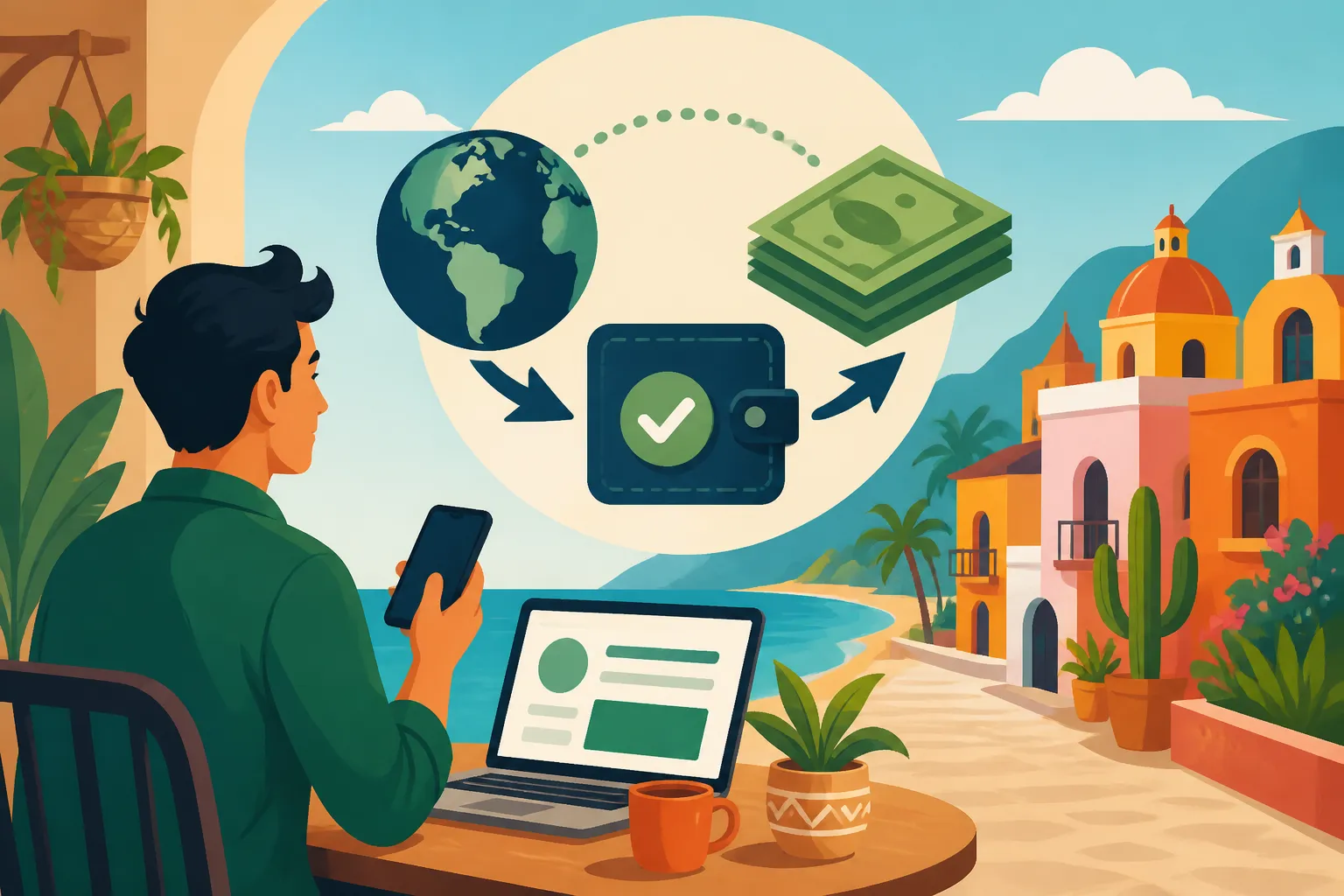
With a Wise account, you can get local bank details for several countries, including the US, UK, Canada, Europe, and more. This means you can receive payments in your home currency directly into your Wise account, just as if you had a local bank account in that country. Then, within the Wise platform, you can convert that money to Mexican pesos at the real mid-market exchange rate – the one you see on Google – for a very small, transparent fee. This completely bypasses the unfavorable exchange rates and hefty international wire transfer fees charged by traditional banks.
Imagine you're paid in USD from your remote job. Instead of your US bank charging you to send it to Mexico, and a Mexican bank charging you to receive it and convert it, you can simply receive it in your Wise USD balance. Then, convert what you need to pesos and send it to yourself, or use your Wise debit card directly in Mexico. This flexibility and transparency are why Wise has become an indispensable tool for so many of us.
Sending Money to Yourself: Speed, Fees, and Exchange Rates with Wise
Let's talk about getting your money from your home account into your hands (or a Mexican account) quickly and cheaply. This is a common pain point. Traditional wire transfers can take days, come with high fixed fees, and often bury an unfavorable exchange rate in the transaction.
Wise revolutionizes this. When you send money from your home bank to your Wise account, or directly from your home bank through Wise to a Mexican bank account (yours or someone else's), the process is remarkably fast and cost-effective.
Here’s how it typically works for an expat using Wise:
- Fund your Wise account: You can add money from your US, Canadian, UK, or European bank account (among others) to your Wise balance in that currency. This is often done via local transfer, which is usually free or very low cost from your bank.
- Convert to MXN: Once the money is in your Wise balance, you convert it to Mexican Pesos. Wise uses the real mid-market exchange rate, and you only pay a small, upfront conversion fee, which is always clearly stated. No surprises.
- Send to a local Mexican account (if you have one) or use your Wise card: If you eventually get a Mexican bank account, you can send the pesos from your Wise balance directly to it. These are local transfers (SPEI in Mexico), meaning they are fast, often arriving in minutes. If you don't have a local account yet, you can still use your Wise debit card to spend pesos or withdraw cash.
For many expats, including myself, Wise has been the most reliable and affordable way to move money across borders. It truly solves the problem of Transferring Money Internationally: Best Ways to Send Money to/from Mexico.
Using Debit Cards from Abroad and Avoiding ATM Traps (Mention Wise card)
While relying on your home country debit card can be expensive due to ATM and foreign transaction fees, the Wise debit card offers a fantastic alternative.
The Wise debit card works just like any other Visa or Mastercard, but it's linked to your multi-currency account. When you use it for a purchase in Mexico, it automatically converts money from your peso balance (if you have one) or from another currency balance (like USD or CAD) at the mid-market rate, charging only the small conversion fee.
Key benefits of the Wise card in Mexico:
- Spend like a local: If you have pesos in your Wise account, you can spend them directly with no foreign transaction fees or hidden exchange rate markups.
- Low ATM fees: Wise allows you to withdraw a certain amount of cash for free each month, with very low fees after that. You'll still face the fee from the Mexican ATM, but at least your home bank won't charge you another one, and the exchange rate will be excellent. Check their current limits, as these can change.
- Security: You can easily freeze and unfreeze your Wise card from the app, offering an extra layer of security. If your physical card is compromised, you can still use your digital card or manage your funds from the app.
- Convenience: Use it anywhere Visa or Mastercard is accepted, which is widely in Mexico, especially in larger towns and tourist areas.
The Wise debit card is definitely a top recommendation for anyone living in Mexico without a local bank account, or even with one, as it helps manage Bank Fees in Mexico: Tips to Avoid Unnecessary Charges.
Beyond Digital: Other Practical Options for Cash and Payments
Even with the convenience of digital solutions, cash remains incredibly important in Mexico. There will be times when you simply need pesos, and knowing your options beyond the costly ATM route is vital.
Cash is King: Planning for Your Pesos Needs
Mexico is still very much a cash-based society, especially outside of major cities and upscale establishments. For local markets (tianguis), street food vendors, taxis (that aren't Uber), smaller shops, and even many service providers, cash is the only way to pay. This means you need a strategy for getting pesos efficiently.
- Bring USD/CAD/EUR: While it's generally best to avoid carrying large sums, bringing some foreign currency can be useful for exchanging at a casa de cambio (exchange house) when you first arrive. These often offer better rates than airports or hotels. However, be aware that many places now have limits on how much foreign currency they will exchange from an individual.
- Look for Bank Exchange Counters: Major banks like Bancomer (BBVA), Banorte, or Citibanamex often have exchange counters inside. If you can present your passport and sometimes your FMM or resident card, you can exchange foreign currency for pesos. The rates are usually decent, but it can be time-consuming.
- Friends and Family: This might sound informal, but in many expat communities, people help each other. If you have friends with local bank accounts, you might be able to transfer them money (via Wise, for example) and they can give you pesos in return. Just make sure it's someone you trust implicitly.
- Plan Ahead for Withdrawals: If you rely on ATM withdrawals, try to take out larger sums less frequently to minimize fees. Always use ATMs inside banks or in well-lit, secure locations. Avoid standalone ATMs in convenience stores if possible.
Remember, having enough small bills (20, 50, 100 peso notes) is a godsend for taxis, street food, and smaller purchases where large notes (500 pesos) can be hard to break.
Alternative Payment Methods: PayPal, Zelle, and More
While less common for everyday transactions, some alternative digital payment methods can come in handy.
- PayPal: You can link your foreign bank account or credit card to PayPal. Some online Mexican businesses, larger chain stores, and even some individuals (especially freelancers or small businesses dealing with international clients) accept PayPal. However, PayPal's exchange rates and fees can sometimes be less favorable than dedicated money transfer services like Wise. It's useful for certain online purchases or for sending money to friends and family abroad, but not typically for day-to-day spending in Mexico.
- Zelle: Zelle is primarily a US-based bank transfer service. It works within US banks and generally cannot be used for direct transfers to Mexican bank accounts. So, unless you are sending money to another US bank account holder who is also in Mexico, Zelle won't be a direct solution for getting pesos.
- Western Union/MoneyGram: These services are reliable for sending cash to Mexico, and the recipient can pick up pesos at many locations. They are often used by those who need to send money to family members who might not have bank accounts. However, the fees can be quite high, and the exchange rates may not be the best, making them less ideal for regular personal use by expats who have other options like Wise.
- Cryptocurrency: While it's gaining traction, using cryptocurrency for daily transactions in Mexico is still niche. You'd need to convert crypto to pesos via an exchange, which adds steps and potential fees. For those interested in this, it often involves a local exchange that can transfer pesos to a Mexican bank account, or an international one that can use services like Wise to move funds. Our guide on Cryptocurrency in Mexico: Can You Use Bitcoin or Other Crypto as an Expat? provides more details.
Handling Bills and Recurring Payments Without a Mexican Bank Account
This is often one of the biggest anxieties for new arrivals. How do you pay your rent, electricity, water, and internet without a Mexican bank account? It's completely doable, but it requires a bit more planning and understanding of local practices.
Navigating Utilities and Rent
Bills in Mexico are often managed differently than what you might be used to.
- Electricity (CFE): Your CFE bill typically arrives every two months. You can almost always pay this in cash at convenience stores like OXXO, 7-Eleven, or even at some supermarkets like Walmart or Soriana. Just take your physical bill or the payment barcode on your phone. Many expats find Paying Bills at OXXO: A Handy Option for Expats in Mexico incredibly convenient. You can also pay online via CFE's website using an international credit card, though some cards might incur foreign transaction fees.
- Water: Water bills (often municipal or private) can usually be paid at OXXO, other convenience stores, or directly at the water utility office.
- Gas: If you have a stationary gas tank (common in many homes), a truck will come to fill it, and you pay in cash on delivery. If you use portable gas tanks, you can buy them at a depot or have a truck deliver, paying cash.
- Internet: Many internet providers like Telmex, Totalplay, or Izzi allow you to pay your monthly bill at OXXO, or via their app/website using an international credit or debit card. Some will even allow you to set up recurring payments from an international card.
- Rent: This is often the trickiest.
- Cash: Many landlords, especially for private rentals, prefer cash. This means you need a strategy to get enough pesos each month.
- International Bank Transfer (through Wise): If your landlord is willing to provide their Mexican bank account details, you can use Wise to send pesos directly to their account. This is a far more cost-effective and faster method than a traditional international wire transfer. Wise converts your funds at a great rate and typically delivers pesos in minutes. This can be a huge relief for both you and your landlord.
- Payment through a Property Manager: If you rent through a property manager, they might have systems in place to accept international payments, though they may charge a fee for this service.
- Finding a Rental in Mexico: Portals and Process will dive into more details on how to handle rent payments during your search.
It's crucial to clarify payment methods with your landlord or utility providers upfront. Don't assume you can pay everything with your foreign credit card or an international bank transfer without asking.
Paying for Services and Purchases
For everyday spending and services, your options will generally be:
- Cash: Essential for markets, street food, small shops, and many local service providers (like gardeners, cleaners, or handymen). Always carry a good amount of smaller bills.
- International Credit/Debit Card: Accepted at most supermarkets, department stores, mid-to-high-end restaurants, tourist attractions, and larger chain businesses. Remember those foreign transaction fees and less favorable exchange rates if you're not using a specialized card like the Wise debit card.
- Wise Debit Card: As discussed, this is a strong contender for card payments, offering better exchange rates and fewer fees than most traditional foreign bank cards.
- PayPal: Limited but useful for some online purchases or specific merchants.
Consider having a mix of cash and a reliable card like Wise to cover all your bases. I always make sure I have enough cash for a week's worth of small purchases, just in case something goes wrong with my cards or a payment terminal is down.
Wise Up: Making Your Financial Life Seamless in Mexico
Let's circle back to what truly makes a difference for expats dealing with international finances in Mexico: a smart, integrated solution. While Mexico’s banking system can be a maze, the right tools can cut through the red tape.
Why Wise Stands Out for Expats
Wise isn't just another money transfer service; it's a financial companion built for the global citizen, which is exactly what expats are. Here’s why it consistently comes out on top for those living in Mexico without a local bank account:
- True Mid-Market Exchange Rates: This is paramount. Most banks and traditional services bake their profit into a poorer exchange rate. Wise gives you the real rate, like you see on Google, and charges a tiny, transparent fee. Over months and years, this saves you hundreds, if not thousands, of dollars/euros/pounds. For anyone dealing with Currency Exchange in Mexico: Getting the Best Rates on Pesos, Wise is the answer.
- Multi-Currency Account: You can hold balances in over 50 currencies. This means you can keep money in your home currency until you need to convert it, protecting you from currency fluctuations. When you get paid, it can land in your Wise account in your home currency without immediate conversion, giving you control.
- Local Bank Details: Need to get paid in USD or EUR from an employer or client abroad? Wise provides you with local account details for many countries, allowing seamless, free receipt of funds, which then sit in your multi-currency balance.
- Debit Card for Local Spending: The Wise debit card lets you spend directly in pesos (if you have a peso balance) or converts on the fly from another currency at the excellent mid-market rate, with minimal fees. This replaces the need for a traditional foreign debit card with its typical high foreign transaction fees.
- Fast Transfers: Sending money to yourself or to a Mexican bank account (once you eventually get one, or to a trusted friend or landlord) is incredibly fast, often taking just minutes for pesos to arrive via SPEI.
- Transparency: All fees are upfront and easy to understand. No hidden charges, no nasty surprises. This is a huge relief when dealing with international money.
- User-Friendly App: The Wise app makes managing your money on the go simple, allowing you to convert currencies, send money, and track transactions from your phone.
In essence, Wise empowers you to be your own international bank, allowing you to manage your global money from anywhere in Mexico, even before you've cracked the code of local banking.
Real-World Scenarios Solved by Wise
Let's look at how Wise tackles common expat money dilemmas:
-
Scenario 1: The Remote Worker
- Problem: You work for a company in the US and they pay you in USD. You need to access those funds in pesos in Mexico. Your US bank charges for international wires, and your local ATM withdrawals incur double fees.
- Wise Solution: Your employer pays your USD salary directly into your Wise US account details. The money arrives without fees. You then convert the amount you need to pesos within the Wise app at the mid-market rate, paying a small conversion fee. You can then spend directly with your Wise debit card or send the pesos to a Mexican bank account (if you have one) for local payments. You’ve just saved on multiple layers of fees and got a great exchange rate.
-
Scenario 2: The New Arrival Paying Rent
- Problem: You just arrived, don't have a Mexican bank account, and your landlord only accepts pesos or a local bank transfer. You need to get a significant amount of pesos from your home country bank.
- Wise Solution: You initiate a transfer from your home bank to your landlord's Mexican bank account via Wise. You fund it from your home account in your home currency. Wise converts it to pesos at the real rate and sends it as a local SPEI transfer to your landlord. The money arrives in minutes or hours, and your landlord is happy. This eliminates the need for you to withdraw huge sums of cash from ATMs or deal with slow, expensive bank wires.
-
Scenario 3: The Budget-Conscious Traveler/Expat
- Problem: You're traveling around Mexico or making everyday purchases, constantly worried about foreign transaction fees and poor exchange rates from your traditional debit card.
- Wise Solution: Load your Wise account with pesos or your home currency. Use your Wise debit card for purchases. If you have pesos, no conversion fee. If you don't, it converts from your cheapest available balance at the mid-market rate for a tiny fee. You can withdraw cash from ATMs within Wise's free limits and only pay the Mexican ATM fee. This helps you stick to your budget for your Cost of Living in Mexico: 2026 Comprehensive Guide.
In essence, using Wise is like having a financial control center for your expat life. It bridges the gap between different currencies and banking systems, putting the power and savings back into your hands. If you’re serious about making your money work for you in Mexico without the immediate headache of a local bank account, getting set up with Wise is absolutely one of the smartest moves you can make.
| Feature / Service | Traditional Bank Wire (Foreign to Mexican) | Debit Card from Home Country (ATM/POS) | Western Union / MoneyGram | Wise (Multi-Currency Account & Card) |
|---|---|---|---|---|
| Exchange Rate | Bank's retail rate (poor) | Bank's retail rate (poor) | Set by service (variable, often poor) | Mid-market rate (excellent) |
| Fees (Typical) | High fixed fee ($25-50 USD/transfer) | Home bank + Mexican bank ATM fee; Foreign transaction fees (1-3%) | High fixed fees + % of transfer | Low, transparent conversion fee ($0.50-$10 USD/transfer) + small ATM fees after free limit |
| Speed | 2-5 business days | Instant (POS), 1-2 min (ATM) | Minutes | Minutes to hours (transfers), Instant (card use) |
| Convenience | Requires bank visit/online setup | Widely accepted, but costly | Requires pickup at agent location | Easy via app/online, card widely accepted |
| Good for | Very large, infrequent transfers | Small, urgent cash needs | Sending cash to unbanked recipients | Regular transfers, daily spending, holding multiple currencies |
| Transparency | Often opaque, hidden in exchange rate | Opaque | Clear fees, but exchange rate may vary | Fully transparent fees and rates |
| Need Mexican Bank Account? | Yes, for recipient | No (for sender) | No | No (can use card or send to others' MX accounts) |
Disclaimer
The information provided in this guide is intended for general informational purposes only and does not constitute financial, legal, or immigration advice. While we strive to keep the content up-to-date and accurate, regulations and procedures in Mexico can change rapidly. Always consult with a qualified financial advisor, immigration lawyer, or the relevant Mexican authorities (such as INM or your chosen bank) for advice tailored to your specific situation. We are not responsible for any actions taken based on the information in this guide.