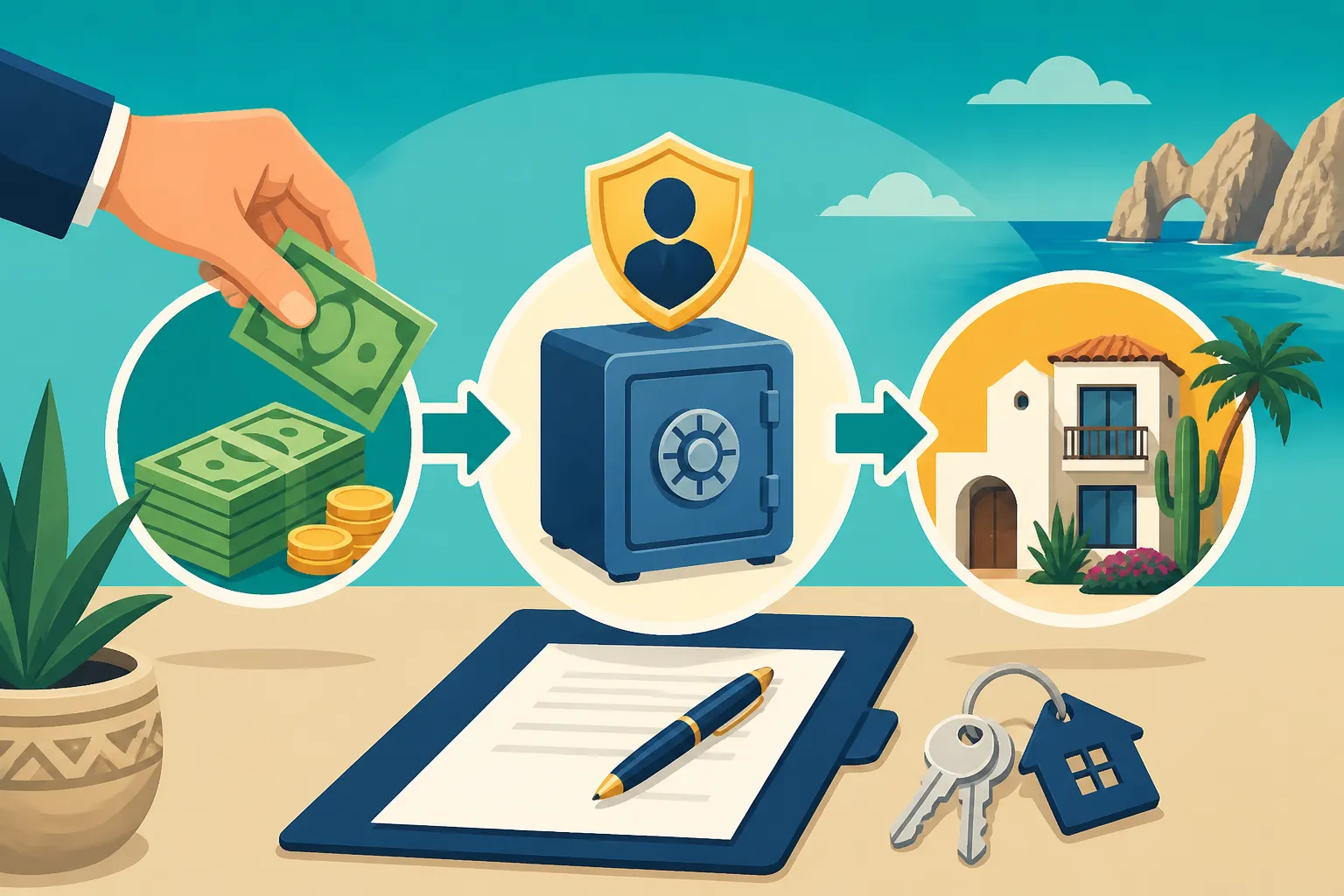
Funding a Fideicomiso: How the Money Actually Moves at Closing
Transferring a large sum of money for a property purchase in Mexico, especially when involving a fideicomiso, can feel like navigating a bureaucratic jungle with a blindfold on. The stress of ensuring your hard-earned funds arrive safely, on time, and without exorbitant fees is a universal expat worry. This guide will walk you through the nitty-gritty of funding your fideicomiso at closing, revealing how the money actually moves and, more importantly, how you can do it efficiently and cost-effectively.
Disclosure: This post may contain affiliate links. We may earn a commission at no extra cost to you if you make a purchase through these links. Read full disclosure.
Demystifying the Fideicomiso in Mexico
Before we dive into the financials, let’s quickly clarify what a fideicomiso is, because understanding its purpose is key to appreciating the funding process. Many expats dream of owning that perfect beachfront villa or a charming colonial home in the restricted zones of Mexico – that’s within 100km of borders or 50km of coastlines. The Mexican constitution, designed to protect national sovereignty, traditionally restricts direct foreign ownership in these areas.
What is a Fideicomiso and Why It's Necessary
A fideicomiso acts as a bank trust, a legal workaround that allows foreigners to securely "hold" property rights in these restricted zones. Think of it as a Mexican bank (the fiduciario) acting as a trustee, holding the legal title of the property on your behalf, while you, the fideicomisario, retain all the rights of ownership – you can sell it, rent it, modify it, and pass it on to your heirs. It’s not a lease; it’s genuine ownership, just structured differently. This system might seem complex at first, but it’s a standard, legally sound procedure. You can learn more about how to set up a fideicomiso to buy property in Mexico in our detailed guide. It's a fundamental part of property ownership for many foreigners.
The Role of the Notario Publico
In Mexico, the Notario Público (Public Notary) is a figure of immense importance, far beyond what a notary public does in many other countries. They are highly skilled attorneys, essentially acting as representatives of the state, ensuring the legality of all property transactions. They conduct thorough due diligence, verify titles, calculate taxes, and oversee the entire closing process, including the movement of funds. They don't just stamp documents; they are the lynchpin that guarantees the validity and security of your investment. Their involvement is why you often transfer funds directly to their designated account or escrow account, which they manage with strict legal oversight, not directly to the seller. They are impartial, legally bound to protect both buyer and seller, and their approval is essential for any property transfer.
The Financial Labyrinth of Mexican Property Transactions
When you're dealing with a property purchase, the amounts involved are substantial, and the stakes are high. Mexico’s banking and financial systems, while robust, can present unique challenges for foreigners accustomed to different processes. It's easy to feel overwhelmed, but understanding these nuances is crucial for a smooth transaction.
Navigating Exchange Rates and Fees
One of the biggest headaches for expats is the currency exchange. You're likely earning in USD, CAD, or EUR, but you need to pay in Mexican Pesos (MXN). The exchange rate you get can significantly impact the final cost of your property. Banks often offer less favorable rates, and hidden fees or inflated spreads can eat into your funds, sometimes by thousands of dollars on a large transaction. It’s not just about the posted rate, but the actual rate you receive after all markups, which can be significantly different. This can be a real frustration when you're trying to budget precisely for your dream home, as a small percentage difference on a large sum translates into a lot of pesos. Understanding currency exchange in Mexico: getting the best rates on pesos is crucial to mitigating this financial drain.
The Challenge of Large International Transfers
Sending large sums of money across borders is never as simple as clicking a button. Traditional banks can impose daily or weekly transfer limits, which can stall your closing process if you need to move a significant amount quickly. Imagine needing to send $200,000 for your fideicomiso, only to find your bank has a $10,000 daily limit – that's 20 days of transfers! The time it takes for funds to clear can also be agonizingly slow, adding unnecessary stress to an already time-sensitive transaction. Imagine your closing date is looming, and your funds are stuck in transit – a common nightmare for many expats. Moreover, there's the anxiety of security. You're sending a life-changing amount of money; you want absolute confidence it will reach its destination safely, without any hiccups or unexpected deductions.
Traditional Methods: A Mixed Bag of Fees and Frustration
For years, expats have relied on a few standard methods to move money for property purchases. While these options are still available, they come with their own set of pros and cons, often leaning towards the latter when it comes to speed and cost-effectiveness for large transactions.
International Wire Transfers Through Banks
This is probably the most common method, primarily because it's what most people are familiar with. You instruct your bank in your home country to wire funds directly to the Notario's account in Mexico. Sounds straightforward, right? In theory, yes. In practice, it can be a slow, expensive affair.
Firstly, traditional bank wire transfers, especially large ones, involve multiple intermediary banks in the SWIFT network, each taking a cut, which means your money effectively gets "nickel-and-dimed" along the way. These fees might be disclosed, but the total sum can be surprisingly high and hard to predict. Secondly, the exchange rate offered by your bank is typically not the mid-market rate, but one with a significant markup, further eroding your funds without you even realizing it. Thirdly, the processing time can vary wildly, sometimes taking 3-5 business days or even longer, especially if there are holidays or banking delays. This unpredictability can be nerve-wracking when your fideicomiso closing date is fixed. For more details on the intricacies, refer to our guide on sending money to and from Mexico: transfers and fees.
Bank Drafts or Cashier's Checks
While less common for property purchases due to the logistical challenges and inherent risks, some expats have attempted to use bank drafts or cashier's checks. The idea is to obtain a check from your home bank, often in USD, and then either hand-deliver it to the Notario or deposit it into a Mexican account. However, this method is fraught with issues. Mexican banks are often hesitant to accept foreign checks for large amounts due to fraud concerns, and when they do, the clearing time can be weeks, if not months, requiring extensive verification processes. You'll also be subject to potentially unfavorable conversion rates upon deposit, and any associated fees for processing foreign checks. Furthermore, carrying a check for a substantial amount of money presents a security risk, especially when traveling internationally. This is rarely a viable or recommended option for a time-sensitive property closing for your fideicomiso.
Wise: The Modern Solution for Cross-Border Property Payments
Now, let's talk about a game-changer that has revolutionized how expats handle large international money transfers: Wise (formerly TransferWise). This platform was built specifically to address the pain points of traditional banking, offering a transparent, fast, and cost-effective way to move money across borders. For funding a fideicomiso, Wise emerges as the clear hero.
Why Wise Stands Out for Large Transfers
Wise operates on a different model than traditional banks. Instead of making a direct international wire transfer that crosses multiple banking systems, Wise uses a localized network of bank accounts. When you send money with Wise, you're essentially sending money to Wise's local account in your home country, and then Wise pays out the equivalent amount from their local account in Mexico. This clever "local-to-local" system bypasses the slow and costly SWIFT networks and reduces the number of intermediary banks, drastically cutting down on fees and transfer times.
This method is particularly beneficial when you're making a payment for a fideicomiso, as it ensures that the significant sum you're sending arrives quickly and with minimal deductions. Wise's commitment to using the mid-market exchange rate – the rate you see on Google – means you get the best possible value for your money, with only a small, transparent fee applied upfront. This transparency allows you to budget accurately and avoid unpleasant surprises. You’ll know exactly how much MXN your Notario will receive before you even click send.
Security and Reliability for Your Investment
When you're moving hundreds of thousands of dollars, security is paramount. Wise is a regulated financial institution in every country it operates in, including Mexico. This means they adhere to strict security protocols and regulatory oversight, giving you peace of mind that your funds are handled safely. They are regulated by entities like the Financial Crimes Enforcement Network (FinCEN) in the US, the Financial Conduct Authority (FCA) in the UK, and operate under the oversight of Mexico's Comisión Nacional Bancaria y de Valores (CNBV) for relevant services. Wise employs bank-level security measures, including two-factor authentication, encrypted transactions, and robust fraud prevention systems, to protect your money and personal data. Many expats use Wise for their routine money transfers, and its reliability scales up beautifully for larger transactions like funding a fideicomiso, making it a trusted choice among the expat community.
Step-by-Step: Funding Your Fideicomiso with Wise
Using Wise for your fideicomiso payment is surprisingly straightforward, designed to be user-friendly even for those who aren't tech-savvy. Here’s a detailed walkthrough of the process, ensuring your funds reach your Notario without a hitch.
Setting Up Your Wise Account and Initial Transfer
First things first, if you don’t have one already, you’ll need to create a Wise account. The registration process is simple and typically involves verifying your identity, which is standard procedure for any financial service handling large sums. You'll usually need to provide photo ID and sometimes proof of address. Once your account is set up, you'll initiate a transfer. You’ll input the amount you want to send in your home currency (e.g., USD), and Wise will immediately show you the exact amount your recipient will receive in MXN, along with the transparent fee and the guaranteed exchange rate. This clarity is invaluable when dealing with a fideicomiso payment where every penny counts, allowing you to confirm the exact funds needed.
Providing Recipient Details (Your Notario)
This is where the Notario Público comes in. Your Notario will provide you with the bank details for their official account where the property funds are to be deposited. This will include the bank name (e.g., BBVA, Banamex, Santander), the account number, and critically, the CLABE number. The CLABE (Clave Bancaria Estandarizada) is Mexico's interbank standardized 18-digit account number, essential for smooth transfers, acting much like a routing number and account number combined. You’ll input these details into Wise, just as you would for any bank transfer. Double-check every digit, as any error can cause significant delays and complications. You might also need to include a reference or memo, often provided by your Notario, to ensure the funds are properly attributed to your specific property transaction – this is vital for their accounting. For more comprehensive information on Mexican banking details, consult our guide on SPEI and CLABE: How Bank Transfers Work in Mexico.
Executing the Transfer and Tracking Funds
Once you've confirmed all the details are accurate, you'll fund your Wise transfer from your home bank account. Wise offers various convenient payment methods, including bank transfers (ACH in the US), debit cards, or even wire transfers for very large sums from your end, typically depositing the funds into their local account. As soon as Wise receives your money, they initiate the payout to the Notario’s Mexican bank account. You'll receive real-time updates via email and through your Wise account, so you can track the progress of your transfer every step of the way. In most cases, these large transfers are completed within 1-2 business days, often faster, ensuring your fideicomiso closing isn't held up by slow banking processes. The ease of tracking and the speed of Wise make it an unparalleled tool for managing significant financial movements.
Key Considerations and Best Practices for Closing Day
Funding your fideicomiso is a significant financial undertaking. Being prepared and proactive can save you immense stress and potential delays, ensuring your dream of owning property in Mexico becomes a reality without unnecessary headaches.
Timing Your Transfer and Communicating with Your Notario
Communication is paramount throughout the entire property purchase process, but especially as closing day approaches. Always coordinate very closely with your Notario Público regarding the exact amount needed for closing (including any adjustments for pro-rated taxes, HOA fees, utility balances, etc.) and the precise timing. They will tell you when they need the funds to arrive by. It's always a good idea to initiate your Wise transfer a few days before the absolute deadline, just to give yourself a buffer for any unforeseen circumstances, though Wise is incredibly fast. Confirm receipt of funds with your Notario once Wise indicates the transfer is complete. Remember, while Wise is quick, Mexican banks here can sometimes be a bit slower to process incoming funds, even if the transfer itself was initiated rapidly. A quick call or email to your Notario to verify receipt is a crucial step for peace of mind.
Understanding Additional Closing Costs
Beyond the property price itself, there are several closing costs associated with a fideicomiso purchase that you absolutely need to budget for. These typically include:
- Acquisition Tax (Impuesto de Adquisición de Inmuebles): Generally 2-5% of the property value, varying by state.
- Notario Fees: Their professional services, usually a percentage of the property value plus VAT (IVA).
- Fideicomiso Setup and Annual Fees: Initial setup fee for the trust (often based on property value), plus ongoing annual maintenance fees to the bank that acts as the fiduciario.
- Appraisal Fees: Required for establishing the property's official value for tax purposes.
- Registration Fees: To register the property under the fideicomiso in the public registry.
- Legal Fees: If you choose to hire an independent attorney for additional representation, which is often a good idea for such a significant investment.
These costs can add up to 5-8% (or even higher) of the purchase price, so factor them into your overall budget from the outset. Many of these smaller payments can also be sent efficiently through Wise directly to the Notario's account, streamlining all your financial movements for the closing. You can get a clearer picture of all expenses in our guide to buying property in Mexico: comprehensive guide for foreign buyers.
Preparing for Potential Language Barriers
While many Notarios in popular expat areas like Puerto Vallarta, San Miguel de Allende, or Mérida might speak English, it's not a guarantee, and their support staff might not. Having basic Spanish phrases related to banking and transactions can be incredibly helpful and show respect for local customs. Phrases like "¿Ha llegado la transferencia?" (Has the transfer arrived?), or "Quiero enviar dinero a esta cuenta" (I want to send money to this account) can go a long way. Consider using a reliable translation app on your phone, or better yet, bringing a Spanish-speaking friend, a trusted expat acquaintance, or a professional translator to your closing appointment for ultimate peace of mind and clarity. Even if your Notario is fluent, misunderstandings can happen, and having someone to clarify complex legal or financial terms can prevent costly mistakes. Check out our tips for overcoming language barriers at the doctor, which also offers useful advice for other formal situations.
Here's a quick comparison of methods for funding your fideicomiso:
| Feature | Traditional Bank Wire (SWIFT) | Wise (formerly TransferWise) |
|---|---|---|
| Exchange Rate | Bank's retail rate (often with significant markup) | Mid-market rate (Google's rate) |
| Fees | Hidden fees, intermediary bank fees, often percentage-based | Low, transparent upfront fee (percentage + small fixed amount) |
| Speed | 3-5+ business days (can be unpredictable, sometimes longer) | 1-2 business days (often faster for MXN, highly predictable) |
| Transparency | Limited visibility on final amount due to hidden fees | Full transparency on exchange rate, fees, and final amount prior to sending |
| Process | Via bank branch or online banking portal (can be clunky) | Online/App, highly user-friendly interface |
| Security | Regulated by banking authorities in respective countries | Regulated by financial authorities in all operating countries (e.g., FinCEN, FCA, CNBV oversight) |
| Ideal For | Those with high trust in traditional banks, less cost-sensitive, not time-critical | Cost-conscious expats, prioritizes speed, transparency, ease of use, reliable for large sums |
By choosing Wise, you're not just moving money; you're gaining control, transparency, and peace of mind during one of the most significant financial transactions of your expat journey. It truly simplifies what can otherwise be a daunting process, allowing you to focus on the excitement of your new home in Mexico rather than the stress of the transfer.
Disclaimer
Please note that while I strive to provide accurate and up-to-date information, financial regulations and immigration laws in Mexico can change. This guide is for informational purposes only and does not constitute legal, financial, or tax advice. Always consult with a qualified Mexican attorney, Notario Público, and financial advisor for personalized guidance regarding your specific situation and property purchase.