How to Plan a Riviera Maya and Yucatán Trip
Planning a trip to the Mexican Caribbean often starts with a dream of turquoise waters but quickly turns into a logistical nightmare of overpriced taxis, confusing bus schedules, and the dreaded "Tulum tax." Most travelers find themselves stuck in a resort bubble, never seeing the colonial beauty of the interior or the hidden cenotes that define this region. This guide provides a veteran’s blueprint for balancing the high-energy Riviera Maya with the soulful, authentic charm of the Yucatán, ensuring you avoid the tourist traps and see the best of both worlds.
Disclosure: This post may contain affiliate links. We may earn a commission at no extra cost to you if you make a purchase through these links. Read full disclosure.
Mapping Out Your Route: The Logistics of the Peninsula
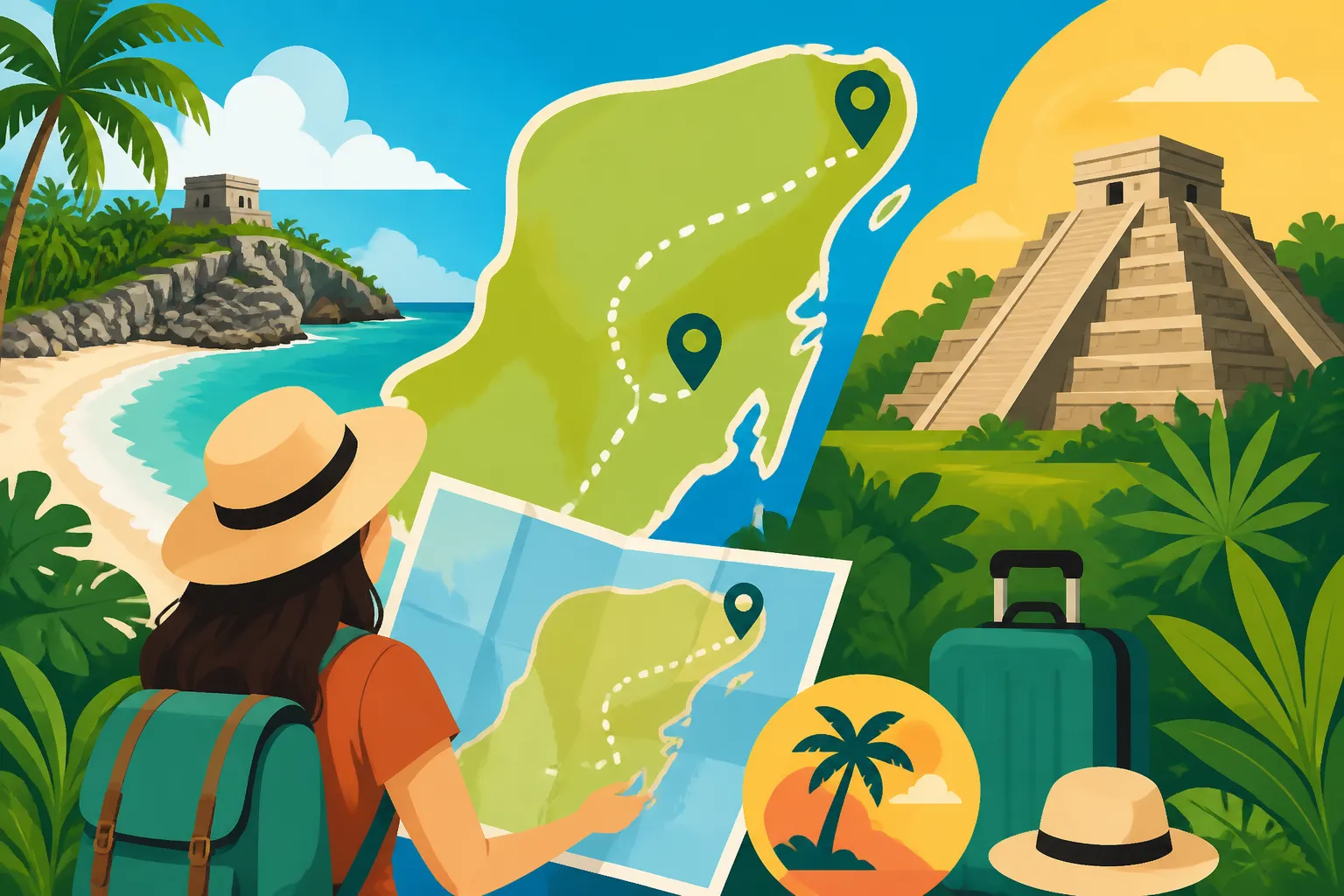
When you first look at a map of the Yucatán Peninsula, it seems manageable. You think, "I'll just zip from Cancún to Mérida in an afternoon." While the roads are generally excellent, the distances are deceiving, and the traffic around the Riviera Maya can be a soul-crushing experience if you don't time it right. The first thing you need to decide is your entry and exit strategy. Most people fly into Cancún International Airport (CUN), but don't overlook the newer Tulum International Airport (TQO) if your heart is set on the southern end of the coast. If you are planning a deep dive into the interior, flying into Mérida (MID) can actually save you hours of driving and put you right in the heart of colonial culture.
Once you land, the biggest hurdle is transportation. In the Riviera Maya, taxis are notoriously expensive and often lack meters, leading to frustrating negotiations. I always tell my friends to look at How to Buy ADO Bus Tickets in Mexico because the ADO system is the gold standard for travel here. These buses are clean, air-conditioned, and incredibly reliable. You can use Busbud to compare schedules and prices ahead of time, which is much better than standing in a humid line at the terminal. If you are staying strictly on the coast, the bus is your best friend. However, if you want to explore the "Puuc Route" or hidden haciendas, a rental car becomes a necessary evil. Just be prepared for the aggressive sales tactics at the rental counters—always insist on seeing the total price including Mexican third-party liability insurance.
Choosing your hubs is the next strategic move. I recommend splitting your time between a coastal "beach hub" and an interior "cultural hub." For the coast, Playa del Carmen is more central, whereas Tulum offers that boho-chic (though increasingly expensive) vibe. For the interior, Valladolid is a stunning, colorful town that serves as the perfect gateway to Chichén Itzá. If you have more time, Mérida is the cultural heavyweight of the peninsula, offering incredible food and nightly free concerts in the plazas. To find the best boutique hotels in these smaller towns, I usually rely on Booking.com to find those hidden gems that aren't part of the massive all-inclusive chains.
| Hub Location | Best For | Atmosphere |
|---|---|---|
| Playa del Carmen | Nightlife & Accessibility | High-energy, walkable, tourist-heavy |
| Tulum | Boho-Chic & Beach Clubs | Trendy, expensive, eco-conscious |
| Valladolid | Authentic Culture & Cenotes | Quiet, colonial, budget-friendly |
| Mérida | Gastronomy & History | Sophisticated, artistic, traditional |
| Akumal | Snorkeling & Families | Relaxed, nature-focused, residential |
The Riviera Maya: Coastal Bliss and Crowd Management
The Riviera Maya stretches from the southern edge of Cancún down to the Sian Ka'an Biosphere Reserve. It is undeniably beautiful, but it has become a victim of its own success. To have a good time here, you need to manage your expectations regarding crowds and the environment. One of the biggest shocks for first-time visitors is the sargassum (seaweed) season, which can turn those postcard-perfect beaches into a brown, smelly mess from April through August. Before you book a beachfront stay, check local seaweed trackers. If the coast is hit hard, that’s your cue to head inland to the cenotes, which are crystal-clear underground rivers that remain unaffected by the ocean’s moods.
Exploring the coast should involve more than just sitting on a lounge chair. You’ll definitely want to check out Best Day Trips From Cancún and the Riviera Maya to see what fits your style. For example, Akumal is famous for swimming with sea turtles, but it has become highly regulated. You must wear a life jacket and hire a guide, which can feel a bit restrictive, but it’s necessary to protect the ecosystem. If you want a more adventurous day, I suggest booking a specialized tour through Viator to visit the Sian Ka'an Biosphere. It’s a UNESCO World Heritage site where you can float down ancient Mayan canals through the mangroves. It’s one of the few places left where the Riviera Maya still feels wild and untouched.
When it comes to dining on the coast, the price tags can rival New York or London, especially in the Tulum Hotel Zone. To save your wallet and your sanity, head into the "pueblo" (the town centers) rather than staying in the tourist zones. This is where you’ll find the real flavor. Look for small taquerías serving al pastor or cochinita pibil. Since you're traveling, you might worry about your stomach. It’s worth reading up on How to Avoid Traveler's Stomach Illness in Mexico so you can enjoy the street food without fear. Generally, if a place is packed with locals and the meat is being carved fresh off the "trompo," you’re in for a treat.
Diving Deep into the Yucatán Interior
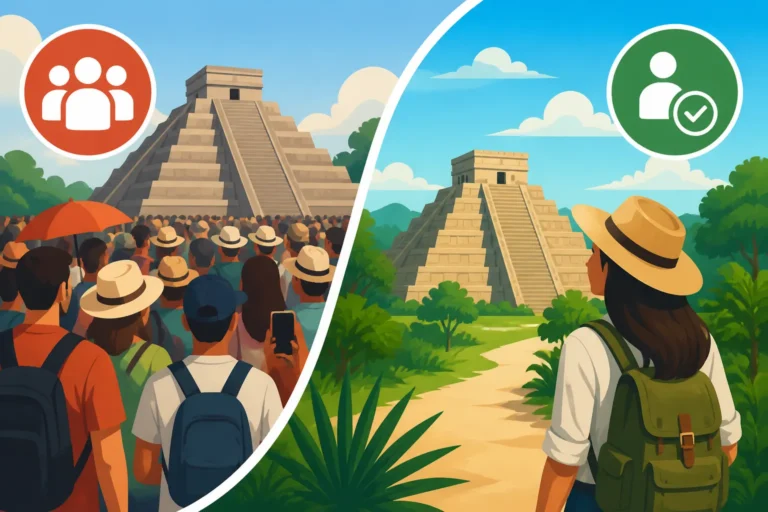
Leaving the coast and crossing into the state of Yucatán is like entering a different country. The humidity stays, but the frantic pace of the Riviera Maya disappears. Your first stop should almost certainly be Valladolid. This "Pueblo Mágico" is built around a central plaza where old men sit on "confidencial" chairs (S-shaped benches) and children play until late at night. It’s incredibly safe and walkable. From here, you are perfectly positioned to see the big ruins. I cannot stress this enough: go early. If you are visiting Chichén Itzá, be at the gate at 7:45 AM. By 11:00 AM, the heat is oppressive and the tour buses from Cancún arrive, turning the site into a sea of umbrellas and selfie sticks.
Beyond the pyramids, the interior is all about the cenotes. There are thousands of them, ranging from wide-open pools that look like lakes to deep, dark caverns with stalactites hanging from the ceiling. You should definitely learn How to Swim in a Cenote in the Yucatán before you go, as there are specific rules about not wearing sunscreen or bug spray to protect the fragile water quality. Some of my favorites near Valladolid are Cenote Oxman, which has a fantastic rope swing, and Cenote Zaci, which is actually located right in the middle of town. They are a fraction of the cost of the "eco-parks" on the coast and offer a far more magical experience.
Finally, make your way to Mérida. As a veteran expat, this is the city that stole my heart. It’s the "White City," known for its limestone buildings and its incredible safety. The food here is distinct from the rest of Mexico. You have to try Sopa de Lima (lime soup) and Papadzules (tortillas filled with egg and covered in pumpkin seed sauce). Mérida is also a great base for visiting What Are Pueblos Mágicos and Which Should You Visit?) like Izamal, which is painted entirely yellow. The city is a hub of activity, and you can often find free cultural performances every night of the week in the main square. It provides the sophisticated, historical balance that the beach towns lack.
Practical Survival Tips: Seasonality, Safety, and Money
Planning a successful trip requires a bit of "boots on the ground" knowledge that you won't find in a glossy brochure. First, let’s talk about money. Mexico is still very much a cash-driven society once you leave the big resorts. You will need pesos for cenote entry fees, small-town restaurants, and tips. While credit cards are accepted in major hubs, the exchange rates offered by shops are usually terrible. I always suggest reading Money for Travel in Mexico: Cash, Cards, and ATMs to understand how to get the best rates without falling victim to high-fee airport ATMs. Always use an ATM attached to a physical bank during daylight hours to avoid skimming devices.
Safety is the question I get asked most often. The Yucatán Peninsula is one of the safest regions in Mexico, but you still need to be "street smart." Petty theft can happen on crowded beaches, and highway police sometimes look for reasons to pull over tourists in rental cars. If you are driving, never keep your passport in the car, and always obey the speed limits—especially when passing through small towns where the "topes" (speed bumps) can literally launch your car into the air if you hit them too fast. For more detailed advice, check out How to Avoid Common Scams in Mexico. Most of the time, the biggest "scam" is just being overcharged for a souvenir or a taxi ride.
Lastly, pay attention to the water. It’s a common rookie mistake to brush your teeth with tap water or swallow some in the shower. Is Tap Water Safe to Drink in Mexico?) is a firm "no" for drinking. Every hotel and Airbnb will provide "garrafones" (large 20-liter jugs) of purified water. Use it for everything. Also, keep in mind the heat. The sun in the Yucatán is much stronger than in the US or Europe. If you are out exploring ruins, you need to double your water intake and wear a wide-brimmed hat. If you follow these small but vital steps, your transition from a tourist to a savvy traveler will be seamless.
Disclaimer
The information provided in this guide is for informational purposes only and reflects the personal experiences and opinions of the author. Travel conditions, safety situations, and local regulations in Mexico can change rapidly. Always check official government travel advisories and local news before your trip. The author and publisher are not responsible for any incidents, losses, or inconveniences encountered during your travels. Any mention of third-party brands is for contextual assistance and does not constitute a legal endorsement.