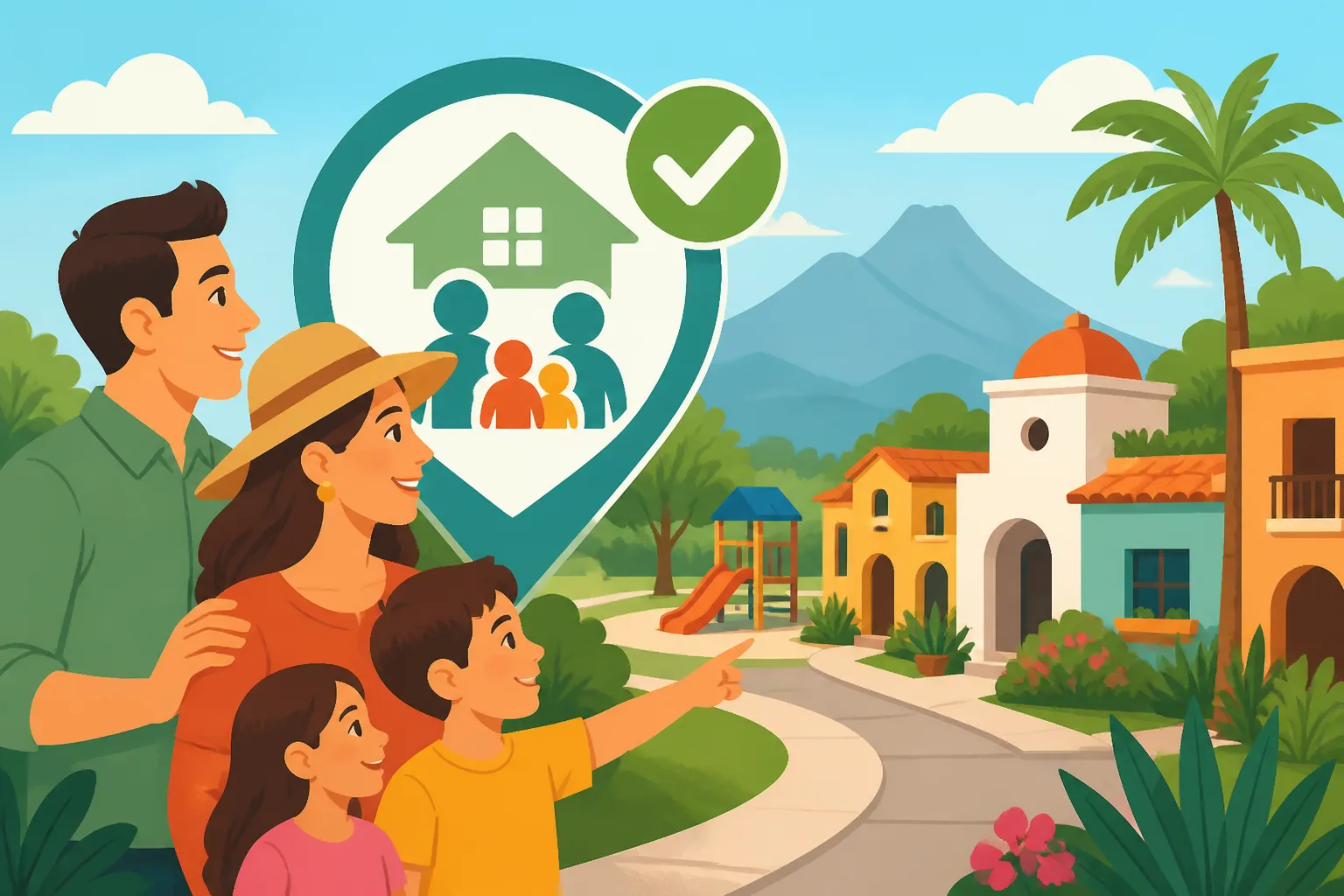
How to Find Family-Friendly Neighborhoods in Mexico
Moving a family to Mexico often means staring at a map and wondering if a designated "park" is a lush playground or just a patch of dusty concrete surrounded by heavy traffic. I remember the paralyzing fear of choosing a school district before I even understood how to pay my water bill. This guide solves the mystery of identifying truly family-friendly neighborhoods that balance safety, high-quality education, and a sense of community.
Disclosure: This post may contain affiliate links. We may earn a commission at no extra cost to you if you make a purchase through these links. Read full disclosure.
Defining Family-Friendly in the Mexican Context
When you start your search, you’ll quickly realize that "family-friendly" in Mexico doesn't always look like the suburban cul-de-sacs of the U.S. or Canada. Here, the concept is deeply rooted in "convivencia"—the act of living together harmoniously. For an expat family, this usually translates to finding a "colonia" (neighborhood) where children can be children, but where parents also have access to the logistical support needed to survive the transition.
One of the first things you will encounter is the "Coto" or "Fraccionamiento." These are gated communities, and they are the gold standard for many expat families, especially in cities like Querétaro or Guadalajara. I spent my first six months in a traditional open neighborhood and, while I loved the charm, the constant noise and lack of a sidewalk for my toddler’s stroller nearly broke me. Moving to a gated community with a "parque central" changed everything. These areas often have private security, controlled access, and shared amenities like pools or clubhouses. It provides a "soft landing" where your kids can ride their bikes without you hovering over their shoulders.
However, safety isn't just about gates and guards. It’s about the presence of other families. When scouting, look for "nido de familias"—neighborhoods where you see grandmothers sitting on porches and kids playing soccer in the street. This organic security, known as "social eyes," is often more effective than any high-tech camera system. You want a place where the local "tiendita" owner knows your kids' names. That level of integration takes time, but choosing a neighborhood with a high density of local families speeds up the process significantly.
Proximity to Top-Tier Schools and Extracurriculars
In Mexico, the school run can be a nightmare if you don't plan your housing around it. Traffic in major hubs like Mexico City or Monterrey is legendary for its ability to turn a 5-kilometer trip into a 90-minute ordeal. Most expat families opt for private "Colegios," which often offer IB (International Baccalaureate) programs or bicultural curricula. Before you sign a lease, you must map out the route to potential schools during peak hours. Schooling in Mexico: Education Options for Expat Children is a vital resource for understanding the different tiers of education available.
Beyond the school gates, consider what your kids do at 4:00 PM. Is there a "club deportivo" nearby? In many Mexican cities, private sports clubs are the heartbeat of social life for families. These clubs offer everything from tennis and swimming to art classes and summer camps. Living within a ten-minute drive of a club like Club Alemán in Mexico City or Club San Javier in Guadalajara can define your entire social circle. It’s where your kids will make friends, and more importantly, where you will meet other parents who can help you navigate the nuances of Family Life in Mexico: A Guide for Expats Moving with Children.
Finally, think about "walkability" in a realistic sense. While many Mexican cities are not walkable in the way European cities are, specific neighborhoods are designed as "15-minute cities." In these areas, you can walk to the pharmacy, the bakery, and a small park without needing to buckle everyone into the car. This is a massive stress-reducer. When you are first arriving and trying to find your bearings, having a local base is essential. I always recommend using a service like Airalo to ensure you have an immediate data connection the moment you land, so you can navigate these streets and check school proximity in real-time without hunting for Wi-Fi.
Top Regions and Specific Neighborhoods for Families
Not all Mexican cities are created equal when it comes to raising a family. While the beach life sounds idyllic, the infrastructure for long-term schooling and pediatric care might be lacking in smaller coastal towns. You need to look for cities that have successfully merged modern amenities with traditional Mexican warmth.
Mexico City: The Urban Family Experience
The capital is a beast, but it contains pockets of absolute tranquility. For families, the debate usually settles between Polanco, Lomas de Chapultepec, and Colonia Del Valle. Polanco is high-end, walkable, and right next to the massive Bosque de Chapultepec, which acts as the city’s lungs. However, it is expensive and can feel a bit "bubble-like." Lomas is where you find the sprawling houses with gardens, favored by diplomats and executive expats, but it is very car-dependent.
My personal "sleeper hit" for families is Colonia Del Valle. It has a high concentration of parks (like Parque Tlacoquemécatl), more reasonable rent than Polanco, and some of the best "Colegios" in the city. The sidewalks are wider, and the neighborhood is filled with "cafeterías" where you’ll see moms and dads working while their kids play nearby. It feels like a real community rather than a tourist destination. If you are just starting your search and want to get a feel for the city's vibe before committing to a long-term lease, staying at a Selina location can provide a great temporary home base where you can meet other remote-working parents and scout these "colonias" in person.
Mérida: The Safety and Growth Leader
Mérida, the capital of Yucatán, consistently ranks as the safest city in Mexico. For families, this is a huge draw. The city is currently expanding northward, and neighborhoods like Altabrisa and Temozón Norte are booming with family-oriented developments. These areas are close to top-tier hospitals and the "super-malls" like La Isla, which feature massive indoor play areas for when the Yucatán heat becomes too much.
What makes Mérida special is the weekend culture. The city center closes down for "Mérida en Domingo," where streets are filled with music and food. Living in the North gives you a modern, safe suburban life, but you are only 20 minutes away from the beach at Progreso or the cultural heart of the city. It’s a balance that’s hard to beat. However, the heat is a real factor. When looking at homes here, your utility budget will be dominated by AC. Make sure you read up on Home Utilities in Mexico: Setting Up Electricity, Water, Gas, and Internet to understand how to manage those costs effectively.
Lake Chapala and Ajijic: Multi-Generational Community
If you are looking for a slower pace of life, the Lake Chapala area is home to one of the largest expat communities in the world. While often thought of as a retirement haven, it is increasingly popular with "slow-mad" families. The climate is "eternal spring," and the community is incredibly welcoming. Here, the "neighborhood" is less about gated walls and more about the "Malecón" (boardwalk) where everyone congregates in the evenings. Living at Lake Chapala and Ajijic: Retiree Guide offers a great overview of the area, but much of the infrastructure mentioned—like the high-quality English-speaking doctors—applies perfectly to families as well.
| City | Recommended Neighborhood | Key Family Amenity | Vibe |
|---|---|---|---|
| Mexico City | Colonia Del Valle | High density of parks & schools | Traditional Urban |
| Mérida | Temozón Norte | Near top hospitals & malls | Modern Suburban |
| Guadalajara | Puerta de Hierro | High-end security & luxury clubs | Elite Gated |
| Querétaro | Juriquilla | Golf courses & international schools | University Town |
| Puebla | Angelópolis | Linear parks & modern infrastructure | Tech & Family |
Logistics and the "First 30 Days" Strategy
Finding the neighborhood is only half the battle; getting your family moved into it is where the real stress begins. I’ve seen many families stall because the sheer volume of logistics feels insurmountable. You aren't just moving boxes; you are moving a life.
When it comes to the physical move, don't try to "DIY" an international relocation with a family in tow. It is the fastest way to burn out before you even arrive. Using a platform like Sirelo to compare international moving companies can save you thousands of dollars and, more importantly, weeks of headaches. They help you find movers who understand the "Menaje de Casa" (the tax-exempt import of household goods for residents). Navigating customs with a shipping container full of your kids' toys and your familiar furniture is a legal minefield. Having a pro handle it means you can focus on getting the kids settled.
In your first month, focus on "hyper-localizing." Once you’ve picked a neighborhood, join the local Facebook and WhatsApp groups. In Mexico, WhatsApp is the "source of truth." There are groups for everything: "Vecinos" (neighbors), "Mamás de [Neighborhood Name]," and even groups for the local "tianguis" (roving markets). These groups are where you find out which pediatrician actually answers their phone at 2:00 AM and which "repa" (repairman) is honest.
Don't forget the administrative side of settling in. You'll need to secure your residency cards to access many local services. The process of How to Get a CURP as a Foreigner: The Mexican ID Number Explained should be one of your first priorities, as this number is required for everything from opening a bank account to registering your children for sports leagues. It can be a bureaucratic "trámite" (procedure) that requires patience, but it is the key to unlocking a stable life in your new neighborhood.
Assessing Safety Beyond the Statistics
I always tell new expats that safety in Mexico is about "street smarts" and location. When you are visiting potential neighborhoods, do the "Night Test." Visit the park at 8:00 PM on a Tuesday. Are there families there? Is it well-lit? In neighborhoods like San Pedro Garza García in Monterrey, you’ll see people jogging at midnight. In other areas, the streets might go silent at sunset.
Pay attention to the "Protección Civil" signs. In cities like Mexico City, family-friendly also means being in a seismically stable zone. Neighborhoods built on volcanic rock (the "Suelo Firme") like San Ángel or Coyoacán are generally safer during earthquakes than those built on the old lakebed like Roma or Condesa. This is a detail many families overlook until the first tremor hits. For more on this, check out Earthquake Preparedness: Safety Tips for Expats in Seismic Zones.
Final Thoughts on the Search
Finding the perfect spot for your family in Mexico isn't a weekend project. It’s a process of elimination. Start with the "big rocks"—safety, schools, and hospitals—and then look for the "sand"—the local parks, the smell of fresh tortillas from the "tortillería" on the corner, and the friendliness of the neighbors.
Mexico is an incredibly "pro-kid" culture. In your new neighborhood, don't be surprised if the waiter at the restaurant offers to walk your fussy baby around so you can finish your meal, or if your neighbors invite your children to a "piñata" party within a week of moving in. Once you find the right neighborhood, you won't just have a place to live; you'll have a village to help you raise your children.
If you're still feeling overwhelmed by the options, take a look at our Best Places to Live in Mexico for Expats (2027 Edition) for a broader comparison of cities. The journey is long, but the reward—a lifestyle where family time is prioritized and the community feels like family—is worth every "trámite" and traffic jam.
Disclaimer
This guide is intended for informational purposes only. While I have lived in Mexico for years and researched these neighborhoods extensively, local conditions, safety levels, and school reputations can change rapidly. Always conduct your own on-the-ground due diligence, consult with local legal and real estate professionals, and check current travel advisories before making a move. Your family's specific needs and comfort levels are unique, and what works for one expat may not work for another.