Facturas and Electronic Invoicing (CFDI) in Mexico
You are standing at the checkout of a Home Depot in Querétaro or perhaps a local car dealership, and the cashier asks you that one word that strikes fear into the heart of every new arrival: "Factura?" I remember my first month in Mexico, nodding along and saying "No, gracias," only to realize months later I had essentially thrown money away and complicated my future residency path. This guide breaks down exactly what a Factura (CFDI) is, why the Mexican tax authorities are so obsessed with them, and how you can master the system to protect your wallet.
Disclosure: This post may contain affiliate links. We may earn a commission at no extra cost to you if you make a purchase through these links. Read full disclosure.
What Exactly is a Factura or CFDI in Mexico
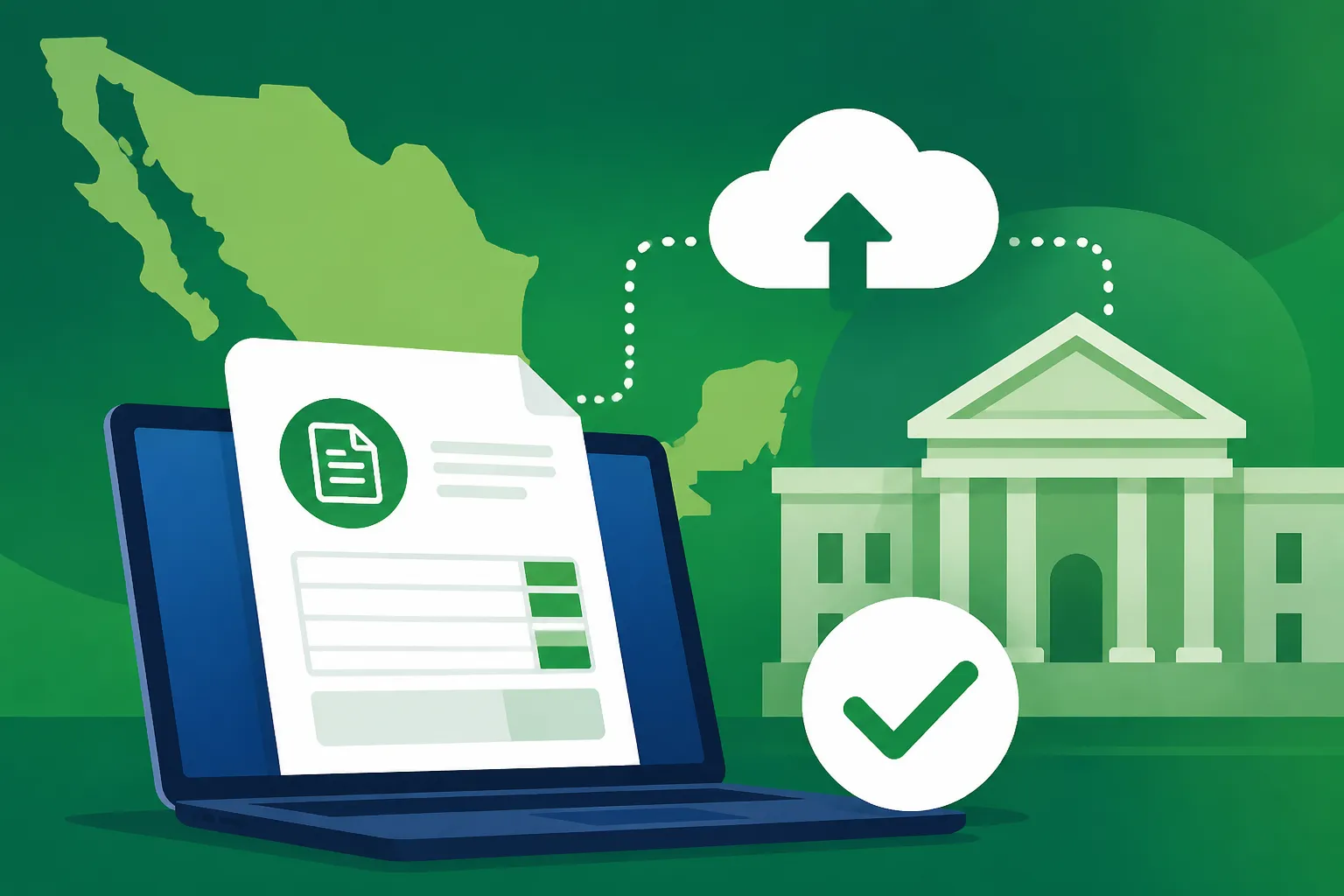
In most countries, a receipt is just a piece of paper that proves you bought something. In Mexico, the "ticket" you get at the grocery store is almost worthless for official purposes. A real invoice is known as a Factura, or more technically, a CFDI (Comprobante Fiscal Digital por Internet). This is a digital tax receipt that is "stamped" by the Mexican Tax Administration Service (SAT) in real-time. It is the only document the government recognizes for tax deductions, proving business expenses, or establishing the legal ownership of high-value items like vehicles.
The Move to CFDI 4.0
Mexico is a global leader in digital invoicing, which is a polite way of saying the SAT has a very high-tech eye on every peso that moves. As of 2023, the country transitioned fully to the CFDI 4.0 standard. This wasn't just a software update; it was a major shift that required every taxpayer to provide their exact tax name, postal code, and tax regime as they appear on their official tax ID. If you are living here as a resident, you will quickly learn that The RFC and SAT: Mexico's Tax System for Foreigners is the foundation of your financial life. Without an RFC (Registro Federal de Contribuyentes), you cannot even request a proper factura in your own name.
Why the SAT Cares So Much
The reason the system is so rigid is to prevent tax evasion. Because every CFDI is registered with the SAT the moment it is issued, the government knows exactly how much a business has earned and how much a consumer has spent. For the expat, this means the days of "off-the-books" transactions for major items are largely over if you want to stay legal. Understanding VAT (IVA) in Mexico: What You Pay is crucial here because the factura will clearly break down the 16% tax you are paying, which is often a requirement if you plan to claim those expenses back later.
The Role of the Constancia de Situación Fiscal
To get a factura under the current 4.0 rules, most businesses will ask for your "Constancia." This is a document that proves your current tax status. I always keep a PDF version of mine on my phone and a printed copy in my glove box. If you don't have this yet, you'll need to learn How to Get an RFC in Mexico and then download your certificate from the SAT portal. Without the exact data from this document—down to the capitalization of your name—the vendor’s system will reject the invoice, and you’ll be left with a useless paper receipt.
Why Expats and Residents Absolutely Need Facturas
You might think that if you aren't running a business, you don't need to worry about electronic invoicing. This is a common and expensive mistake. Even if you are a retiree or a remote worker, there are several scenarios where a simple receipt won't cut it. For example, if you ever decide to sell a car you bought in Mexico, the buyer (especially if it’s a dealership) will demand the original factura. In Mexico, the factura is the title of the car. If you lost it or never got one, you are in for a world of bureaucratic pain.
Deducting Personal Expenses
For those who have become tax residents, requesting facturas for specific "personal deductions" can significantly lower your year-end tax bill. This includes things like medical fees, dental work, psychologists, and even school tuition for your children. However, the SAT is strict: these must be paid via electronic means (credit card, debit card, or wire transfer) and you must have a valid CFDI. If you pay your doctor in cash and get a paper receipt, that expense is invisible to the tax man. This is one of the key points often discussed when Filing Taxes in Mexico as a Foreigner.
Proving Asset Value for Capital Gains
If you own property in Mexico, facturas are your best friend when it comes time to sell. Any capital improvements you make to your home—renovations, a new pool, or even a major solar installation—can be used to offset your capital gains tax when you sell the house. But here’s the catch: you must have a CFDI for the materials and the labor. If you pay a local contractor cash and don't get a factura, you can’t deduct those costs later, which could cost you thousands of dollars in extra taxes. This is a major factor in Income Tax (ISR) in Mexico: How It Works.
Business and Freelance Requirements
If you are one of the many expats Starting a Business in Mexico: Financial and Legal Basics for Foreigners, facturas are the oxygen of your enterprise. You cannot deduct a single expense—rent, internet, office supplies—without a CFDI. Furthermore, if you are invoicing clients within Mexico, you must be the one issuing the facturas. This requires a digital signature (e.firma) and specialized software or the use of the SAT’s free (but often frustrating) online portal. Using a service like Taxes for Expats can help you navigate how these local Mexican requirements interact with your tax filing obligations back home, especially for Americans.
How to Request a Factura Like a Local
Requesting a factura is a ritual. It usually happens at a separate desk or through an online portal after you’ve already paid. Don't be surprised if the cashier at a restaurant asks "Factura?" before they even bring the check. If you say yes, they will often ask for your "datos" (data). This is why having your Constancia ready is vital. If you are managing your money via Wise to pay for local services, ensure the transfer details align with the requirements the vendor needs to generate the invoice.
The Required Information
When you ask for a factura, you will need to provide the following four pieces of information:
- Your full name (exactly as it appears on your tax ID).
- Your RFC number.
- Your Tax Identity Postal Code (where you are registered with the SAT).
- The "Uso de CFDI" (the purpose of the invoice).
The "Uso de CFDI" is a code that tells the SAT what the expense is for. For most expats buying general goods, the code is G03 (Gastos en general). If you are paying a doctor, it might be D01. If you get this code wrong, the invoice might not be deductible, so it is always worth checking with an accountant if you are making a large purchase.
Common Pitfalls at the Point of Sale
The most frustrating part of the process is the "same month" rule. Most businesses in Mexico will not issue a factura for a purchase made in a previous month. If you buy a refrigerator on May 31st and try to get a factura on June 1st, they will likely tell you it's impossible because they have already "closed the month" for tax purposes. Always request your factura immediately. Some large retailers like Walmart or Costco allow you to do it online, but you usually only have 24 to 72 hours from the time of purchase to enter your ticket details into their website.
Managing Digital Files
Once a factura is issued, you will receive two files: an XML and a PDF. The PDF is for your eyes, but the XML is the actual legal document. If you are using a tax professional or a service like Taxes for Expats, they will need the XML files to properly file your returns. Never delete the XML files! I recommend creating a dedicated folder in your email or a cloud drive specifically for "Facturas [Year]" to keep everything organized.
| Document Type | Purpose | SAT Recognition | Recommended Action |
|---|---|---|---|
| Ticket / Simple Receipt | Proof of payment for your records | None (Non-deductible) | Keep for returns/warranties only |
| PDF Factura | Human-readable version of the invoice | Secondary | Store for easy reference |
| XML File | The official legal tax document | Absolute | Must be provided to accountants |
| Constancia | Proof of your tax status | Mandatory for issuance | Keep a copy on your smartphone |
Issuing Facturas as a Freelancer or Business Owner
If you’ve graduated from being a consumer to a provider of services, you’ve entered the world of "expedición de facturas." This is where things get serious. To issue a factura, you must be registered under a specific tax regime. Many expats find success with the RESICO (Simplified Trust Regime), which offers very low tax rates but requires perfect compliance with How to Issue a Factura (CFDI) in Mexico.
The SAT Portal vs. Third-Party Software
The SAT provides a free tool for issuing invoices, but it is notoriously buggy and entirely in Spanish. If you are only issuing one or two invoices a month, you can probably struggle through it. However, if you have a high volume of clients, most expats invest in a "PAC" (Authorized Certification Provider). These are private software companies that offer much more user-friendly interfaces for a small monthly fee. Regardless of the tool, you will need to upload your "Sellos Digitales" (Digital Seals), which are different from your personal e.firma.
Understanding Retentions
When you issue a factura to a Mexican corporation (Persona Moral), they are often required by law to "retain" a portion of your Income Tax (ISR) and VAT (IVA). This means you won't receive the full amount of the invoice in your bank account; the company pays that portion directly to the SAT on your behalf. This was a massive shock to me the first time I invoiced a local company. Understanding these retentions is a vital part of Managing Your Money in Mexico: Budgeting, Saving, and Currency Tips.
Payment Methods and Wise
The SAT tracks how an invoice was paid. On every factura you issue, you must specify the "Forma de Pago" (e.g., 03 for transfer, 04 for credit card) and the "Método de Pago." If you haven't been paid yet, you use PPD (Pago en Parcialidades o Diferido). Once the client pays you, you are legally required to issue a second document called a "Complemento de Pago" (Payment Supplement). If you are receiving international payments through Wise, make sure you are documenting the conversion to pesos correctly so your accounting matches your bank statements.
Factura Etiquette and Best Practices
In Mexico, the financial system moves on a foundation of "confianza" (trust) but is verified by technology. There is a certain etiquette to requesting and issuing facturas that will make your life much easier. For example, if you are working with a local professional, they might appreciate it if you have your tax data ready in a simple text format that they can copy and paste, rather than a blurry photo of a document.
Timing and the "Same Month" Rule
As mentioned earlier, timing is everything. If you are an expat who travels frequently, don't wait until you get back from a trip to handle your facturas. If the month flips, you lose the deduction. This is especially important for Healthcare Costs in Mexico: Doctor Visits, Hospital Stays, and Surgery Expenses because medical facturas are one of the few things that can drastically change your tax liability. I have seen expats lose thousands in potential deductions simply because they forgot to ask for their CFDI before the 30th of the month.
Correcting Errors (Cancelación)
Errors happen. Maybe the postal code was wrong, or the amount was incorrect. Under the new rules, canceling a factura is a formal process. The "issuer" must request a cancellation, and in many cases, the "receiver" must log into the SAT portal to "accept" the cancellation. If you are working with an international tax firm like Taxes for Expats, they can help you understand how these canceled invoices might affect your reporting of foreign income.
Avoiding "Factura Buying" Scams
A word of warning: you might encounter people offering to "sell" you facturas for a fee to help you lower your taxes. Avoid this at all costs. The SAT has become incredibly efficient at identifying "EFOS" (entities that simulate operations). If you are caught using fake facturas, the penalties are severe, including potential criminal charges. Stick to legitimate expenses and always ensure your invoices represent real goods or services. Using a reliable transfer service like Wise ensures that your "paper trail" matches your digital invoices perfectly.
Summary of the Factura Lifecycle
Navigating the Mexican financial landscape can feel like a full-time job at first, but once you understand the rhythm of the CFDI system, it becomes second nature. Always carry your tax info, always pay electronically for anything you want to deduct, and never let a month end without checking that your digital folders are full of the necessary XML files. Whether you are buying a coffee or a condo, the factura is your primary tool for financial self-defense in Mexico.
- Transaction: You pay for a good or service via card or transfer.
- Request: You provide your RFC, Name, CP, and Uso de CFDI to the vendor.
- Issuance: The vendor generates the CFDI and it is stamped by the SAT.
- Receipt: You receive the PDF and XML via email (or download them from a portal).
- Verification: You check that the details are correct.
- Accounting: You or your accountant uses the XML to file your monthly or annual declarations.
Disclaimer
This article is for informational purposes only and does not constitute professional tax, legal, or financial advice. Mexican tax laws, including CFDI requirements, are subject to frequent changes by the SAT. Always consult with a qualified Mexican accountant (contador) or a specialized expat tax service to ensure compliance with current regulations and your specific financial situation.