Getting Paid: How Salaries Are Dispensed (Bank Deposit vs Cash) in Mexico
Nothing says "Welcome to Mexico" like the sheer confusion of trying to figure out why your paycheck hasn't hit your account on a Friday afternoon, only to realize paydays here follow a very different rhythm. I still remember standing in a bank line for an hour during my first month, sweating through my shirt, just to realize my "nomina" account wasn't even active yet. This guide breaks down exactly how salaries are dispensed in Mexico, from the digital precision of bank deposits to the old-school reality of cash envelopes, so you never have to guess when or how your money is arriving.
Disclosure: This post may contain affiliate links. We may earn a commission at no extra cost to you if you make a purchase through these links. Read full disclosure.
Understanding the Quincena Culture
In many Western countries, you might be used to getting paid every week or every two weeks (bi-weekly). In Mexico, the heart of the financial calendar beats to the "quincena." This refers to a semi-monthly payment schedule where employees are paid on the 15th and the last day of the month (the 30th or 31st). If you are Working in Mexico: Job Market, Work Culture, and Opportunities for Foreigners, this is the first cultural adjustment you will need to make regarding your finances.
The 15th and the 30th are not just dates on a calendar; they are cultural phenomena. On these days, restaurants are packed, grocery stores have longer lines, and ATMs often run out of cash by the evening. If a payday falls on a Sunday, most companies will pay you on the Friday before. However, the timing can be precise down to the minute, and seeing your balance update is the highlight of every Mexican worker’s month. This cycle dictates how people budget, pay their rent, and plan their social lives. It is a rigid system that requires you to be much more mindful of your "mid-month" dip, as the gap between the 15th and the end of the month can feel significantly longer than a standard two-week break.
Budgeting for this requires a bit of a mindset shift. If you are used to four paychecks a month or a steady every-other-Friday deposit, the variation in days between the 15th and the 30th can catch you off guard. To help communicate these nuances with your HR department or local colleagues, using a resource like SpanishPod101 can be incredibly helpful for learning the specific financial vocabulary needed to navigate "la quincena."
Bank Deposits and the Nomina Account
For the vast majority of formal jobs in Mexico, you will be paid via a direct bank transfer into a specialized account known as a cuenta de nómina. This is not just a standard savings account; it is a payroll account specifically linked to your employer’s banking system. One of the quirks of the Mexican system is that the employer often dictates which bank you must use. If your company uses BBVA, they will likely ask you to open a BBVA account to facilitate the "dispersión de nómina" (payroll distribution).
While it is legally possible to request your pay be sent to a different bank, many expats find it much easier to simply go with the employer's preferred institution to avoid delays. Opening these accounts can be a bit of a bureaucratic hurdle, often requiring your residency card, proof of address (comprobante de domicilio), and your RFC. For a deeper look at this process, you should check out How to Open a Bank Account in Mexico: Requirements and Tips. Once the account is set up, the process is usually seamless, with funds appearing instantly on the morning of the 15th and 30th.
Another critical component of the bank deposit system is the "CFDI" (Comprobante Fiscal Digital por Internet). These are your digital pay stubs. In Mexico, every peso paid in a formal salary must be backed by an electronic invoice sent to the SAT (the Mexican tax authority). You will usually receive an email twice a month containing a PDF version of your pay stub and an XML file. Do not ignore these; they are your primary proof of income if you ever want to apply for a loan or prove your financial solvency for residency renewals. If you find the technical language in these documents confusing, SpanishPod101 offers great lessons on formal and business Spanish that can help you decode your deductions and bonuses.
Getting Paid in Cash: The Informal and Mixed Reality
Despite the push toward a digital economy, cash is still king in many sectors of the Mexican economy. You might find yourself being paid in cash if you are working for a small startup, a family-owned business, or if you are Teaching English in Mexico: Comprehensive Guide to Jobs and Qualifications at a smaller, local language school. While receiving a "sobre" (envelope) full of pesos feels very old-school and convenient, it comes with significant caveats that every expat needs to understand.
Cash payments often fall into the "informal" category. This means the employer might not be reporting your full salary to the SAT or paying into the Public Healthcare in Mexico: IMSS and IMSS Bienestar Explained for Expats system. While this might mean more "take-home" pay in the short term because taxes aren't being withheld, it leaves you without a legal paper trail. If there is a dispute over unpaid wages, proving your salary without bank records or CFDIs is an uphill battle. Furthermore, if you plan on staying in Mexico long-term, having a recorded history of formal employment is vital for your legal standing.
Sometimes, companies use a "mixed" model (esquema mixto). In this scenario, they pay you a portion of your salary via bank deposit (usually the minimum wage or a low base) and the rest in cash or as "bonuses" to lower their tax burden. Be very careful with this. While common, it can affect your "Aguinaldo" (Christmas bonus) and your severance pay, both of which are calculated based on your registered daily wage. Understanding Labor Laws in Mexico: Understanding Employee Rights and Benefits is essential before agreeing to any cash-heavy payment structure.
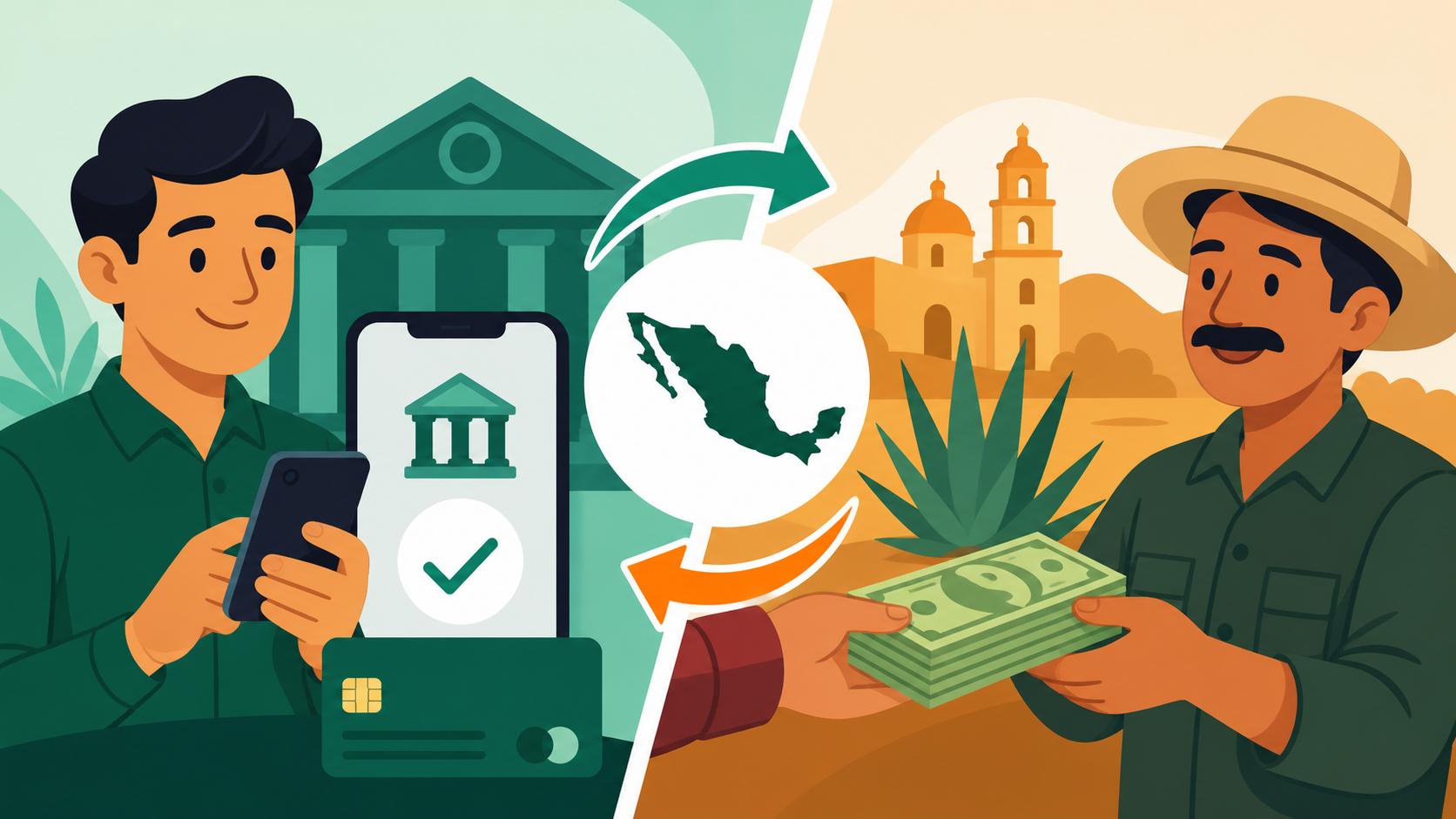
| Payment Method | Pros | Cons |
|---|---|---|
| Bank Deposit (Nómina) | Legally tracked, easy to prove income, automatic tax filing, builds banking history. | Requires RFC and residency, bank queues on paydays can be long. |
| Cash (Efectivo) | Immediate access to funds, no bank fees, often involves less paperwork. | No proof of income, no social security contributions, high risk of theft. |
| Mixed (Deposit + Cash) | Higher immediate take-home pay. | Lower "Aguinaldo" and benefits, potential legal/tax issues with the SAT. |
| Electronic Transfer (SPEI) | Fast and flexible, can use any bank. | May not be classified as "nómina," potentially affecting your credit score. |
The Essential Role of the RFC and CURP
You cannot talk about getting paid in Mexico without talking about the two most important strings of characters in your life: the CURP and the RFC. The CURP (Clave Única de Registro de Población) is your population registry string, and the RFC (Registro Federal de Contribuyentes) is your tax ID. Without these, no legitimate company can put you on a formal payroll.
The RFC is particularly tricky. In recent years, the SAT has tightened requirements, and you now often need a "Constancia de Situación Fiscal" (a document showing your current tax status) to give to your HR department before they can issue your first paycheck. This document ensures that the name and postal code on your payroll record exactly match the SAT’s database. If there is even a small typo, the system will reject the payment. I’ve seen expats go weeks without pay because their middle name was misspelled on their tax ID. To avoid this, make sure you know How to Get a CURP as a Foreigner: The Mexican ID Number Explained as one of your first steps upon arrival.
If you are struggling to navigate the SAT website or make an appointment—which can be a nightmare—learning some specific conversational phrases from SpanishPod101 can help you talk to a "gestor" (a professional who helps with red tape) or handle the appointment yourself. Knowing how to ask for your "RFC con homoclave" is a small step that saves hours of frustration. For those who are self-employed, you'll need to handle your own invoicing, which makes Taxes in Mexico for Expats: A Complete Guide to Income Tax and More a must-read to ensure you're getting paid legally and keeping the tax man happy.
Bonuses and Deductions: What Stays and What Goes
When you look at your first pay stub in Mexico, you might be shocked by the difference between your "Sueldo Bruto" (gross salary) and "Sueldo Neto" (take-home pay). Mexico has a progressive income tax system, and deductions for the IMSS (social security) are mandatory for formal employees. These deductions are taken directly from your bank deposit, so the money that hits your account is yours to keep.
However, the Mexican system also includes some "extra" payments that are legally mandated. The most famous is the Aguinaldo. By law, every employee is entitled to a Christmas bonus equivalent to at least 15 days of salary, paid before December 20th. For many expats, this is a delightful surprise, but it is a core part of the annual compensation package. There is also PTU (Participación de los Trabajadores en las Utilidades), which is profit sharing. If the company made a profit the previous year, a portion of that is distributed to employees in May or June.
Understanding these cycles is vital for your financial health. If you are Banking in Mexico: Complete Guide for Foreigners, you will see your balance fluctuate significantly during these bonus months. It is also important to note that if you resign or are let go, you are entitled to a "finiquito," which is a pro-rated payment of your Aguinaldo, vacations, and other benefits. Always double-check these calculations; many employers "forget" to include the full amount unless you ask for it in clear, firm Spanish.
Practical Tips for Your First Payday
Your first payday in Mexico will likely involve a bit of a learning curve. If you are being paid via bank deposit, don't be surprised if the HR department asks you to sign a physical copy of your payroll receipt (nómina) even though everything is digital. This is a legacy practice used for internal auditing.
If you are being paid in cash, try to avoid carrying large sums of money on the 15th or the 30th. Because everyone knows it’s payday, these are the days when petty crime in crowded areas can spike. Go straight home or to a secure ATM to deposit the cash into your own account. Also, keep a personal log of every payment you receive. Whether it’s a screenshot of a bank transfer or a photo of a cash receipt, having a backup record is vital for Managing Your Money in Mexico: Budgeting, Saving, and Currency Tips.
Finally, don't be afraid to ask questions. The "quincena" system and the way taxes are handled can be opaque. Using resources like SpanishPod101 to brush up on your business vocabulary will allow you to advocate for yourself. If your pay looks wrong, you need to be able to ask HR, "¿Podría explicarme las deducciones en mi recibo de nómina?" (Could you explain the deductions on my pay stub?). Being informed is your best defense against administrative errors.
Disclaimer
The information provided in this article is for informational purposes only and does not constitute legal, financial, or tax advice. Labor laws and tax regulations in Mexico are subject to change, and their application can vary based on individual circumstances and residency status. We recommend consulting with a qualified Mexican accountant or labor attorney to address your specific situation. Internal links are provided for further context and were accurate at the time of publication.