Is a Degree from a Mexican University Recognized Abroad?
One of the biggest anxieties for any expat considering a move to Mexico is the fear that their hard-earned credentials will suddenly become "invisible" once they cross back over an international border. I remember sitting in a small café in Coyoacán, staring at my enrollment forms and wondering if I was essentially buying a very expensive piece of wall art rather than a career-advancing degree. This guide is designed to dismantle that fear and provide a realistic, boots-on-the-ground look at how Mexican degrees are perceived globally.
Disclosure: This post may contain affiliate links. We may earn a commission at no extra cost to you if you make a purchase through these links. Read full disclosure.
The Global Standing of Mexican Higher Education
When you start looking into Studying in Mexico: Guide for International Students (Universities and Programs), you’ll quickly realize that the Mexican higher education system is far more robust than the Hollywood stereotypes might suggest. However, recognition isn't a "yes or no" answer; it's a "how and where" conversation. In the academic world, Mexico is home to some of the most prestigious institutions in Latin America, which are held in high regard by international ranking bodies like QS and Times Higher Education.
Understanding Accreditation and RVOE
The most critical thing you need to know—and something I wish someone had shouted at me before I signed my first tuition check—is the term RVOE (Reconocimiento de Validez Oficial de Estudios). This is the official recognition from the Mexican Secretariat of Public Education (SEP). If a program doesn't have an RVOE, it is essentially a private course with no legal standing in Mexico or abroad. When you apply for University Admissions in Mexico: How International Students Can Apply, your first question should always be about the RVOE status of your specific major. Without this, you will find it nearly impossible to have your degree "homologated" or recognized in the US, Canada, or Europe.
Top-Tier Institutions and Global Rankings
Not all universities are created equal. Schools like the National Autonomous University of Mexico (UNAM) and the Monterrey Institute of Technology and Higher Education (Tec de Monterrey) are the heavy hitters. These institutions have international partnerships that make degree recognition significantly smoother. If you graduate from a top-tier school, an employer in London or New York is much more likely to recognize the brand name. While you're studying at these high-pressure institutions, you might find that using a resource like SpanishPod101 helps you bridge the gap between "classroom Spanish" and the high-level academic Spanish required to actually pass your exams.
The Reality of Degree Recognition in the US, Canada, and Europe
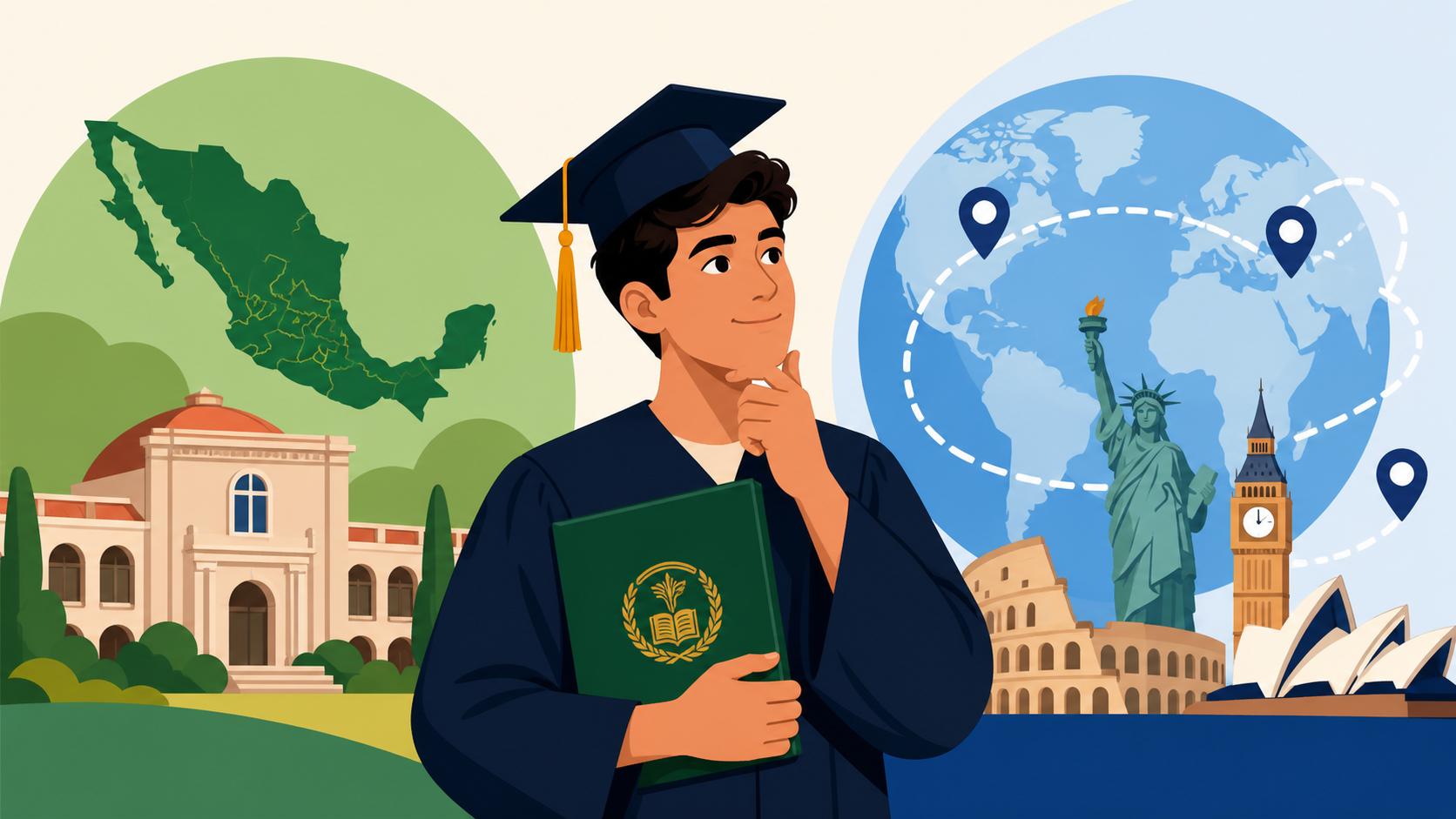
The most common question I get from fellow expats is whether they can use a Mexican degree to get a job back in their home country. The answer depends heavily on the industry. For "non-regulated" professions—think marketing, graphic design, business administration, or software development—a degree from a recognized Mexican university is usually accepted as the equivalent of a Bachelor’s or Master’s degree without much fuss. Employers in these fields care more about your skills and your ability to navigate Mexican Work Culture: Business Etiquette and Workplace Norms than the specific country on your diploma.
The Credential Evaluation Process
If you are moving back to the US or Canada, you will likely need to go through a credential evaluation service like WES (World Education Services) or ECE. These agencies take your Mexican transcripts and "translate" them into the local equivalent. They look at the credit hours, the curriculum, and the university’s standing. In my experience, most degrees from RVOE-accredited Mexican universities are evaluated as being equivalent to a four-year degree from a regionally accredited US institution. This is a vital step if you plan on Recognizing Foreign Qualifications: Using Your Professional License in Mexico in reverse when you return home.
Regulated vs. Non-Regulated Professions
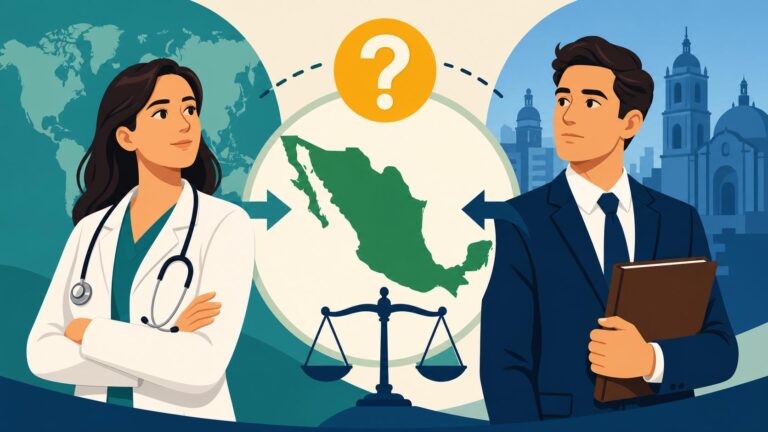
This is where the "I've-been-there" reality check gets a bit tough. If you are studying to be a doctor, a lawyer, or an architect, recognition is much more difficult. These are "regulated" professions, meaning the degree is only the first step. For example, a medical degree from Mexico is highly respected, but to practice in the US, you still have to pass the USMLE exams and complete a residency. Similarly, a law degree in Mexico is based on Civil Law, whereas the US and Canada (except Quebec) use Common Law. If your goal is to practice law in Chicago, a degree from Mexico City might not be the most direct path. If you are in one of these fields, you must check the specific "equivalency" requirements of the board in the country where you intend to work.
Practical Steps to Ensure Your Mexican Degree Travels With You
Bureaucracy in Mexico is a beast you have to learn to tame. I’ve spent more hours than I care to admit in government offices, and if there is one thing I’ve learned, it’s that a document without a stamp is just a piece of paper. To ensure your degree is recognized abroad, you cannot simply pack your diploma in your suitcase and hope for the best. You need a paper trail that satisfies international legal standards.
The Importance of the Apostille and Official Translations
Mexico is a member of the Hague Convention, which means you can get an "Apostille" on your graduation documents. This is an international certification that verifies the signatures on your degree. Without an Apostille, most foreign governments won't even look at your transcripts. Once you have that, you will need "Certified Translations." Even if your degree is from a bilingual program, your official transcripts will likely be in Spanish. For your visa or job search back home, you'll need to know How to Translate Documents for Your Mexican Visa Application (Certified Translations) techniques to ensure the target country accepts them.
Professional Networking and Soft Skills
While the piece of paper matters, your experience living abroad often matters more to recruiters. Navigating Working in Mexico: Job Market, Work Culture, and Opportunities for Foreigners gives you a level of cultural intelligence that a domestic student simply won't have. When you head back home, don't just talk about your classes; talk about how you managed projects in a second language and adapted to a different business environment. To keep your professional edge, I often suggest students continue using SpanishPod101 even after they graduate; maintaining that high-level fluency is what truly "proves" the value of your international degree to a skeptical employer.
| Factor | Degree of Recognition | Required Action |
|---|---|---|
| Accreditation | Mandatory | Verify RVOE status before enrolling |
| STEM / Business | Very High | Use a credential evaluation service (e.g., WES) |
| Law / Medicine | Difficult | Expect additional exams and licensing hurdles |
| Arts / Humanities | High | Focus on portfolio and international experience |
| Government Jobs | Moderate | May require formal "homologation" by the state |
Navigating the Career Transition Post-Graduation
After you toss your cap in the air, the real work begins. If you decide to stay in Mexico, you'll be entering a job market where your international background is a massive asset. Many expats find that their bilingualism, bolstered by tools like SpanishPod101, allows them to act as a bridge between Mexican firms and international clients. If you are leaning toward the Digital Nomad Life in Mexico: Remote Work Living Guide, having a degree from a local university can actually help you network within the local tech hubs like Guadalajara or Mexico City.
Local vs. International Job Markets
In Mexico, your degree carries a lot of weight in social and professional circles. People will often address you by your title (e.g., Licenciado or Ingeniero). However, in the US or Europe, people care less about the title and more about what you can do. If you plan to work internationally, make sure your curriculum matches international standards. For example, if you are studying business, ensure your program covers international accounting standards (IFRS) and not just local Mexican tax laws. Knowing the nuances of Do You Need to Speak Spanish to Study at a Mexican University? will help you choose a program that offers the right balance of local depth and global breadth.
Maintaining Your Language Proficiency
Nothing discredits a Mexican degree faster than a graduate who can't speak Spanish fluently. If you have a degree from Mexico on your resume, an employer will test your language skills. I’ve seen expats get the job solely because they could handle a surprise interview in Spanish, and I’ve seen others lose out because they let their skills slide after graduation. Using a platform like SpanishPod101 to keep your vocabulary fresh—especially the industry-specific jargon—is a small investment that pays off when you're sitting in a high-stakes interview. You want to prove that your time in Mexico was an immersive educational experience, not just a four-year vacation.
Strategic Planning for Your Future
If you're still in the planning stages, consider looking into Spanish Language Schools: Best Immersion Programs for Expats as a bridge before you commit to a full degree. This allows you to test the waters of the Mexican academic style without the massive commitment of a four-year program. Remember, the recognition of your degree is often a reflection of how well you can explain its value. If you can show that you attended a top-tier school, secured your RVOE-accredited transcripts, and had them properly Apostilled and evaluated, you are in a very strong position to succeed anywhere in the world.
Disclaimer
I am a veteran expat and blogger, not a licensed attorney or a certified credential evaluator. While I have navigated these administrative hurdles myself and seen many others do the same, regulations regarding degree recognition can change. Always verify the current requirements with the Secretariat of Public Education (SEP) in Mexico and the relevant professional boards or education departments in your home country. This guide is for informational purposes only.