Can You Teach English in Mexico Without a College Degree?
Finding a way to sustain a life in Mexico often feels like a puzzle with missing pieces, especially when you realize that most high-paying "official" jobs demand a university degree you might not have. I remember the knot in my stomach when I first arrived in Querétaro, clutching only a TEFL certificate and a lot of hope, wondering if I’d be deported for trying to work without a diploma. This guide will walk you through the realistic, boots-on-the-ground strategies for teaching English in Mexico when you don’t have a college degree, covering everything from legal loopholes to the best places to find work.
Disclosure: This post may contain affiliate links. We may earn a commission at no extra cost to you if you make a purchase through these links. Read full disclosure.
The Legal and Administrative Reality of Teaching Without a Degree
The first hurdle is always the paperwork, and in Mexico, the bureaucracy can feel like a labyrinth designed by someone who really loves stamps and waiting in lines. Technically, to obtain a Mexico Work Visa Process: From Job Offer to Residency Card, the Mexican consulate often asks for proof of professional qualification. For many high-tier positions, this means a degree. However, the secret that many veteran expats know is that the "professional" requirement is frequently interpreted broadly by private language institutes.
In the eyes of the Instituto Nacional de Migración (INM), a "professional" can sometimes be defined by a specialized certification rather than a four-year degree. While you won't be landing a job at a prestigious university or a top-tier international school without a diploma, many private language centers—the bread and butter of the ESL industry—are more interested in your ability to speak English natively and your teaching certification. They have their own ways of navigating the system to get you the necessary permission to work.
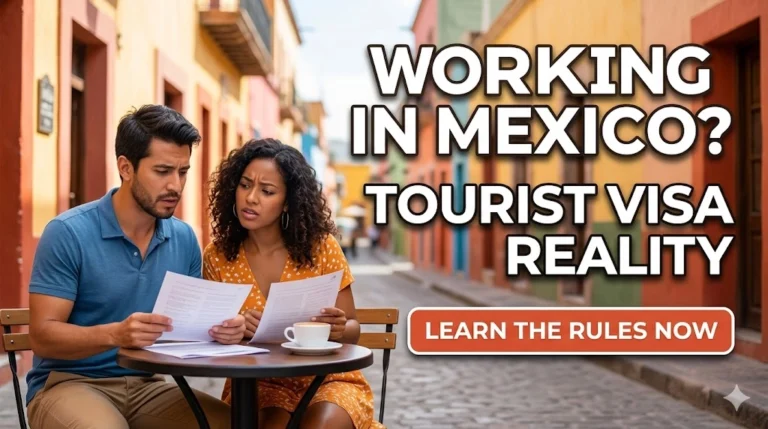
It is vital to understand that while you might find schools willing to hire you "under the table" on a tourist permit, this is increasingly risky. The authorities have tightened up on "border runs" to reset tourist stays. Your goal should always be to find a school that will help you transition to a Residente Temporal with work authorization. Once you have that, you’ll also need to learn How to Get a CURP as a Foreigner: The Mexican ID Number Explained, which is the key to everything from opening a bank account to getting a local phone plan.
Where to Find Teaching Jobs That Don't Require a Degree
Since you are bypassing the formal education system (SEP-regulated schools), your primary targets will be private language institutes and "English for Business" companies. These organizations operate as private businesses rather than formal academic institutions, giving them more flexibility in their hiring practices. Schools like Harmon Hall, Interlingua, and Quick Learning are ubiquitous across Mexico and frequently hire native speakers based on their performance in a demo class rather than their academic transcripts.
Another massive opportunity lies in the corporate sector. Many companies in industrial hubs like Monterrey, San Luis Potosí, and the State of Mexico require their executives to learn English. These companies often hire through agencies that send teachers directly to offices. These agencies are often much more concerned with your professional demeanor, your TEFL Certification: Requirements to Teach English in Mexico, and your punctuality than they are with a BA in Sociology.
If the physical classroom feels too restrictive, the digital nomad route is always an option. Many expats living in Mexico teach for online platforms based in Europe or Asia. While this doesn't provide a Mexican work visa on its own, it allows you to earn in a stronger currency while enjoying the lower Cost of Living in Mexico: 2026 Comprehensive Guide. If you go this route, you’ll likely need to apply for residency based on "financial solvency" rather than a local job offer, which has its own set of strict income requirements.
Essential Qualifications to Boost Your Competitive Edge
If you don't have a degree, your resume needs to shine in other ways. You are essentially competing against people who do have degrees, so you must prove that you are a more "practical" or "prepared" choice. A high-quality TEFL (Teaching English as a Foreign Language) or TESOL certificate is non-negotiable. Look for a course that includes at least 120 hours of instruction and, crucially, some observed teaching practice. In the competitive market of Mexico City or Guadalajara, a "weekend online" certificate won't carry much weight.
Beyond the certificate, your biggest asset is your ability to communicate with the people who will hire you. I cannot stress enough how much your life will improve if you invest time in learning the language. While you are there to teach English, the school directors, the HR managers, and the janitors all speak Spanish. I spent months using SpanishPod101 to get my conversational skills to a level where I could actually negotiate my salary and understand my contract. Being the "gringo" who actually understands the local context makes you infinitely more employable and less likely to be taken advantage of.
Furthermore, specialized knowledge can replace a general degree. If you have a background in hospitality, IT, or medical services, you can market yourself as an "ESP" (English for Specific Purposes) teacher. A school might pass over a degree-holder to hire someone who can specifically teach "Aviation English" or "Legal English" because they have five years of experience in that field. Use your previous career as your "degree equivalent" when pitching to Finding English Teaching Jobs: Best Schools and Institutes for ESL Teachers.
Qualifications Comparison for ESL Teachers in Mexico
| Qualification Type | Degree Required? | Market Value in Mexico | Best For |
|---|---|---|---|
| International School / University | Yes (Strict) | High (Top Salaries) | Long-term career educators |
| Private Language Institutes | Preferred but No | Medium | New expats, gap year travelers |
| Corporate/Business English | No (Experience focus) | Medium-High | Professionals with business backgrounds |
| Online/Freelance Teaching | Depends on Platform | Variable | Digital nomads, rural residents |
| Volunteering/Community Centers | No | Low (often unpaid) | Gaining initial experience |
Practical Steps to Landing Your First Job
In Mexico, the digital world is secondary to the "face-to-face" world. While you should certainly look at job boards, the most effective way to find a job without a degree is to show up in person. Dress professionally—Mexican business culture is more formal than many realize—and bring several printed copies of your resume. When you walk into a school, ask to speak with the "Coordinador de Inglés."
Before you start pounding the pavement, make sure you are prepared for Living in Mexico with Limited Spanish: Survival Tips for Language Barriers. Even if the job is to teach English, the interview process often involves a lot of Spanish-language HR paperwork. Using a resource like SpanishPod101 to master phrases related to "salary expectations," "work hours," and "benefits" will prevent you from nodding your way into a bad deal. Most schools will ask you to perform a 20-minute demo lesson on the spot, so have a "bag of tricks" ready—a few reliable activities that require no technology or prep.
Networking is your other secret weapon. Join local expat Facebook groups and attend language exchange meetups. Many of the best jobs never make it to a job board; they are filled when a teacher says, "Hey, I'm leaving next month, do you want to take over my hours?" This is especially true for the more lucrative private tutoring gigs. When you build a reputation as a reliable, effective teacher, the lack of a degree becomes a footnote rather than a dealbreaker.
Managing the Financials and the "No Degree" Salary
Let’s be honest: without a degree, you will likely start at the lower end of the pay scale. In 2026, a typical starting salary for a language institute teacher might range from 10,000 to 18,000 pesos per month. While this sounds low in USD or CAD, it is a livable wage in many parts of Mexico, though you will likely be sharing an apartment in the bigger cities. You have to be smart with your money and understand that your first job is often just a stepping stone to get your residency and local experience.
To supplement your income, many teachers find their own private students on the side. You can charge significantly more per hour for private lessons than a school will pay you. However, you have to be careful about your tax obligations. Once you are a resident, you will need to look into Teaching English in Mexico: Comprehensive Guide to Jobs and Qualifications to see how people balance multiple income streams. You will also want to look into Spanish Language Schools: Best Immersion Programs for Expats if you decide you want to pivot into a different industry later on, as being bilingual opens doors that a degree sometimes can't.
Lastly, keep your expectations realistic. You won't be living in a luxury condo in Polanco on an ESL teacher's salary without a degree. But you will be living in a culture that values community, has incredible food, and offers a pace of life that is a world away from the "grind" of the north. I used SpanishPod101 to help me navigate the markets and the street food stalls, which is where you’ll actually save the most money and have the most authentic experiences anyway.
Disclaimer
The information provided in this article is for educational and informational purposes only. Immigration laws, financial requirements, and labor regulations in Mexico are subject to frequent changes. While we strive to provide the most current and accurate advice, we are not legal, tax, or immigration professionals. Always consult with the official Mexican Consulate or a certified immigration attorney before making decisions regarding your residency or employment status in Mexico.
The mention of specific brands or services is based on personal experience and general availability and does not constitute a legal endorsement. Your personal experience may vary depending on the specific region of Mexico you choose and your individual circumstances. Stay proactive, verify all requirements through official government channels (INM and SRE), and always have a backup plan for your stay in the country.