Understanding Machismo: Gender Roles and Expectations in Mexico
Navigating social dynamics in Mexico often feels like trying to solve a puzzle where the pieces change shape depending on who you are talking to. I remember sitting at a family dinner in Guadalajara, feeling completely baffled by the subtle "rules" governing who spoke when and who served the food. This guide decodes the complex layers of machismo and gender expectations in Mexico to help you integrate smoothly and respectfully.
Disclosure: This post may contain affiliate links. We may earn a commission at no extra cost to you if you make a purchase through these links. Read full disclosure.
The Cultural Architecture of Machismo and Marianismo
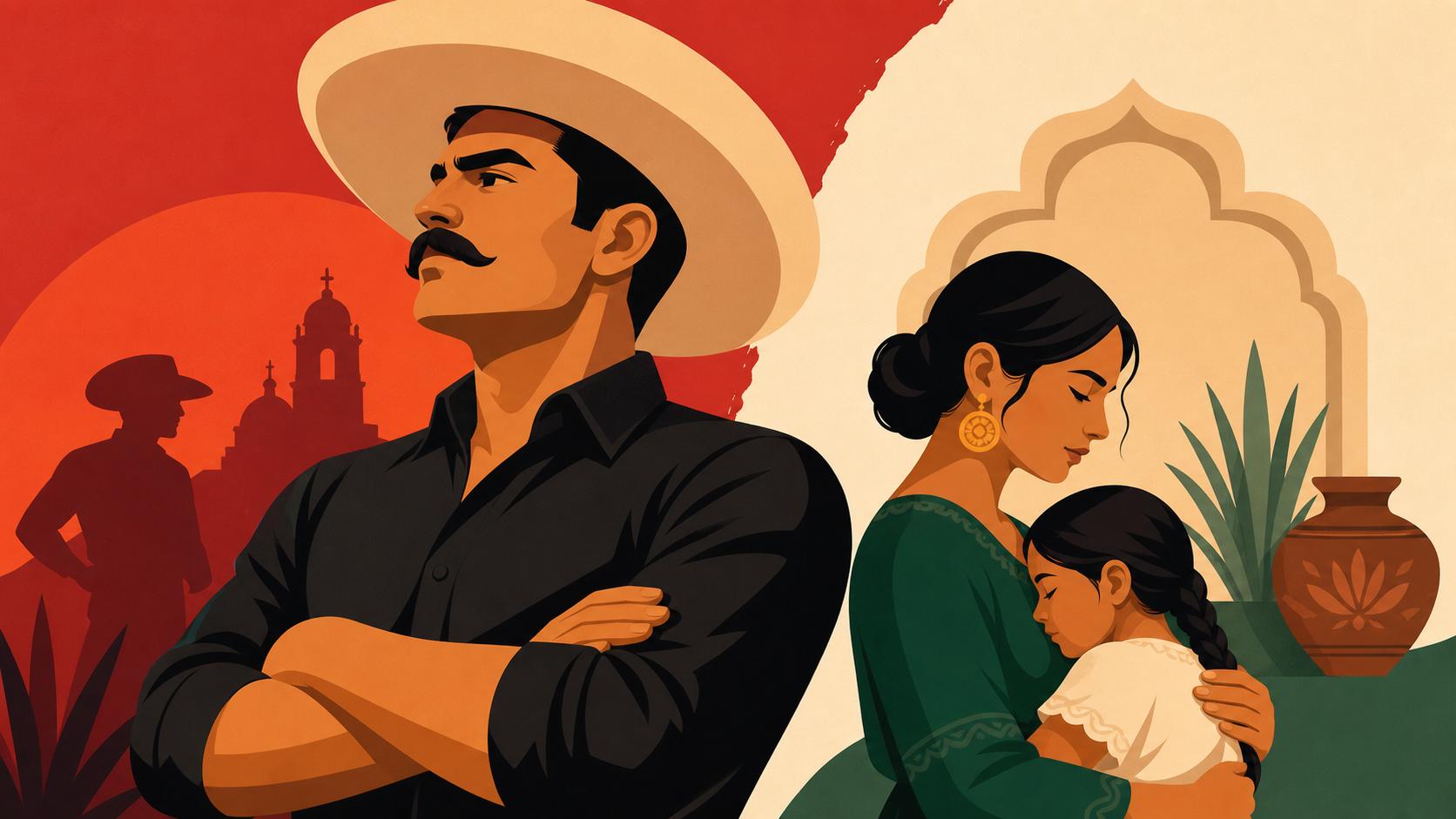
When most foreigners hear the word machismo, they immediately think of aggressive masculinity or toxic behavior. While those elements can exist, the reality in Mexico is far more nuanced and deeply rooted in centuries of history. It is a social contract that dictates how men and women interact, provide for their families, and carry themselves in public. As an expat, understanding this isn't just about cultural curiosity; it is essential for Politeness and Indirect Communication: Understanding Mexican Social Cues to ensure you are interpreting social cues correctly.
The Historical Roots and Evolution of Gender Norms
Machismo originally stems from a combination of Spanish colonial influence and indigenous structures. Historically, the man was the undisputed protector and provider, the "jefe de familia." His worth was tied to his ability to defend his family's honor and provide financial stability. In the modern era, especially in cities like Mexico City or Monterrey, this has softened significantly. You will see men pushing strollers and sharing household duties, but the underlying expectation of being the "strong" figure often remains.
If you are staying at a Selina during your first few weeks, you will notice that younger generations of Mexicans are actively deconstructing these roles. They are more likely to embrace gender equality in professional and social settings. However, as you move into more traditional circles, you may still encounter the classic "caballerosidad"—a chivalrous but sometimes patronizing form of machismo where men insist on paying for everything or making decisions on behalf of the group.
Marianismo The Often Overlooked Counterpart
You cannot understand machismo without understanding marianismo. Named after the Virgin Mary, marianismo is the cultural ideal that women should be self-sacrificing, nurturing, and the moral compass of the home. I have seen many expat women struggle with this when they realize that their Mexican female friends are expected to bear the emotional labor of the entire extended family.
In many households, the woman is the "heart," and while the man may be the "head," the heart often makes the real decisions behind the scenes. You might find that your female neighbors are incredibly influential in the local community, even if they appear traditional on the surface. Understanding this balance helps you avoid making assumptions about who holds the actual power in a social or business transaction.
How These Roles Manifest in Daily Life Today
In daily life, you will see these roles play out in "micro-moments." It might be a male colleague insisting on carrying your bags, or a female friend apologizing for not having a perfectly clean house. It is also visible where the division of labor during a party is often split by gender—men at the grill, women in the kitchen preparing the sides.
As a veteran expat, my advice is to observe without immediate judgment. What looks like a lack of agency might actually be a deeply ingrained social dance. If you need to order books or resources to dive deeper into Mexican sociology, using Amazon Mexico is a reliable way to get international titles delivered to your doorstep. Staying connected via an Airalo eSIM also ensures you can quickly look up social etiquette or translate phrases when you find yourself in a confusing social situation.
Navigating Social and Professional Expectations
The way gender roles play out in a professional environment can be a major source of culture shock for foreigners. Mexico is a highly relationship-based culture, and these relationships are often filtered through the lens of gender expectations. You will likely notice that the "old boys' club" still exists in some sectors, though it is rapidly changing.
Workplace Dynamics and the Glass Ceiling
In the Mexican workplace, hierarchy is king. For men, being a "leader" often involves a certain level of paternalism—taking care of employees like a father figure. For women, the path to leadership can be steeper. While Mexico has made huge strides, including electing its first female president, the day-to-day office environment can still feel "macho" in certain industries like construction or finance.
Female expats may find that they have to work twice as hard to be taken seriously in meetings, or they might experience "piropos" (compliments) that would be considered inappropriate in a US or Canadian office. Learning to navigate these waters requires a mix of firm professional boundaries and an understanding of the local "polite" way to deflect unwanted attention.
Romantic Relationships and Dating Etiquette
If you are a single expat, the dating scene in Mexico is a crash course in gender roles. Traditional dating often involves a lot of "courting." For men, the expectation is often to be the pursuer, to pay for the dates, and to be very vocal with praise. For women, there is often a social pressure to be "difícil" (hard to get), which can lead to a lot of mixed signals for someone used to direct communication.
Even in modern circles, dating can be influenced by these old-school ideas. For instance, it is very common for a man to pick a woman up at her house and meet her parents much earlier than in other cultures. This isn't necessarily a sign of extreme seriousness; it's just the "correct" way to do things. Understanding these expectations can save you a lot of heartbreak and confusion.
Traditional vs. Modern Social Expectations
To help you visualize the shift, here is a comparison of how these roles are traditionally viewed versus how they are evolving in modern urban centers.
| Aspect | Traditional Expectation | Modern Urban Reality |
|---|---|---|
| Financial Provider | Primarily the male (Jefe de familia) | Dual-income households are the norm |
| Household Labor | Almost exclusively female | Increasing participation from men |
| Social Authority | Men lead public conversations | Equal participation in social circles |
| Parenting | Mothers as primary caregivers | Active "involved" fatherhood rising |
| Dating | Men always pay; very formal | Splitting bills (occasionally) among youth |
| Professionalism | Male-dominated leadership | High female representation in politics/tech |
Practical Tips for Expats to Navigate Gender Norms
Living in Mexico as an expat means finding a middle ground between your own values and the local culture. You don't have to "become" Mexican, but being aware of these norms will make your life significantly easier. Whether you are dealing with a landlord, a coworker, or a new friend, your gender will play a role in how you are perceived.
Communication Strategies for Men and Women
For male expats, it is important to be aware of the "macho" trap. You might feel a need to act tougher or more assertive to "fit in," but this can often backfire. The most successful male expats I know are those who lean into the "caballero" aspect—being polite, respectful, and helpful—without the aggressive ego. Remember that your tone of voice and body language carry a lot of weight.
For female expats, the challenge is often about being heard without being seen as "aggressive." In Mexico, directness can sometimes be interpreted as rudeness. Learning to "soften" your requests with pleasantries like "Disculpe" or "Si no es mucha molestia" can get you much further than a direct command. Building a friendly rapport is the only way to ensure things actually get fixed.
Safety and Social Awareness for Female Expats
Safety is a valid concern that is often tied to gender dynamics. While Mexico is generally welcoming, unwanted attention is something every female expat should be aware of. There is a culture of "street compliments" that can range from harmless to intimidating.
- Trust your gut: If a situation feels "too macho" or aggressive, leave.
- Use technology: Keep your eSIM active so you can always share your location with friends.
- Social Hubs: Work and socialize in places like Selina where the environment is curated to be inclusive and safe for international travelers and locals alike.
- Dress Code: While you should wear what you want, Dress Code in Mexico: What to Wear for Different Occasions can sometimes help you blend in and avoid unwanted attention in more traditional neighborhoods.
Setting Boundaries Without Offending
The hardest part of living here is saying "no" to a cultural norm without burning bridges. If a male neighbor insists on doing something for you that you'd rather do yourself, you can decline by emphasizing your own "hobbies" or "habits" rather than making it a point about gender. For example, instead of saying "I can carry my own groceries," you might say, "Thank you, but I need the exercise!"
Similarly, if you find the gender roles a bit stifling, you can create your own "expat-local" hybrid culture. Most Mexicans are incredibly forgiving of foreigners who don't get the rules 100% right, as long as they see you are making an effort to be respectful. Using resources like SpanishPod101 can help you learn the specific phrases needed to navigate these social boundaries with grace.
Long-term Adjustment and Cultural Empathy
Adjusting to life in Mexico is a marathon, not a sprint. You will have days where you feel frustrated by the perceived "unfairness" of gender roles, and other days where you find the chivalry and family-centric focus incredibly beautiful. The key is to develop cultural empathy. Understand that machismo is often a shield used to protect a family, even if that shield feels outdated to you.
As you spend more time here, you will begin to see the cracks in the facade. You will meet "machos" who are incredibly tender with their daughters and "traditional" mothers who run successful businesses from their dining room tables. The more you move away from the stereotypes and toward the individuals, the more you will appreciate the complexity of the Mexican spirit.
If you are ever in doubt, Making Friends in Mexico: Expat Groups, Meetups, and Social Tips is a great way to meet people who have already navigated these hurdles. They can offer a listening ear when the culture shock hits hard. Mexico is a land of contradictions, and its gender roles are perhaps the greatest contradiction of all—simultaneously rigid and fluid, ancient and evolving.
Disclaimer
This article is intended for informational purposes only and reflects the personal experiences and observations of the author. Cultural norms in Mexico vary significantly by region, social class, and individual family dynamics. This guide does not constitute legal, psychological, or professional advice. Readers are encouraged to conduct their own research and exercise personal judgment when navigating social and professional situations in Mexico.