Building a Home in Mexico: What Expats Need to Consider
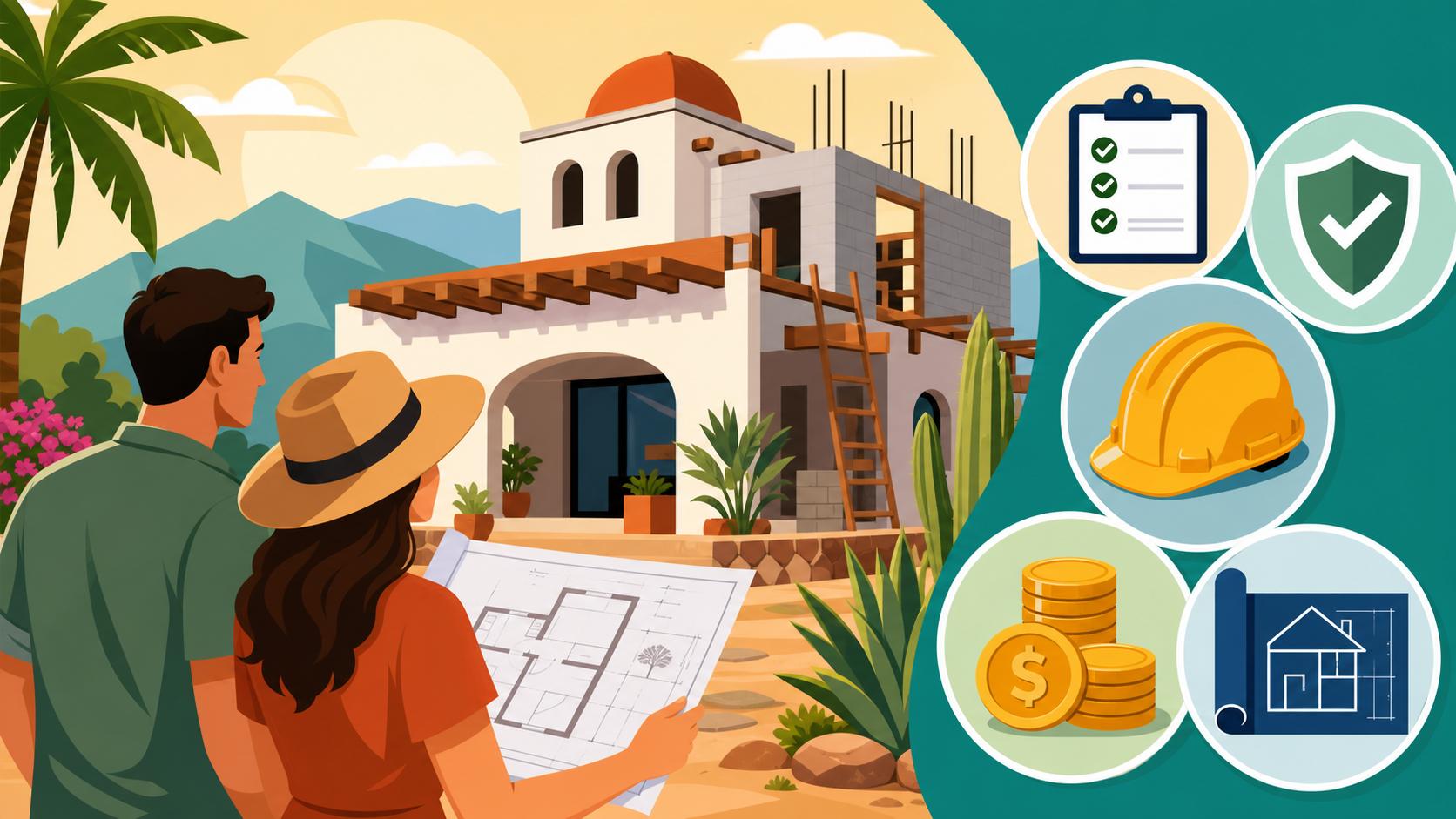
I remember standing on a dusty lot in Sayulita, holding a blueprint that looked more like a suggestion than a plan. Many expats find that buying an existing home involves too many compromises, leading them toward the complex path of ground-up construction. This guide solves the mystery of Mexican building permits, labor laws, and the essential legal protections you need.
Disclosure: This post may contain affiliate links. We may earn a commission at no extra cost to you if you make a purchase through these links. Read full disclosure.
The Legal Foundation and Land Acquisition Due Diligence
Before you even think about the color of your floor tiles, you have to ensure the ground you are standing on is legally yours. In Mexico, land ownership for foreigners is a bit different than what you might be used to in the US, Canada, or Europe. If you are looking at land within 50 kilometers of the coast or 100 kilometers of the border, you are in the Restricted Zone. To "own" this land, you must use a bank trust or a Mexican corporation.
Understanding the nuances of the Restricted Zone is the first hurdle. Many people get nervous about the idea of a bank holding their title, but it is a secure, standard legal mechanism that has been used for decades. I highly recommend reading through What Is a Fideicomiso? A Foreigner’s Trust for Owning Coastal Property to understand how this protects your investment. Without this trust, you simply cannot legally build on the coast.
The Dangers of Ejido Land
One of the most heart-wrenching mistakes I have seen fellow expats make is "buying" Ejido land. This is communal land intended for Mexican agricultural workers. It is often sold at incredibly low prices in beautiful, undeveloped areas. However, as a foreigner, you cannot legally own Ejido land until it has been "dis-enlisted" and converted into private property (título de propiedad).
Buying Ejido land is essentially a handshake agreement that holds no weight in Mexican court. I have known people who built beautiful homes on Ejido lots only to have the local community reclaim the land years later, leaving the expat with no legal recourse and a total loss of their investment. Always ensure your lawyer verifies that the land is "Pequeña Propiedad" (private property) before any money changes hands.
Verifying Zoning and Utility Access
Never assume that because there is a house next door, you can build whatever you want. Each municipality has specific zoning laws (uso de suelo). You need to confirm that your lot is zoned for residential use and check the "C.O.S." and "C.U.S." coefficients. These numbers dictate what percentage of the lot can be covered by the structure and the total allowable square footage.
Furthermore, utility access in Mexico can be a logistical nightmare. In some areas, getting a CFE (Federal Electricity Commission) connection can take six months or more. You might find a "bargain" lot only to realize that bringing water and electricity to the site will cost you tens of thousands of dollars. While you are scouting these locations, staying at a reliable spot like Selina can give you the high-speed internet and community vibes you need while doing this intensive research.
Building Your Professional Team in Mexico
In my experience, your project will succeed or fail based on your team. You cannot manage a construction project in Mexico from abroad via email. You need a trusted local boots-on-the-ground team. This usually includes an architect, a contractor, and a Director Responsable de Obra (DRO).
The DRO is a licensed engineer or architect who assumes legal responsibility for the structural integrity and code compliance of your building. They are the person whose name is on the permit, and they are legally liable if the building collapses or violates municipal codes. This is a role that doesn't really have a direct equivalent in some other countries, but they are essential for a legal build in Mexico.
Architects vs. Maestros de Obra
You will find two common ways to build. One is hiring an architect who manages everything, and the other is hiring a "Maestro de Obra" (a master builder/foreman) directly. While hiring a Maestro is cheaper, it is much riskier for an expat. An architect provides you with detailed blueprints, material lists, and a timeline. A Maestro often works from a rough sketch and "experience."
Unless you speak fluent Spanish and understand Mexican construction techniques (like masonry and reinforced concrete casting), go with an architect. They act as your translator and your shield against local bureaucracy. They will help you navigate Buying Property in Mexico: Comprehensive Guide for Foreign Buyers and ensure your home is built to withstand local conditions, whether that is the seismic activity of the highlands or the humidity of the coast.
Managing the Language and Cultural Barrier
Construction culture in Mexico is built on personal relationships. If you treat your workers well, they will go the extra mile for you. If you act like a demanding "patrón" without building rapport, you will find progress slows to a crawl the moment you leave the site. During these phases, I found that using an e-sim from Airalo was a lifesaver. It allowed me to stay connected with my architect and contractor via WhatsApp—the primary communication tool for Mexican business—even when I was in remote areas checking on material deliveries.
Expect "Mexican Time" to be a factor. Deadlines are often viewed as aspirational rather than set in stone. This isn't laziness; it is a different cultural approach to problem-solving and life. If a supplier is late with the cement, your contractor might just move on to a different task rather than stressing about the schedule. Patience is the most important tool in your belt.
Navigating Labor Laws and the IMSS Headache
This is the section where most expats trip up and end up paying thousands of dollars in fines. In Mexico, when you build a house, you are legally considered an employer. This means you are responsible for the social security (IMSS) payments of every worker on your site.
Even if you hire a contractor who says they are "handling it," you must demand to see the IMSS receipts every single month. If the contractor fails to pay and disappears, the IMSS inspectors will come after the property owner—you. They can and will place a lien on your home or stop construction entirely until the back-taxes and penalties are paid.
Understanding the Finiquito
When a worker's job is done, or if you decide to part ways with a contractor, you must pay a "finiquito" (severance/liquidation). Mexican labor laws are very pro-worker. Even if a worker was only there for three weeks, they are entitled to a portion of their Christmas bonus (Aguinaldo) and vacation pay.
Always have your lawyer or a specialized accountant calculate these payments. Never just hand over a wad of cash. You must have the worker sign a release form in front of a witness to ensure they cannot later claim they were unfairly dismissed. This process is similar to what you might experience when Hiring Domestic Help in Mexico: Maids, Gardeners, and Etiquette, but the stakes are higher with construction crews.
Safety and Insurance on Site
While IMSS covers medical care for workplace injuries, it is a basic public system. Many expats choose to carry additional liability insurance during the construction phase. You also need to ensure the site is secure. Theft of building materials (especially copper wiring and bags of cement) is common. You may need to hire a "velador" (night watchman) to live on-site in a temporary shack until the house is "closed in" with doors and windows. To keep yourself protected personally during this time, make sure you've looked into Health Insurance in Mexico: How Expats Can Get Coverage (2027).
| Construction Aspect | Buying Existing | Building New |
|---|---|---|
| Customization | Limited to renovations | Total control from day one |
| Timeframe | 30-90 days for closing | 12-24 months for construction |
| Legal Risk | Moderate (title issues) | High (permits, IMSS, labor) |
| Upfront Cost | Higher (market price) | Lower (land + cost of materials) |
| Hidden Costs | Repairs and upgrades | Permit fees, IMSS, overruns |
| Infrastructure | Already established | You must bring in utilities |
Sourcing Materials and Managing the Budget
Construction costs in Mexico are generally lower than in the US or Canada, primarily due to labor. However, finished goods and high-end materials can be surprisingly expensive. Anything imported will have a significant markup.
I learned early on that local "ferreterías" (hardware stores) are great for basics, but for specialized fixtures, smart home tech, or high-end kitchen appliances, Amazon Mexico is often your best bet. They have a surprisingly robust delivery network even in smaller towns. Ordering your faucets, lighting, and handles online can save you a fortune compared to the specialty "luxury" shops in cities like Guadalajara or Mexico City.
The Reality of Material Inflation
In 2026, the cost of steel and concrete continues to fluctuate. When your architect gives you a quote, it is usually based on current prices. Most contracts include a "price escalation" clause. If the price of rebar jumps 20% mid-project, you will be expected to cover that difference.
To manage your budget, try to purchase as many of your finishing materials as possible early on and store them. If you see a sale on the floor tiles you want, buy them now. It protects you against inflation and ensures you won't face a "backorder" situation when the workers are ready to install them. This is a common part of managing the Cost of Living in Mexico: 2026 Comprehensive Guide as an expat—expecting the unexpected.
Environmental Considerations and Climate
Building in Mexico requires a different mindset regarding climate. In the north, you need to account for extreme heat and cold. In the south and coastal areas, humidity and salt air will destroy cheap materials in months. If you are building on the coast, you must use marine-grade stainless steel for any outdoor hardware.
Make sure your design accounts for "pasive cooling." High ceilings, cross-ventilation, and thick masonry walls are traditional for a reason—they keep the house cool without needing massive air conditioning bills. If you are in a seismic zone, ensure your structural engineer has accounted for the local soil conditions. You can find more about regional Safety in Mexico: What Expats Need to Know About Staying Safe.
The Final Stretch: Manifestación de Obra and Occupancy
Once the house is built, you aren't done with the paperwork. You must file a "Manifestación de Obra" with the municipality. This document officially records the square footage of the construction. This is vital because your property taxes (predial) and the eventual resale value of your home are based on this recorded construction.
Many expats skip this step to keep their property taxes low, but this is a massive mistake. When you go to sell the house later, the buyer's notary will see that you are selling a "lot" that happens to have a house on it. You will then be hit with massive capital gains taxes because you cannot prove the "cost basis" of the construction.
Getting Your Termination of Work
You also need a "Terminación de Obra" from the municipality and a letter of "No Adeudo" (no debt) from IMSS. The IMSS letter is your golden ticket. it proves that you paid all your labor taxes and that no worker can come back and claim against the property. Do not make the final payment to your architect or contractor until they hand you these documents.
Getting your CURP is also a helpful step in this phase, as it integrates you into the system for utility contracts. If you haven't done that yet, check out How to Get a CURP as a Foreigner: The Mexican ID Number Explained.
Building in Mexico is a marathon, not a sprint. There will be days when you want to pack your bags and head back to a country where "permits only take a week." But when you finally sit on your terrace, watching the sunset over the Pacific or the Sierra Madres, in a house that was built specifically for your life, you’ll realize the struggle was part of the story.
Disclaimer
This guide is for informational purposes only and does not constitute legal, financial, or professional real estate advice. Mexican laws and municipal regulations change frequently. Always consult with a licensed Mexican attorney and a certified architect before purchasing land or beginning construction in Mexico.