Duty-Free Import of Household Goods: Using Menaje de Casa with Your Visa
Disclosure: This article contains affiliate links. If you buy through them, we may earn a commission at no extra cost to you. Read our full disclosure.
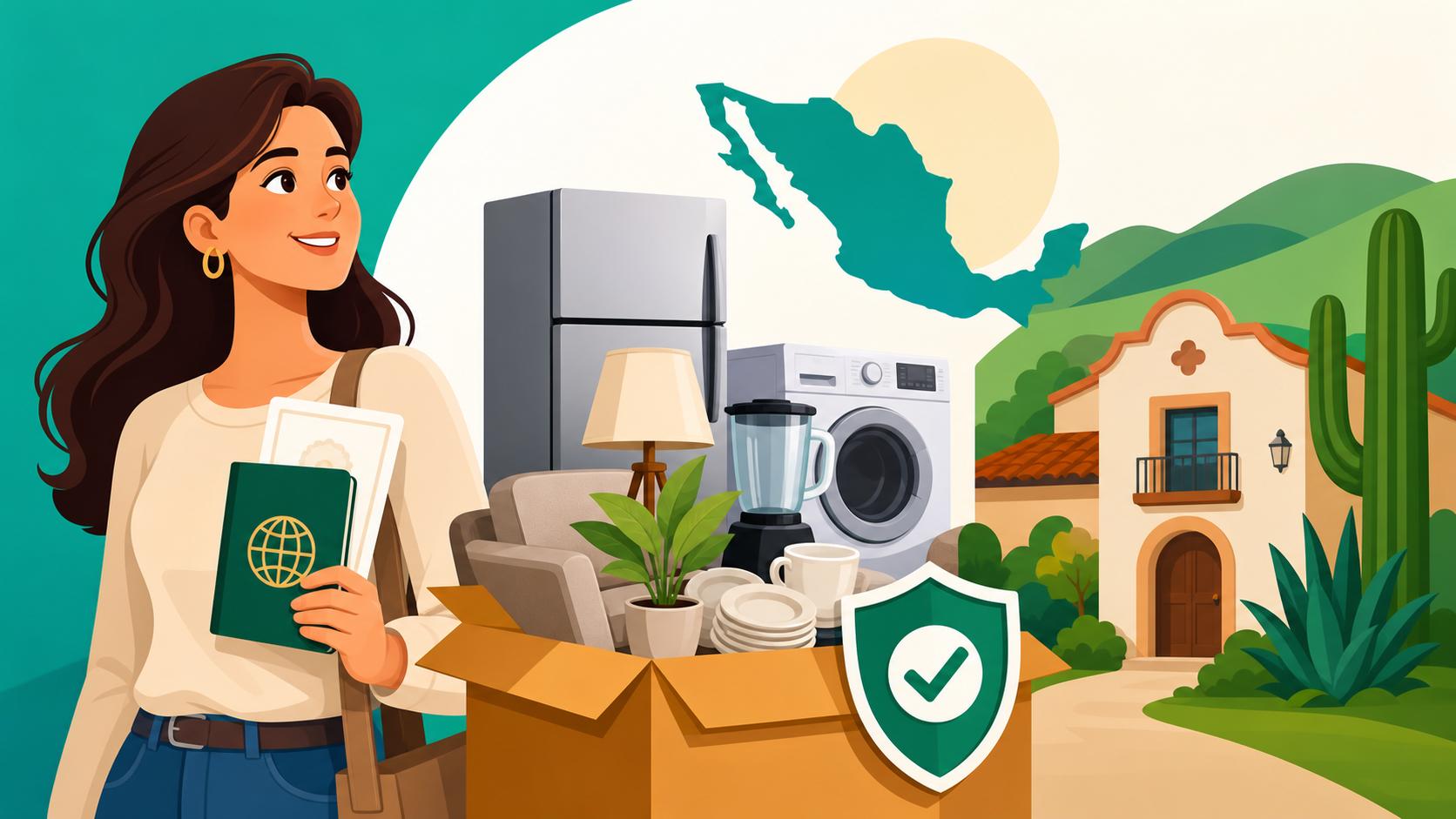
Moving your entire life across an international border is, quite frankly, one of the most stressful things you’ll ever do. I remember sitting in a sea of cardboard boxes in my old living room, staring at a blender and wondering if the Mexican customs agents were going to charge me a fortune just to bring my favorite kitchen gear. This guide solves the mystery of the Menaje de Casa, showing you exactly how to import your household goods duty-free so you can settle into your new Mexican home without the financial headache.
Understanding the Menaje de Casa Concept
The Menaje de Casa is a legal provision in Mexican law that allows foreign residents to bring their used household goods into the country without paying the standard import duties. It’s essentially the government saying, "Welcome to Mexico; you shouldn't have to pay taxes on the bed you've slept in for five years." However, there is a very specific process to follow, and if you miss a single step, you could find your shipping container stuck at the border with a massive tax bill or, worse, being sent back to your home country.
The Legal Basis for Duty-Free Import
The right to a Menaje de Casa is tied directly to your residency status. Whether you are holding a Mexico Temporary Resident Visa: Comprehensive Guide for Expats (2026 Update) or you have already transitioned to permanent status, the law recognizes your need to establish a household. The catch is that these items must be "used." In the eyes of Mexican customs (SAT/Aduana), this generally means items you have owned and used for at least six months. If you try to bring a brand-new, in-the-box 85-inch television, the agents will likely flag it as a commercial import rather than a household good, and you’ll be reaching for your wallet.
Temporary vs. Permanent Resident Rights
There is a subtle but important difference in how the Menaje de Casa is handled depending on your visa type. Temporary residents are essentially "borrowing" their goods into the country. Your household items are tied to the duration of your visa. If you eventually leave Mexico and don't renew your residency, those items are technically supposed to leave with you. Permanent residents, on the other hand, are importing their goods for good. In my experience, once you have your Mexico Permanent Residency Explained: A Complete Guide (2027), the process feels a bit more "final," but the paperwork requirements at the start are nearly identical.
Who is Eligible for the Menaje de Casa
Not everyone walking across the border can claim this benefit. It is strictly reserved for those who are moving to Mexico with a resident's intent. Tourists—those on a 180-day FMM or a standard visitor stamp—cannot use the Menaje de Casa. If you are a tourist and you try to bring a truckload of furniture, you will be treated as a commercial importer.
The Six-Month Window
One of the biggest traps expats fall into is the timeline. You generally have a six-month window from the time you first enter Mexico as a resident (or from the date your residency card is issued) to apply for and execute your Menaje de Casa. Many newcomers who waited a year to "see if they liked it" before moving their stuff, only to find out they had forfeited their right to the duty-free exemption. If you’re planning a move, keep that clock in mind from the moment you get your residency stamp.
One-Time Opportunity
It is also vital to understand that the Menaje de Casa is typically a one-shot deal. You cannot bring half of your stuff this year and the other half next year under the same exemption. You need to create a comprehensive list of everything you intend to bring in that one shipment. If you forget your favorite recliner and try to bring it in six months later, it won't be covered under the initial Menaje certification. This is why planning is so crucial. When you are Moving to Mexico: What to Pack and What to Buy Locally, you need to be decisive about what is coming and what is staying.
| Feature | Temporary Residents | Permanent Residents |
|---|---|---|
| Duration of Import | Tied to Visa validity | Indefinite/Permanent |
| Duty Exemption | 100% on used goods | 100% on used goods |
| One-Time Use? | Yes, per visa issuance | Yes, one-time only |
| Customs Broker Needed? | Highly recommended/Required | Mandatory for containers |
| Inventory Requirement | Detailed Spanish list | Detailed Spanish list |
The Step-by-Step Process for a Successful Import
The process doesn't start at the border; it starts at your nearest Mexican consulate in your home country. This is where most people get tripped up. You cannot just show up at the bridge with a trailer and a smile.
Creating Your Inventory List (Lista de Menaje)
The most tedious part of this entire journey is the inventory list. You must list every single item you are bringing, and it must be in Spanish. And I mean every item. You can’t just write "kitchen stuff." You have to write "1 blender, 1 toaster, 10 plates, 8 forks." You don't need to list the brand of your socks, but for electronics and appliances, you absolutely must include the brand, model, and serial number. This list is what the consulate will stamp and what the customs broker will use to clear your goods.
To ensure accuracy and legal compliance, many expats use services like RushTranslate to handle the translation of their inventory lists and other supporting documents. While you might speak some Spanish, the technical terms for certain household goods used by customs can be specific, and having a professional, certified translation can prevent "lost in translation" moments at the border.
Consular Certification and Legalization
Once your list is ready, you make an appointment at the Mexican consulate. You will bring your valid passport, your residency visa (or card), and four copies of your inventory list. The consulate will charge a fee—usually around $100 to $150 USD—to certify the list. This stamped document is the "Golden Ticket" of the Menaje de Casa. Without this consular stamp, the duty-free exemption does not exist.
Hiring a Mexican Customs Broker (Agente Aduanal)
Here is a reality check: you cannot clear a large shipping container through Mexican customs on your own. You are legally required to hire a Mexican Customs Broker (Agente Aduanal). This is where things can get expensive and complicated. The broker acts as the intermediary between you and the SAT. They will review your consular-stamped list, verify your residency status, and handle the actual entry of the goods. Some people try to save money by doing this "DIY" style with a small trailer, but even then, having a broker on speed dial is a lifesaver.
Essential Documents and Translation Requirements
Documentation is the backbone of Mexican bureaucracy. If you arrive with a missing signature or an uncertified copy, the process stops dead in its tracks. You will need your original passport, your residency card (the plastic one you get after the "canje" process in Mexico), the certified Menaje list, and often proof of your last residence outside of Mexico (like a utility bill).
Managing Your Paperwork
Beyond the inventory, you might need to prove the value of certain high-ticket items if they appear "too new." This is where keeping receipts for your larger appliances can actually help, even if they are a few years old. If you are importing items that require specific certifications or if your residency documents are from a non-Spanish speaking country, ensure you have everything handled by RushTranslate early in the process. Containers have sat in the scorching sun at the Manzanillo port for weeks because a birth certificate or a marriage license wasn't properly translated and apostilled.
Professional Translation Needs
The importance of How to Translate Documents for Your Mexican Visa Application (Certified Translations) cannot be overstated. Mexican officials are notoriously sticklers for proper formatting. A DIY translation from a free online tool might look "good enough" to you, but to a customs official, it can look like an attempt to bypass the law. Using a recognized service ensures that your Spanish list uses the correct terminology that customs agents expect to see.
What You Can and Cannot Bring
The Menaje de Casa is generous, but it isn't a free-for-all. It is specifically for household items. It is not for "business equipment." If you are a professional photographer and you bring 20 high-end cameras and 10 studio lights, customs will argue that this is for a business, not a home, and they will tax you accordingly.
Included Items: Furniture, Appliances, and Clothes
Basically, if it belongs in a house, it’s covered. This includes:
- Bedroom, living room, and dining furniture.
- Kitchen appliances (microwaves, refrigerators, stoves).
- Linens, towels, and clothing.
- Books and artwork (as long as they aren't part of a commercial collection).
- Personal tools (drills, saws, etc., in reasonable quantities).
When considering Bringing Appliances from Home vs Buying in Mexico: What You Should Know, remember that the voltage in Mexico is the same as the US and Canada (110v), but the cycles can vary slightly, and modern electronics are sensitive. Many expats choose to bring their high-quality kitchen gadgets but buy their big fridges and washers in Mexico to ensure they have a local warranty.
Prohibited and Restricted Items
This is where you need to be extremely careful. You cannot include the following in your Menaje de Casa:
- Food and Liquids: No pantry items, no wine collections, and certainly no perishables.
- Chemicals: No cleaning supplies or garden pesticides.
- Weapons: No firearms or ammunition. Do not even think about it.
- Vehicles: Your car is NOT part of your Menaje de Casa. It requires a completely separate process involving a Temporary Import Permit (TIP) for Cars: What Residents Should Know.
- New Items: Anything that still has tags on it or is in original retail packaging will be flagged for duty.
Logistics and Shipping Your Belongings
Once you have your paperwork and your inventory, you have to actually get the stuff to Mexico. You have three main options: a professional international moving company, a "man with a van" service (common for moves from the US/Canada), or driving it yourself.
Choosing a Moving Company
If you are moving a whole house, an international mover is your best bet. They understand the "Aduana" dance. They often have their own brokers and can provide door-to-door service. However, they are expensive. For those on a tighter budget, driving a U-Haul to the border and transferring it to a Mexican carrier is a common "hack," but it requires nerves of steel and a lot of coordination. You’ll want to check Customs Tips for New Residents: What You Can Bring When Moving to Mexico to see how people are currently navigating the specific border crossings, as some are much friendlier to expats than others.
Insurance and Safety Abroad
While your goods are in transit, you need to think about your own well-being. Moving is physically exhausting and can lead to unexpected health issues. While newcomers protect their furniture with shipping insurance, they should also protect themselves with proper health coverage. Cigna Global is a popular choice for expats during this transition period because it provides international coverage that follows you from your home country into Mexico. Having a policy from Cigna Global ensures that if you throw out your back lifting those "duty-free" boxes, you aren't stuck navigating the public health system without a plan. It’s all about peace of mind—protecting your stuff and your health at the same time.
Common Mistakes and How to Avoid Them
Border problems can be heartbreaking, and one of the biggest mistakes is trying to "sneak" in something new. If a customs agent finds a brand-new Dyson vacuum hidden behind an old sofa, they may decide to inspect every single box in your container. This can lead to thousands of dollars in "man-handling" fees as the port workers unpack and repack your entire life.
Another mistake is the car confusion. I cannot stress this enough: do not put your car's spare tires or parts in your household goods shipment unless they are listed very specifically and you've checked with your broker. Generally, cars and their parts should stay with the car paperwork. Look into Bringing Your Car vs Buying in Mexico: Impact on Visa and Legal Status to see how to handle your vehicle separately.
Finally, don't forget the "human" element of the move. Moving to a new country is a massive lifestyle shift. While you’re worrying about your blender, make sure you’ve also considered the bigger picture, like Is Mexico Safe for Residency? Addressing Safety Concerns for Visa Applicants. Once you have your things, your residency, and your health insurance through a provider like Cigna Global, you can finally stop worrying and start enjoying the "mañana" lifestyle you came here for.
Disclaimer
This guide is for informational purposes only and does not constitute legal or professional advice. Immigration and customs laws in Mexico are subject to frequent change. Always consult with the nearest Mexican consulate or a licensed customs broker before attempting to import goods.