Is Mexico Eliminating the FMM? Understanding Entry Changes in 2026
Arriving at a Mexican airport and realizing the immigration officer didn't hand you that familiar green-and-white paper slip can trigger an immediate sense of panic. I remember the days of obsessively tucking that little FMM into my passport, terrified that losing it would lead to a week of bureaucratic purgatory at the INM office. This guide clarifies the digital shift in 2026 and explains exactly how to navigate Mexico's entry requirements without the physical paperwork.
Disclosure: This post may contain affiliate links. We may earn a commission at no extra cost to you if you make a purchase through these links. Read full disclosure.
The Evolution of Mexico’s Entry System: Goodbye Paper FMM
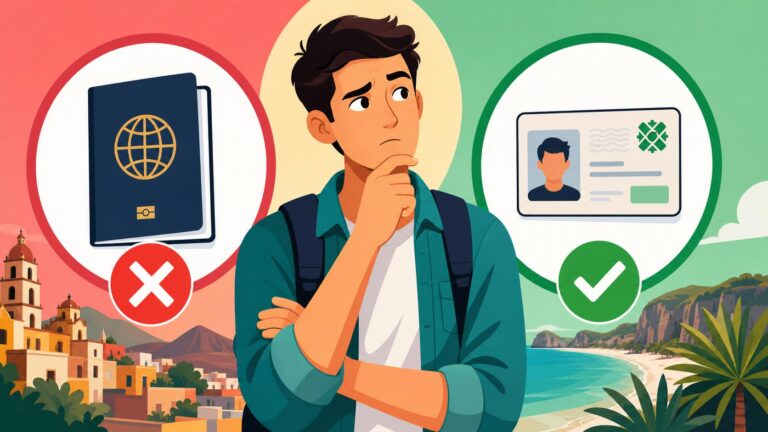
The short answer to the question on everyone’s mind is yes, Mexico has largely eliminated the physical, paper version of the Forma Migratoria Múltiple (FMM) for those arriving by air. This transition wasn't an overnight change but a phased rollout that began at major hubs like Cancun and Mexico City before becoming the standard across nearly all international airports by 2026. For those of us who have lived here for years, this shift is both a blessing and a source of confusion, as it replaces a physical receipt with a digital ghost that you must know how to track.
Historically, the paper FMM served two purposes: it was your legal "receipt" of entry and your proof of how many days you were granted. If you overstayed, you had to pay a fine at the airport before leaving. If you lost it, you had to visit a local immigration office and pay for a replacement. In 2026, the process is streamlined via the "Sistema de Control Migratorio," which links your entry directly to your passport number in a central database. However, just because the paper is gone doesn't mean the rules have vanished; in fact, the lack of a physical reminder makes it even easier to accidentally overstay.
Why the Shift to Digital Happened
The primary driver behind the elimination of the paper FMM was efficiency and the modernization of Mexican customs. Long lines at the Aeropuerto Internacional Felipe Ángeles (AIFA) or the busy terminals in Puerto Vallarta were often bogged down by the manual processing of these forms. By moving to a digital system, the Mexican government has significantly reduced wait times. From a security standpoint, a digital record is much harder to forge or lose, providing a more accurate snapshot of who is in the country at any given time.
Another factor is the integration of biometric data. Many major airports now utilize automated gates for certain nationalities, where your face and passport are scanned, and your entry is recorded without ever speaking to an officer. This is a far cry from the old days of filling out a form with a borrowed pen on the back of a stranger’s shoulder. For the expat community, this means fewer lost documents, but it also means you must be proactive in checking your digital status to ensure you weren't accidentally given a shorter stay than you anticipated.
The Current Reality at Major Airports
When you land in Mexico today, the process usually involves a quick scan of your passport and, in many cases, a physical stamp. This stamp is now your primary point of reference. It should indicate the date of entry and, crucially, the number of days you are allowed to stay. While the paper form is gone, the legal requirement to have an entry record remains. If you are entering as a tourist, you are still subject to the officer’s discretion, which can range from 7 to 180 days.
I’ve heard countless stories from newcomers who assumed that the "elimination of the FMM" meant they could stay as long as they wanted. That is a dangerous misconception. The digital FMM still exists in the government’s cloud; you just don't hold it in your hand. If you need to prove your legal status, for example to sign a short-term rental agreement, you may be asked to provide a printed version of your digital entry record, which can be downloaded from the National Institute of Migration (INM) website.
Navigating the Digital Entry Process at Major Hubs
The transition to a digital-first system means that the "onboarding" process for your trip to Mexico happens the moment you reach the immigration booth. The officer will scan your passport, and your entry is logged in the system. For many tourists from "visa-exempt" countries, the process is seamless. However, for those of us living here or planning to apply for residency, this digital record is the foundation of our legal presence.
You should always verify that the officer actually stamps your passport. While the system is digital, that ink stamp is your immediate backup if the digital system experiences a glitch—and in Mexico, glitches are a part of life. If you notice the officer didn't write the number of days or the stamp is illegible, politely ask them to clarify. It is much easier to fix an entry error at the airport than it is at a local office three weeks later.
Checking Your Status Online via the INM Portal
Once you have cleared customs and made it to your destination, your first task should be to log into the INM portal to verify your digital FMM. You will need your passport information and your entry date to access the record. This portal allows you to download a PDF version of your entry permit. This document is essential if you plan on doing anything official, such as opening a bank account or if you unfortunately need to navigate Medical Emergencies in Mexico: What Expats Should Know and Prepare.
The digital permit will clearly state your "expiration date." I recommend saving this PDF to a cloud drive and printing a copy to keep with your passport. In 2026, many local police officers or secondary checkpoints (especially in southern states like Chiapas or Quintana Roo) are aware that paper forms are no longer issued, but they will still expect to see proof of your legal stay if you are stopped. Having that printed PDF can save you hours of unnecessary questioning.
What to Do if You Don't Get a Stamp or Digital Record
Occasionally, travelers might pass through automated "E-Gates" and notice they didn't receive a physical stamp. In these cases, the digital record is your only proof of entry. If you find that the system hasn't updated or you cannot find your record online after 48 hours, you may need to visit the nearest INM office. This is a classic "welcome to Mexico" hurdle that requires patience and a bit of Spanish.
If you are entering Mexico with the intent to start a residency process—known as "canje"—the lack of a stamp or a digital FMM can be a major roadblock. You must ensure that your entry is marked as a "visitor for residency" rather than a "tourist." If the officer incorrectly logs you as a tourist, you might have to leave the country and re-enter to fix the mistake. This is why many expats choose to use services like RushTranslate to ensure all their home-country documents are ready for the INM, as the immigration officers will have little patience for paperwork errors if your entry record is already messy.
Why Documentation Still Matters for Residents and Digital Nomads
Even in a digital age, the paperwork burden for foreigners in Mexico remains significant. If you are moving beyond the tourist phase, your digital entry record is just the first step in a long chain of documentation. For example, if you are looking into Health Insurance in Mexico: How Expats Can Get Coverage (2027), your insurance provider will likely require proof of your legal residency or a valid entry permit to activate your policy. Companies like Cigna Global are well-versed in the digital FMM transition, but they still need to see that you are in the country legally to maintain your coverage.
For those working remotely, the digital nomad life in Mexico has become slightly more complex with the removal of the paper FMM. In the past, you could simply show your paper slip to prove how long you’d been in the country. Now, you are responsible for maintaining your own digital trail. If you plan on staying for several months, you should also consider how this digital record affects your eligibility for Mexico's Regularization Programs: Giving Illegal Stays a Second Chance, which occasionally open up for those who have been in the country for a certain period but have let their status lapse.
Proof of Entry for Residency Applications
If you are applying for temporary or permanent residency, the digital FMM is a non-negotiable requirement. When you arrive at the INM office for your appointment, they will check their internal system to see when and where you entered. If the digital record doesn't match the visa sticker in your passport, your application will be stalled. This is where having a veteran expat’s mindset pays off: always double-check the work of the official at the border.
I’ve seen people lose months of progress because an immigration officer in Cancun accidentally checked the "Tourist" box on the digital screen instead of the "Residency" box. To fix this, you often need How to Translate Documents for Your Mexican Visa Application (Certified Translations) to prove your intent and identity. Using a professional service like RushTranslate ensures that your birth certificates and bank statements are accepted without question, allowing you to focus on fixing the digital entry error rather than worrying about your translations.
Maintaining Coverage with International Plans
For many expats, health is the biggest concern when navigating the bureaucracy of a new country. While you are sorting out your residency and your digital entry permits, you shouldn't let your health coverage slide. This is why many choose Cigna Global, as their plans are often more flexible for people who are in the middle of transitioning their legal status from tourist to resident. They understand that a "digital FMM" is the new standard and won't penalize you for not having the old paper slip.
Having reliable insurance is also a part of Medical Tourism vs Expat Healthcare: Key Differences and Tips. If you are in Mexico specifically for a procedure, you still need to be legally present. The elimination of the physical FMM means you must be more diligent about keeping digital folders of all your records—insurance cards, entry permits, and doctor’s notes—in one accessible place on your phone.
| Feature | Paper FMM (Old System) | Digital Entry (2026 System) |
|---|---|---|
| Physical Document | Green/White slip kept in passport | Passport stamp and online PDF |
| Recovery Process | Pay fee at INM office for replacement | Download PDF from INM portal for free |
| Overstay Penalty | Paid at airport before departure | Paid via bank or INM portal before departure |
| Residency Use | Handed over to INM officer | System verified electronically by officer |
| Primary Risk | Physical loss or theft | System errors or incorrect data entry |
Land Crossings vs. Air Travel: The Inconsistency Problem
While air travel has gone almost entirely digital, land crossings at the US-Mexico border remain a wild west of administrative inconsistency. If you are driving across at San Ysidro or Laredo, you might still be issued a paper FMM, or you might be directed to a kiosk to pay for one online. This inconsistency is one of the biggest frustrations for expats who split their time between the two countries.
The rules for land entry often depend on how far you are traveling into Mexico. If you stay within the "Border Zone" (usually 20-30km from the border), you generally don't need an FMM. However, if you are driving to places like San Miguel de Allende or Lake Chapala, you must stop at the border to get your entry recorded. Many land borders are still transitioning to the digital system, so you may find yourself in a situation where the officer asks for a paper form that the airport officers told you no longer exists.
Tips for Land Travelers
When crossing by land, never assume the process is automatic. Unlike airports, where you are funneled through immigration, at land borders, you often have to proactively find the INM office (usually labeled "Migración") to get your passport stamped and your entry logged. If you fail to do this, you are technically in the country illegally, which can cause massive issues if you are stopped at a military checkpoint or if you need to access Healthcare in Mexico: Complete Guide for Expats (Public vs Private).
I always tell people: if you see a "Migración" sign, stop. Even if no one waves you over, it is your responsibility to get that entry record. For land travelers, it is also wise to have a copy of your Mexico Temporary Resident Visa: Comprehensive Guide for Expats (2026 Update) requirements if you are entering to start a residency. The officers at land borders deal with a lot of traffic and might not be as familiar with the residency "canje" process as those at the big airports.
Common Pitfalls at the US-Mexico Border
The most common mistake at the border is the "180-day assumption." People assume that because they are driving, they automatically get six months. In reality, land border officers can be even stricter than airport officials. They might only grant you 7 or 30 days if you don't have a clear travel plan or a hotel reservation to show them. This is why it is essential to be prepared with a lease agreement to prove your intent to stay.
Another pitfall is the payment of the FMM fee. At airports, this is usually included in your plane ticket. At land borders, you must pay it separately at a nearby bank or via an online portal. Always keep your bank receipt! Even in a digital world, that little piece of paper from the bank is often the only thing an officer will accept as proof that you’ve paid your entry fee. If you are looking for a smooth experience, checking the Mexico Immigration FAQs: Everything New Expats Need to Know before you hit the road is a life-saver.
Essential Disclaimer
The information provided in this guide is for informational purposes only and does not constitute legal or professional immigration advice. Mexico's immigration laws and the "Sistema de Control Migratorio" are subject to frequent changes by the National Institute of Migration (INM). Always verify the current requirements with the nearest Mexican Consulate or an accredited immigration attorney before traveling or starting a residency process.