Mexico’s Regularization Programs: Giving Illegal Stays a Second Chance
I will never forget the suffocating panic of realizing my tourist visa had expired three months ago, leaving me legally stranded and terrified of every police checkpoint. Overstaying your welcome in Mexico used to be a casual slap on the wrist, but today it is a highly penalized, deportable offense. This comprehensive guide breaks down Mexico’s regularization programs, offering undocumented expats a bureaucratic lifeline to legally reclaim their residency without having to leave the country.
Disclosure: This post may contain affiliate links. We may earn a commission at no extra cost to you if you make a purchase through these links. Read full disclosure.
The Anxiety of Overstaying Your Tourist Visa
Living in Mexico with an expired immigration document alters your entire psychological reality. You are no longer a carefree expat enjoying the culture; you are an undocumented immigrant actively hiding from federal authorities. Understanding how this happens and the severity of the consequences is the first step toward fixing it.
How Expats Accidentally Overstay
The myth of the automatic 180-day tourist visa is the primary culprit behind the massive wave of undocumented expats currently residing in Mexico. For over a decade, foreigners from the United States, Canada, and Europe were culturally conditioned to believe that simply showing up at a Mexican airport guaranteed them six months of uninterrupted, unquestioned beach time. This conditioning led thousands of people to book one-way tickets, sign informal apartment leases, and settle into a comfortable routine without ever checking the tiny, handwritten number scribbled by the immigration agent on their passport stamp.
In recent years, the implementation of automated E-gates and a massive federal crackdown on unregulated migration have completely shattered this complacency. Many expats assume they received 180 days, only to realize months later that the digital system or the agent only granted them seven, fourteen, or thirty days based on their hotel reservation. They continue living their lives, completely unaware that their legal status expired weeks ago. By the time they realize the error, they are already deeply entrenched in the local community, paralyzed by the fear of approaching the authorities.
There are also cases of genuine, uncontrollable life emergencies that force expats into an irregular status. A sudden, severe medical crisis, a complicated pregnancy, or the unexpected death of a family member back home can completely derail your administrative timelines. When you are fighting for your physical or emotional survival, renewing a tourist permit at the local immigration office becomes the absolute last priority. By the time the dust settles and the emergency passes, the expiration date has long since lapsed, leaving you legally stranded.
The psychological toll of this realization is suffocating. You transition instantly from a relaxed remote worker into a ghost hiding in plain sight. Every time you see a National Guard truck, every time a police officer glances in your direction, and every time you have to show identification, your heart rate spikes. You become a prisoner in your own neighborhood, terrified that a random traffic stop will lead to a deportation holding cell. It is a profoundly isolating, anxiety-inducing way to live.
The Immediate Consequences of Irregular Status
The moment your tourist permit or residency card expires, you instantly lose access to the foundational infrastructure of the formalized Mexican economy. You become legally invisible. If you attempt to open a local bank account, update your driver’s license, or register a vehicle, the government systems will flag your expired document and block the transaction. This forces you to operate entirely in the dangerous, unregulated cash economy, a vulnerability we heavily warn against in Banking in Mexico: Complete Guide for Foreigners.
Furthermore, your housing situation becomes incredibly precarious. Professional real estate agencies and high-end corporate landlords routinely audit the legal status of their foreign tenants. If your lease is up for renewal and you cannot produce a valid residency card or an active tourist permit, you will be denied the contract. You are then forced to rely on predatory, informal landlords who charge exorbitant cash deposits and offer zero tenant protections. The stress of maintaining a roof over your head multiplies exponentially, compounding the complexities already outlined in Renting a Home in Mexico: Complete Expat Guide to Leases, Deposits, and More.
Your mobility is also severely restricted. You absolutely cannot board a domestic commercial flight within Mexico without showing a valid passport and an active immigration document. Federal agents frequently perform random spot-checks at boarding gates. Similarly, taking long-distance ADO buses between states has become highly risky, as immigration checkpoints are routinely established on major highways specifically to intercept undocumented travelers. You are effectively trapped within your immediate municipality.
Most dangerously, living irregularly exposes you to severe extortion. If you are pulled over for a minor traffic violation and the police officer realizes you are undocumented, they possess immense leverage over you. They know you are terrified of being handed over to immigration authorities for deportation. This vulnerability makes you a prime target for aggressive bribes, completely undermining your safety and violating the core protocols we discuss in Safety in Mexico: What Expats Need to Know About Staying Safe.
The Shift in Immigration Enforcement
The Mexican government has profoundly shifted its stance on undocumented foreigners. Driven by geopolitical pressure and the domestic housing crises caused by massive influxes of digital nomads, the Instituto Nacional de Migración (INM) has abandoned its historically lenient approach. Immigration enforcement is aggressive, highly digitized, and unforgiving.
The era of the “border run” is officially dead. In the past, undocumented expats would simply pay a small fine at the airport, fly to Guatemala or Texas for the weekend, and return on Monday for a fresh tourist stamp. Today, if you attempt to leave the country after severely overstaying your visa, the INM agents will flag your passport. You will be pulled into a secondary inspection room, heavily fined, and permanently marked in the federal database. When you attempt to re-enter Mexico, you will almost certainly be denied entry and deported back to your home country.
Federal immigration sweeps are no longer confined to the southern borders; they are actively occurring in major expat hubs like Mexico City, Puerto Vallarta, and Tulum. INM agents, often backed by the National Guard, conduct random document checks in popular tourist plazas, bars, and public parks. If you cannot produce valid, active legal status on the spot, you are detained in a holding facility until your deportation can be processed.
This aggressive enforcement means that “waiting it out” is a catastrophic strategy. You cannot simply hope the government ignores you. If you want to remain in Mexico and build a sustainable life, you must actively, voluntarily approach the INM and utilize the specific legal frameworks they have provided to rectify your status before they find you.
Demystifying the Programa de Regularización Migratoria
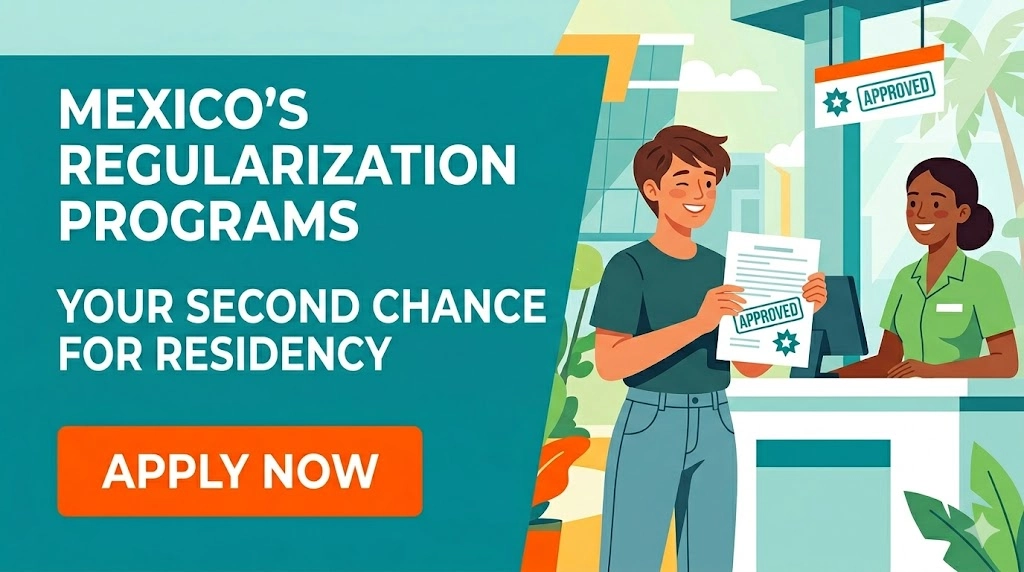
Recognizing that mass deportations of integrated, peaceful expats are economically disruptive and logistically impossible, the Mexican government offers a bureaucratic lifeline. This is known universally as the Programa de Regularización Migratoria (Immigration Regularization Program).
What is the Regularization Program
The Regularization Program is fundamentally an amnesty initiative. It is a pragmatic, highly formalized legal pathway designed to allow foreigners who have fallen out of legal status to step out of the shadows, pay their penalties, and integrate into the formalized Mexican registry. It represents a shift from a punitive mindset to an integration mindset.
The program acknowledges that many expats contribute positively to the local economy. They rent apartments, buy groceries, and support local businesses. Deporting them simply because they missed a renewal deadline or misunderstood a tourist stamp is counterproductive. By offering a path to regularization, the government captures lost revenue through application fees and ensures all residents are properly vetted, documented, and identifiable within the national database.
It is critical to understand that this is not a loophole; it is a meticulously documented federal procedure. It requires extreme humility. You are actively admitting to the Mexican government that you broke their laws. You must approach the process not with entitlement, but with a profound respect for their willingness to offer you a second chance at building a life within their borders.
However, the program is often temporary or cyclical. The federal government periodically opens and closes specific regularization windows based on internal policy shifts. You must constantly monitor official INM communications to determine if a generalized amnesty program is currently active, or if you must apply under specific, localized administrative guidelines for expired documents.
Eligibility Criteria and Who Qualifies
Not every undocumented foreigner is automatically eligible for regularization. The INM imposes strict, non-negotiable criteria to filter out transient bad actors and prioritize individuals who have established genuine roots in the country. The criteria frequently shift, but there are baseline requirements that govern the landscape.
First, you must prove that your irregularity is simply an administrative failure, not a criminal one. You must possess a completely clean criminal record, both within Mexico and in your home country. If you have been arrested for violent crimes, severe fraud, or drug offenses, your application will be instantly rejected and deportation proceedings will commence.
Second, many iterations of the program require you to prove that you entered the country legally before your status expired. You must produce your original passport bearing the physical entry stamp or possess the digital FMM receipt proving you were inspected by an agent upon arrival. If you sneaked across the border undetected without any initial documentation, you generally do not qualify for standard administrative regularization.
Finally, the program often targets individuals who have continuously resided in Mexico for a specific period of time. The government wants to see that you are actually living here, not just dropping in and out. You may be asked to prove your continuous physical presence through utility bills, localized apartment leases, or bank statements showing daily local transactions.
The Reward Transitioning to Temporary Residency
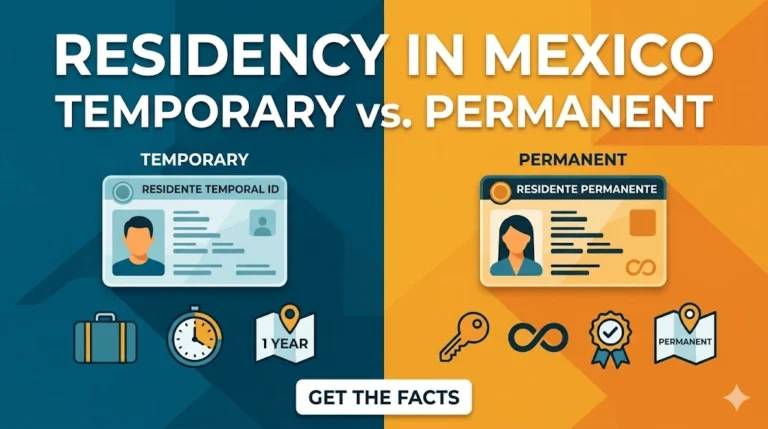
The ultimate prize for successfully surviving the regularization gauntlet is the issuance of a Residente Temporal (Temporary Resident) visa. This is the exact same plastic residency card that standard, legally processed expats receive. It instantly legitimizes your entire existence in the country.
Receiving this card wipes the slate clean. Your irregular past is forgiven, and you are officially entered into the national registry as a legal resident. You are granted a CURP, which allows you to seamlessly engage with the formal economy, secure long-term housing, and bypass the extortion risks that haunted your undocumented days.
Crucially, the temporary residency granted through regularization operates on the standard progression track. Your initial card will be valid for one to four years. Once you possess it, you must adhere strictly to the annual renewal protocols. If you successfully maintain this legal status for four consecutive years, you become eligible to transition to Permanent Residency, forever closing the chapter on your immigration anxiety.
| Feature | Standard Consulate Application | Programa de Regularización |
| Application Location | Outside Mexico (Home Consulate) | Inside Mexico (Local INM Office) |
| Economic Solvency | Strict, High UMA Thresholds | Frequently Waived or Lowered |
| Current Legal Status | Must be legally outside Mexico | Must be currently irregular/expired |
| Processing Time | Weeks (Consulate) + 30 Days (Canje) | Months (Pending INM Resolution) |
| Travel Restrictions | Free to travel until Canje begins | Cannot leave Mexico during processing |
The Financial and Bureaucratic Realities
Regularizing your status is a massive bureaucratic undertaking. You are essentially begging the government to waive the rules for you, which means they will scrutinize your paperwork with ruthless intensity. You must be prepared for significant financial and administrative friction.
Waiving the Income Requirements
The single greatest advantage of the regularization program—and the reason many expats desperately seek it out—is the financial leniency. Under the standard temporary residency application process initiated abroad, expats must prove massive economic solvency, often requiring proof of over $4,500 USD in monthly income or $75,000 USD in liquid savings.
Under specific regularization guidelines, the INM frequently waives or drastically lowers these aggressive economic solvency requirements. Because the program is designed as a humanitarian and administrative amnesty, the government recognizes that many people who overstayed cannot meet the towering UMA thresholds. They are more interested in documenting your presence than proving your immense wealth.
This leniency is an absolute miracle for younger digital nomads, freelance creatives, and retirees on strict fixed incomes who accidentally overstayed but genuinely want to contribute to the local culture. It provides a backdoor to legal residency for those who have been priced out of the standard consular pathway, a financial dynamic we explore deeply in Digital Nomads in Mexico: Remote Work Guide.
Government Fees and Fines Explained
While the income thresholds may be waived, the regularization process is absolutely not free. You are actively penalizing yourself for breaking the law, and the Mexican government expects to be compensated for their administrative leniency. You must be prepared to pay multiple overlapping fees.
First, you must pay the multa (fine) for overstaying your visa. The fine is calculated based on the exact number of days you have been undocumented. If you overstayed by three days, the fine is relatively minor. If you have been living illegally in Oaxaca for three years, the fine can easily run into thousands of pesos. You cannot negotiate this fine; it is algorithmically generated by the INM system.
Second, you must pay the standard application fee for the residency procedure itself, known as the Recepción y estudio. Finally, if your application is approved, you must pay the issuance fee for the physical plastic residency card (Expedición de documento migratorio). Altogether, you should budget anywhere from $300 to $800 USD equivalent in physical pesos to cover the total cost of the fines, applications, and card issuance.
The Cost of Certified Document Translations
Because you are applying for a highly scrutinized amnesty program, your identity and background must be impeccably documented. The INM will require your original passport, but depending on the specific regularization pathway, they may also demand foreign birth certificates, marriage licenses, or home-country police background checks.
The Mexican government operates strictly in Spanish. They will instantly reject any legal document presented in English, French, or German. Every single foreign document you submit must be formally apostilled in your home country and then officially translated into Spanish by a certified professional. You cannot translate these yourself, and automated internet translations will result in an immediate denial.
This is where leveraging a certified service like RushTranslate becomes your greatest tactical advantage. When the INM demands a localized translation of your Canadian birth certificate or your US marriage license, you cannot afford bureaucratic delays. By submitting your apostilled documents to RushTranslate, you receive legally certified, flawlessly accurate Spanish translations back within 24 hours. Because RushTranslate guarantees acceptance by global immigration authorities, you eliminate the risk of a grumpy INM clerk rejecting your entire regularization packet over a translation technicality.
Step-by-Step Guide to the Application Process
You cannot casually walk into an immigration office and ask for a pardon. Executing a successful regularization application requires military precision, infinite patience, and absolute adherence to the established INM protocols.
Initiating the Process Inside Mexico
The most unique aspect of the regularization program is its geography. Unlike standard residency, which must legally begin at a Mexican consulate in your home country, the regularization process is initiated and executed entirely from within Mexico. You do not have to leave the country.
The process begins online. You must navigate to the official INM digital portal and fill out the specific application form for Regularización por Documento Vencido (Regularization for Expired Document) or the broader amnesty program currently active. You must generate the payment slips (hojas de ayuda) and physically pay the initial application fees at a local Mexican bank branch (like Santander or BBVA).
Once the fees are paid, you must secure an appointment (cita) at your local INM delegación. Depending on the city, securing this appointment can take weeks. You must fiercely protect this appointment date, as missing it can result in the automatic cancellation of your regularization attempt.
Gathering the Required Paperwork
Walking into an INM office without a perfectly assembled document portfolio is a fatal error. You must prepare a comprehensive binder that leaves absolutely no room for administrative doubt. The Mexican bureaucracy operates on the “cult of the photocopy.” If the mandate asks for one copy, bring five pristine copies of every single page.
Your portfolio must include your original passport and copies of all data pages, your expired FMM tourist card or expired residency card, and the original bank receipts proving you paid the application fees. You must also provide a rock-solid proof of address (comprobante de domicilio), usually a recent electricity bill in your name or your landlord’s name, accompanied by a signed lease agreement.
Crucially, you must submit an Escrito Bajo Protesta de Decir Verdad (A Letter Under Oath to Tell the Truth). This is a formal, signed letter written entirely in Spanish addressed to the INM delegates. In this letter, you must politely, humbly, and clearly explain exactly how and why your legal status expired, and formally request to be regularized. If your Spanish drafting skills are poor, do not attempt to write this yourself. Write it in English and have RushTranslate execute a formal, certified translation into professional Spanish. Submitting a poorly worded, confusing apology letter translated via Google can severely damage the credibility of your application.
Surviving the INM Waiting Rooms
The day of your INM appointment is a grueling test of your sanity. You must arrive early, dress professionally, and prepare to wait. INM offices are notoriously understaffed, chaotic, and lacking in basic amenities. You may sit in a hard plastic chair for four to six hours before your name is called.
The officials processing your regularization are under no obligation to speak English. If you do not understand their instructions, they will simply tell you to leave and come back with a translator. When you finally reach the desk, you must hand over your impeccably organized binder. The agent will scrutinize every signature. If approved to move to the next step, you will be fingerprinted, photographed, and asked to sign digital biometric pads.
You must remain infinitely patient, polite, and subservient throughout this entire ordeal. Do not lose your temper, sigh loudly, or express frustration. The clerk behind the desk holds your entire future in Mexico in their hands. We discuss how to properly navigate this specific cultural deference in Mexican Etiquette and Customs: Do’s and Don’ts for New Expats.
Health and Logistics During the Transition
The most agonizing part of the regularization process is the waiting period. After you submit your paperwork, the INM can take anywhere from two to six months to issue a final resolution. During this time, you exist in a highly vulnerable legal limbo.
The Legal Limbo Travel and Employment Restrictions
When your application is accepted for processing, the INM issues you a document containing a Número Único de Trámite (NUT). This piece of paper is your temporary shield. If the police or National Guard stop you, presenting your NUT proves that you are actively resolving your immigration status, protecting you from immediate deportation.
However, the restrictions during this waiting period are absolute. You cannot legally work or engage in any remunerative activities inside Mexico. You must rely entirely on your foreign savings or remote offshore income to survive. Furthermore, you are absolutely forbidden from leaving the country. If you attempt to cross the border and fly home for a wedding or an emergency while your regularization is pending, your application is instantly abandoned, and your money is forfeited. You are physically trapped inside Mexico until the plastic card is in your hand.
Managing Healthcare Without Legal Status
Existing in a legal limbo presents severe risks to your physical well-being. Because you do not yet possess a valid residency card, you are completely locked out of the Mexican public healthcare system (IMSS). You have zero governmental safety net.
If you are involved in a scooter accident, contract severe dengue fever, or require emergency surgery while your paperwork is pending, you must utilize the private healthcare sector. Mexican private hospitals operate strictly as businesses. If you arrive at an emergency room without legal residency and without immediate access to massive amounts of liquid cash, they will demand astronomical upfront credit card deposits before they even look at you. We detail the terrifying reality of these costs in Healthcare Costs in Mexico: Doctor Visits, Hospital Stays, and Surgery Expenses.
The Importance of International Medical Coverage
To survive this highly vulnerable transitional period, you must secure robust private medical coverage. Relying on luck is a catastrophic financial gamble.
Securing a premium, borderless policy from Cigna Global is the ultimate defense for an expat navigating the regularization limbo. Because Cigna Global is an international provider, your coverage is not contingent upon possessing a localized Mexican residency card. If an emergency strikes while you are waiting for your INM resolution, your Cigna Global policy ensures you are immediately admitted to top-tier private trauma centers without being extorted for massive cash deposits. It provides the absolute peace of mind required to survive the agonizing, months-long wait for your legal papers.
Securing Housing While Undocumented
Finding a safe place to live while waiting for your residency card is a massive logistical hurdle. Professional real estate agencies will reject your rental application the moment they realize your passport stamp is expired.
During this transitional phase, you must rely on alternative housing strategies. Many expats utilize long-term Airbnb rentals, which bypass local lease laws but charge massive premiums. A far more strategic option is to shelter in a highly secure, community-driven coliving space. By booking a long-term stay at a globally recognized hub, you secure enterprise-grade internet, a safe room, and a community of bilingual locals without ever having to present a legal residency card or sign a binding Mexican lease. This buys you the safe, reliable time you need to finalize your paperwork.
Protecting Your Status After Approval
The day you are finally called back to the INM office to pick up your physical, plastic Residente Temporal card is a day of profound liberation. You have officially beaten the system and reclaimed your life. However, you must aggressively protect this newly minted status.
Receiving the Card and Updating Information
With your plastic card in hand, you must immediately integrate into the formal systems you were previously locked out of. Your very first task is to visit the SAT office to secure your official RFC (Tax ID). Securing this localized tax number is legally mandatory and allows you to finally legitimize your financial existence, a process we demystify in Taxes in Mexico for Expats: A Complete Guide to Income Tax and More.
Next, you must march into a local Mexican bank, present your shiny new residency card, and open a domestic bank account. This severs your reliance on dangerous cash withdrawals and allows you to pay rent via the instantaneous SPEI digital network, fully normalizing your daily life.
Navigating the Annual Renewal Process
Your regularization is a massive victory, but it is a temporary one. The residency card granted through this program is usually only valid for exactly one year. You have merely hit the reset button; you must now play by the rules.
You must begin your annual renewal process precisely within the 30-day window before your card expires. If you show up one day late, you risk massive fines or losing the residency you just fought so brutally to acquire. Furthermore, under immigration law, if you move to a new apartment or change your marital status, you are legally mandated to notify your local INM office within 90 days. Failing to update your address will result in severe penalties during your renewal.
The Pathway to Permanent Residency
The ultimate goal of regularization is permanence. By adhering strictly to the renewal protocols, you build a pristine legal record. Once you successfully maintain your Residente Temporal status for four consecutive years, you reach the finish line.
You become legally eligible to transition to Residente Permanente. This transition is the final reward for your endurance. Once you secure Permanent Residency, your card never expires, you automatically gain the unrestricted right to work locally in the Mexican economy, and you are officially free from the annual INM renewal bureaucracy forever. By surviving the regularization gauntlet, you transform a terrifying legal mistake into a permanent, secure, and beautiful life in Mexico.
References
Primary sources (official)
- Secretaría de Gobernación (SEGOB): The federal ministry overseeing migration policy, providing official decrees and legal frameworks for temporary amnesty programs. https://www.gob.mx/segob
Other helpful sources
- RushTranslate: Premier certified translation service ensuring your apostilled foreign birth certificates, marriage licenses, and formal appeal letters are flawlessly translated and accepted by Mexican immigration authorities during regularization. https://rushtranslate.com/
- Cigna Global: Comprehensive international health insurance provider, offering borderless policies that protect undocumented expats from massive private hospital bills while they await their legal residency resolutions. https://www.cignaglobal.com/
Disclaimer
The information provided in this article is for educational and informational purposes only and does not constitute official legal, immigration, medical, or tax advice. Mexican immigration laws, the specific eligibility criteria for the Programa de Regularización Migratoria, and INM administrative procedures are highly complex, strictly enforced, and subject to rapid, unannounced changes at the federal level. Overstaying a tourist visa carries severe legal risks, including detention and permanent deportation. Always conduct extensive due diligence, verify current regularization windows directly with your local INM office, and consult with a licensed, bilingual Mexican immigration attorney (abogado migratorio) before approaching federal authorities or submitting amnesty applications.