Cost of Living in Oaxaca City: How Affordable Is It for Expats?
Walking through the cobblestone streets of Oaxaca City, enveloped by the scent of roasted agave, complex moles, and blooming jacarandas, it is incredibly easy to be hypnotized by the magic of this southern Mexican highland. I vividly remember my first time sitting in a sun-drenched courtyard in Jalatlaco, completely convinced I had found the ultimate, budget-friendly bohemian paradise. This comprehensive guide strips away the romanticized myths and provides a candid, brutally honest breakdown of what it actually costs to live, thrive, and financially survive in Oaxaca City today.
Disclosure: This post may contain affiliate links. We may earn a commission at no extra cost to you if you make a purchase through these links. Read full disclosure.
1. Housing and Real Estate: Navigating the Gentrification Divide
The single largest line item in your Oaxaca budget is rent. Because the city is geographically constrained by surrounding mountains, the highly desirable, walkable neighborhoods are incredibly small in square footage. This restricted supply, meeting massive international demand, has caused real estate prices in the center to skyrocket over the past five years.
The Trendy Triangle: Centro, Jalatlaco, and Xochimilco
If your dream is to step out of your front door and immediately walk to world-class mezcalerías, artisan coffee shops, and historic plazas, you will be looking at the “Trendy Triangle” consisting of the Centro Histórico, Jalatlaco, and Xochimilco. These neighborhoods are visually stunning, incredibly safe, and deeply gentrified.
Finding a long-term lease here is fiercely competitive. Landlords realize they can charge premium nightly rates on short-term rental platforms, which drastically reduces the long-term housing stock available to actual residents. Renting a beautifully restored, furnished one-bedroom apartment or a small traditional house (casita) in these zones routinely costs between $1,000 and $1,800 USD per month. If you want a rooftop terrace or a private courtyard, prices easily exceed $2,000 to $2,500 USD.
The Upscale Suburbs: Reforma and San Felipe del Agua
For expats who prioritize quiet, space, and modern amenities over being in the immediate historic center, the northern neighborhoods of Colonia Reforma and San Felipe del Agua are the gold standard.
Reforma is an upscale, commercial-residential mix populated by wealthy locals and established expats. It features wider streets, modern supermarkets, excellent cafes, and premium fitness centers. A spacious, modern two-bedroom apartment here typically ranges from $800 to $1,400 USD.
Further north, nestled directly against the mountains, lies San Felipe del Agua. This is the wealthiest enclave in the city, characterized by massive walled estates, luxury vehicles, and absolute tranquility away from the downtown noise. Renting a large family home with a garden here will generally cost between $1,500 and $3,000 USD per month.
The Smart Expat Strategy: Local Neighborhoods
To reclaim your budget without sacrificing safety, savvy expats look to working-class, transitional neighborhoods just outside the center. Areas like Santa Lucía del Camino, Cinco Señores, or the immediate outskirts of the city limit offer phenomenal value.
In these areas, the streets are noisier, you will hear more barking dogs and wandering vendors, and English is rarely spoken. However, the financial savings are massive. You can secure a modest, functional two-bedroom Mexican apartment here for $400 to $700 USD per month. By simply expanding your search radius a 15-minute taxi ride from the Zócalo, you can slash your housing budget by up to 60%.
The Bureaucracy of Leasing
Securing a 12-month lease in Oaxaca involves navigating a strict bureaucratic gauntlet. Traditional landlords aggressively protect themselves against transient tenants and squatters. You will generally be asked to provide a fiador (a guarantor who owns debt-free property in the state of Oaxaca). Because new expats lack this local connection, you will usually be required to pay for a póliza jurídica—a legal background check and contract fee that costs roughly 30% to 50% of one month’s rent.
Furthermore, you are generally expected to provide the first month’s rent and a security deposit equal to one month’s rent upfront. When you need to transfer several thousand dollars to secure a lease, relying on a traditional US or Canadian retail bank will subject you to brutal exchange rate markups and sluggish wire delays. To guarantee the money arrives instantly and without hidden margin fees, the entire expat community relies on Wise. By loading your home currency into Wise, you secure the true mid-market exchange rate and can execute a local SPEI transfer directly to the landlord. We explore this localized leasing process deeply in Renting a Home in Mexico: Complete Expat Guide to Leases, Deposits, and More.
2. Utilities, Climate, and the Oaxaca Water Crisis
Understanding utilities in Oaxaca requires a fundamental shift in how you view modern infrastructure. The most critical, stress-inducing, and heavily budgeted utility in this city is not electricity or internet—it is water.
The Water Scarcity Tax
Oaxaca is in the grips of a severe, multi-year water crisis. The municipal infrastructure is antiquated, and the surrounding aquifers are heavily depleted due to prolonged drought and the massive water demands of the booming, industrialized mezcal sector. In many neighborhoods, municipal water (agua potable) only flows through the city pipes once every two to three weeks, and sometimes not at all for months during the dry season.
To survive, every functional home in Oaxaca relies on a dual-tank system: an underground cistern (cisterna) and a rooftop gravity tank (tinaco). When the municipal pipes run dry, you must purchase water from private water trucks known as pipas.
The demand for pipas is staggering, and prices surge during the dry months of March and April. A standard 10,000-liter water truck costs roughly 1,200 to 1,500 MXN (about $60 to $80 USD). If you rent an apartment with a tiny cistern, you will have to order smaller, incredibly expensive deliveries multiple times a month. Before signing any lease in Oaxaca, you must physically inspect the size of the cisterna and clarify in writing whether the landlord or the tenant pays for the pipas. Budgeting an extra $50 to $100 USD a month purely for trucked-in water is an unavoidable reality of the Oaxacan lifestyle.
Electricity (CFE) and Domestic Gas
The geographical blessing of Oaxaca is its altitude. Sitting at roughly 5,000 feet (1,500 meters) above sea level, the city boasts a temperate “eternal spring” climate. While late April and May can be uncomfortably hot, you will rarely, if ever, need central air conditioning.
Because you aren’t running heavy AC units around the clock, electricity—provided by the state-owned CFE (Comisión Federal de Electricidad)—is incredibly cheap. A standard bi-monthly bill usually hovers between $15 and $30 USD.
Domestic gas, used for cooking and heating your shower water via a standard boiler, is delivered by truck to a stationary tank on your roof or sold in portable cylinders. Depending on how frequently you cook at home, a gas refill will run roughly $15 to $30 USD per month.
Telecommunications and Connectivity
Despite its historical charm, Oaxaca has modernized its digital infrastructure to cater to remote workers and digital nomads. Providers like Telmex (Infinitum) and Megacable offer reliable, high-speed fiber-optic internet in the central and northern neighborhoods. A premium connection (100 to 300 Mbps) capable of supporting heavy video conferencing typically costs between $25 and $45 USD per month. You can review the nuances of securing these utility contracts as a foreigner in Internet and Mobile Phone Plans in Mexico: Staying Connected as an Expat.
3. Food and Dining: The Culinary Capital of Mexico
Oaxaca is widely considered the gastronomic heart of Mexico. Your grocery and dining budget here is highly elastic and depends entirely on whether you embrace local agricultural rhythms or insist on importing your North American lifestyle.
The Mercado Economy vs. Supermarkets
If you shop at the massive corporate supermarkets (like Chedraui, Soriana, or Walmart located in Reforma or Plaza del Valle) and fill your cart with imported European cheeses, American peanut butter, and specialized gluten-free products, your grocery bill will easily mirror US prices—averaging $400 to $600 USD a month for a couple.
To live economically and experience the true flavor of the region, you must shift your shopping to the traditional markets. The sprawling Mercado de Abastos is the chaotic, vibrant, wholesale epicenter of the city. Here, you can buy a week’s worth of incredibly fresh, farm-direct produce, artisan cheeses (quesillo), and freshly ground spices for a fraction of corporate supermarket prices.
For daily, manageable shopping without the overwhelming crowds of Abastos, neighborhood markets like the Mercado de la Merced or Mercado Sánchez Pascuas are phenomenal. By supplementing basic supermarket runs with trips to local fruterías and markets, a couple can eat exceptionally well for $250 to $350 USD a month.
The Dining Spectrum: Street Food to Tasting Menus
The disparity in dining costs in Oaxaca is mind-boggling. You can walk out of your apartment and buy a massive, phenomenal tlayuda (a large, toasted tortilla covered in beans, pork fat, meat, and cheese) or a plate of memelas from a street vendor for $3 to $5 USD. Neighborhood fondas offer comidas corridas (fixed-price, three-course lunches) for roughly $5 to $8 USD.
Conversely, Oaxaca boasts a high-end culinary scene that rivals Mexico City. Restaurants helmed by world-renowned chefs cater heavily to wealthy tourists. If you dine at upscale establishments in Centro, exploring avant-garde mole tasting menus and premium wild-agave mezcal flights, a dinner for two will effortlessly exceed $100 to $200 USD.
To manage these restaurant bills effortlessly without accumulating 3% foreign transaction fees on your legacy credit cards, smart expats use localized digital funding strategies. You can read exactly how to optimize your spending apps in Using Credit and Debit Cards in Mexico: What Expats Need to Know.
4. Navigating the City: Transportation and “Bloqueos”
Walkability and Ride-Sharing
The absolute best way to experience Oaxaca is on foot. If you live in Centro, Jalatlaco, or Xochimilco, you can walk to almost everything you need, from daily groceries to evening entertainment.
When walking isn’t feasible, ride-sharing is the preferred method for expats. It is important to note that DiDi is vastly more popular and reliable than Uber in Oaxaca. A 15-minute DiDi ride across town typically costs between $3 and $6 USD. Traditional yellow taxis are ubiquitous, but they are not metered; you must fiercely negotiate and establish the fare with the driver before getting in the vehicle.
The Reality of Car Ownership and “Bloqueos”
Do not buy a car if you live in central Oaxaca. The cobblestone streets are incredibly narrow, parking is virtually non-existent, and the suspension damage from the rough roads will drain your wallet.
More importantly, Oaxaca is a highly politically active state. The city is famous for its bloqueos (blockades). Teachers’ unions, indigenous groups, and local syndicates frequently protest by commandeering public buses and completely blocking major intersections, highways, and even the toll road to Mexico City. During a major bloqueo, vehicular traffic in the city grinds to an absolute halt for hours or even days. If you own a car, you will inevitably find yourself trapped. Walking and utilizing nimble public transit is the only way to retain your sanity and your budget.
For regional travel to the coast (Puerto Escondido or Mazunte), the recently completed Barranca Larga–Ventanilla highway has drastically reduced travel times. Taking an ADO bus or a private shuttle van (suburban) to the beach is highly affordable and completely negates the need for a personal vehicle.
5. Healthcare in the Southern Highlands
Local Clinics and Routine Care
While Oaxaca does not possess the massive, towering medical tourism complexes found in Monterrey or Cancún, it has excellent private medical infrastructure for routine and moderate care. Private clinics and hospitals, such as Hospital Reforma and Clínica Hospital del Carmen, offer quality care and modern diagnostic imaging.
Routine medical care is highly accessible and remarkably affordable. Booking an appointment with an English-speaking general practitioner or specialist generally costs between $30 and $60 USD out-of-pocket. Dental work, ranging from routine cleanings to complex restorative procedures, is consistently 60% to 70% cheaper than North American prices. Many younger expats simply self-insure, paying cash for their daily medical needs.
The Absolute Necessity of Global Insurance
For highly complex, specialized surgeries, severe trauma, or advanced oncology, expats in Oaxaca are frequently transferred to the neighboring metropolises of Puebla or Mexico City.
Relying entirely on a cash-only strategy for catastrophic emergencies is incredibly dangerous. A severe accident or a major illness requiring ICU admission and an air-ambulance transfer can easily result in bills exceeding $50,000 to $100,000 USD. Mexican private hospitals operate strictly as businesses; they demand massive upfront cash deposits or credit card holds before they will even admit you to a trauma room.
You must budget for a premium international health insurance policy. For a healthy adult, a robust global policy typically costs between $150 and $300 USD per month. This premium acts as your ultimate financial shield, ensuring you are treated in top-tier facilities without liquidating your retirement savings. We break down these exact insurance mechanics and facility costs in Healthcare Costs in Mexico: Doctor Visits, Hospital Stays, and Surgery Expenses.
6. Managing Cross-Border Finances and Wealth
The Invisible Tax of Retail Banking
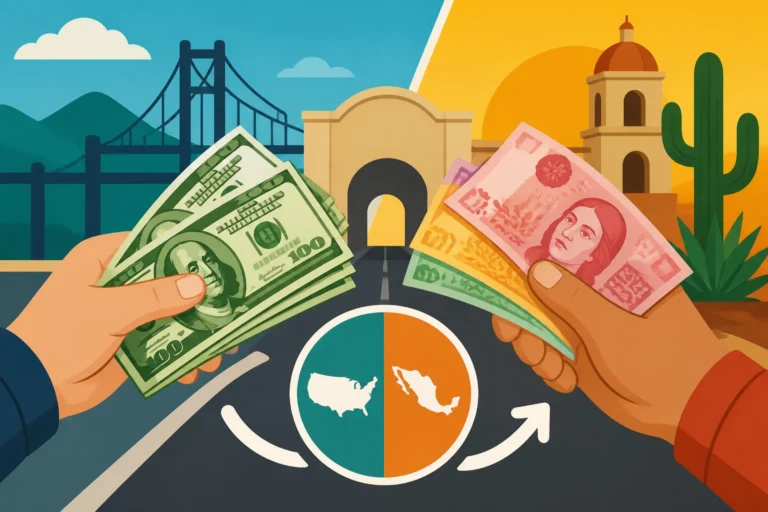
The most devastating mistake new expats make in Oaxaca is treating their finances exactly as they did back in the US, Canada, or Europe. When you move to Mexico, you must regularly convert your home currency to pesos to fund your daily life. If you rely on traditional retail banks to wire your rent or use their debit cards at local ATMs, you are being robbed blindly by hidden currency conversion markups and flat out-of-network withdrawal fees.
Traditional banks bake massive profit margins into their exchange rates, often skimming 3% to 5% off your money before it ever reaches Mexico. Over a single year, this invisible “expat tax” can cost you thousands of dollars in lost purchasing power.
To permanently escape this trap, the savvy expat community routes their monthly living expenses through Wise. By funneling your home currency through Wise, you guarantee the true mid-market exchange rate. Wise bypasses the sluggish SWIFT banking network, depositing your pesos instantly into your local Mexican bank account via the domestic SPEI system. It is the ultimate tool for stretching your monthly budget.
Protecting Your Global Assets
While you must manage your daily liquidity in pesos, keeping your life savings, proceeds from a home sale, or massive remote salary localized in a Mexican retail bank is incredibly dangerous. The Mexican peso is an emerging market currency subject to intense geopolitical volatility. Your true wealth—your retirement accounts, emergency funds, and investment portfolios—must remain insulated from local economic shocks in hard currency.
Furthermore, many mainstream North American brokerages will forcefully restrict or close your investment accounts if they discover you have established a permanent foreign address in Mexico due to strict anti-money laundering compliance laws. Being forced to liquidate your retirement portfolio simply because you relocated is a devastating financial hit.
To prevent a catastrophic compliance freeze, proactive expats migrate their assets to Interactive Brokers. Because Interactive Brokers caters explicitly to an international clientele, you can legally maintain your global investment portfolio using your Oaxaca residential address. This ensures your wealth continues compounding securely in the global market, safely insulated from Mexican inflation. We explore these advanced strategies deeply in Banking in Mexico: Complete Guide for Foreigners.
Tax Implications for Digital Nomads and Retirees
If you spend more than 183 days a year in Mexico, the Mexican tax authority (SAT) legally considers you a tax resident, meaning you are obligated to declare your worldwide income.
Many remote workers assume that because their employer is abroad and their salary is deposited into a foreign bank account, Mexico has no right to tax them. This is entirely incorrect and highly dangerous in the modern era of automated global banking data exchanges (like CRS and FATCA). You must utilize Double Taxation Agreements to ensure you don’t pay taxes twice on the same dollar. We untangle these dual-country obligations comprehensively in Taxes in Mexico for Expats: A Complete Guide to Income Tax and More.
7. Three Realistic 2026 Oaxaca Budgets
To contextualize the data, here are three realistic monthly budget profiles for a single expat living in Oaxaca City.
Profile 1: The “Lean Local” (Santa Lucía / Xoxocotlán)
This expat avoids the prestige historic zones entirely, cooks at home using the Mercado de Abastos, relies on walking and colectivos, meticulously manages their water usage, and integrates into the local working-class economy.
- Rent (Unfurnished 1BR/2BR apartment outside center): $500 USD
- Utilities, Internet & Extra Water Pipas: $70 USD
- Groceries (Local markets & basic staples): $250 USD
- Dining Out (Street tacos, local fondas): $120 USD
- Transportation (Walking & Colectivos): $30 USD
- Healthcare (Basic Expat Insurance & Cash Clinics): $120 USD
- Entertainment/Misc: $100 USD
- Estimated Monthly Total: $1,190 USD
Profile 2: The “Comfortable Remote Worker” (Reforma / Jalatlaco outskirts)
This is the standard digital nomad or comfortable expat budget. They rent a modern or restored apartment close to the action, enjoy high-speed fiber-optic internet, utilize a hybrid grocery strategy, take DiDi frequently, and enjoy the city’s vibrant dining and cafe scene.
- Rent (Furnished 1BR/2BR near cafes): $1,200 USD
- Utilities, Internet & Water Pipas (Plus Housekeeper 1x week): $140 USD
- Groceries (Supermarkets, some imported goods): $350 USD
- Dining Out & Mezcalerías: $350 USD
- Transportation (DiDi/Taxis exclusively): $100 USD
- Healthcare (Premium Global Insurance): $200 USD
- Entertainment/Gym/Misc: $200 USD
- Estimated Monthly Total: $2,540 USD
Profile 3: The “Luxury Historic Retiree” (Centro Histórico / San Felipe)
This expat expects a premium lifestyle with zero compromises. They rent a massive restored colonial home in Centro with a courtyard or a walled estate in San Felipe, dine at high-end tasting-menu restaurants, shop at premium imported supermarkets, and demand the highest tier of global financial and medical security.
- Rent (Luxury Colonial Home or San Felipe Estate): $2,800 USD
- Utilities, Internet, Water & Domestic Staff (Maid 2x week): $350 USD
- Groceries (Premium Imported Goods): $600 USD
- Dining Out (Fine Dining/Premium Mezcal Tastings): $800 USD
- Transportation (Private Drivers / Shuttles): $250 USD
- Healthcare (Top-Tier Global Insurance): $350 USD
- Entertainment & Wealth Management: $500 USD
- Estimated Monthly Total: $5,650+ USD
| Expense Category | Lean Local | Comfortable Remote | Luxury Retiree |
| Housing Target | Santa Lucía, Xoxo | Reforma, Jalatlaco | Centro Histórico, San Felipe |
| Dining Strategy | Fondas, Street Food | Trendy Cafes, Mid-range | Fine Dining, Tasting Menus |
| Transit Focus | Walking, Colectivos | Walking, DiDi | Private Driver |
| Wealth Mgmt | Cash/ATM Focus | Standard Banking | Interactive Brokers Global Mgmt |
| Transfer Tool | Wise | Wise | Interactive Brokers / Wise |
Conclusion: Designing Your Life in the Culinary Capital
Oaxaca City offers a uniquely enchanting, deeply indigenous, and culturally profound lifestyle. It boasts phenomenal cuisine, world-class arts, and an unapologetically authentic atmosphere. It is absolutely not the easiest place to live in Mexico—navigating the water crisis and the political protests requires patience, resilience, and adaptability—but it arguably offers one of the most soul-stirring experiences available in the Americas.
If you attempt to blindly replicate your North American lifestyle here—insisting on a massive home in the immediate historic center, relying purely on imported goods, and ignoring local infrastructural realities—your budget will escalate rapidly, and your frustration will peak. By choosing your neighborhood strategically, embracing the local agricultural markets, optimizing your daily currency conversions with platforms like Wise, and protecting your massive long-term wealth securely through Interactive Brokers, you can unlock an exceptional, sustainable quality of life in the true cultural heart of Mexico.
References
Primary sources (official)
- Banco de México (Banxico): Official central bank portal for verifying daily mid-market exchange rates, historical inflation data, and monetary policy affecting the peso. https://www.banxico.org.mx/
Other helpful sources
- Interactive Brokers: Institutional-grade global brokerage protecting expat wealth and facilitating spot-market currency exchange for major real estate purchases. https://www.interactivebrokers.com/
Disclaimer
The information provided in this article is for educational and informational purposes only and does not constitute financial, investment, legal, real estate, or tax advice. Macroeconomic conditions, inflation rates, real estate markets in gentrified zones, water infrastructure challenges, and currency exchange rates are highly volatile and subject to rapid change. The budgets presented are estimates, and individual lifestyle choices will heavily dictate actual monthly expenditures. Always consult with a certified cross-border financial planner and a qualified tax professional before relocating, restructuring your assets, or making significant financial decisions.