How to Enter Mexico While Your Visa Is Being Processed
You’ve spent months gathering paperwork, only to realize a family emergency or a business trip is calling you back across the border right in the middle of your residency swap. I remember the cold sweat I broke into when I realized my flight home was scheduled just three days after my fingerprinting appointment at the INM. This guide solves the "limbo" problem, explaining exactly how to enter and exit Mexico without voiding your pending visa.
Disclosure: This post may contain affiliate links. We may earn a commission at no extra cost to you if you make a purchase through these links. Read full disclosure.
Understanding the Residency Workflow and Travel Restrictions
The biggest mistake most foreigners make is thinking that once they have a visa sticker in their passport, they are "safe" to travel as they please. In reality, the Mexican immigration process is divided into two distinct phases, and the rules for entering and exiting change dramatically between them. If you mess up the entry protocol at the airport or land border, you could inadvertently cancel your entire application, forcing you to start from scratch and pay all the fees again.
The first phase is the "Consular" stage. This is when you visit a Mexican consulate in your home country and receive a visa sticker in your passport. This sticker is not your residency; it is essentially a "one-time use" permit that tells the border agent you are entering to finalize your residency. The second phase is the "Canje" (exchange) process, which takes place inside Mexico at the Instituto Nacional de Migración (INM). During this phase, you are exchanging that sticker for a plastic resident card. Between the moment you enter Mexico and the moment you hold that plastic card in your hand, you are in a state of immigration limbo.
To understand the stakes, you should familiarize yourself with Mexico Immigration Terminology 101: FMM, CURP, RFC and Other Essentials. Knowing the difference between a visa and a residency card is the first step toward avoiding a catastrophic mistake at the port of entry. If you leave during this window without the proper authorization, the system will mark your "Canje" as abandoned.
The First Entry: Converting the Sticker to a Card
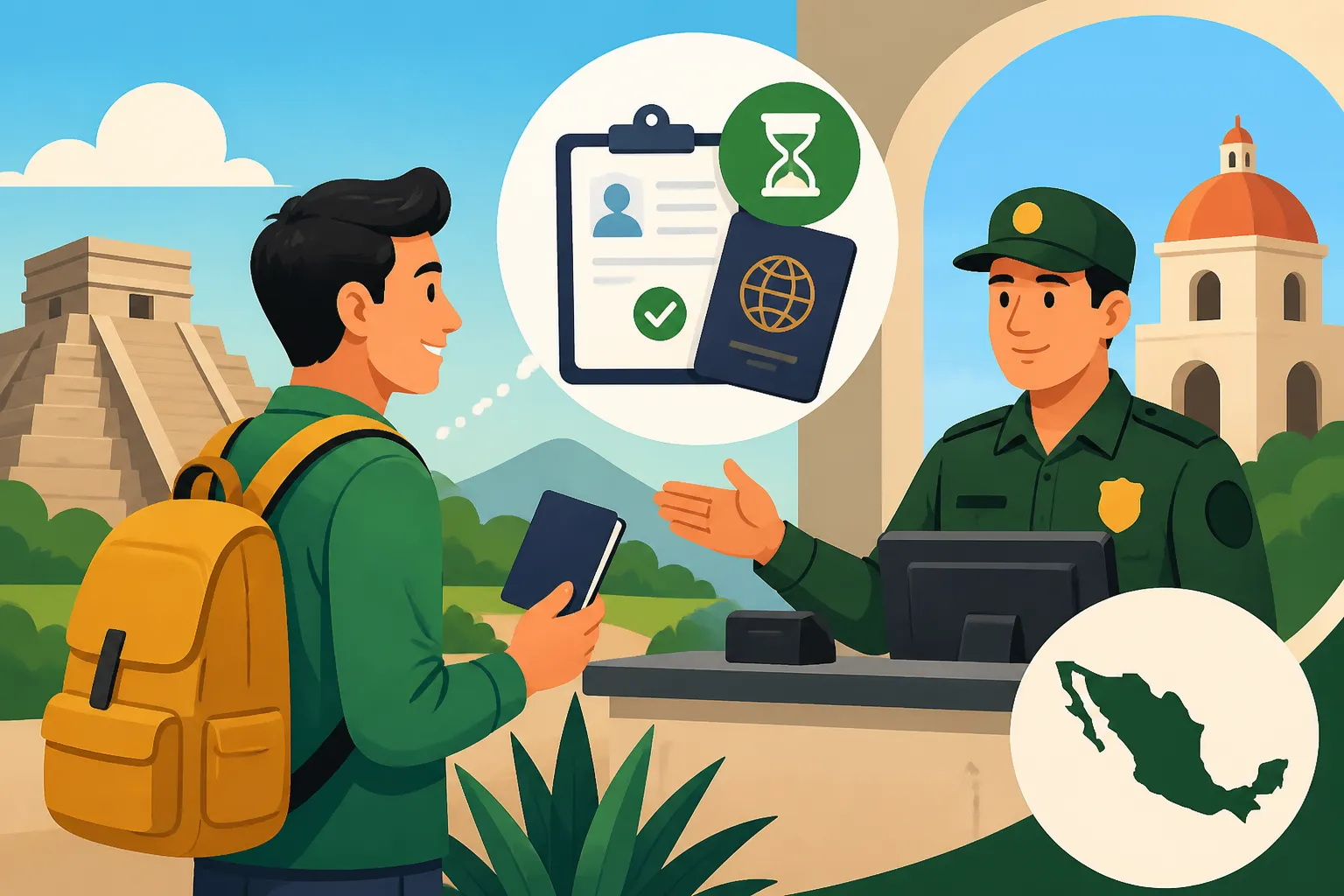
When you first arrive in Mexico with your brand-new visa sticker, the way you enter the country is critical. In the past, every traveler had to fill out a paper form called an FMM. While many major airports like Mexico City and Cancun have moved toward digital systems and passport stamps, the underlying requirement remains the same: the agent must mark you as a "Canje" (Exchange) and not as a "Turista" (Tourist).
I’ve heard horror stories of expats being ushered through the electronic gates (E-Gates) at the airport, only to find out later that the system automatically logged them as tourists. If this happens, your residency process is dead on arrival. You must speak to a human officer and ensure they see your visa sticker. They need to write "Canje" and "30 days" on your entry record. This gives you exactly 30 days to report to the nearest INM office to begin the exchange. For more details on this specific document, read What Is a Forma Migratoria Múltiple (FMM) and How Does It Work?.
If you are entering by land, you must stop at the border station. Do not simply drive through. You need to pay the fee and get your entry recorded correctly. If you walk into an INM office a week later without that specific "Canje" entry record, they will tell you to leave the country and come back. It’s a frustrating, expensive mistake that I’ve seen happen to even the most prepared travelers.
The Salida y Regreso: Your Golden Ticket for Travel
If you have already started your paperwork at the INM office—meaning you’ve submitted your application and received a "pieza" number—but you do not yet have your plastic card, you cannot leave and re-enter Mexico freely. To do so, you must apply for a "Permiso de Salida y Regreso" (Exit and Return Permit). This is a physical piece of paper with your photo on it that authorizes you to be outside the country for up to 60 days while your residency is being processed.
Applying for this permit is a separate mini-process within the INM. You’ll need to provide proof of why you need to leave, though in most offices, "personal reasons" is an acceptable explanation. The timing is crucial. You should apply for this permit at least two weeks before your flight. Once issued, the permit is valid for a single exit and entry. If you leave without it, or if you stay outside Mexico for more than 60 days, your residency application will be automatically cancelled.
For a deep dive into the logistics of this permit, check out How to Obtain a Mexican Exit Permit (Salida y Regreso) During Visa Processing. It is the only legal way to maintain your status while your residency is in the "waiting for approval" or "waiting for printing" stage. I personally recommend keeping a digital and physical copy of this permit, as you will need to present it to the airline and the immigration officer upon your return.
Document Prep and the Role of Certified Translations
Navigating the INM involves a mountain of paperwork. One of the most common reasons for delays or rejections during the visa entry and processing phase is improperly prepared documents. Mexico is very strict about its "Perito Traductor" (Official Translator) requirements for documents that are not in Spanish. Whether it is your bank statements for proving solvency or marriage certificates for a family-based visa, the quality of the translation matters.
Many expats find success using professional services to ensure their documents meet the high standards of Mexican bureaucracy. Using a service like RushTranslate can be a lifesaver when you are in a time crunch. I’ve seen people try to use basic Google translations, only to be laughed out of the INM office. A certified translation from a reputable company like RushTranslate provides the level of professionalism that Mexican officials expect.
When you are preparing for your INM Office Visits: What to Expect When Processing Your Visa in Mexico, make sure every document is translated perfectly. If you are bringing documents from the US or Canada, you might also need an apostille. Having a reliable partner like RushTranslate to handle the linguistic side of things allows you to focus on the logistics of the immigration appointments themselves. Remember, once you have your card, you will also need to figure out How to Get a CURP as a Foreigner: The Mexican ID Number Explained to truly begin your life in Mexico.
Navigating the Port of Entry: Scenarios and Risks
The experience of re-entering Mexico depends heavily on your current status. The immigration officers at the airport see thousands of people a day, and they are trained to look for specific markers. If you are in the middle of your residency, you are no longer a tourist, but you aren't yet a "fully baked" resident. This middle ground is where the most errors occur.
| Your Current Status | Document Needed to Re-enter | Primary Risk |
|---|---|---|
| Visa Sticker (First Entry) | Passport with Sticker + FMM/Stamp | Being marked as a "Tourist" instead of "Canje" |
| Application Submitted (In-Process) | Passport + Salida y Regreso Permit | Application cancelled if entering as a Tourist |
| Residency Card Expired (Renewing) | Passport + Expired Card + Renewal Receipt | Denial of entry if renewal was not filed in time |
| Permanent Resident | Passport + Permanent Resident Card | No risk, as long as the card is valid |
If you find yourself needing to return to Mexico after your initial entry but before your card is ready, you must ensure the airline does not try to check you in as a tourist. Sometimes, gate agents at international airports don't understand the "Salida y Regreso" document. You may need to explain that this paper is your legal entry authorization. If you are currently in the renewal phase, you should look at the Requirements for Renewing Temporary Residency After Four Years (2026 Rules) to ensure your paperwork is in order before you even book a flight.
If you are worried about the language barrier when explaining your situation to a border agent, consider having your permit and a brief explanatory letter translated. Services like RushTranslate can help you prepare these small but vital "insurance policy" documents that make the interaction with the INM officer go much smoother.
Practical Tips for a Stress-Free Entry
First and foremost, never use the E-Gates if you are in the middle of a residency process. These gates are designed for speed and are almost always programmed to grant a 180-day tourist stay. While that might seem convenient, it is legally incompatible with a residency application. Always wait in the line for a human officer.
Second, carry a "residency folder." This folder should contain your original passport, copies of your visa sticker, your INM filing receipt (the "NUT" or "pieza" page), and your "Salida y Regreso" permit if applicable. Having these organized shows the officer that you know the law and are following the process correctly. If you had to use RushTranslate for any of your supporting documents, keep the original certified translations in this folder as well.
Third, once you have successfully re-entered and finally received your card, don't forget the final steps. Once the plastic is in your hand, the stress of "Can I leave? Can I come back?" finally disappears. I still remember the feeling of walking through the airport with my plastic card for the first time; it felt like I finally had the keys to the kingdom.
Avoiding Common Pitfalls and the "Tourist Reset" Trap
Some people will tell you that if you mess up, you can just do a "border run" to reset your status. This is becoming increasingly difficult and risky. Mexican immigration has cracked down on people living in the country on perpetual tourist visas. If you are caught trying to "fix" a residency mistake by entering as a tourist and then trying to flip it back to residency later, you may find your entry denied or your stay limited to only 7 or 15 days.
The "Salida y Regreso" is your only legitimate safety net. If you are outside the country and your permit is about to expire, you must return to Mexico before that 60-day clock runs out. There are almost no exceptions for medical issues or flight cancellations. If the clock hits 61 days and you aren't on Mexican soil, the INM system will close your file.
To ensure your documents are beyond reproach, always use professional services for your translations. RushTranslate has been a staple for many in the expat community for this very reason. Having clear, certified, and accurate Spanish versions of your foreign documents removes one of the biggest variables from an already complex process. By following the rules for the How to Translate Documents for Your Mexican Visa Application (Certified Translations), you are setting yourself up for a win at the INM.
Disclaimer
This guide is for informational purposes only and does not constitute legal advice. Mexican immigration laws and procedures are subject to frequent change, especially regarding digital entry systems (FMM) and financial requirements in 2026. Always consult with the official Instituto Nacional de Migración (INM) website or a qualified Mexican immigration attorney before making travel plans or submitting residency applications. Individual cases may vary based on the specific consulate or INM office involved.