Import Duties and Customs: Taxes on Bringing Goods into Mexico
Staring helplessly as a customs officer casually slaps a massive 16% tax on your “gently used” electronics simply because you misunderstood the luggage limits is an incredibly painful welcome to expat life. I remember the panic of watching my relocation budget evaporate right at the airport terminal. This guide solves the confusion around Mexican customs, import duties, and crossing the border seamlessly.
Disclosure: This post may contain affiliate links. We may earn a commission at no extra cost to you if you make a purchase through these links. Read full disclosure.
Navigating Airport Customs When Arriving in Mexico
The Personal Luggage Exemption Limit
When you finally step off the plane, exhausted and hauling your life in three oversized suitcases, you are immediately subject to Mexico’s personal luggage rules. The Mexican tax authority (SAT) allows you to bring a highly specific list of personal items entirely duty-free. This exemption includes your clothing, footwear, standard toiletries, up to two cameras, three cell phones, and exactly one laptop or tablet per person. If you are a digital nomad or remote worker who travels with both a laptop and a desktop computer, be warned: the second computer is not automatically exempt and will likely be taxed based on its assessed or estimated market value.
Beyond your strictly defined personal items, arriving international air passengers are granted a franquicia (tax exemption allowance) of exactly $500 USD for any other goods. If you arrive by land across the US-Mexico border or by sea, this exemption drops to $300 USD outside of the officially designated holiday seasons (such as the Programa Héroes Paisanos window, when it temporarily increases). This allowance is meant to cover gifts, small appliances, or miscellaneous items. It is crucial to understand that this exemption applies per family member, so a couple traveling together has a combined $1,000 USD allowance for extra goods.
If the value of your non-personal goods exceeds your franquicia, you are legally required to declare them and pay a flat 16% import tax (IVA) on the surplus value. If you fail to declare these items, attempt to walk through the “Nothing to Declare” lane, and are caught during a random inspection, the customs agents will confiscate the goods until you pay the original tax plus a severe penalty fine. Understanding these exact limits before you pack your bags is a vital part of planning your Cost of Living in Mexico: 2026 Comprehensive Guide budget, as unexpected airport fees can drain your early cash reserves.
Declaring Cash and High-Value Electronics
Carrying large sums of cash across the border to fund your initial setup is a common, albeit risky, strategy for new arrivals who haven’t yet opened local bank accounts. Under Mexican and international anti-money laundering laws, you must formally declare if you are carrying more than $10,000 USD (or its exact equivalent in any other currency, including cashier’s checks or money orders). There is absolutely no tax or penalty for bringing in your own money, but failing to declare it on your customs form is a federal crime that can result in the immediate seizure of all your funds and potential jail time.
When it comes to high-value electronics that exceed your personal limit—like expensive camera lenses, professional DJ equipment, or high-end gaming consoles—presentation matters immensely. Bringing these items in their original, sealed, factory shrink-wrap absolutely screams “I am importing this to sell it on the black market” to the customs agents. They will instantly flag you as a commercial importer rather than a tourist or new resident, subjecting you to massive commercial tariffs.
Always remove electronics from their original packaging and pack them securely among your clothes in protective sleeves. While you still legally owe duties if their value exceeds your $500 USD limit, demonstrating that the items are strictly for personal, used consumption often makes the valuation process much smoother. If you are ever unsure about how to transport high-value items, it is always safer to carry the original purchase receipts to prove their depreciated value rather than letting an agent guess their worth based on an internet search.
The Red Light Green Light System Reality
For decades, Mexican customs utilized a famous “traffic light” system known as the semáforo fiscal: you pressed a physical button, and if it flashed green, you walked through; if it flashed red, your bags were searched. While many major airports like Mexico City and Cancún have phased out the physical button in favor of automated X-ray scanners that check all baggage before it even hits the luggage carousel, the fundamental reality of random secondary inspections remains a daily occurrence.
If you are flagged for a secondary revision by the customs officers or the sniffer dogs, the agents will meticulously unpack your luggage on a metal table. If they find items that appear commercial in nature—like ten identical brand-new t-shirts with the retail tags still attached, or a dozen identical bottles of expensive nutritional vitamins—they will assess commercial import duties, regardless of your personal exemption limits. Arguing with an armed, federally mandated customs official is a battle you will not win; politeness, patience, and compliance are your only effective tools.
In the event you are assessed a tax, you must pay it on the spot before leaving the secure customs area. The kiosks generally accept major foreign credit and debit cards, but they often apply terrible dynamic currency conversion rates that add a hidden 5% to the bill. Savvy expats rely on their Wise debit card to pay these unexpected airport fees. Using Wise ensures the transaction processes locally in Mexican pesos, utilizing the true mid-market exchange rate and saving you from your home bank’s aggressive foreign transaction penalties.
Shipping Household Goods for a Permanent Move
The Menaje de Casa Exemption Process
If you are moving more than just a few suitcases and want to ship your furniture, appliances, mattresses, and life’s accumulated belongings, you must formally apply for a Menaje de Casa. This is a one-time, highly regulated concession granted by the Mexican government that allows foreigners holding a Temporary or Permanent Resident visa to import their used household goods completely duty-free. You cannot use this concession if you are entering on a standard tourist visa (FMM).
The most critical and frequently misunderstood rule is that the Menaje de Casa must be approved by the Mexican Consulate in your home country before your shipment crosses the physical border. You must schedule a specific appointment and provide a meticulously typed list (in Spanish) detailing every single item in your shipment. This inventory must include the brand, model, and serial number of all electronics and large appliances. Furthermore, the goods must arrive in Mexico within six months of your first entry as an official resident.
The items must clearly be used. Mexican law formally defines this as items that were purchased and utilized at least six months prior to the move. If you think you can buy a house full of brand-new luxury furniture in Texas, keep it in the boxes, and bring it across the border tax-free using this permit, you are mistaken. The consulate will reject the list, and customs will halt the truck at the border facility. You can review the exact residency requirements needed to qualify for this permit in The Ultimate Guide to Mexico’s Visa and Residency Options (2027 Edition).
Restricted and Prohibited Items to Leave Behind
Even with a perfectly stamped and approved Menaje de Casa, there are strict, non-negotiable limitations on what you can bring into the country. The permit covers standard furniture, linens, books, clothing, and typical household appliances. However, you are strictly prohibited from duplicating major appliances. You can bring one refrigerator, one microwave, and one stove; if your inventory list includes three refrigerators, customs will flag the shipment as commercial inventory and assess massive, punitive duties.
Furthermore, collections of any kind are heavily scrutinized by the SAT. If you attempt to bring a massive, highly valuable collection of art, rare pottery, or pristine vinyl records, customs agents may reject the duty-free status, claiming these items are intended for resale in local galleries or markets. You will be forced to hire a specialized art broker and pay import taxes on their fully appraised value, which can delay your shipment for weeks.
Additionally, absolutely no motorized vehicles, firearms, ammunition, fresh food, or live plants can be included in your household shipment. The penalties for attempting to sneak a firearm or even a single stray bullet into Mexico hidden inside a sofa cushion are incredibly severe, resulting in immediate federal arrest and the confiscation of your entire moving truck. When packing up your life, you must be brutally honest about what is truly worth the administrative headache to bring south.
Hiring Customs Brokers vs. Do It Yourself
Technically, if your household shipment is valued under a certain specific threshold, the law allows you to process the import yourself at the border. In reality, attempting a DIY border crossing with a rented U-Haul full of your belongings is an administrative suicide mission. The Mexican customs bureaucracy is unforgiving; a single typo in a serial number on your consular inventory or a missing signature can result in your entire truck being impounded in a dusty border lot for weeks.
This is why 99% of successful expats hire a licensed Agente Aduanal (customs broker) or an international moving company that provides in-house broker services. The broker acts as your legal, sworn representative to the SAT. They ensure the paperwork matches the physical cargo perfectly, they navigate the notoriously corrupt inspection lines, and they handle the logistics required to keep the wheels of bureaucracy turning smoothly.
While hiring a broker adds several thousand dollars to your moving budget, it guarantees your life’s possessions actually make it to your new living room. When paying these massive logistics invoices to Mexican moving companies or brokers, do not use a standard international wire transfer. Using Wise allows you to execute an immediate SPEI transfer in pesos directly to the broker’s local account, avoiding the predatory wire fees and terrible exchange rates charged by traditional retail banks.
Import Taxes on Vehicles and Motorized Equipment
Temporary Import Permits for Expat Cars
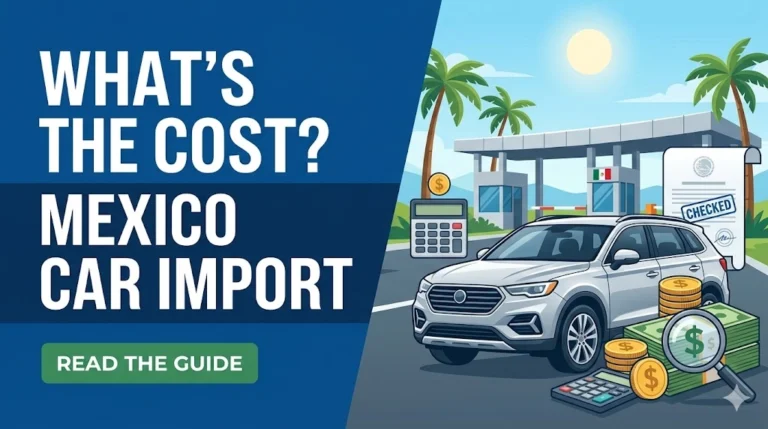
Bringing your foreign-plated car into Mexico is entirely different from bringing your furniture. If you hold a tourist visa (FMM) or a Temporary Resident visa, you are allowed to drive your foreign vehicle into the country by obtaining a Temporary Import Permit (TIP). This permit is issued by Banjercito (the Mexican military bank) and ties the legal status of your car directly to the expiration date of your immigration visa.
To get a TIP, you must pay a non-refundable processing fee (around $50 to $60 USD) and leave a refundable deposit ranging from $200 to $400 USD, depending strictly on the age and model year of the vehicle. As long as you drive the car out of Mexico before your visa expires and formally cancel the permit at a border Banjercito kiosk, you get the deposit back on your credit card. However, if you let the permit expire, you forfeit the deposit, and your car instantly becomes illegal contraband subject to immediate confiscation by the transit police.
The most critical rule regarding the TIP is that Permanent Residents (Residente Permanente) are strictly forbidden from driving foreign-plated cars in Mexico under any circumstances. If you transition from a Temporary to a Permanent resident, you must remove your car from the country immediately or face severe legal consequences. For a full breakdown of this legal maze and how to insure your vehicle properly, please read Bringing Your Car vs Buying in Mexico: Pros and Cons for Expats.
Permanent Vehicle Importation Costs and Rules
If you wish to permanently import your foreign vehicle and put legal Mexican license plates on it, prepare for a staggering financial and logistical hurdle. Permanent importation requires the services of a licensed customs broker at the northern border and is subject to strict NAFTA/USMCA origin rules. Only vehicles manufactured or assembled entirely in the United States, Canada, or Mexico (verified by the VIN number starting with 1, 2, 3, 4, or 5) are generally eligible for permanent importation.
The costs are astronomical. Between the 16% IVA (Value Added Tax), the ISAN (New Vehicle Tax, if applicable), customs processing fees, and the broker’s hefty commission, expats regularly pay between 30% and 50% of the vehicle’s “Blue Book” value just to legally nationalize it. Furthermore, Mexico routinely blocks the importation of salvaged vehicles, cars with rebuilt titles, or cars over a certain age to prevent the country from becoming a dumping ground for high-emission foreign cars.
Because of the extreme cost and the fact that you must physically drive the car back to the northern border to complete the multi-day process, the vast majority of expats simply sell their cars in their home country and buy a new or used vehicle once they are established in Mexico. The headache of the paperwork rarely justifies the financial output, especially when used cars in Mexico hold their value so well.
Managing Exchange Rates on High Customs Fees
If you decide that permanently importing a vehicle, a boat, or heavy motorized equipment like a high-end RV is absolutely necessary for your lifestyle, you will be handed a massive invoice by your customs broker that must be paid in pesos before the vehicle clears the federal lot. Transferring $10,000 to $20,000 USD to cover import taxes via a traditional bank wire will result in losing hundreds of dollars to a poor exchange rate spread.
Veteran expats frequently use Interactive Brokers to manage these heavy, localized capital expenses. By keeping a liquid balance in their global investment account, they can convert their home currency exactly when the mid-market rate is favorable, and withdraw the funds to execute the final payment to the customs authority or broker. Managing your currency intelligently is the only way to soften the blow of Mexico’s aggressive import taxation, a strategy we detail deeply in Banking in Mexico: Complete Guide for Foreigners.
E-commerce and Receiving Mail from Abroad
The Global De Minimis Threshold for Online Shopping
Once you are completely settled in your new Mexican home, the urge to order familiar products, specialty electronics, or favorite clothing brands from Amazon US or European boutiques will inevitably strike. When shopping internationally, you must deeply understand the de minimis threshold—the specific value under which goods can be imported without paying formal taxes or duties.
In 2026, the de minimis threshold for Mexico remains relatively low and heavily enforced. If you order a package from abroad that is valued under $50 USD (when shipped via a private courier like DHL or UPS), it enters the country duty-free. For goods valued between $50 and $117 USD originating specifically from the US or Canada, they are generally free of strict tariffs under the USMCA trade agreement, but they are still subject to the flat 16% IVA. Any package valued over $117 USD will be hit with the full force of 16% IVA plus any specific import tariffs applied to that category of goods.
It is critically important to note that you cannot circumvent these taxes by asking your family to mail you a “gift” and declaring the value as $10 on the slip. Mexican customs agents routinely X-ray packages and will arbitrarily assess a fair market value on the items if they suspect you are lying on the customs declaration form. If they assess the value higher than you declared, you will pay the tax on their assessed value, not yours.
How Couriers Handle Import Duties and Processing Fees
When you order items via international couriers like DHL, FedEx, or UPS, these companies act as your default customs broker to expedite the shipping process. If your package incurs taxes or duties based on the de minimis rules, the courier will front the money and pay the SAT on your behalf to clear the package through the airport facility. However, they will hold your box hostage at your front door until you reimburse them for the 16% IVA, plus their own exorbitant “advancement fee” or “brokerage surcharge.”
This means that a $150 USD pair of specialized running shoes can easily cost you an additional $40 to $60 USD in taxes and courier fees payable upon delivery. Furthermore, if you order items that are highly regulated by the government—such as wooden products, cosmetics, perfumes, or nutritional supplements—customs may seize the package entirely, requiring you to provide sanitary permits from the Ministry of Health (COFEPRIS) to release it.
To navigate these unexpected delivery fees without scrambling for physical peso notes when the delivery driver arrives, having a localized payment method is essential. You can easily use your Wise card to pay the courier’s online payment portals in advance of the delivery, ensuring you don’t miss a package due to a lack of exact change. We explore these payment habits further in Digital Payments in Mexico: Using Mobile Apps and Wallets (CoDi, etc.).
Alternative Strategies for Sourcing Familiar Goods
To avoid the intense friction, high costs, and anxiety of international shipping, savvy expats learn to navigate the domestic Mexican e-commerce ecosystem. Amazon Mexico and Mercado Libre have vastly expanded their localized, in-country inventories over the last few years. You can often find the exact same international products—from specific coffee beans to specialized computer monitors—already warehoused inside the country.
While the domestic sticker price on Amazon Mexico already includes the 16% IVA (making it slightly more expensive than the US site at first glance), buying domestically completely eliminates the unpredictable customs delays, the risk of government seizure, and the predatory courier brokerage fees. Learning to source your life locally is a core tenet of our Finding Familiar Products: An Expat Shopping Guide (Walmart, Costco, etc.) guide.
| Import Category | Tax / Duty Threshold | Expected Fees | Best Approach |
| Air Travel Luggage | > $500 USD (Franquicia) | 16% flat rate on surplus | Unbox items; carry receipts. |
| Household Move | N/A (One-time exemption) | Zero (with Menaje de Casa) | Hire a customs broker; do not duplicate appliances. |
| Vehicle Import (TIP) | N/A (Temporary) | $50 fee + $400 deposit | Cancel permit before leaving; never overstay visa. |
| E-commerce Courier | > $50 USD | 16% IVA + Courier Fee | Buy via Amazon Mexico or Mercado Libre instead. |
Managing the Financial Reality of Customs
Paying Duties Without Predatory Bank Markups
The overarching theme of dealing with Mexican customs and immigration is that you will inevitably have to pay the government at some point, whether it is for a residency visa, a vehicle permit, or a box of imported books that got flagged. When these moments arise, the last thing you want to do is compound your tax burden by paying exorbitant foreign transaction fees to your home country bank.
If you swipe a standard US or Canadian debit card to pay a 10,000-peso customs bill at the airport or broker’s office, your bank will often charge a 3% foreign transaction fee and bake another 2% into a terrible exchange rate. You are effectively paying a 5% “foreigner tax” on top of the government’s taxes. By consistently using your Wise card for all government and local administrative payments, you eliminate these parasitic bank fees and keep your relocation budget strictly under control.
Protecting Your Underlying Global Wealth
Relocating your entire life to Mexico is an expensive endeavor. Between shipping costs, import duties, rental deposits, and buying a car locally, it is incredibly easy to accidentally drain your checking accounts. Faced with these mounting relocation expenses, many expats make the mistake of permanently liquidating their home-country investments to generate the cash needed to smooth over this transition.
Liquidating your life savings to pay for relocation expenses is a catastrophic financial error that halts your long-term wealth compounding and triggers unnecessary capital gains taxes. To protect your nest egg while living abroad, you should migrate your portfolio to Interactive Brokers. Because Interactive Brokers caters explicitly to international residents, you can legally maintain your global investments while keeping a Mexican residential address without fear of your account being frozen.
If you are hit with a massive, unexpected import tax bill—perhaps you decided to permanently nationalize a luxury vehicle or import high-end furniture—you can use Interactive Brokers to execute a low-cost margin loan against your portfolio. This allows you to generate the immediate cash needed to pay the SAT without ever selling your underlying assets, a highly sophisticated strategy we explore in Should Expats Keep Savings in Pesos or Dollars? Managing Currency Risk.
Tracking Your Budget for Hidden Relocation Taxes
Moving across borders is not just about paying for the flight and the moving truck. The true cost of relocating to Mexico is hidden in the administrative friction: the TIP deposit, the consular fee for the Menaje de Casa, the broker’s massive commission, and the 16% IVA on the extra luggage you couldn’t bear to leave behind.
When planning your move, you must build a 15% to 20% buffer into your relocation budget specifically for these customs, border-related expenses, and initial setup taxes. By understanding the rules, strictly following the exemption protocols, and utilizing modern financial tools to minimize exchange rate losses, you can cross the border confidently and start your new life in Mexico without financial regret. For a complete guide on organizing your overall financial transition and avoiding double taxation, review Taxes in Mexico for Expats: A Complete Guide to Income Tax and More.
References
Primary sources (official)
- Wise – Transparent tools and mid-market exchange rates for paying international relocation fees and border taxes: https://wise.com/
Other helpful sources
- Interactive Brokers – Global portfolio management and liquidity services for expats residing permanently in Mexico: https://www.interactivebroers.com/
Disclaimer
The information provided in this article is for educational and informational purposes only and does not constitute financial, legal, or formal tax advice. Customs regulations, de minimis thresholds, import tariffs, and immigration laws in Mexico are subject to frequent changes and strict compliance rules by the SAT and ANAM. Always consult with a licensed Mexican Customs Broker (Agente Aduanal) or a qualified legal professional before attempting to import vehicles, commercial goods, or massive household shipments. Ensure that any financial platforms or services mentioned meet your specific individual legal residency and compliance requirements.