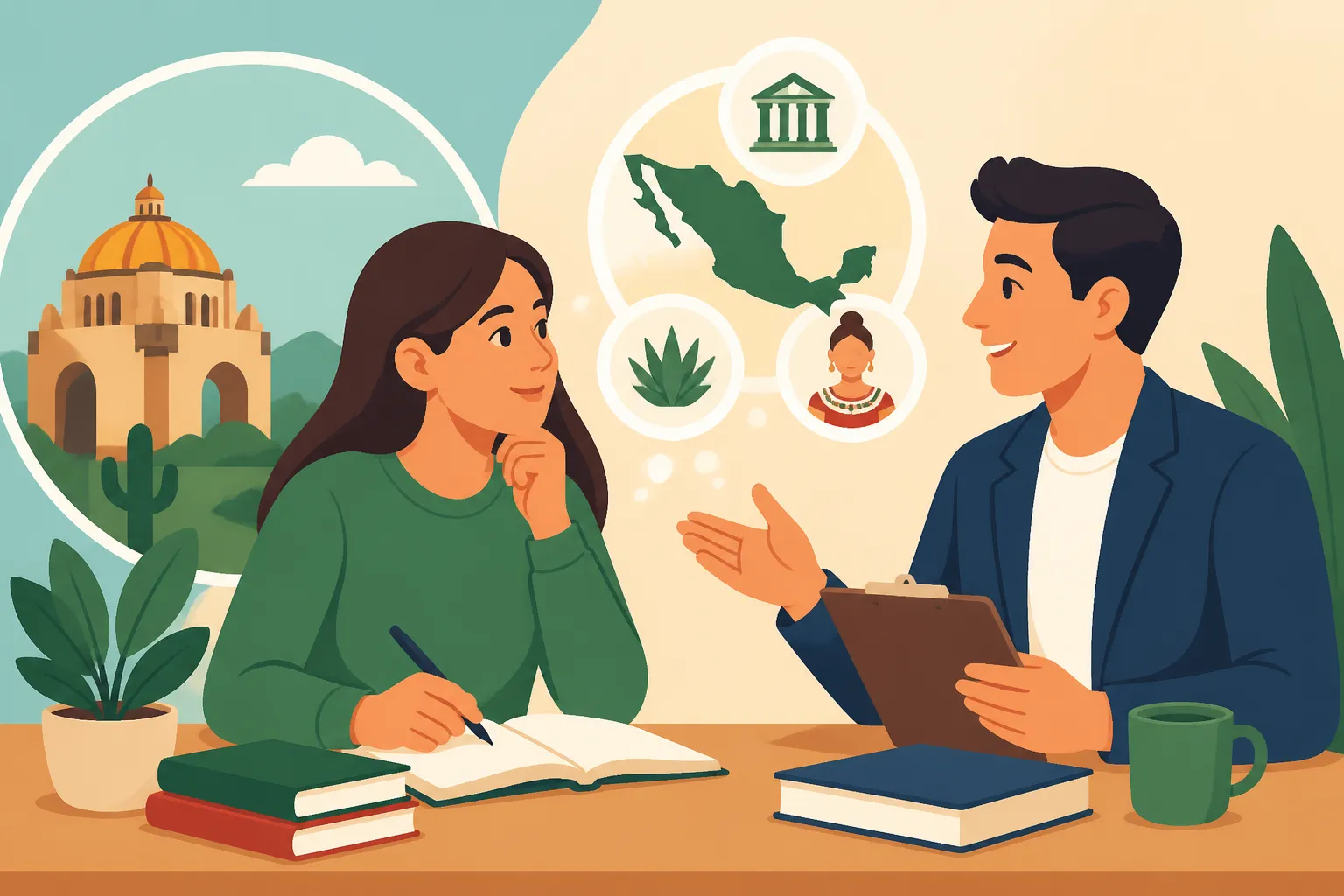
Preparing for the Mexican Naturalisation Interview With a Tutor
So, you've made the incredible decision to pursue Mexican citizenship – ¡felicidades! It’s a huge step, and one that often comes with a bit of a hurdle: the naturalization interview. This isn't just about speaking Spanish; it's about confidently navigating questions on Mexican history, culture, and government, all while your nerves are probably doing the cha-cha. This comprehensive guide will walk you through exactly how a dedicated tutor, particularly an online one, can become your secret weapon for nailing that interview and truly feeling at home in your new country.
Disclosure: This post may contain affiliate links. We may earn a commission at no extra cost to you if you make a purchase through these links. Read full disclosure.
Understanding the Mexican Naturalization Interview
Let's be honest, the naturalization interview can feel like a big, mysterious beast. Many expats get through the residency process, which is already a mountain of paperwork and patience, only to find this final step still daunting. It's not just a formality; it's a genuine assessment of your integration and knowledge.
What the Interview Entails
The interview typically covers three main areas: your personal information (to verify your identity and residency path), your Spanish language proficiency, and your knowledge of Mexican history, culture, and civics. Imagine being asked about the three branches of government, or who Benito Juárez was, or the significance of the Día de Muertos—all in Spanish, under pressure. It's a lot! The immigration officers at the Secretaría de Relaciones Exteriores (SRE) are looking for more than just correct answers; they want to see that you genuinely understand and appreciate the country you wish to call home.
The interview setting can vary, but generally, it's a one-on-one conversation, sometimes with two interviewers present. They want to see that you can carry on a coherent conversation, understand nuances, and express yourself clearly. This isn't the time for basic tourist Spanish; it's about demonstrating a functional command of the language suitable for daily life and civic engagement.
Common Fears and Misconceptions
One of the biggest fears is, naturally, the language barrier. Many of us expats get by with "survival Spanish," but the naturalization interview requires a higher level of fluency and understanding, especially of abstract concepts. You might worry about conjugating verbs correctly under pressure, or not understanding a question phrased in a formal way. Another common misconception is that the history and culture portion will be easy if you've lived here for a while. While immersion helps, the questions can be very specific, sometimes focusing on details that even many native Mexicans might not recall without a quick refresher.
Another fear revolves around making a mistake or not knowing an answer. It's important to remember that they expect you to be human. What they truly value is your effort, your willingness to learn, and your ability to articulate what you do know, even if you don't have every single fact perfectly memorized. The key is confident communication and a genuine interest. This is where a good tutor comes in, helping you to not just memorize facts, but to articulate them naturally and confidently.
Why a Tutor is Your Secret Weapon for the Interview
Navigating the intricacies of the Mexican naturalization interview is a beast you shouldn't try to tame alone. While self-study is commendable, a dedicated tutor offers a personalized, targeted approach that can make all the difference. This isn't just about extra Spanish practice; it's about strategic preparation tailored specifically to this unique challenge.
Personalized Language and Cultural Coaching
A tutor provides an unparalleled advantage by offering personalized language coaching. Unlike a group class, your tutor can focus entirely on your specific weaknesses – be it verb tenses, tricky pronunciations, or expanding your vocabulary for complex civic terms. They can simulate the interview environment, asking you questions that mirror those you'll encounter, and give you immediate, constructive feedback. This is crucial because the interview requires more than just basic Spanish; it demands the ability to express nuanced thoughts on history and culture clearly and politely.
Furthermore, a great tutor can act as your cultural guide. They can explain the context behind certain historical events, the significance of national symbols, or the subtle nuances of Mexican social etiquette that are important to convey during the interview. Imagine being taught not just what happened during the Mexican Revolution, but why it's remembered in a particular way, or how to articulate your connection to Mexico respectfully. This deepens your understanding and allows you to answer questions not just factually, but with genuine insight, showing the SRE officers that you truly belong here.
Mastering Mexican History and Civics
The history and civics portion of the naturalization exam can be surprisingly tough. It’s not just about memorizing names and dates; it's about understanding the flow of Mexican history, key figures, important documents like the Constitution, and how the government functions. A tutor, especially one from Mexico, can distill complex information into digestible lessons, providing context that textbooks often miss. They can recommend specific resources, focus on the most commonly asked topics, and help you structure your answers to be both accurate and articulate.
Having a native speaker guide you through topics like the Independence War, the Reforma, or the modern political system can illuminate details that might be lost in translation or overlooked in general study guides. They can explain the roles of different government agencies, important national holidays, or the contributions of famous Mexican artists. This focused approach ensures you cover the relevant material thoroughly and build the confidence to discuss these topics fluently, making you feel much more prepared than if you were just relying on self-study materials.
Practicing Interview Scenarios and Building Confidence
One of the most valuable aspects of working with a tutor is the opportunity to practice mock interviews. The actual interview environment can be nerve-wracking, but repeatedly simulating it with a tutor can significantly reduce anxiety. Your tutor can role-play as the immigration officer, asking questions, observing your body language, and providing feedback on your clarity, tone, and confidence. This kind of practice is invaluable for identifying areas where you might stumble and for refining your responses.
These practice sessions allow you to become comfortable with the formal tone, anticipate potential follow-up questions, and learn to rephrase if you don’t initially understand something. It’s about building muscle memory for speaking under pressure and transforming nervous hesitation into confident delivery. Having someone knowledgeable guide you through these high-stakes scenarios builds immense confidence, turning a potentially terrifying experience into a manageable, even exciting, step towards becoming a Mexican citizen.
Choosing the Right Tutor: Online vs. In-Person
Once you've decided to invest in tutoring for your Mexican naturalization interview, the next big question is where to find the right guide. The choice often comes down to online platforms or local, in-person options, each with their own set of advantages and considerations. For many expats, the flexibility and accessibility of online tutoring are game-changers, and that's where platforms like iTalki truly shine.
The Benefits of Online Tutoring (with iTalki)
Online tutoring has revolutionized language learning, and for preparing for a specific, high-stakes event like a citizenship interview, it offers a wealth of benefits. Foremost among these is unparalleled flexibility. You can schedule sessions at any time that suits your busy expat life, whether it's early mornings before work, during a lunch break, or late evenings after the kids are asleep. This means no commuting time, no traffic headaches – just direct, focused learning from the comfort of your home. Platforms like iTalki are designed specifically for this, connecting you with thousands of tutors globally, including native Spanish speakers right here in Mexico.
The sheer variety of tutors available on iTalki is another massive plus. You can browse profiles, read reviews, watch introductory videos, and even take trial lessons to find a tutor whose teaching style, personality, and background perfectly match your needs. Want someone with a history degree from Mexico City? Or a tutor who specializes in formal conversation? Or perhaps someone who has specific experience helping other foreigners with their naturalization processes? You can find them on iTalki. This level of customization ensures that your learning is hyper-focused on the specific demands of the naturalization interview, making your preparation incredibly efficient.
Cost-effectiveness is also a significant factor. Online tutors often offer more competitive rates than in-person options, primarily because they have lower overheads. On iTalki, you'll find a wide range of prices, allowing you to fit your tutoring into your budget without compromising on quality. This means you can afford more sessions, leading to deeper, more thorough preparation for your big day. Imagine getting consistent, high-quality, personalized instruction for less than the cost of a single in-person class. It’s a smart investment in your future as a Mexican citizen.
Considerations for In-Person Tutors
While online platforms like iTalki offer incredible advantages, some expats might initially consider in-person tutoring. The idea of face-to-face interaction can be appealing, offering a more traditional classroom feel. Local tutors can sometimes provide a physical meeting space, which might be preferred by those who struggle with online distractions or prefer a more tangible learning environment. They might also be able to integrate local resources more directly, such as physical textbooks or local historical maps, though many of these are also available digitally.
However, in-person tutoring comes with its own set of challenges in Mexico. Finding a tutor with the specific expertise for naturalization can be harder in smaller towns, limiting your options to whoever is locally available. The logistics of scheduling, factoring in travel time and Mexico's often unpredictable traffic, can eat into your valuable study time. Plus, the cost for in-person instruction is generally higher due to the tutor's travel and facility expenses. For those living in bustling cities like Mexico City or Guadalajara, navigating commutes to a tutor can add significant stress that detracts from the learning experience.
Ultimately, the decision boils down to your personal learning style and priorities. But for the tailored, flexible, and often more affordable support needed for a unique challenge like the Mexican naturalization interview, an online platform like iTalki provides a compelling and practical solution that meets the needs of most expats.
Making the Most of Your Tutoring Sessions
Having a tutor is a fantastic resource, but it's crucial to approach your sessions strategically to maximize their effectiveness, especially when preparing for something as important as your naturalization interview. It’s not just about showing up; it’s about active participation and focused practice.
Setting Clear Goals and Communicating Them
Before your first session, or at least very early on, sit down and think about your specific goals. Do you feel weakest in grammar? Are you terrified of the history questions? Do you just need to practice speaking under pressure? Be explicit with your tutor. For instance, you could tell your iTalki tutor, "My main goal is to confidently discuss Mexican civic structure and historical figures, and to improve my formal Spanish for the interview." The more specific you are, the better your tutor can tailor the lessons.
Don't be shy about communicating your learning style, either. Do you learn best by reading? Through conversation? With flashcards? Are you a visual learner who needs diagrams? Your tutor is there to help you, so provide them with the information they need to do their best work. Regular check-ins on progress and adjustments to the plan are also vital. Remember, platforms like iTalki allow for a very fluid and adaptable learning experience, so take full advantage of that flexibility.
Specific Exercises for Interview Preparation
Your tutoring sessions should go beyond general Spanish conversation. Work with your tutor to incorporate exercises directly relevant to the naturalization interview. This includes:
- Mock Interviews: This is paramount. Have your tutor role-play as the SRE officer and ask you typical interview questions. This simulates the pressure and allows you to practice your answers in real-time. Afterwards, discuss your performance, pronunciation, grammar, and areas for improvement. Do this repeatedly!
- Vocabulary Building for Civics and History: Create lists of key terms related to Mexican government, historical periods, famous personalities, and cultural traditions. Your tutor can explain their meanings, help you use them in sentences, and ensure correct pronunciation.
- Cultural Deep Dives: Ask your tutor to explain the nuances of Mexican holidays, traditions, and social customs. Understanding the why behind cultural practices will make your answers more authentic and insightful.
- Grammar and Formal Speech Practice: The interview often requires formal Spanish (using usted). Your tutor can correct common grammatical errors and help you practice speaking formally and politely. They can also focus on sentence structures for explaining complex ideas clearly.
- Listening Comprehension: The interviewer might have a particular accent or speak quickly. Practice listening to your tutor and asking for clarification in Spanish if needed, just as you might in the actual interview.
By focusing on these targeted exercises during your iTalki sessions, you'll build not only your language skills but also the specific knowledge and confidence needed to ace your naturalization interview.
Homework and Self-Study Between Sessions
Tutoring is most effective when it's part of a larger, consistent study routine. Your sessions with a tutor on iTalki are powerful, but the real progress often happens in between. Your tutor can provide invaluable homework assignments and recommend self-study resources that reinforce what you've learned. This might include reading articles about Mexican history, watching documentaries, or practicing specific vocabulary lists.
For example, after a session discussing the Mexican Revolution, your tutor might suggest you read a short biography of Emiliano Zapata and be ready to discuss it next time. Or perhaps they'll assign writing practice, asking you to draft answers to potential interview questions. Dedicate time each day or week to these tasks. Consistent exposure and active engagement outside of your formal lessons will solidify your knowledge, improve your retention, and significantly accelerate your progress towards interview readiness. Learning Spanish in Mexico: Top Tips and Resources for Expats can offer great ideas for supplementary materials and immersion strategies.
Beyond the Interview: Sustaining Your Spanish and Integration
Congratulations, you've aced the interview and you're officially a Mexican citizen! This is a huge accomplishment, but the journey of language learning and cultural integration doesn't end there. True belonging is an ongoing process, and continuing to nurture your Spanish skills and engage with Mexican culture will enrich your life exponentially.
Continuing Language Learning Post-Naturalization
Even after you’ve successfully passed your naturalization interview, don't let your Spanish skills stagnate. Think of this as a new beginning, a foundation upon which to build even greater fluency and confidence. Many expats find that once the pressure of the interview is off, they can enjoy their language learning even more. You might consider transitioning from highly structured interview prep to more conversational lessons with a tutor on iTalki, focusing on topics of personal interest, current events, or regional slang. This makes learning enjoyable and keeps your skills sharp.
Continuing to engage with Spanish-speaking content is also vital. Read Mexican literature, watch telenovelas or local news, listen to Mexican podcasts and music. Immerse yourself in everyday conversations. The goal is to move beyond merely understanding to thinking and dreaming in Spanish. This continuous effort not only benefits you personally but also demonstrates your ongoing commitment to your new citizenship and the vibrant culture that comes with it.
Deepening Cultural Integration
Becoming a citizen is a legal status, but true integration is a journey of the heart. Now that you've officially joined the familia mexicana, seize every opportunity to deepen your connection with the culture. This means participating actively in local festivities, understanding regional traditions, and engaging with your community beyond the expat bubble. Mexican Holidays and Festivals: What Expats Should Know is a fantastic resource to start exploring these vibrant celebrations.
Seek out local groups, volunteer opportunities, or classes for hobbies like cooking, dancing, or local crafts. Attend community events, strike up conversations with your neighbors, and ask questions. Show genuine curiosity and respect for local customs. Learning about the different regions of Mexico, their unique flavors, and traditions will also expand your appreciation. This continuous effort to integrate makes you not just a citizen, but a contributing and cherished member of your Mexican community.
Becoming a Resource for Other Expats
One of the beautiful aspects of the expat community is the willingness to help one another. Now that you've successfully navigated the naturalization process, you're a valuable resource for others who are just beginning their journey. Share your experiences, offer tips, and perhaps even recommend your tutor from iTalki to friends who are considering naturalization. Your insights can ease the anxieties of new arrivals.
Consider joining expat forums or local social groups to provide advice and support. Being able to guide someone through the intricacies of Navigating Mexico's Immigration System: Visas, INM Procedures, and Regulations or sharing your study methods for How to Become a Mexican Citizen: The Complete Naturalization Guide is a wonderful way to give back. Your firsthand experience with the interview, the preparation, and the ongoing integration process can be an invaluable source of encouragement and practical guidance for those following in your footsteps.
Overcoming Specific Challenges: Pronunciation, Culture, and Nerves
The naturalization interview isn't just a test of knowledge; it's a test of composure under pressure. Many expats face specific hurdles that, if not addressed, can hinder their performance. A skilled tutor can be instrumental in turning these challenges into strengths.
Tackling Pronunciation and Accent
One of the most common anxieties for non-native speakers is pronunciation. You might be able to read and understand Spanish perfectly, but speaking it clearly, with an understandable accent, can be another story. In an interview setting, clear pronunciation is paramount so that the SRE officer can fully grasp your answers without having to strain. Your tutor on iTalki can specifically focus on this. They can identify your persistent pronunciation errors and provide targeted exercises to correct them.
This might involve practicing specific sounds, working on intonation, or even mimicking native speakers. Remember, the goal isn't to eliminate your accent entirely – that's often unrealistic and unnecessary – but to ensure your speech is clear, confident, and doesn't impede communication. Consistent feedback from a native Spanish speaker, which is readily available through platforms like iTalki, is the fastest way to refine your pronunciation and sound more natural when you speak.
Navigating Cultural Nuances in Communication
Beyond just the language, understanding and demonstrating Mexican cultural nuances in communication can significantly impact your interview. This includes appropriate levels of formality, politeness, and even body language. For example, knowing when to use usted versus tú isn't just a grammatical rule; it's a mark of respect, especially in formal settings. Your tutor can guide you through these unwritten rules. Mexican Social Etiquette for Visitors: Greetings and Warmth offers a great starting point for understanding these dynamics.
They can teach you how to respond politely even when you don't know an answer, how to express enthusiasm for Mexican culture without sounding disingenuous, and how to maintain a respectful demeanor throughout the interview. These subtle cultural cues can make a profound difference in how you are perceived by the immigration officers, showing them that you've not only learned the language but truly embraced the social fabric of Mexico.
Managing Interview Nerves
Let’s be real: interviews are stressful, and a naturalization interview in a foreign language with so much riding on it can feel like a pressure cooker. Nerves can lead to mind blanks, stuttering, or simply not performing at your best. This is where your tutor's role extends beyond academic instruction to emotional support and confidence-building. Repeated mock interviews create familiarity, making the actual event feel less intimidating.
Your tutor can help you develop strategies for managing anxiety, such as deep breathing exercises or mental rehearsal techniques. They can also remind you that it's okay to take a moment to collect your thoughts before answering. The continuous, positive reinforcement you receive from a dedicated tutor, particularly on a platform like iTalki where you can build a strong rapport, builds an inner resilience. Knowing you've extensively prepared with an expert reduces self-doubt, allowing you to walk into that SRE office with a calm confidence that speaks volumes.
Resources for Your Naturalization Journey
Preparing for Mexican naturalization involves much more than just language and history. It's about understanding the entire process, gathering your documents, and ensuring you meet all the requirements. Having a holistic approach to your preparation will save you stress and time.
Essential Study Materials for History and Civics
While your tutor will be an invaluable guide, having solid study materials for Mexican history, culture, and civics is non-negotiable. Look for official government resources or reputable educational materials. Many immigration lawyers or consultants provide study guides specifically tailored to the naturalization exam. Focus on key periods like the Pre-Hispanic era, the Conquest, Independence, the Mexican Revolution, and significant modern events.
Don't forget the fundamentals of Mexican government: the three branches, key institutions, and important constitutional articles. Understanding famous national symbols, anthems, and iconic figures is also crucial. Your iTalki tutor can help you source the most relevant and up-to-date materials, guiding you through what's essential to memorize versus what's good to understand for broader context. Engaging with a variety of materials, from online articles to physical books, will reinforce your learning and give you different perspectives.
Navigating the Application Process
The interview is just one part of becoming a Mexican citizen. The application process itself is a multi-step journey involving collecting numerous documents, submitting forms, and paying fees. It starts long before the interview with obtaining your temporary and then permanent residency. Understanding the financial requirements for Mexican residency, for example, is a precursor to even applying for citizenship. The Ultimate Guide to Mexico's Visa and Residency Options and Mexico Permanent Residency Explained: A Complete Guide will provide crucial background on the initial steps you must have already taken.
It's highly advisable to consult with an immigration lawyer specializing in Mexican naturalization. While a tutor helps with the interview itself, a lawyer ensures your paperwork is immaculate and that you meet all legal requirements. They can guide you through securing your birth certificate, apostilles, translations, and ensure your residency status is in order. Remember, any discrepancies in your application can delay or even derail your citizenship dreams, so professional guidance on the administrative side is truly a wise investment.
Leveraging Expat Networks and Communities
You are not alone on this journey! Mexico has thriving expat communities both online and offline, filled with individuals who have already navigated the naturalization process or are currently going through it. These networks can be a goldmine of practical advice, shared experiences, and emotional support. Joining Facebook groups dedicated to expats in Mexico, or specific naturalization groups, can provide answers to niche questions and connect you with others who understand your specific challenges.
Attend local expat meetups in your area. Hearing firsthand accounts of others’ interview experiences can demystify the process and alleviate anxieties. While official information should always come from SRE or a lawyer, the anecdotal wisdom from fellow expats can offer invaluable tips, from what to wear to the interview to how to handle a specific type of question. Sharing your concerns and celebrating your milestones with a supportive community makes the entire process feel less isolating and more achievable.
| Feature | Online Tutoring (e.g., iTalki) | In-Person Tutoring (Local) |
|---|---|---|
| Flexibility | High – Schedule anytime, anywhere | Moderate – Fixed times, travel needed |
| Tutor Choice | Vast – Global pool, specialized experts | Limited – Restricted by local availability |
| Cost | Generally lower hourly rates, competitive | Generally higher hourly rates (overhead) |
| Convenience | Excellent – No commute, learn from home | Variable – Depends on location, traffic |
| Specialization | Easy to find tutors with specific naturalization exp. | May be harder to find highly specialized tutors locally |
| Trial Lessons | Often available and encouraged | Less common, usually full-price sessions |
| Connection | Strong (video calls, messaging) | Strong (physical presence) |
| Resources | Digital resources, shared screen, online tools | Physical books, local materials (can be limited) |
The Mexican naturalization interview might feel like the final boss level of your expat journey, but with the right preparation, it's entirely conquerable. Investing in personalized tutoring, especially through a flexible and accessible platform like iTalki, empowers you to master not just the Spanish language, but also the history, culture, and confidence required to truly become a proud ciudadano mexicano. It's a journey of growth, and with every practice session, you're not just preparing for an interview; you're building a deeper, more meaningful connection to the country you now call home. So, take a deep breath, find your perfect tutor, and step confidently into your Mexican future!
Disclaimer
This article is for general informational purposes only and does not constitute professional advice. Laws, prices and regulations vary by location and change over time. Consult a qualified professional for guidance on your specific situation.