Absolute Beginner to Conversational Spanish: A 6-Month Tutoring Plan
Living in Mexico is an incredible adventure, full of vibrant culture, delicious food, and wonderful people. But let's be real, the moment you step outside your expat bubble and realize you can't quite order your coffee the way you want or chat with your neighbors, the language barrier hits hard. It can feel incredibly isolating and frustrating, making you feel like you're only scratching the surface of this amazing country. This comprehensive guide is going to walk you through a realistic, effective 6-month tutoring plan to take you from an absolute Spanish beginner to being genuinely conversational, with a focus on leveraging online platforms like iTalki to get you there.
Disclosure: This post may contain affiliate links. We may earn a commission at no extra cost to you if you make a purchase through these links. Read full disclosure.
Why Learning Spanish in Mexico is a Game-Changer (and a Challenge)
You’ve made the leap, you’re here in Mexico, and you're surrounded by the sounds of Spanish everywhere you go. It’s intoxicating, isn’t it? Every street corner, every market stall, every casual chat among friends is an opportunity to pick up new words, new rhythms, new ways of expressing yourself. This immersion is a gift, but it also comes with its own set of unique hurdles that many expats face head-on.
The Immersion Advantage (and Initial Overwhelm)
Being immersed in the language is, without a doubt, the fastest way to learn. You’re constantly hearing Spanish, seeing it written, and, crucially, having opportunities to speak it. Your brain is working overtime, trying to make sense of the sounds and piece together meanings. There’s no escaping it, which forces you to engage in a way that’s impossible in a classroom back home. However, this constant influx of new information can also be incredibly overwhelming. Imagine walking into a busy market in Oaxaca, trying to buy some fresh produce, and every vendor is speaking rapid-fire Spanish with local slang. Your initial excitement can quickly turn into a deer-in-headlights moment, making you want to retreat to the comfort of English-speaking friends. It’s a delicate balance between pushing yourself and avoiding burnout.
Beyond Basic Greetings: Real Connections
Sure, you can probably manage "Hola," "Gracias," and "Una cerveza, por favor." But to truly connect with Mexico, to understand its nuances, its humor, and its heart, you need to go deeper. Learning Spanish opens doors you didn't even know were there. It means you can have a genuine conversation with your landlord, joke with the local tortillera, or share stories with new Mexican friends over a long dinner. These are the moments that transform an expat experience from merely living in Mexico to truly living Mexico. Without that deeper understanding, you’re always just observing from the outside, missing out on the rich tapestry of daily life and the warmth of genuine human connection that this country offers in spades. This is why a structured approach to learning, like the one we'll discuss, becomes so vital.
The Expat Language Barrier Struggle is Real
Let's be honest, we've all been there. You try to explain something important, perhaps at the bank or at a government office, and despite your best efforts, you just can't articulate what you need. The person on the other side looks at you with a polite but blank stare, and the frustration bubbles up. You might even find yourself relying heavily on English-speaking friends or turning every simple errand into a monumental task. This isn't just about inconvenience; it can lead to feeling isolated, misunderstood, and even vulnerable. You start to feel like you're not fully participating in your new life. Many expats default to staying within communities where English is common, inadvertently limiting their experience. It’s a common trap, but with a plan, you absolutely can break through it. For more on navigating these initial challenges, check out Living in Mexico with Limited Spanish: Survival Tips for Language Barriers.
Setting Realistic Expectations: What "Conversational" Means in Six Months
Before we dive into the nitty-gritty of a learning plan, let’s talk about expectations. Six months sounds like a decent chunk of time, but what exactly does "conversational" mean when you're starting from scratch? It's crucial to define this so you don't get discouraged along the way. Learning a language is a journey, and every step counts, but some steps are bigger than others.
Defining "Conversational": It's Not Fluency Yet!
When I say "conversational" in six months, I don't mean you'll be debating philosophy with a local intellectual or understanding every rapid-fire joke in a telenovela. That takes years. What it does mean is that you'll be able to handle most everyday situations with confidence. You'll be able to introduce yourself, ask and answer basic questions, express opinions, navigate daily errands, order food without pointing, and understand the gist of most slower-paced conversations. You'll make mistakes, plenty of them, but you’ll be able to communicate effectively enough to get your point across and engage with the world around you. Think of it as reaching a solid B1 level on the Common European Framework of Reference for Languages (CEFR) – independent user, capable of routine tasks. It’s about functional communication, not linguistic perfection.
The Time Commitment You'll Need
Let’s not sugarcoat it: this isn't going to happen with an hour a week. To go from absolute beginner to conversational in six months requires dedication. You should be aiming for a consistent daily practice. This means at least 3-5 dedicated tutoring sessions per week, each lasting 45-60 minutes, supplemented by daily review, active listening, and speaking practice. That's easily 5-7 hours a week just in focused study, plus many more hours of passive and active immersion. Treat it like a part-time job or a serious hobby. If you're currently working full-time or have other major commitments, you'll need to be realistic about carving out this time. Consistency, even more than intensity, is your best friend here. Missing a few days here and there is fine, but letting a week go by without interacting with the language will significantly set you back.
Overcoming the Plateau: The Marathon, Not a Sprint
Language learning is rarely a linear progression. You’ll have periods where you feel like you’re soaring, picking up new words and grammar points effortlessly. Then, you'll hit a plateau – a frustrating phase where it feels like you're not making any progress, or even worse, forgetting what you've learned. This is completely normal and happens to everyone. It’s often a sign that your brain is consolidating information before it's ready for the next leap. The key is to recognize it, not get discouraged, and push through. During these times, switch up your methods, revisit old material, or try a different type of practice. Remember, this is a marathon, not a sprint. Celebrate small victories, like understanding a new phrase from a bus driver or successfully ordering a tortilla without hesitation. For ideas on other learning resources, you might find Spanish Language Schools: Best Immersion Programs for Expats helpful.
Your 6-Month Road Map: A Phased Approach with iTalki
Alright, now for the action plan! This is where we lay out a structured approach to learning, with a heavy emphasis on personal tutoring, and honestly, for accessibility and flexibility, a platform like iTalki is a game-changer for expats. It allows you to connect with native Spanish speakers from Mexico and other countries, often for a fraction of the cost of in-person lessons, right from your living room in Guadalajara or your beach house in Tulum.
Month 1-2: Building Your Foundation (Survival Spanish & Basic Grammar)
During your first two months, the goal is to establish a solid foundation. You need to get comfortable with the absolute basics so you can start interacting immediately. This means focusing heavily on pronunciation, fundamental vocabulary, and simple sentence structures.
Your iTalki tutor will be invaluable here. They can help you with:
- Basic greetings and introductions: "Hola, me llamo [your name], soy de [your country]."
- Essential vocabulary: Numbers, colors, common objects, food items, places (e.g., mercado, farmacia, restaurante).
- Survival phrases: Asking for directions, ordering food, basic shopping, explaining simple problems.
- Present tense: Conjugating regular verbs like ser, estar, tener, querer, ir.
- Pronunciation: Getting your tongue around those tricky R's and understanding common vowel sounds.
Aim for 3-4 iTalki lessons per week during this phase. Each lesson should be focused on active speaking and correction. Between lessons, review flashcards, listen to simple Spanish podcasts or music, and try to use your new phrases in real-life interactions, no matter how small. Don't be afraid to sound silly; every local you interact with will appreciate your effort. Your iTalki tutor can provide targeted exercises and correct your pronunciation in real-time, something apps simply can't do.
Month 3-4: Expanding Your Vocabulary & Simple Sentence Structures
By month three, you should have a basic grasp of the present tense and some fundamental vocabulary. Now it's time to build on that. This phase focuses on expanding your ability to express more complex ideas and understand a wider range of conversations.
With your iTalki tutor, you'll delve into:
- Past tenses: Preterite and imperfect, understanding when to use each for storytelling.
- Future tense: Simple ways to talk about upcoming events.
- More nuanced vocabulary: Describing feelings, hobbies, daily routines, travel, and health.
- Connecting words and phrases: Y, pero, o, porque, cuando, después.
- Asking open-ended questions: Moving beyond yes/no answers to truly engage.
Continue with 3-4 iTalki sessions a week. During these sessions, try to have mini-conversations entirely in Spanish. Your tutor can guide you through simple role-playing scenarios like going to the doctor, explaining a problem to a mechanic, or discussing your day. Outside of lessons, start labeling objects in your home, reading simple children’s books, and actively listening to more complex Spanish content, like news in slow Spanish or podcasts designed for learners. This is also a great time to start understanding Mexican Etiquette and Customs: Do's and Don'ts for New Expats more deeply through conversation.
Month 5-6: Towards Fluidity & Everyday Conversations
You're in the home stretch! These last two months are about increasing your confidence, fluency, and ability to hold sustained conversations. The focus shifts from simply knowing the grammar to using it naturally and automatically.
Your iTalki sessions will now feel much more like actual conversations. You'll work on:
- Subjunctive mood (basics): Understanding when and how to use it for desires, doubts, emotions. This is a big one, don't rush it.
- Conditional tense: "I would like," "I would do."
- Idiomatic expressions and common slang: Your iTalki tutor, especially a Mexican one, can teach you phrases locals actually use. This is where your language starts to sound more natural and less like a textbook.
- Active listening and comprehension: Challenging yourself with more natural speech speeds.
- Expressing opinions and feelings in detail: Moving beyond simple "I like" or "I don't like."
At this stage, 3 iTalki sessions a week might be sufficient if you're actively immersing yourself daily. The lessons should be driven by conversation, with your tutor gently correcting and pushing you. Engage in discussions about current events, your experiences in Mexico, or cultural topics. Outside of lessons, challenge yourself to attend local events, join clubs where you're the only English speaker, or volunteer. The goal is to make Spanish a living, breathing part of your daily life. You'll be surprised at how much you've grown from those first hesitant "Holaplease" moments!
Choosing Your iTalki Tutor: Finding Your Perfect Match
Choosing the right tutor on a platform like iTalki is just as important as the consistent effort you put in. It’s not a one-size-fits-all situation; what works for one person might not work for another. The beauty of iTalki is the sheer variety of tutors available, which means you have the power to find someone who truly resonates with your learning style and goals.
Professional Teachers vs. Community Tutors: The Pros and Cons
When browsing iTalki, you'll typically see two categories of tutors: Professional Teachers and Community Tutors.
Professional Teachers usually have certifications (like a TEFL for teaching English, or a specific Spanish teaching certification), a structured curriculum, and experience teaching grammar rules and language theory.
- Pros: Structured lessons, clear progression, excellent at explaining complex grammar, often better for absolute beginners who need a strong foundation.
- Cons: Generally more expensive, sometimes less flexible in their teaching style, might feel too "classroom-like" if you prefer a more conversational approach.
Community Tutors are native speakers who offer informal lessons, often focusing purely on conversation practice. They don't necessarily have teaching certifications.
- Pros: More affordable, great for practicing conversation and gaining confidence, can offer insights into local culture and slang. They are perfect for when you just need to talk.
- Cons: May lack structured teaching methods, might not be as adept at explaining complex grammar, could be less effective for those needing foundational instruction.
For your 6-month journey from absolute beginner to conversational, I'd highly recommend starting with a Professional Teacher on iTalki for the first 2-3 months to build that strong foundation, then transitioning to a mix of both, or primarily Community Tutors, to really boost your conversational fluency and confidence in the later months.
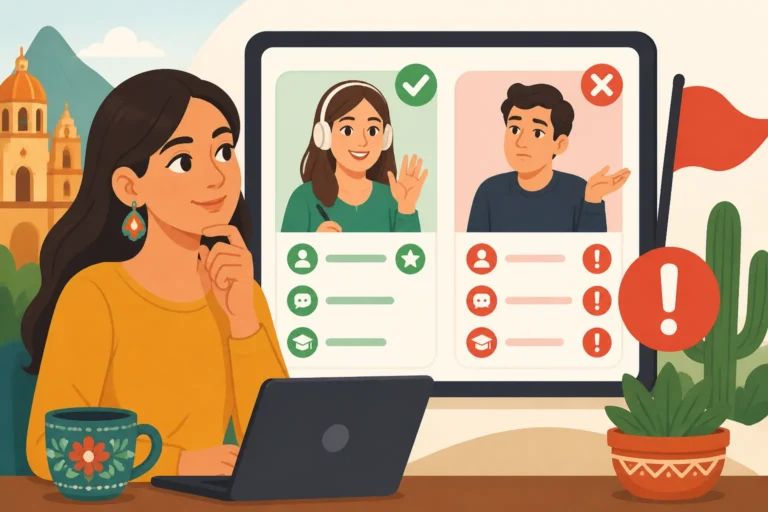
What to Look for in an iTalki Tutor (and Red Flags)
Once you've decided on the type of tutor, how do you pick the right one? Here's what to consider:
- Personality and Teaching Style: Do they seem patient, encouraging, and engaging from their profile video? Do they match your energy? Some prefer a more serious, academic approach, while others thrive with a lighthearted, chatty tutor. Many tutors offer trial lessons – take advantage of these! They're often cheaper and allow you to test the waters before committing.
- Reviews and Ratings: Always check their student reviews. Look for comments that mention their teaching methods, ability to explain concepts, and overall helpfulness.
- Specialties: Some tutors specialize in conversation, others in grammar, business Spanish, or preparing for specific exams. Choose someone whose specialties align with your current learning phase.
- Availability: Make sure their schedule aligns with yours, especially if you plan on consistent lessons.
- Accent: If you plan to stay in Mexico, finding a Mexican Spanish speaker can be beneficial to get used to the local accent and idioms, though any native speaker will help you learn the language.
Red Flags:
- Poor audio/video quality in their intro video: If they can't manage basic tech for their introduction, imagine a whole lesson.
- Lack of structure or preparedness: If trial lessons feel disorganized or the tutor isn't actively engaging, they might not be right for you.
- Too much English: While some English is fine for explanations, if they keep defaulting to English during your sessions, it defeats the purpose of immersion.
Scheduling and Consistency: Making it Work with Your Expat Life
The most effective learning comes from consistency. Life in Mexico, especially expat life, can be busy and unpredictable. You'll need to actively schedule your iTalki lessons and treat them like non-negotiable appointments.
- Regular Slots: Try to book recurring weekly slots with your chosen tutor(s). This helps build routine and ensures you get consistent practice.
- Flexibility: If your schedule changes, many iTalki tutors are understanding and allow rescheduling with sufficient notice. Don't let one missed lesson derail your whole plan.
- Short, Frequent Lessons: Instead of one long, grueling two-hour session, consider three to five shorter 45-60 minute lessons throughout the week. This keeps your brain engaged without overwhelming it and allows for more frequent exposure.
- Pre-Book: Good tutors, especially popular ones, book up fast. Book your lessons a week or two in advance to secure your preferred times.
Remember, the goal is to integrate learning into your new life, not just add another chore. With iTalki, you're investing in personalized attention that will accelerate your progress and make your expat experience so much richer.
Maximizing Your Tutoring Sessions: Beyond the Lesson
Having an iTalki tutor is fantastic, but the real magic happens when you extend your learning beyond the scheduled session. Think of your tutor as a guide, but you are the explorer. Your daily life in Mexico is your laboratory, and every interaction is a chance to practice and solidify what you're learning.
Preparation is Key: Before, During, and After Each Session
To get the most bang for your buck and time, approach each iTalki session strategically.
- Before: Don't just show up cold. Spend 10-15 minutes reviewing notes from your previous lesson, any new vocabulary, or grammar points you struggled with. If your tutor assigned homework, complete it diligently. Also, think about what you want to achieve in the upcoming lesson. Do you have specific questions? A topic you want to discuss? A real-life scenario you want to role-play? Communicate this to your tutor beforehand.
- During: Be an active participant. Don't be afraid to ask for clarification ("Más despacio, por favor" – Slower, please). Take notes on new vocabulary, common phrases, or grammar explanations. If you make a mistake, don't shy away from correction; that's what your tutor is there for! Try to speak as much Spanish as possible, even if it feels awkward at first.
- After: Immediately after the lesson, take another 10-15 minutes to review your notes. Write down new words, try to construct sentences with them, or quickly look up anything that was still unclear. Integrate this new knowledge into your daily interactions. Consistency in this follow-up is where long-term retention truly forms.
Integrating Spanish into Your Daily Life in Mexico
Your time in Mexico is an unparalleled opportunity for immersion. Every moment can be a learning experience.
- Grocery Shopping: Head to the local mercado instead of just the big supermarket. Ask vendors about their produce. Grocery Shopping in Mexico: Supermarkets vs Local Markets provides excellent tips for this. Practice phrases like "¿Cuánto cuesta?" (How much does it cost?) or "Quiero un kilo de tomates, por favor." (I'd like a kilo of tomatoes, please.)
- Ordering Food: Don't just point! Try to read the menu and order using full sentences. Ask for recommendations: "¿Qué me recomienda?" (What do you recommend?)
- Public Transport: Listen to announcements, try to understand directions, or ask the bus driver a simple question.
- Social Interactions: Even if you start with just a few words, make an effort to speak Spanish with your neighbors, the cashier at OXXO, or anyone you encounter. Most Mexicans are incredibly patient and appreciative of the effort.
- Media: Change your phone language to Spanish. Watch Mexican TV shows or movies with Spanish subtitles (or no subtitles if you're brave!). Listen to local radio or podcasts. This passive listening drastically improves your comprehension. You might also find Mexican Spanish: Slang and Expressions for Visitors useful here.
Supplementing iTalki with Local Immersion
While your iTalki tutor is your anchor, don't forget the rich resources right outside your door.
- Language Exchange Partners: Find locals who want to practice English in exchange for Spanish. Many cafes in expat-friendly cities like San Miguel de Allende or Mérida have boards for this, or check local expat Facebook groups. This is a no-pressure way to practice conversation.
- Local Classes/Meetups: Even with online tutoring, an in-person class once a week or joining a Spanish-speaking meetup group can provide a different dynamic and help you connect with other learners. See How to Choose Between Online and In-Person Spanish Classes in Mexico for a comparison.
- Volunteering: Engage in a local cause. This will put you in situations where you must speak Spanish and meet people outside the expat bubble. Volunteering in Mexico: Programs and Visas has more information.
- Embrace the Mistakes: The single biggest barrier to speaking is the fear of making mistakes. Everyone makes them. Laugh them off, learn from them, and keep going. Most locals will appreciate your effort, not judge your grammatical errors.
| Learning Stage | Focus Areas | Expected Outcomes (6 Months) | Daily Time Commitment | iTalki Tutor Type |
|---|---|---|---|---|
| Months 1-2 | Pronunciation, Basic Greetings, Present Tense, Survival Vocabulary | Understand simple questions, introduce self, order basic items | 1-2 hours | Professional |
| Months 3-4 | Past Tenses, Future Tense, Expanded Vocabulary, Simple Connections | Describe past events, future plans, discuss hobbies, manage common errands | 1.5-2.5 hours | Professional/Mixed |
| Months 5-6 | Subjunctive (basic), Conditional, Idioms, Fluency, Active Listening | Express opinions, engage in sustained conversations, understand general gist | 2-3+ hours | Community/Mixed |
Common Pitfalls and How to Avoid Them
As a long-time expat, I've seen countless people try to learn Spanish, and many hit similar roadblocks. It's totally normal to stumble, but recognizing these common pitfalls can help you navigate them more smoothly and stay on track with your 6-month conversational goal.
The Fear of Making Mistakes: Embracing the "Gringo Spanish"
Oh, the dreaded "gringo Spanish"! We all have it, that initial phase where you feel like a toddler trying to articulate complex thoughts, mixing up genders, conjugating verbs incorrectly, and probably saying something unintentionally hilarious. The fear of sounding silly, being misunderstood, or offending someone can be paralyzing. It stops so many expats from even trying to speak, and if you don't speak, you don't improve.
The absolute best way to overcome this is to embrace it. Accept that you will make mistakes. Lots of them. And that's perfectly okay. Most Mexicans are incredibly kind and patient. They’ll likely appreciate your effort more than they notice your errors. Think of each mistake as a learning opportunity. When you're having an iTalki lesson, actively ask your tutor to correct you. In daily life, if someone looks confused, try rephrasing. Laugh it off. The sooner you shed that fear, the faster you'll gain confidence and, consequently, fluency. Don't let perfect be the enemy of good enough communication!
Burnout and Motivation: Keeping the Fire Alive
Learning a new language is demanding. There will be days when your brain just feels fried, when every new word seems to slip away, and when you question why you even started. This is burnout, and it's a real threat to your progress. Losing motivation is easy when the initial novelty wears off and the grind sets in.
To combat burnout and maintain motivation:
- Vary Your Methods: Don't just do iTalki lessons. Mix it up with listening to music, watching shows, reading simple books, or practicing with language exchange partners.
- Celebrate Small Wins: Did you successfully order your coffee in Spanish? Did you understand a phrase from a song? Acknowledge these victories!
- Take Breaks: If you're feeling overwhelmed, step away for a day or two. Your brain needs time to process.
- Connect Your Learning to Your Life: Use Spanish to do things you genuinely enjoy. Can you watch a Mexican cooking show? Follow a Mexican artist on social media? Learn about Mexican holidays and festivals in Spanish?
- Set Realistic Daily Goals: Instead of "I need to become fluent today," aim for "I'll learn 5 new words" or "I'll practice my preterite tense for 20 minutes."
- Find a Study Buddy: Having someone else going through the same process can provide mutual support and accountability.
Relying Too Much on English-Speaking Expat Bubbles
This is perhaps the most insidious pitfall, especially in popular expat destinations like Lake Chapala or San Miguel de Allende. It’s comforting, easy, and natural to gravitate towards communities where you can speak your native language. And there’s nothing wrong with having your expat friends! However, if all your social interactions, errands, and leisure activities happen within an English-speaking bubble, your Spanish will stagnate. You won't be forced to practice, and those hard-won vocabulary words will gather dust.
To avoid this:
- Actively Seek Spanish-Speaking Opportunities: Make an effort to socialize with locals. Go to local events, join a club related to a hobby (e.g., hiking, cooking, art), or even volunteer.
- Set "Spanish-Only" Times: Designate certain hours or days where you commit to only speaking Spanish, even if it's challenging.
- Diversify Your Social Circle: While expat friends are wonderful, consciously seek out Mexican friends or acquaintances. Ask your iTalki tutor for tips on local groups or activities.
- Explore Beyond Expat Hotspots: Venture into neighborhoods or towns where fewer foreigners live. This naturally forces you to use your Spanish more.
Remember, you moved to Mexico for an experience. Don't let the convenience of your native language limit the depth of that experience. Push yourself, be patient, and enjoy the incredible journey of truly connecting with your new home through its language.
Disclaimer
This article is for general informational purposes only and does not constitute professional advice. Laws, prices and regulations vary by location and change over time. Consult a qualified professional for guidance on your specific situation.