Medical Evacuation From Mexico to the US: When It’s Needed and What It Costs
Let’s face it, the thought of a serious medical emergency in a foreign country is terrifying. You’ve moved to Mexico for the sunshine, the culture, and the vibrant life, not to end up in a hospital bed wondering how on earth you’ll get the specialized care you need, or even get back home. The idea of a "medical evacuation" might sound like something out of a movie, but for expats living here, it's a very real concern. This guide is here to cut through the confusion, lay out exactly what medical evacuation means from Mexico to the US, when it’s truly needed, what it costs, and most importantly, how to ensure you're covered with reliable options like SafetyWing.
Disclosure: This post may contain affiliate links. We may earn a commission at no extra cost to you if you make a purchase through these links. Read full disclosure.
Understanding Medical Evacuation: More Than Just an Ambulance Ride
When we talk about a medical emergency, most of us picture an ambulance ride to the nearest hospital. But a medical evacuation is a whole different beast, especially when you're an expat in Mexico. It’s not just about getting to the emergency room; it's about getting to the right emergency room, potentially across international borders, when your life or long-term health depends on it.
What Medical Evacuation Truly Means for Expats
Imagine you're enjoying life in Mexico, perhaps exploring the beautiful beaches of Oaxaca or the bustling streets of Mexico City, and suddenly, something serious happens. Maybe you have a sudden stroke, a severe accident, or develop a complex illness that requires highly specialized treatment that simply isn’t available or up to par with what you'd expect back home. That's where medical evacuation comes in.
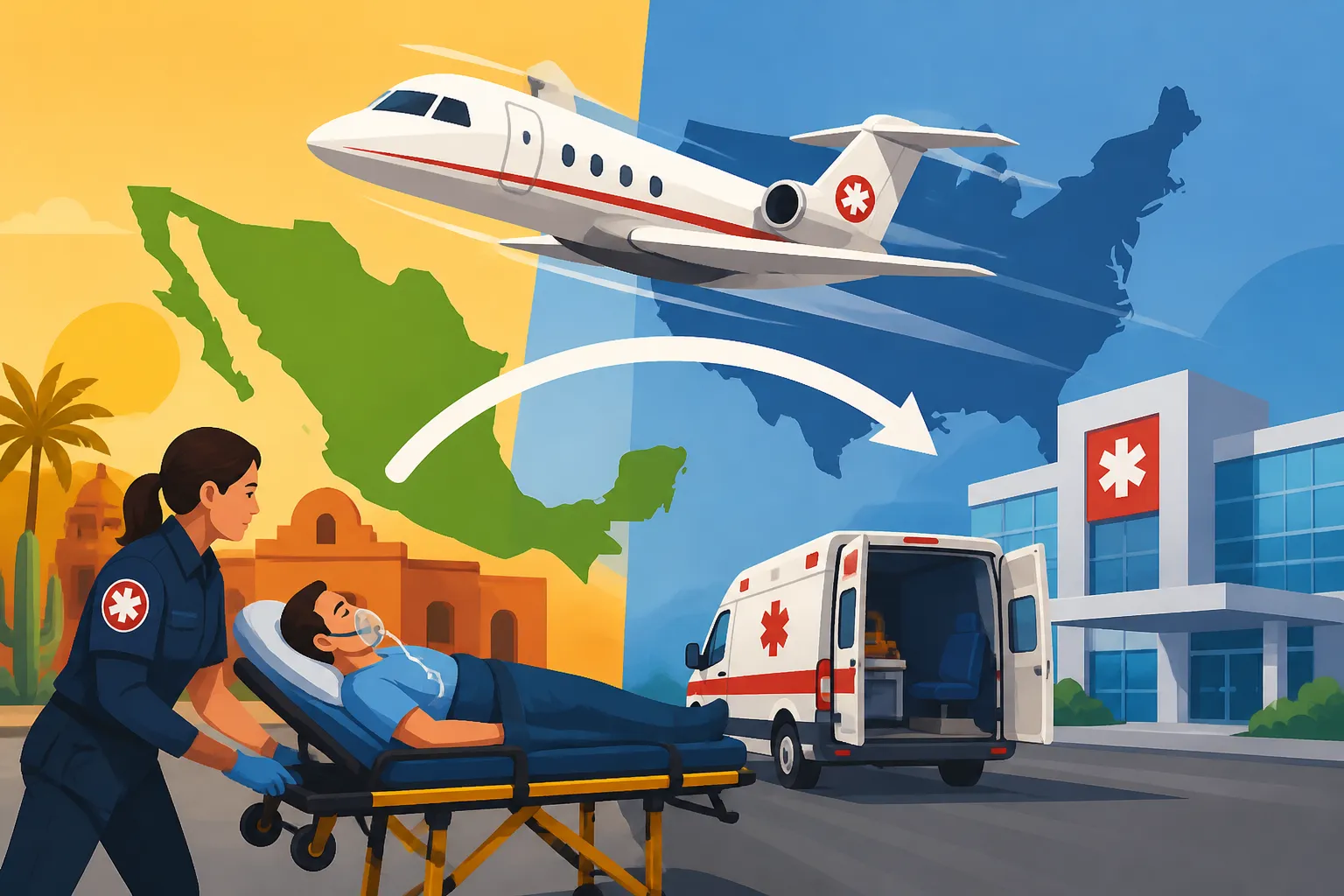
This isn't just a simple ambulance transfer or a commercial flight with a doctor onboard. A full medical evacuation typically involves a dedicated air ambulance—a specially equipped jet with a medical team, including doctors and nurses, and all the necessary life-support equipment to transport you safely over long distances. The goal is to move you from a facility where you cannot receive adequate care to one where you can, often back to your home country, like the United States. This entire process is meticulously coordinated, medically complex, and, as we’ll get into, incredibly expensive. It's truly about bringing you home or to a world-class facility when your local options just aren't enough.
When Is Medical Evacuation Absolutely Necessary?
So, how do you know if you truly need a medical evacuation versus just getting treatment in Mexico? This is a critical question, and it's usually decided by a confluence of factors, often involving your local attending physicians, your family, and crucially, your insurance provider's medical review team.
Firstly, if your condition is life-threatening or could lead to permanent disability, and the local medical facilities in Mexico lack the specific expertise, technology, or resources to treat it effectively, evacuation becomes a serious consideration. Think complex neurosurgery, highly specialized cancer treatments, or advanced cardiac procedures that require cutting-edge equipment and highly trained specialists you might find more readily in a major US hospital. While Mexico has excellent private hospitals, especially in major cities, they might not always cover every single sub-specialty or rare condition. For an overview of local options, check out our guide on Healthcare in Mexico: Complete Guide for Expats (Public vs Private).
Secondly, a direct recommendation from your attending physician in Mexico is a strong indicator. If they believe your prognosis would significantly improve with care elsewhere, they'll often advise a transfer. However, even with a doctor's recommendation, it's often your insurance provider's medical team that makes the final determination of "medical necessity" for the evacuation itself. They'll review your case, examine available medical records, and consult with the treating physicians to ensure the move is truly warranted and that the destination facility can provide superior care. This process can be daunting, especially when dealing with Overcoming Language Barriers at the Doctor: Tips for Expats during a crisis.
Lastly, sometimes it's about peace of mind. While not strictly "medically necessary" in every case, many expats simply feel more comfortable receiving long-term or critical care in their home country, surrounded by family, and within a healthcare system they understand. Having a robust medical evacuation policy, like those offered through SafetyWing, can make this personal preference a reality, bridging the gap between local care and home-country comfort without financially ruining you.
The High Cost of Emergency Transport: Why You Can't Afford to Skimp
This is where the rubber meets the road, or rather, where your wallet meets a brick wall. Medical evacuation is not just expensive; it’s astronomically expensive. This isn't a bill you want to face without proper coverage, because it can easily wipe out your life savings and then some.
Breaking Down the Astronomical Price Tag
Let's be blunt: a medical evacuation isn't a bargain. The costs are staggering because you're essentially chartering a private, flying intensive care unit, complete with a specialized medical crew and all the life-saving equipment you can imagine. We're talking about figures that routinely soar into the tens of thousands, and often well over $100,000 USD, depending on the distance, the patient's condition, and the level of care required mid-flight.
Here's a snapshot of what goes into that eye-watering bill:
- Fixed-wing air ambulance: This is the big-ticket item. These are typically Learjets or similar aircraft specially configured for medical transport. They come with sophisticated medical equipment that mirrors an ICU, from ventilators and defibrillators to medication pumps. The cost includes fuel, aircraft maintenance, landing fees, and all the operational overhead.
- Highly specialized medical crew: You're not just getting pilots; you're getting an emergency physician, critical care nurses, and sometimes even respiratory therapists, all trained for in-flight medical management. Their expertise and availability around the clock don't come cheap.
- Ground transport at both ends: The journey often starts with a local ambulance taking you from the Mexican hospital to the nearest international airport equipped for air ambulances. Once you land in the US, another ambulance will transfer you from the airport to the receiving hospital. These ground legs, while less than the air portion, still add significant costs.
- Permits, customs, and logistics: Coordinating an international medical flight involves navigating airspace regulations, customs, and immigration clearances for both the patient and the medical team, adding layers of administrative complexity and associated fees.
- Repatriation of remains (the grim reality): While nobody wants to think about it, in the most tragic circumstances, some medical evacuation policies also cover the repatriation of remains. This is another costly logistical undertaking that underscores the comprehensive nature of these plans.
A hypothetical scenario: Imagine you're in Cancún and need to be flown to Houston, Texas, for urgent heart surgery unavailable locally. A flight like that could easily run you between $60,000 to $90,000 USD. If you're further inland, say San Miguel de Allende, and need transport to a specialized trauma center in Dallas, the costs could be even higher. This isn't pocket change; it's a financial catastrophe waiting to happen if you're not prepared.
Real-Life Scenarios and Their Financial Impact
Let me tell you, I’ve heard countless stories from fellow expats about medical scares, and the ones that stick with you are always about the financial aftermath. Without a robust medical evacuation plan, what should be a time for healing can quickly become a period of profound financial ruin.
Consider Maria, an expat retiree who, despite her careful planning, thought her basic travel insurance would cover "everything." When she suffered a severe hemorrhagic stroke in a smaller Mexican city, local doctors stabilized her but recommended immediate transfer to a specialized neurosurgical center in Florida. Her travel insurance policy had a paltry $10,000 evacuation limit – barely enough to get her to a major hospital in Mexico City, let alone across the border. Her family was suddenly faced with a choice: risk her long-term recovery by keeping her in Mexico, or pay out-of-pocket for an $85,000 air ambulance. They drained their retirement savings and took out a second mortgage to get her home. The emotional toll of the stroke was compounded by the crushing financial stress.
Then there’s the case of the young digital nomad, Alex, who broke his back in a serious ATV accident near Puerto Vallarta. He needed complex spinal surgery and extensive rehabilitation, and his family wanted him back in a US facility. Because he had neglected to get comprehensive travel medical insurance that included robust emergency evacuation – thinking he was young and invincible – he was looking at a bill north of $120,000 for the air transport and initial medical stabilization in the US. His family had to set up a GoFundMe campaign, hoping friends and strangers would bail them out. It put immense pressure on everyone involved.
These aren't isolated incidents. The reality is that while Mexico has capable medical facilities, particularly private hospitals in bigger cities like those detailed in our guide on Navigating Hospitals and Clinics in Mexico: An Expat’s Guide to Medical Care, there will always be situations that demand higher-level care or the comfort of your home country’s medical system. Relying solely on local Mexican health insurance or basic travel coverage for medical evacuation can leave you desperately vulnerable. This is precisely why a dedicated solution like SafetyWing is so critical for any expat living in Mexico – it’s an investment in your safety and financial future.
Navigating Medical Evacuation Insurance: Your Safety Net
Alright, now that we’ve established just how vital medical evacuation coverage is, let’s talk about how to get it and what to look for. This isn't a one-size-fits-all situation, and understanding the nuances can save you a world of heartache and money.
What to Look For in a Medical Evacuation Policy
Choosing the right policy means asking the right questions and digging into the details. Here are the key components you absolutely must look for:
- High Coverage Limits: This is non-negotiable. As we discussed, evacuations can cost well over $100,000. Look for policies with limits of at least $100,000, and preferably much higher, sometimes up to $500,000 or even $1,000,000, depending on your risk tolerance and where you live in Mexico (remote locations increase costs). Don't settle for a basic travel insurance policy that only offers a few thousand dollars in evacuation coverage; that’s essentially useless for a true air ambulance situation.
- "Medical Necessity" Clause and Provider Control: Pay very close attention to how "medical necessity" is defined and, crucially, who makes the final decision. Most policies state that the insurance provider’s medical team, not your local doctor or you, determines if an evacuation is medically necessary. This is standard, but you want a provider known for fair assessments. Understand that they will look for the nearest appropriate facility, which might not always be your home country if a suitable facility exists closer.
- Destination of Evacuation: Clarify whether the policy will take you to your home country (e.g., the US), the nearest appropriate medical facility, or your choice of facility. Most standard policies opt for the "nearest appropriate medical facility," which could still be in Mexico or another country, not necessarily the US. If returning to your home country is paramount, ensure your policy explicitly covers "repatriation for medical reasons" or "evacuation to country of origin."
- Repatriation of Remains Coverage: Again, a grim but necessary consideration. Many comprehensive policies include this, covering the logistics and costs of transporting remains back home in the unfortunate event of a death abroad.
- Worldwide Coverage and Provider Network: Ensure the policy covers you where you live in Mexico and has a robust network of air ambulance providers. Some policies might have geographical restrictions or preferred providers. A plan that covers you globally, like SafetyWing, offers immense peace of mind, knowing that if disaster strikes, they have the resources and network to act quickly.
- Coverage for the underlying medical condition: An evacuation policy only gets you to the hospital. Does your health insurance cover the actual treatment once you arrive? A comprehensive travel medical insurance like SafetyWing not only includes emergency medical evacuation but also covers eligible unexpected illness and injury treatment, making it a powerful combined solution.
Distinguishing Between Travel Insurance, Health Insurance, and Evacuation Coverage
This is where many expats get tripped up, thinking one type of insurance covers all their bases. Let's clarify the differences:
- Standard Travel Insurance: This is usually for short trips (a few days to a few months) and often has limited medical coverage. While it might include some emergency medical evacuation, the limits are typically too low for a serious international air ambulance. It's great for lost luggage or minor illnesses on vacation, but inadequate for long-term expat life and critical emergencies. Many expat travel insurances like SafetyWing go beyond this with higher limits and continuous coverage.
- Local Mexican Health Insurance: Plans from providers like GNP Seguros or AXA Seguros in Mexico are excellent for your day-to-day medical needs, doctor visits, hospital stays, and prescriptions within Mexico. They are crucial for accessing care locally and often required for visa applications. However, most local Mexican policies do not include international medical evacuation to your home country. Their purpose is to cover your care in Mexico. For more on this, see Health Insurance in Mexico: How Expats Can Get Coverage (2027).
- International Health Insurance: This is broader coverage designed for expats living abroad. These plans, offered by companies like Cigna Global or Bupa Global, provide comprehensive medical care coverage in Mexico and often internationally. Many high-end international health insurance plans do include robust emergency medical evacuation benefits. However, they are typically significantly more expensive than travel medical insurance and may have stricter underwriting for pre-existing conditions.
- Dedicated Medical Evacuation Membership/Rider: Some companies offer stand-alone medical evacuation memberships (like MedjetAssist) or you can add an evacuation rider to an existing international health policy. These are specifically for transport and do not cover the underlying medical treatment.
The key takeaway is that for expats in Mexico, you ideally need a combination of strong local health insurance for routine and emergency care in Mexico, PLUS a robust medical evacuation component. This could be an international health insurance plan that includes it, or a comprehensive travel medical insurance like SafetyWing that offers significant emergency medical and evacuation coverage. It’s important to understand that Travel Insurance vs Local Insurance: Do Expats Need Both? – the answer is often yes, for different purposes.
The Logistics of an Evacuation: What to Expect
If you find yourself or a loved one in a situation requiring medical evacuation, the last thing you want to be is unprepared or surprised by the process. It's a high-stakes, high-stress event, and knowing what to expect can make a significant difference.
The Step-by-Step Process from Mexico to the US
While every situation is unique, a medical evacuation generally follows a coordinated sequence of events:
- Initial Stabilization in Mexico: The immediate priority is always to stabilize the patient at the local Mexican hospital. The medical evacuation team cannot transport someone who is actively unstable. This might involve emergency surgery, medication, or life support. Your local doctors here in Mexico will be working to get you into a condition where transport is safe. For a deeper understanding of emergency services, read Medical Emergencies in Mexico: What Expats Should Know and Prepare.
- Contacting Your Insurance Provider: This is your very first step after stabilization. As soon as a doctor suggests or you consider an evacuation, you or a family member must contact your medical evacuation provider (e.g., SafetyWing's emergency assistance line). They have 24/7 medical and logistical teams ready to respond. Provide them with all the details: your location, diagnosis, current medical status, and the contact information for your attending physician in Mexico.
- Medical Review and Approval: Once contacted, your insurance provider's medical team (usually doctors and nurses) will immediately liaise with your treating physicians in Mexico. They will review your medical records, discuss your condition, and determine if the evacuation meets the "medical necessity" criteria of your policy. This is not a fast decision in a crisis, but their experienced team works efficiently to get all the necessary information.
- Logistical Coordination: If approved, the real logistical ballet begins. The insurance provider's team will:
- Identify an appropriate receiving facility in the US: They'll work to find a hospital that has the specialists and equipment needed for your specific condition.
- Charter an air ambulance: This involves securing a specially equipped jet and a qualified medical crew.
- Arrange ground transportation: They'll coordinate local ambulances to transfer you from the Mexican hospital to the departing airport, and from the arrival airport in the US to the receiving hospital.
- Handle international paperwork: This includes flight plans, permits, customs, and immigration clearances for both the patient and the medical team.
- The Journey: Once all arrangements are made, the air ambulance team will arrive at your location in Mexico. They will conduct their own assessment, transfer you to the aircraft, and provide continuous medical care throughout the flight. The journey itself can be long, but you will be under constant professional supervision.
- Arrival and Transfer: Upon landing in the US, another ambulance will be waiting to transport you directly to the designated American hospital, where your care will continue.
This entire process is incredibly intricate and emotionally draining. You are at your most vulnerable, and having a reliable company like SafetyWing managing the complex, stressful logistics is truly invaluable.
Preparing for the Unthinkable: Documents and Communication
While we hope you never need it, being prepared for a medical evacuation is crucial. Think of it as putting together a "go bag" for a medical emergency.
- Keep Policy Details Accessible: Do not just rely on having your policy number buried in an email. Print out your insurance policy information, especially the emergency contact numbers for your medical assistance provider (like SafetyWing). Keep a copy in your wallet, another at home in a clearly labeled folder, and an electronic copy on your phone and in cloud storage. Ensure a trusted friend or family member also has these details.
- Emergency Contacts List: Have a laminated card with essential contacts: family members (with international numbers), your primary care doctor in Mexico, and your emergency contact at your insurance provider. Keep it current.
- Medical Records (Translated, if possible): Maintain an updated file of your most important medical history, including current medications, known allergies, chronic conditions, and any significant past surgeries. If you can get a summary translated into English (or Spanish, if you're evacuating to Mexico from another country), that can expedite care upon arrival. This is especially helpful when Bringing Prescription Medications from Home: Rules and Tips for Expats.
- Overcoming Language Barriers: In an emergency, language can be a huge hurdle. While many private hospitals in Mexico have English-speaking staff, you can’t always count on it, especially outside major expat hubs. Have a translation app on your phone, or better yet, a list of critical Spanish medical phrases. Your insurance provider's assistance line will likely have bilingual staff to help bridge this gap with local medical teams.
- Designate a Point Person: If you're traveling with family or have close friends in Mexico, designate one person to handle communication with your insurance provider and family back home. This centralizes information and reduces confusion.
- Power of Attorney for Healthcare: For long-term residents, consider having a legal document like a medical power of attorney (or equivalent in Mexico) in place, designating someone to make medical decisions on your behalf if you're incapacitated. This can be complex to arrange internationally, so consult with legal professionals familiar with both Mexican and your home country's laws.
Being proactive about these preparations won't prevent an emergency, but it will certainly smooth the path if one occurs, allowing your energy to be focused on recovery rather than logistical nightmares.
Choosing Your Best Option: SafetyWing
When it comes to comprehensive peace of mind for expats in Mexico, especially concerning the daunting prospect of medical evacuation, finding the right insurance solution is paramount. This isn't just about covering costs; it's about having a dedicated team ready to act when you need it most.
Why SafetyWing Stands Out for Expats in Mexico
For many expats, digital nomads, and long-term travelers in Mexico, SafetyWing has become a truly compelling option. What makes it stand out, particularly in the context of emergency medical evacuation?
- Designed for Nomads and Expats: Unlike traditional travel insurance, SafetyWing's Nomad Insurance is built for individuals living and working abroad on a long-term basis. It understands the unique needs of expats, offering continuous coverage that can be started and stopped on a monthly basis, providing immense flexibility. This is a huge advantage over short-term travel policies that leave you vulnerable if your trip extends.
- Robust Emergency Medical Evacuation: SafetyWing's core offering includes comprehensive emergency medical evacuation benefits. This isn't just a token amount; it's designed to cover the high costs of transporting you to the nearest appropriate medical facility or back to your home country if medically necessary. When you're facing a potential $100,000+ bill, having a plan like SafetyWing with substantial coverage is an absolute game-changer.
- Coverage for Unexpected Illness and Injury: Beyond evacuation, SafetyWing covers new illnesses and injuries that occur while you're insured. This means if you get sick or have an accident in Mexico, your eligible medical expenses are covered, and if the situation escalates to require evacuation, that's covered too. It's a cohesive package.
- Worldwide Coverage (including Mexico and brief trips home): SafetyWing provides global coverage. This means you’re covered while living in Mexico, and also for short trips back to your home country (typically up to 30 days every 3 months, or 15 days for US citizens). This flexibility is perfect for expats who maintain ties or need to visit family back home without losing coverage.
- Simplicity and Affordability: One of the biggest appeals of SafetyWing is its straightforward, subscription-based model. You pay monthly, can cancel anytime, and the sign-up process is entirely online and user-friendly. For many, it strikes an excellent balance between comprehensive coverage and an affordable price point, especially compared to high-end international health insurance plans. It's a pragmatic solution for many expats looking for a reliable safety net.
- 24/7 Emergency Assistance: When a medical emergency happens, you need immediate support. SafetyWing provides a 24/7 emergency assistance line, connecting you with medical and logistical experts who can coordinate care and, if needed, initiate the complex process of medical evacuation.
Having a solution like SafetyWing means you don't have to choose between experiencing the expat dream and being financially protected against life's harsher realities. It offers a solid, dependable layer of protection that addresses one of the biggest fears for anyone living abroad.
Comparing SafetyWing to Other Evacuation Solutions
Let’s put SafetyWing into perspective against the other types of coverage we discussed:
| Feature/Solution | SafetyWing (Nomad Insurance) | Traditional Travel Insurance | Local Mexican Health Insurance (e.g., GNP) | International Health Insurance (e.g., Cigna Global) | Stand-alone Evacuation Membership (e.g., MedjetAssist) |
|---|---|---|---|---|---|
| Primary Focus | Travel Medical & Emergency Evacuation for Expats/Nomads | Short-term trip protection (medical, luggage, delays) | Medical care within Mexico | Comprehensive health coverage globally for expats | Emergency medical transport only |
| Medical Evacuation Coverage | High, integral part of plan (e.g., $250k) | Often low limits (e.g., $10k-$50k) | Generally none internationally | Often high, integral to comprehensive plans | High, specialized solely for transport |
| Covers Underlying Medical Treatment | Yes, for eligible unexpected illness/injury | Yes, for eligible unexpected illness/injury | Yes, for eligible conditions in Mexico | Yes, comprehensive global medical treatment | No, only transport costs |
| Duration of Coverage | Continuous, monthly, flexible for long-term expat life | Short-term, usually up to 6 months | Annually renewable for long-term residents in Mexico | Annually renewable for long-term residents abroad | Annually renewable, typically |
| Cost | Moderate, very competitive for expat coverage | Low to moderate (for short trips) | Moderate to high, depending on coverage tier | High, comprehensive plans are expensive | Moderate (separate cost from health insurance) |
| Flexibility | High (start/stop monthly, worldwide coverage) | Low (tied to specific trip dates) | Medium (good for Mexico, limited outside) | Medium (good for global expat life, but often less flexible) | High (can supplement other insurance) |
As you can see, SafetyWing fills a crucial niche, offering robust medical evacuation alongside coverage for unexpected medical events, all wrapped in a flexible, expat-friendly package. For those living in Mexico, it often acts as that essential bridge between local care and the critical need for international transport, providing peace of mind without the prohibitive costs of top-tier international health insurance or the limitations of basic travel plans.
Ready to secure your peace of mind and ensure you’re covered for any eventuality? Look into SafetyWing's flexible and comprehensive plans today and join thousands of expats who rely on it for their safety net.
Disclaimer
Please remember that I am an expat blogger, not a licensed insurance agent or legal professional. The information provided in this article is for general informational purposes only and is based on my personal experience and research as a long-term resident of Mexico. While I strive to provide accurate and up-to-date information, insurance policies, regulations, and costs can change. It is crucial to always consult with a qualified insurance professional to discuss your specific needs and to review the terms and conditions of any insurance policy before making a purchase. Your individual circumstances may require different coverage options.