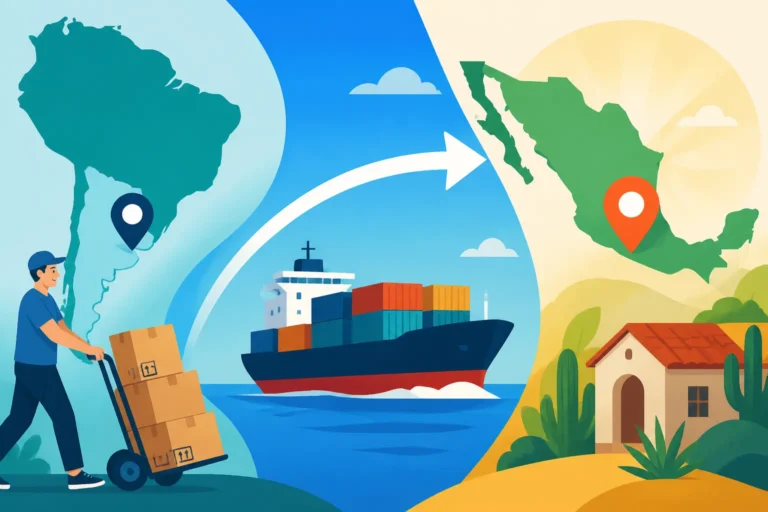
Paying for Overseas SaaS and Ads From Mexico: Cutting FX Markup
Living in Mexico is an absolute dream for many of us, isn't it? The culture, the food, the sunshine – it’s incredible. But let's be real, managing your finances from here, especially when you need to pay for things back home or for international services like SaaS subscriptions or online ads, can feel like navigating a labyrinth with a blindfold on. Those sneaky foreign exchange markups and bank fees from Mexican banks can seriously eat into your budget. This guide is here to shed light on those hidden costs and, more importantly, show you how services like Wise can be your absolute lifeline for cutting down those frustrating FX markups and making overseas payments much smoother.
Disclosure: This post may contain affiliate links. We may earn a commission at no extra cost to you if you make a purchase through these links. Read full disclosure.
The Hidden Costs of Overseas Payments from Mexico
It's one of those things you don't really think about until you're knee-deep in it: how much it actually costs to move your money internationally, even for something as routine as a monthly software subscription. Many of us arrive in Mexico expecting everything to be cheaper, and while much of life here certainly is, international banking is often an unwelcome exception. You sign up for an online tool, a cloud service, or set up an ad campaign, thinking it's a simple transaction, but then you see your bank statement and wonder why the final amount is higher than expected. This isn't just an annoyance; for those of us running online businesses or freelancing from Mexico, these extra costs can significantly impact our bottom line.
Understanding Bank Exchange Rates and Fees
When you try to pay for an overseas service using your Mexican bank account, whether it's with a debit card linked to your local bank or an international wire transfer, you're usually in for a rude awakening. Mexican banks, much like traditional banks globally, are not exactly known for their transparent or favorable foreign exchange rates. What often happens is they'll offer you an exchange rate that's considerably worse than the real "mid-market" rate you see on Google. This difference, known as the "spread," is a profit margin for them, and it’s often hidden in plain sight.
Let's say you're a content creator in Guadalajara and need to pay for your monthly Adobe Creative Cloud subscription in USD. Your bank, perhaps BBVA or Banorte, will process that transaction. While the service itself costs $50 USD, by the time it's converted to pesos on your statement, you might find you've paid the equivalent of $52 or $53 USD due to that unfavorable exchange rate. On top of that, many banks slap on a flat fee for any international transaction, sometimes a percentage, sometimes a fixed amount, which further chips away at your hard-earned pesos. It really adds up, especially if you have multiple recurring payments.
The Headache of Credit Card Foreign Transaction Fees
If you're using a credit card issued by a Mexican bank for your overseas SaaS and ad payments, you're likely facing another layer of charges: foreign transaction fees. These fees typically range from 1% to 3% of the transaction amount and are applied on top of whatever unfavorable exchange rate the card issuer decides to use. Imagine running a Facebook Ads campaign from your base in Playa del Carmen, spending a few hundred dollars a month. That 2% foreign transaction fee might seem small, but it's an extra $4-$6 every time you top up your ad account – pure money down the drain.
Many expats initially try to use their credit cards from their home country, only to find that even those cards, depending on the issuer, might still carry foreign transaction fees. What’s more, sometimes overseas vendors offer "dynamic currency conversion" (DCC), asking if you want to pay in pesos instead of their native currency. While it might sound convenient, it's almost always a terrible deal. The merchant's bank sets the exchange rate, and it's notoriously poor, giving you yet another layer of markup. It's frustrating because you’re trying to run your business efficiently, and these small, insidious fees just keep piling up, making it harder to track your actual expenses. This is especially true for recurring charges that just seem to disappear into the ether of your bank statement. For more general advice on using plastic, check out our guide on Using Credit and Debit Cards in Mexico: What Expats Need to Know.
Traditional Payment Methods and Their Pitfalls for Expats
When you first move to Mexico, the banking system can feel quite different from what you're used to. While local transactions are often smooth, the moment you venture into international payments, the cracks in the system become apparent. Many of us try to stick with what we know, attempting to leverage our local Mexican bank accounts for all our financial needs, only to run into brick walls of bureaucracy, slow processing times, and of course, those pesky fees. It truly tests your patience and often leaves you feeling like you're losing money just trying to keep your digital tools running.
Using Mexican Bank Transfers (SPEI and SWIFT)
For domestic payments within Mexico, SPEI (Sistema de Pagos Electrónicos Interbancarios) is fantastic. It’s fast, usually free, and allows you to send money between different Mexican banks instantly. But as soon as you need to send money outside of Mexico, SPEI is no help at all. You're forced to use international wire transfers, commonly known as SWIFT transfers. This is where things get complicated and expensive.
Initiating a SWIFT transfer from a Mexican bank often means physically going to a branch, filling out forms (in Spanish, of course!), and sometimes even explaining why you're sending money abroad. The fees are typically much higher than domestic transfers, often a flat fee ranging from $20 to $50 USD, and that's just from your bank. The recipient's bank might also charge fees, and intermediary banks along the way can take a cut too. And let's not forget the exchange rate – it will almost certainly be unfavorable, adding another layer of cost. Plus, these transfers aren't instant; they can take anywhere from 2-5 business days, sometimes even longer, leaving you in limbo. If you're looking for more details on this, our post on How to Send Money To and From Mexico: Transfers and Fees delves deeper into the intricacies.
Relying on International Credit Cards
Many expats maintain credit cards from their home countries, thinking they can bypass Mexican bank fees for international payments. While this can sometimes reduce the specific fees imposed by Mexican banks, it doesn't eliminate the problem entirely. As mentioned, many international cards still come with foreign transaction fees, especially if they're not specifically marketed for travel or international use. You might think you're getting a good deal, but a quick glance at your statement often reveals those extra percentages adding up.
Furthermore, relying solely on international cards can make budgeting and expense tracking a nightmare, especially when dealing with fluctuating exchange rates. The amount deducted from your account might vary slightly each month depending on the MXN/USD or MXN/EUR rate, making consistent financial planning a challenge. You also run the risk of your home country's bank flagging recurring international payments as suspicious activity, leading to your card being temporarily blocked until you verify the transactions. This can be a real headache, especially if you're trying to pay a time-sensitive ad invoice or ensure uninterrupted SaaS access. While it's tempting to keep things status quo, for those truly committed to life here, you might eventually look into options for Building Credit in Mexico: How Foreigners Can Establish Credit History to integrate more fully into the local financial system.
Introducing Wise: Your Go-To Solution for International Payments
Alright, enough with the frustrations! Let's talk about the game-changer that many expats in Mexico (myself included) swear by for managing international money: Wise. Seriously, if you're pulling your hair out over bank fees and terrible exchange rates when paying for overseas SaaS or ads, this is where you need to focus. It's not just a little better; it's a completely different approach that respects your money and your time. It’s the kind of service that makes you wonder why traditional banks cling to their outdated, expensive methods.
How Wise Cuts Down on FX Markups
The single biggest reason Wise (formerly TransferWise) stands out is its commitment to the real mid-market exchange rate. You know, the rate you see when you Google "USD to MXN" – that's the one they use. Unlike traditional banks that pad their profits with a hefty "spread" on the exchange rate, Wise offers you the actual rate, which means more of your pesos are actually going towards your payment, not into a bank's pocket.
On top of the fair exchange rate, their fees are ridiculously transparent and low. You'll see exactly how much you're paying upfront, calculated as a small percentage of the transfer amount, plus sometimes a tiny fixed fee. This level of honesty is incredibly refreshing after dealing with the opaque charges from conventional banks. The magic behind it? Wise uses a system of local bank accounts. When you send money from Mexico to the U.S., for example, your pesos go into their local Mexican account, and then they pay out the USD from their local U.S. account. This ingenious method bypasses expensive international SWIFT transfers, saving you a ton on fees and making the process much faster. So, whether you're paying for Salesforce, Mailchimp, or even a big Google Ads bill, you're getting the best bang for your buck. For a deeper dive into moving money, you can also revisit our article on Sending Money To and From Mexico: Transfers and Fees.
Streamlining SaaS Subscriptions and Ad Spend with Wise
For anyone running an online business or just managing various digital subscriptions from Mexico, Wise is a godsend. Imagine having half a dozen SaaS tools – think project management software, email marketing platforms, design tools – all charging you in different currencies. With traditional banks, each one is a separate foreign transaction fee and a terrible exchange rate. With Wise, you can streamline these payments incredibly efficiently.
You can link your Wise account directly to many services, or use their debit card. The Wise debit card is a game-changer because it allows you to spend in various currencies as if you were a local. If you have a balance in USD, for instance, and you use your Wise card to pay for a service in USD, there's no conversion necessary, and thus no conversion fees! If you don't have enough of the local currency, it automatically converts from your other balances at that excellent mid-market rate. You can even generate virtual cards for specific subscriptions, adding an extra layer of security. This level of control and transparency simplifies your monthly financial management for things like Spotify, Zoom, or even keeping your Meta Ads campaigns running without a hitch.
Multi-Currency Accounts and Local Bank Details
One of the standout features of Wise for expats is their multi-currency account. This isn't just about sending money; it's about holding money in different currencies. You can keep balances in USD, Euros, British Pounds, Canadian Dollars, and many more, all within your single Wise account. This is incredibly useful for managing your income and expenses, especially if you're paid in a foreign currency but live in Mexico. Instead of your bank automatically converting your foreign income to pesos at a poor rate, you can receive it directly into your Wise multi-currency account and decide when and how much to convert.
What's even cooler is that Wise provides you with local bank details for several of these currencies. This means you get a U.S. account number and routing number, a Euro IBAN, a UK sort code and account number, and so on. This makes it possible for you to receive payments from clients or employers in those countries as if you had a local bank account there, often avoiding fees for both you and the sender. When you're managing your finances in an international context, minimizing exposure to currency fluctuations is key, and this feature helps immensely. It gives you far more flexibility than trying to decide if you Should Expats Keep Savings in Pesos or Dollars? Managing Currency Risk in a traditional Mexican bank.
Practical Steps to Optimize Your Overseas Payments
Making the switch to a more expat-friendly financial tool like Wise might seem like another administrative hurdle at first, but trust me, the long-term benefits for your wallet and your peace of mind are immense. It's about empowering yourself to reclaim control over your money and stop letting those hidden bank fees dictate your international spending.
Setting Up Your Wise Account from Mexico
Getting started with Wise is remarkably straightforward, especially when compared to the hoops you often jump through with traditional Mexican banks. The entire process can typically be done online or through their user-friendly app. First, you'll need to sign up for an account, which involves providing some basic personal information. Next, like any regulated financial service, you’ll go through a verification process. This usually means uploading a clear photo of your identification (your Mexican resident card or passport works perfectly) and proof of address here in Mexico, like a recent CFE electricity bill or a bank statement.
Once verified, you can start funding your Wise account. From Mexico, the most common and cost-effective way to do this is via a local bank transfer (SPEI) from your Mexican bank account. You'll initiate the transfer from your Mexican bank's online platform to the local Wise bank details they provide. You can also fund it using a debit or credit card, though these methods might incur slightly higher fees from Wise or your card issuer. Compared to the often-cumbersome process of trying to How to Open a Bank Account in Mexico: Requirements and Tips as a foreigner, setting up Wise feels like a breeze.
Using Wise for Your Business and Personal Needs
Once your Wise account is active and funded, the world of efficient international payments opens up. For your business, this means you can confidently pay for all your overseas SaaS tools – be it your CRM, your website hosting, or your SEO software – knowing you're getting the true exchange rate and minimal fees. Setting up recurring payments is simple, ensuring your subscriptions never lapse. For your ad spend on platforms like Google or Meta, you can easily top up your accounts directly or use your Wise debit card.
Beyond business, Wise is incredibly versatile for personal finance too. Need to send money to family back home? Want to pay an international bill or manage travel funds for an upcoming trip abroad? Wise handles it all, often delivering money to recipients much faster than traditional bank wires. The transparency and speed it offers truly transform how you manage your money across borders, making you feel far more connected and financially savvy as an expat in Mexico.
Beyond Wise: Other Considerations for Expats
While Wise truly is a standout, it's always good to be informed about your overall financial strategy here in Mexico. Keep an eye on your spending and track those exchange rates regularly, as they can fluctuate. For those running businesses from Mexico and needing to pay for overseas services, remember that these expenses need to be properly accounted for. Consulting with a local contador (accountant) can help you navigate the tax implications of these payments and ensure you’re compliant with Mexican tax laws. They can advise on how to manage your Taxes in Mexico for Expats: A Complete Guide to Income Tax and More effectively.
For some, especially if receiving frequent payments from specific countries, exploring other fintech services might complement your Wise strategy. However, for sheer value in transparent exchange rates and low fees for SaaS and ad payments, Wise remains a top contender. The goal is to maximize your pesos and minimize the financial friction of living internationally. By leveraging smart financial tools and understanding the landscape, you can truly enjoy the Cost of Living in Mexico: 2026 Comprehensive Guide without feeling constantly nickel-and-dimed.
| Feature | Traditional Mexican Bank (e.g., BBVA, Banorte) | Wise (formerly TransferWise) |
|---|---|---|
| Exchange Rate | Marked up (unfavorable "spread") | Real mid-market rate |
| Fees | High, often hidden, fixed + percentage | Low, transparent, clearly shown upfront |
| Speed | International wires 2-5+ business days | Often instant, or within hours/1-2 business days |
| Ease of Use | Can be complex, in-person visits, paperwork | Fully online/app, intuitive interface |
| Recurring Payments | Subject to individual card/bank fees | Streamlined via debit card, virtual cards, direct link |
| Multi-currency | Limited to Mexican pesos + specific foreign exchange services | Hold & manage 50+ currencies, local bank details |
| Transparency | Often opaque, charges revealed after transaction | Full fee breakdown and rate shown before transaction |
Disclaimer
The information provided in this guide is for general informational purposes only and does not constitute financial, legal, or tax advice. While we strive to provide accurate and up-to-date content, financial regulations and service offerings can change. It is always recommended to consult with a qualified financial advisor, lawyer, or accountant in Mexico for advice tailored to your specific situation before making any financial decisions. We are not responsible for any actions taken based on the information in this article.