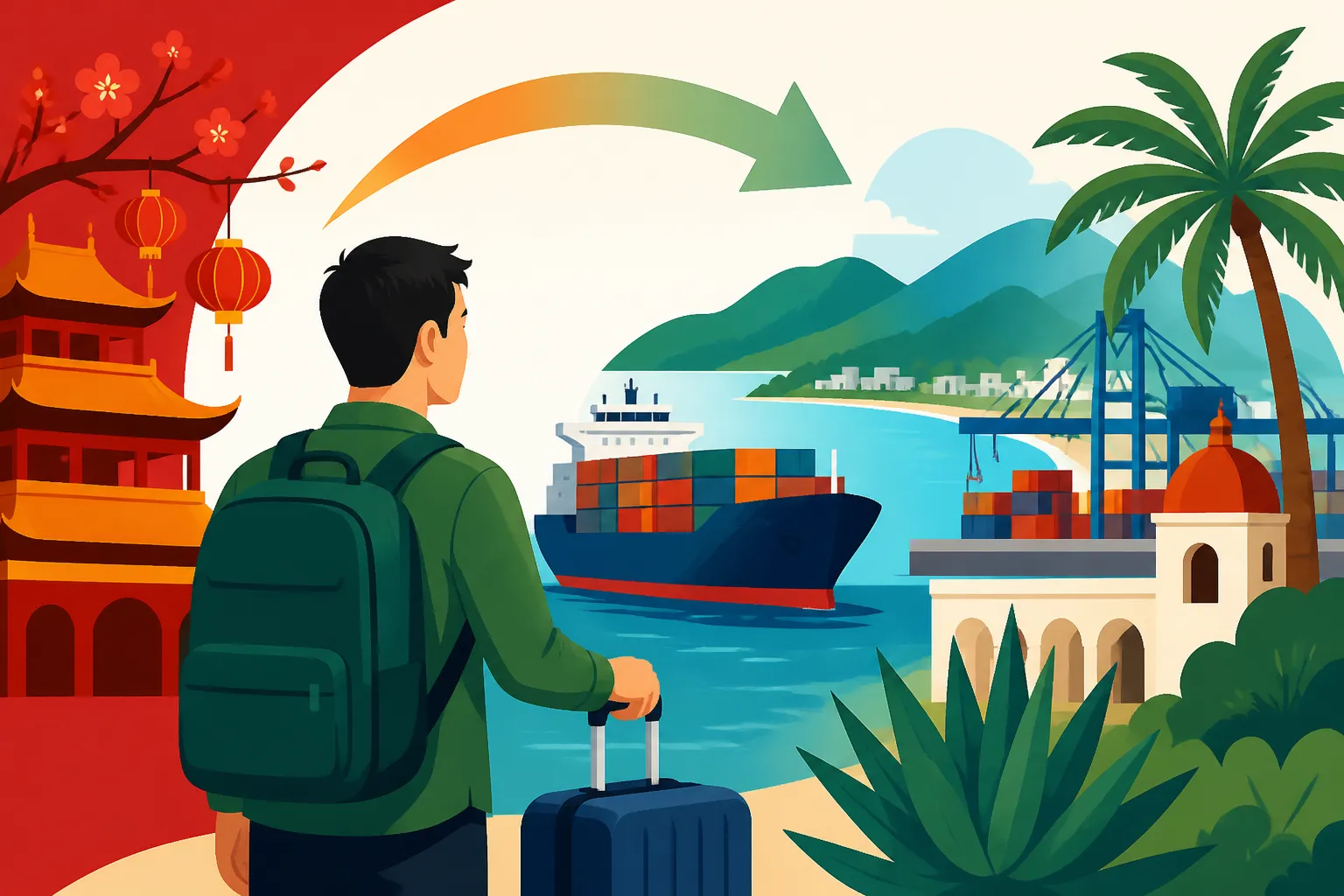
Moving to Mexico from China: Manzanillo and Lazaro Cardenas Arrivals
The thought of relocating your entire life from China to Mexico can be overwhelmingly complex, especially when picturing your cherished belongings making the long journey across the Pacific to bustling ports like Manzanillo or Lázaro Cárdenas. The sheer volume of administrative hurdles, the unfamiliar customs procedures, and the cultural differences can feel like a mountain before you even begin to pack. This comprehensive guide is here to break down the intricate process of shipping your household goods, helping you navigate the complexities of port arrivals and find trusted assistance for a smoother transition into your new life in Mexico.
Disclosure: This post may contain affiliate links. We may earn a commission at no extra cost to you if you make a purchase through these links. Read full disclosure.
Understanding the Logistics of Moving Household Goods from China to Mexico
Moving your entire household from one continent to another is never a small feat, but when you're moving from China to Mexico, you're not just crossing an ocean; you're stepping into a completely different regulatory landscape. Forget what you know about efficiency in your home country; Mexico operates on its own unique rhythm, and understanding this from the outset is crucial for maintaining your sanity.
The Initial Shock: Bureaucracy and Expectations
One of the first things you'll realize, even before your ship leaves port in China, is that patience is not just a virtue here; it's a survival skill. Mexican bureaucracy, while ultimately navigable, can feel like a labyrinth designed by Franz Kafka. Documents often need multiple copies, stamps, and signatures, and sometimes, the process itself can seem to change with the tide. It's not uncommon for things to take longer than expected, for requirements to shift slightly, or for a seemingly simple step to involve several trips to different offices. This isn't inefficiency, it's just how things are, and expecting it helps you manage your stress levels.
The key here is preparation and redundancy. Always make extra copies of every single document. Keep digital backups. And when you think you have everything, assume you might need one more obscure paper. This isn't meant to scare you, but rather to prepare you mentally for a process that demands a calm demeanor and a willingness to adapt. This is where a reliable international moving partner, like those you can find through Sirelo, becomes invaluable, as they deal with these nuances daily.
Choosing Your Shipping Method: Sea Freight vs. Air Cargo
When sending your household goods from China, you'll primarily be looking at two options: sea freight or air cargo. Each has its distinct advantages and disadvantages, heavily influencing cost, transit time, and what you can realistically bring.
Sea freight is, by far, the most common and cost-effective method for shipping an entire household. You'll typically have two options here: Full Container Load (FCL) or Less than Container Load (LCL).
- FCL (Full Container Load): If you're moving a substantial amount of belongings – say, a three-bedroom house – an FCL means your items get their own dedicated container. This offers better security, less handling, and often faster transit times than LCL, as the container doesn't need to be consolidated or deconsolidated with other shipments. It's pricier, but for large moves, it can be worth it.
- LCL (Less than Container Load): For smaller moves, like a one-bedroom apartment or just a few large items, LCL is more economical. Your belongings will share container space with other shipments, meaning the cost is divided. The trade-off is often longer transit times due to consolidation and deconsolidation processes at both ends, and slightly higher risk of damage or delays due to more handling.
Air cargo, on the other hand, is significantly faster but also significantly more expensive. It's usually reserved for essential items you need immediately, valuable electronics, or small, high-priority shipments. If you're planning to fly to Mexico and start setting up your home quickly, a small air cargo shipment might supplement a larger sea freight consignment. However, be prepared for the cost to be many times that of sea freight per cubic meter. Most expats will use sea freight for the bulk of their belongings and carry a few essentials in their checked luggage on their flight.
| Feature | Sea Freight (FCL) | Sea Freight (LCL) | Air Cargo |
|---|---|---|---|
| Cost | High (for container), but best value per volume | Medium (cost-effective for smaller volumes) | Very High (most expensive per volume) |
| Transit Time | 4-8 weeks (port-to-port) | 6-12 weeks (port-to-port, due to consolidation) | 3-10 days (door-to-door often) |
| Best For | Large households, full homes | Smaller households, partial shipments, large items | Urgent items, small high-value shipments, essentials |
| Security/Handling | High security, less handling | Moderate security, more handling | High security, less risk of damage in transit |
| Flexibility | Good for non-urgent, heavy/bulky items | Good for smaller, non-urgent shipments | Best for time-sensitive or fragile items |
Navigating Manzanillo and Lázaro Cárdenas Ports
Your goods from China will most likely arrive at one of Mexico's two major Pacific ports: Manzanillo in Colima or Lázaro Cárdenas in Michoacán. These ports are the primary gateways for trans-Pacific commercial cargo, and understanding their dynamics is key to anticipating your shipment's journey.
Manzanillo: Mexico's Pacific Gateway
Manzanillo, located on the coast of Colima, is Mexico's busiest port and a critical hub for international trade. For expats, this means a high volume of traffic and well-established logistics infrastructure. The port handles a massive influx of goods daily, including a significant portion of shipments from Asia. While this means efficiency in terms of container movement, it also implies that the customs processes can be rigorous due to the sheer volume.
If your household goods arrive here, your moving company will work with a customs broker (agente aduanal) who is intimately familiar with the local operations. This relationship is crucial. The port itself is a bustling industrial zone, not somewhere you'll be personally visiting to "check on" your container. All interactions will happen through your broker, emphasizing the need for a trustworthy and experienced professional, often sourced through international moving networks like Sirelo.
Lázaro Cárdenas: Industrial Hub and Customs
Further south, in the state of Michoacán, lies Lázaro Cárdenas. This port is known for its deep-water capabilities and its role in handling large bulk cargo, as well as a growing amount of container traffic. It's a highly industrialized port, with robust connections to central Mexico via rail and road. For household goods, it serves a similar function to Manzanillo.
While perhaps not as high-volume as Manzanillo for all types of cargo, Lázaro Cárdenas is still a significant entry point. The processes for customs clearance will be similar, again requiring a proficient customs broker. It's important to remember that the choice of port isn't typically yours; it's determined by the shipping lines and your chosen moving company based on their routes and availability from your origin in China. The good news is that both ports are equipped to handle international shipments efficiently, provided all your documentation is in order.
Customs Clearance and Importation: The Paper Trail Nightmare
This is arguably the most intimidating part of the entire process. Mexico's customs procedures for importing household goods are detailed and require meticulous attention. The most critical document you'll need is your Menaje de Casa, or "Household Goods Declaration." This isn't just a packing list; it's an official document issued by a Mexican consulate in China that certifies your intention to import personal effects free of import duties.
To obtain your Menaje de Casa, you'll need to prove your residency status in Mexico (Temporary Resident Visa or Permanent Residency) and provide a detailed, itemized list of everything you're importing. This list must be incredibly specific – not just "kitchenware" but "6 plates, 4 bowls, 2 frying pans." The consulate will stamp and seal this document. Without it, you could face hefty import duties, or worse, have your items held indefinitely. Plan to obtain this before you leave China and before your goods arrive. It’s a foundational requirement that directly impacts whether your shipment clears customs smoothly or becomes a nightmare. For a deep dive into this crucial document, check out our guide on Menaje de Casa: Your Household Goods Declaration.
The customs broker assigned by your international moving company will take your Menaje de Casa, bill of lading, passport, residency card, and other supporting documents, and present them to Mexican customs. They'll handle the tariffs, taxes (if applicable, which they shouldn't be with a Menaje de Casa), and any inspections. This is where language barriers can become a huge problem if you try to do it yourself, so relying on an experienced broker is non-negotiable.
Making the Move Smoother with a Trusted Partner
Let's be frank: attempting to manage an international move from China to Mexico entirely on your own is a recipe for monumental stress and potentially costly mistakes. This is particularly true when dealing with the intricacies of customs at major ports like Manzanillo and Lázaro Cárdenas.
Why a Moving Company is Non-Negotiable
An international moving company isn't just about packing boxes and putting them on a boat. For a move of this scale, they act as your primary liaison, navigating the complex web of logistics, regulations, and paperwork. Here's what they bring to the table:
- Expertise in International Shipping Laws: They know the specific requirements for importing goods into Mexico, including the critical Menaje de Casa process and local customs regulations, which can differ even between countries.
- Customs Brokerage: Reputable companies have established relationships with Mexican customs brokers at Manzanillo or Lázaro Cárdenas. These brokers are licensed professionals who know the local personnel, the specific forms, and the unwritten rules of engagement at the ports.
- Logistics Management: From packing and crating in China to arranging sea freight, tracking your shipment across the Pacific, and finally coordinating inland transportation in Mexico, they manage the entire chain. This includes understanding port operations and potential delays.
- Insurance: A good international mover will offer comprehensive insurance options for your goods, protecting you against damage or loss during transit – a small but essential peace of mind investment for such a long journey.
- Problem Solving: When (not if) unexpected issues arise – a missed connection, a customs query, a delay at port – your moving company is your advocate, working to resolve it on your behalf.
This is not the time to pinch pennies on professional help. The cost of errors or delays in customs can far outweigh the savings of a DIY approach.
The Sirelo Advantage: Comparing Quotes and Services
Finding the right international moving company can itself be a daunting task. How do you know who to trust? How do you compare services and prices across multiple providers? This is where a platform like Sirelo truly shines.
Sirelo acts as a global marketplace for international movers. Instead of spending weeks researching and contacting individual companies, you can submit your moving details once, and Sirelo will connect you with multiple pre-vetted, reputable moving companies that specialize in the China-to-Mexico route. This allows you to:
- Receive Multiple Quotes: You'll get competitive pricing from several movers, enabling you to compare not just costs but also the services included (e.g., packing, unpacking, insurance options, customs support). This transparency is invaluable.
- Access Verified Movers: Sirelo only partners with movers who meet their quality standards, giving you a greater sense of security. You can also read reviews from other expats who have used their services.
- Save Time and Stress: Instead of juggling multiple inquiries, you have a streamlined process to find and choose your ideal moving partner. This frees you up to focus on other aspects of your relocation, such as securing your Mexico Temporary Resident Visa: Comprehensive Guide for Expats (2026 Update) or figuring out Renting a Home in Mexico: Complete Expat Guide to Leases, Deposits, and More.
- Benefit from Expert Guidance: While Sirelo itself is a platform, the movers it connects you with are the experts. They can walk you through the specifics of your move, including the Menaje de Casa requirements and what to expect at Manzanillo or Lázaro Cárdenas.
By utilizing Sirelo, you’re taking a proactive step to simplify a potentially overwhelming aspect of your move. It’s an intelligent approach to finding a reliable partner who can transform the complex logistics of moving from China to Mexico into a manageable process.
Post-Arrival: Settling In and Next Steps
Once your container has cleared customs at Manzanillo or Lázaro Cárdenas, the final leg of the journey begins: getting your goods to your new home and truly settling in.
Menaje de Casa: Your Household Goods Declaration
We've mentioned it before, and it bears repeating: the Menaje de Casa is the absolute cornerstone of your move. This document, obtained from a Mexican consulate in China, is what allows your personal belongings to enter Mexico duty-free. It literally translates to "houseware" or "household effects." Without it, every item you import could be subject to import taxes, which can be incredibly costly.
Your customs broker at the port will utilize this document to ensure your shipment is classified correctly. It's crucial that the list you provided to the consulate for your Menaje de Casa closely matches what's actually in your shipment. Any significant discrepancies could trigger additional inspections, delays, and potential fines. This is why professional packing services offered by a Sirelo-partnered mover are beneficial – they create professional, clear packing lists that align with customs expectations. Always keep your physical Menaje de Casa document safe and accessible, even after your goods arrive, as it's a record of your duty-free import.
Inland Transportation and Delivery
Once cleared from customs, your household goods will be loaded onto trucks for inland transportation to your final destination in Mexico. Whether you're moving to Mexico City, Guadalajara, or a charming smaller town, your moving company will coordinate this final leg.
Consider the journey ahead for your goods. Mexico has a vast network of highways, but conditions can vary. Your moving company will ensure proper handling and secure transport. If you live in a more remote area, confirm with your mover about delivery access to your specific street or building. Sometimes, smaller local trucks might be needed to navigate narrow streets or tricky residential areas, especially in older colonial towns.
Upon delivery, thoroughly inspect all your boxes and items before signing off. Check for any visible damage and ensure all boxes accounted for on the inventory list are present. If you notice any issues, document them immediately with photos and note them on the delivery receipt before the crew leaves. This is essential for any potential insurance claims. Having unpacked many boxes after such a move, I can tell you that the relief of seeing your familiar items arrive safely is immense, even if a few things are inevitably jostled during the trans-Pacific journey. It's truly a moment of finally feeling home.
Disclaimer
Please note that immigration laws, customs regulations, and financial requirements in Mexico can change. While every effort has been made to provide accurate and up-to-date information, this guide is for informational purposes only and does not constitute legal or professional advice. It is highly recommended to consult with a qualified immigration lawyer, customs broker, and international moving specialist for personalized guidance regarding your specific situation.