Tech Jobs in Mexico: Where the Roles Are
Finding a high-paying tech job in a foreign country often feels like navigating a maze of ghost listings and "Spanish required" walls that seem designed to keep you out. I remember spending my first few weeks in Guadalajara scouring LinkedIn, feeling a deep sense of frustration as my years of software engineering experience seemed to get lost in translation. This guide breaks down the Mexican tech landscape to show you exactly where the roles are, which cities are hiring, and how to successfully navigate the local hiring culture.
Disclosure: This post may contain affiliate links. We may earn a commission at no extra cost to you if you make a purchase through these links. Read full disclosure.
The Big Three: Mexico’s Primary Tech Hubs
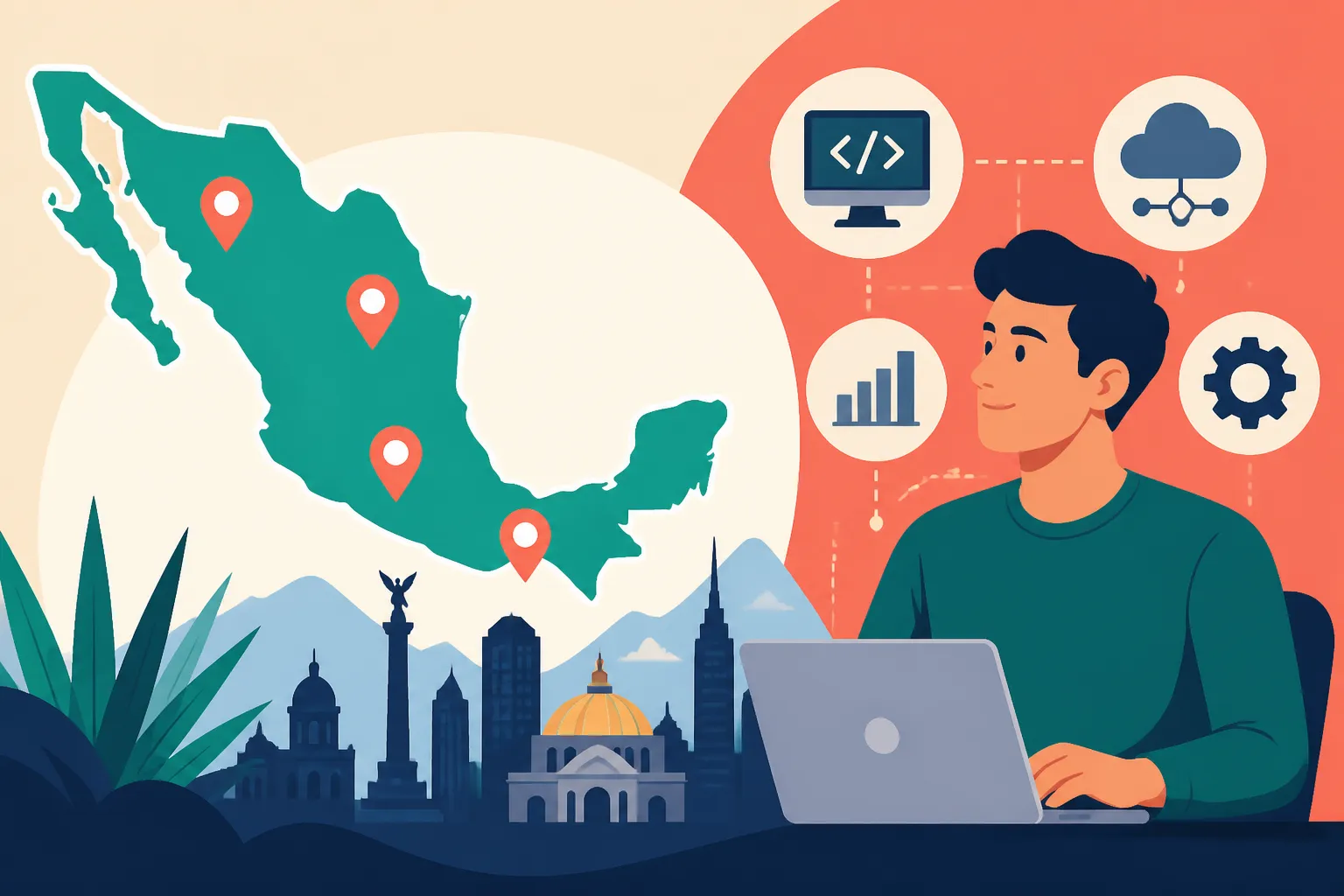
When people think of tech in Latin America, they often overlook the sheer scale of the Mexican ecosystem. The country has moved far beyond being just a "nearshore" outsourcing destination. Today, it is a primary site for R&D, product development, and massive FinTech expansion. However, the opportunities are not spread evenly across the map; they are concentrated in three specific powerhouses.
Guadalajara: The Silicon Valley of Mexico
Guadalajara, the capital of Jalisco, earned its nickname "Silicon Valley of Mexico" decades ago, and it continues to live up to the hype. Unlike other cities that focus on services, Guadalajara is a hardware and software engineering heavyweight. It is home to massive campuses for Intel, Oracle, HP, and IBM. When I first moved there, I was struck by the "Tech Center" vibe of neighborhoods like Zapopan, where modern office towers sit right next to traditional markets.
The roles here are deeply technical. You will find a high demand for embedded systems engineers, cloud architects, and full-stack developers. Because of the long-standing presence of multinational corporations, the local talent pool is sophisticated, and the ecosystem for startups is the most mature in the country. If you are looking for stability and a high concentration of fellow expat engineers, this is where you start.
Mexico City: The FinTech and Startup Capital
If Guadalajara is about the "how" of tech, Mexico City (CDMX) is about the "what." This is the commercial heart of the country. If you are looking for roles in FinTech, EdTech, or E-commerce, the capital is unbeatable. Companies like Kavak (Mexico’s first unicorn), Bitso, and Clara are headquartered here, constantly hunting for product managers, data scientists, and growth hackers.
Working in the capital is a different beast entirely. The pace is frantic, the networking events are endless, and the competition is fierce. However, the salaries in CDMX for top-tier tech talent are often the highest in the country. I’ve found that while the Cost of Living in Mexico City (2026): Detailed Expat Budget Guide is higher than in the provinces, the career upside in the startup scene is unparalleled. Most of these companies operate in English, making it a "soft landing" for foreigners.
Monterrey: Industrial Tech and Engineering
Monterrey is the industrial backbone of Mexico, located just a few hours' drive from the Texas border. The tech scene here is heavily influenced by the city's manufacturing roots. Think Industry 4.0, logistics tech, and enterprise software for massive conglomerates like Cemex or Femsa.
The work culture in Monterrey is known for being more "Americanized"—it’s direct, business-oriented, and very productive. For expats with a background in supply chain tech, IoT, or large-scale systems integration, Monterrey offers a unique niche. It’s also worth noting that because of its proximity to the U.S., many companies here operate on a hybrid model, often requiring occasional travel across the border.
Top Roles and Skills in High Demand
The Mexican tech market is currently facing a massive talent deficit. This is great news for you. While local universities are churning out graduates, there is a significant "seniority gap." Companies are desperate for experienced leads who can mentor junior teams and handle complex architecture.
Software Development and Engineering
This remains the bread and butter of the industry. Java, Python, and JavaScript (React/Node.js) are the dominant languages. However, there is a growing niche for specialized engineers. I’ve seen a massive surge in demand for DevOps engineers and Site Reliability Engineers (SREs).
Many US-based firms use Mexico as their primary engineering hub. This means they aren't just looking for someone who can code; they want someone who understands the Working in Mexico: Job Market, Work Culture, and Opportunities for Foreigners context—someone who can bridge the gap between a head office in San Francisco and a development team in Mexico.
Data Science and Artificial Intelligence
In the last two years, AI has exploded in the Mexican corporate sector. Retailers like Liverpool and banks like BBVA Mexico are investing millions into data-driven decision-making. If you have a background in machine learning, data engineering, or business intelligence, you are in a very strong position to negotiate.
The challenge for most companies in Mexico isn't a lack of data; it's a lack of people who know how to clean it and extract value from it. Because this is a relatively new field locally, an expat with 5+ years of experience in data science can often walk into a Director or Lead-level role quite easily.
Product Management and UX/UI
One of the biggest shifts I’ve noticed is the move away from "feature factories" toward "product-led growth." Mexican companies are finally realizing that a great backend means nothing if the user experience is poor. This has created a vacuum for seasoned Product Managers (PMs).
If you are a PM who has worked in a mature tech market, your "playbook" is incredibly valuable here. Companies are looking for people who can implement Agile methodologies, conduct proper user research, and manage stakeholders. These roles are often more culturally sensitive, so while the technical work is in English, being able to chat with your design team is vital. To brush up on your professional terminology, using a platform like iTalki to find a tutor who specializes in "Business Spanish" can give you a massive edge during the interview process.
Navigating the Job Search as a Foreigner
Searching for a job in Mexico is not just about having a great LinkedIn profile. There are cultural hurdles and "unspoken rules" that can trip up even the most qualified candidates.
The Hidden Job Market and "Palancas"
In Mexico, the "who you know" factor—often called "palancas" (leverage)—is extremely strong. Many of the best roles are never publicly posted on sites like Indeed or OCC Mundial. They are filled through referrals and Slack communities.
When I was looking for work, I found that joining local tech Slack channels and attending meetups in Guadalajara was far more effective than sending out a hundred cold applications. People want to see that you are actually in Mexico and committed to the local scene. If you show up to a "Tech & Beers" event and show genuine interest in the local challenges, someone will almost certainly offer to pass your CV to their HR department.
The Interview Process and Language
Even in "English-speaking" roles, the interview process will likely involve some Spanish. Most tech leads and CTOs will speak perfect English, but the HR manager or the department head might not. This is where many expats fail. They assume that because they are "techies," they don't need to speak the local tongue.
The truth is, being able to navigate a cultural interview in Spanish shows respect and a desire to integrate into the Mexican Work Culture: Business Etiquette and Workplace Norms of the office. I personally used iTalki to simulate interview scenarios before my big meetings. It helped me move past the "standard" technical answers and actually build a rapport with my interviewers.
Where to Look: Best Job Boards for Tech
| Platform | Best For | Language |
|---|---|---|
| Multinational Corps & Large Startups | English/Spanish | |
| Get On Board | Startups and Dev Roles | Spanish (mostly) |
| OCC Mundial | Corporate IT and Traditional Firms | Spanish |
| Glassdoor | Salary Research & Reviews | English/Spanish |
| AngelList (Wellfound) | Early-stage Startups | English |
Legal Requirements for Working in Tech
You cannot just show up on a tourist visa and start working for a Mexican company. The government has become much stricter about this in recent years. To work legally, you need the right paperwork, and the process can be a bureaucratic headache.
Work Permits and Residency
The most common route is the Mexico Temporary Resident Visa: Comprehensive Guide for Expats (2026 Update) with permission to work. To get this, a Mexican company must "sponsor" you. They have to prove to the National Institute of Migration (INM) that they couldn't find a local candidate with your specific skillset—which, in high-level tech, is usually easy to prove.
The company must have an active "Constancia de Empleador" (Employer Certificate) to hire foreigners. Always ask this in the first interview: "Does your company have a current Constancia to hire foreigners?" If they say no, the process could take months, or it might not happen at all. For more details, see our guide on How to Get a Work Permit Tied to a Mexican Employer.
The Importance of the RFC and CURP
Once you have your residency card, your next stop is the SAT (the Mexican tax authority). You need to get your RFC (Registro Federal de Contribuyentes). Without this tax ID, a Mexican company cannot legally pay you. I remember waiting weeks for an appointment at the SAT office; it’s a rite of passage for every expat.
Getting your Getting an RFC and Working Legally in Mexico sorted early is crucial. Many companies will ask for your RFC on day one. Along with this, you’ll need your CURP (a unique population registry code), which is usually issued alongside your residency card but sometimes needs separate activation.
Salaries, Benefits, and Taxes
One of the biggest surprises for expats is how Mexican compensation packages are structured. It’s not just a base salary; there are "legal benefits" (prestaciones de ley) and "superior benefits" that can significantly increase your take-home value.
Understanding the Package
A standard "Sueldo Bruto" (Gross Salary) in a high-level tech role might look lower than a US salary at first glance, but the benefits add up.
- Aguinaldo: This is a mandatory year-end bonus, legally at least 15 days of salary, though tech companies often give 30 days.
- Prima Vacacional: An extra payment given when you take your vacation days to help cover travel costs.
- Vales de Despensa: Grocery vouchers that are tax-exempt and can be used at most supermarkets.
- Savings Fund (Fondo de Ahorro): The company matches a percentage of your salary that you save, which is then paid out once or twice a year.
Tax Compliance for Expats
Taxes in Mexico (ISR – Impuesto Sobre la Renta) are withheld by your employer, but as an expat, your tax situation is "global." If you are a U.S. citizen, for example, you still have filing obligations back home even if you are paying tax in Mexico.
The interplay between Mexican tax law and your home country’s requirements is complex. I highly recommend consulting with a specialized service like Taxes for Expats to ensure you aren't being double-taxed. They understand the nuances of the Foreign Earned Income Exclusion (FEIE) and how it applies to those of us working for Mexican entities. Managing your finances correctly from the start will save you a massive headache during the April tax season.
Cultural Nuances in the Mexican Tech Workspace
Landing the job is only half the battle. Surviving and thriving in a Mexican office requires a shift in mindset, especially if you are coming from a high-pressure "Move Fast and Break Things" environment.
Communication: The Art of the "Indirect"
In the U.S. or Northern Europe, if a piece of code is bad, you say it’s bad. In Mexico, that can be seen as a personal attack. Feedback is often "sandwiched" between compliments, and direct confrontation is generally avoided.
I’ve learned that the "Social Contract" in a Mexican office is just as important as the employment contract. Taking 15 minutes in the morning to ask about your colleague’s family or their weekend isn't "wasting time"—it’s building the trust required to get work done later. If you are struggling with this, looking into Digital Nomads in Mexico: Remote Work Guide for 2027 can give you some perspective on how to balance "international" work styles with local culture.
Punctuality and Deadlines
There is a stereotype that Mexico is "relaxed" about time. In the tech sector, this is mostly false—deadlines are taken seriously. However, the start of the day can be fluid. A 9:00 AM meeting might actually start at 9:10 AM after everyone has grabbed their coffee and finished their greetings.
Don't let the friendly atmosphere fool you. Mexican developers are some of the hardest-working people I’ve met, often staying late to finish a sprint. The "work-to-live" balance is a bit different here; work is highly social, and your coworkers often become your primary friend group. Emphasizing your ability to work as part of a team is often more important in an interview than your individual coding prowess.
Summary of Tech Hub Characteristics
| City | Primary Industry Focus | Expat Community Size | Average Sr. Dev Salary (Monthly) |
|---|---|---|---|
| Guadalajara | Hardware, Cloud, Embedded | Large | $80,000 – $120,000 MXN |
| Mexico City | FinTech, E-commerce, Apps | Very Large | $90,000 – $150,000 MXN |
| Monterrey | Industrial Tech, Logistics | Medium | $85,000 – $130,000 MXN |
| Querétaro | Aerospace, Data Centers | Small/Growing | $70,000 – $100,000 MXN |
Whether you are looking to work for a global giant in Guadalajara or a disruptive startup in Mexico City, the roles are there for those who are willing to navigate the local system. By focusing on How to Find English-Speaking Jobs in Mexico and taking the time to understand the cultural and legal requirements, you can build a very rewarding career in one of the world's most exciting emerging tech markets.
Disclaimer
The information provided in this article is for educational and informational purposes only and does not constitute legal, financial, or immigration advice. Immigration laws, tax regulations, and job market conditions in Mexico are subject to frequent change. Always consult with a certified immigration attorney, a qualified accountant, or the relevant Mexican authorities (such as INM or SAT) before making any decisions regarding residency, employment, or tax compliance. The author and publisher are not responsible for any actions taken based on the content of this guide.